
B.N. (Betzabe) Torres Olave, Dr
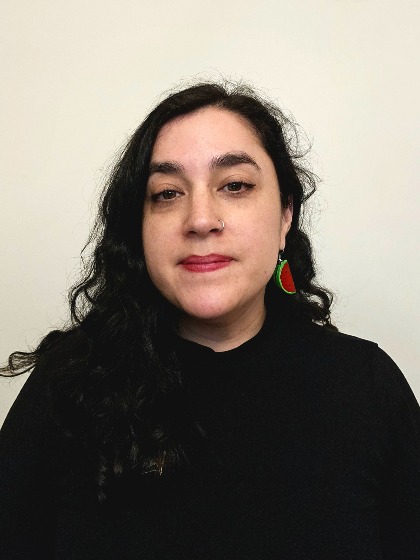
I am a Marie Skłodowska-Curie Fellow leading the project "Pedagogies for the Imagination: Science Education for Climate-Just Futures" at the Institute for Science Education and Communication, working with Prof Lucy Avraamidou.
I received my PhD in Science Education from the University of Bristol in the UK, following an MRes in Educational Research (Distinction) from the same institution. Prior to my doctoral studies, I earned an MA in Philosophy of Science (Distinction) from the Universidad de Santiago de Chile and a BSc in Pedagogy in Physics from the Pontificia Universidad Católica de Valparaíso, Chile. Upon completion of my doctorate, I worked as a Postdoctoral Research Fellow at the University of Leeds. Before coming to Europe, I worked as a physics teacher educator, physics lecturer, and secondary physics teacher in Valparaíso, Chile.
My research examines how science and education can create conditions for justice and collective flourishing, with a focus on the sociopolitical dimensions of science education. At the heart of my work is an exploration of educators' agency, collective praxis, and justice-oriented pedagogies, critically interrogating how neoliberal agendas have shaped science education and seeking counternarratives through the concepts of transformative agency and critical imagination. Currently, I am exploring participatory methods for developing transformative science pedagogies grounded in global solidarity, putting critical imagination and the world's needs at the centre.
I have co-edited the special issue Reflecting on Freire: a praxis of radical love and critical hope for science education in the journal Cultural Studies of Science Education, celebrating Freirean influences on science educators' praxis. My work has been shaped by my engagement with diverse collectives and is informed by the philosophies of Paulo Freire and Simone Weil, as well as southern theories and feminist philosophies of science. I am also interested in (and learn with) participatory and ethnographic methodologies, physics education research, science and technology studies, and transdisciplinary praxis.