
Zernike Board
The Board (information on the portfolios below) of the Zernike Institute for Advanced Materials consists of
Prof.dr. Wouter Roos - Chair [Portfolio tbd]
(since March 2025, chair since April 2026)
Tel: +31 50 363 4928; e-mail: w.h.roos rug.nl

Wouter Roos studied Physics at the Universiteit van Amsterdam which was followed by a PhD at the Universität Heidelberg under the supervision of Joachim Spatz. After research stays at the Max-Planck-Institut für Metallforschung, Institut Curie and the Vrije Universiteit Roos moved to the Rijksuniversiteit Groningen in 2015. Here he is chair of the Molecular Biophysics Lab at the Zernike Institute. His research focus is in the field of Physical Virology, studying viral dynamics and their material properties. Furthermore he studies membrane assemblies and protein dynamics. The main used techniques are (High Speed) Atomic Force Microscopy and Optical Tweezers. Roos received funding via the Dutch talent programme as well as numerous other national and international grants. In 2025 he was awarded an ERC Advanced grant of the European research council.
Prof.dr. Marleen Kamperman [Portfolio Education]
(since April 2022)
Tel: +31 50 363 7888; e-mail: marleen.kamperman rug.nl
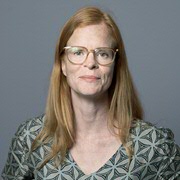
Marleen Kamperman studied Chemistry at the University of Groningen (UG) and was awarded her doctorate in 2008 at Cornell University in Ithaca, New York. Since 2018, she has been the Professor of Polymer Science at the UG. Here, Kamperman focuses on making new materials, such as the long, organic molecules that are often known as polymers.
Kamperman studies softer materials that are suitable for biomedical applications, among other things. Her focus now lies on adhesives that stick well to wet surfaces. Geckos, for example, appear to have a kind of superglue on their feet: they can peel their feet off surfaces and reattach them very often, without the glue losing its effect. Mussels also possess a unique type of glue that works under water. Marleen Kamperman is fascinated by this. She is attempting to replicate such special types of glue. These could be used in the human body, for instance, to adhere wounds shut instead of stitching them up.
Kamperman has received several honors, grants and academy memberships. In 2010 she receivend an NWO Veni, in 2012 an NWO Athena Premium, was member and chair of the Wageningen Young Academy (2013-2018), received and NWO Vidi in 2014, was member of the Young Academy (DJA) of the Royal Netherlands Academy of Arts and Scinces (KNAW), reived the KNCV Van Marumpenning (2018), and in 2019 the IUPAC - Periodic Table of Younger Chemists and an ERC Consolidator Grant.
Prof.dr. Justin (Jianting) Ye [Portfolio tbd]
(since April 2026)
Tel: +31 50 363 4376; e-mail: j.ye rug.nl
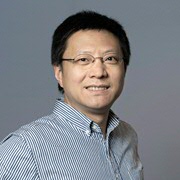
Prof. Jianting Ye is an experimental physicist working in the field of electronic devices on nanomaterials. He obtained his PhD from the Hong Kong University of Science and Technology in 2006. Following this, he did postdoctoral research at both HKUST and Tohoku University. In 2008, Jianting Ye became an assistant professor at Tohoku University, where he began his work on electronic devices using nanomaterials such as carbon nanotubes, graphene, and other layered materials. He continued his academic career as an assistant professor and later as a lecturer at the University of Tokyo since 2010. In 2013, Jianting Ye spent a short time as a senior research scientist at RIKEN before joining the University of Groningen as an associate professor and chair of Device Physics of Complex Materials at the Zernike Institute of Advanced Materials. He has been a full professor since 2022.
Prof.dr. Loredana Protesescu [Portfolio tbd]
(since April 2026)
Tel: +31 6 3192 1615; e-mail: l.protesescu rug.nl

Prof. Loredana Protesescu is an Associate Professor specializing in the chemistry of nanomaterials, a role she has held since 2024, following her tenure as an Assistant Professor at the Zernike Institute for Advanced Materials, University of Groningen (2019–2024). Her research bridges fundamental inorganic chemistry with applied nanoscale engineering, with the goal of unlocking new functionalities for advanced technologies. Her work has led to over 60 publications, three patents, and collaborations with industry partners, including AiLumiQ, where she serves as a scientific advisor.
At the core of her work is the development of synthetic strategies—from molecular design to the engineering of complex ink systems—enabling scalable and functional nanomaterial applications. By integrating precision chemical design, structural control, and self-assembly principles, and by innovating in automated and high-throughput synthetic processes, her group accelerates discovery and optimization.
Her research is driven by deep expertise in nanomaterial chemistry, where her team pioneers innovations across two interconnected yet distinct directions: semiconductor nanocrystals and hard/superhard nanomaterials for extreme environments.
Together with her team, Prof. Protesescu designs and synthesizes semiconductor nanocrystals, spanning from conventional to unconventional systems (e.g., perovskites and antiperovskites), with optical and electronic properties tailored from the visible to the infrared. These materials enable breakthroughs in optoelectronics, energy conversion, sensing, and advanced imaging, where her group achieves unprecedented control over their synthesis, structure, and surface chemistry.
Simultaneously, her research focuses on the development of hard and superhard nanomaterials, such as metal borides, engineered for extreme environments. These materials combine exceptional mechanical strength, thermal stability, and conductivity, making them ideal for high-temperature electronics, protective coatings, and high-stress applications.
By integrating automated high-throughput synthesis and precision chemical design, her team accelerates the discovery and optimization of nanomaterials that are both scientifically innovative and industrially impactful. Their work pushes the boundaries of materials science, creating solutions that redefine performance in energy, electronics, and beyond.
Her research has been recognized with awards such as the Nanomaterials 2020 Young Investigator Award, Veni and Vidi NWO grants, OTP NWO grant (2024), MWO-M2 (2024), and an ERC Starting Grant (2025). She is also actively involved in the scientific community, serving as an Early Career Board member for Nano Letters (2022–2025) and as Chair of the Board (2023–2024). Since September 2024, she has been the Program Director of the Nanoscience Master’s program, fostering innovation and excellence in nanoscience research.
The Board's Strategic Portfolios in a nutshell
Education – Scope of programs – strategic developments – alignment of programs and outreach to schools with research
Coordinating the participation in the various education programs i.e. applied physics, physics, chemistry, chemical engineering, biomedical engineering, mechanical engineering, life science & technology; overviewing & stimulating the balanced assignment of TA’s from our PhDs
Funding – Signaling – Guidance – Feedback – Support
Improving the quality of proposals by best practices and internal peer-review, paving the ways of support, identifying opportunities in the complex funding landscape and outside the current scope
PR & Outreach – Editing – Social Media - Web – Print – ScienceLinX – Exhibitions
Editing and publishing news out of the institute in web/print, creating awareness at companies and (societal) partners, creating an image that is motivating students to engage in programs related to the Zernike Institute
Strategic partnerships – Inventory - Identification – Reach Out – Building Alliances (academic and industrial) – Networks (societal and academic)
Research alliances are key in the current funding landscape. Building them is timeconsuming. On the other hand many meet & greets are planned that fill agenda’s leading to nothing. Strategic approaches may help to act directed and make use of existing networks and expertise
The scientific director and office of the institute handle the portfolio:
Organization & Staff development – Values – Structure (clarity, roles) - Internal Communication | Hiring – Scouting – Talent Development
Creating clarity on roles, support and processes, reducing ad hoc actions and procrastination; support Finishing4; TD 3.0: preparing for funding and prizes; scouting for talent; running smooth recruiting procedures
© Photography by Reyer Boxem