
Introducing our new staff scientific member Gerwin Dijk
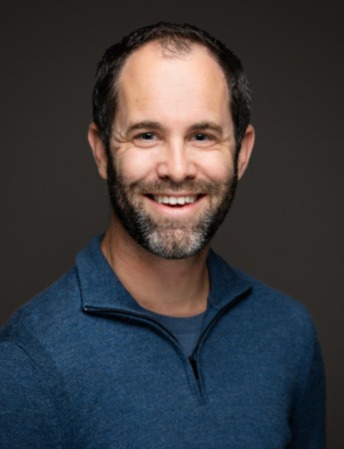
We are happy to announce that from May 1, Dr. Gerwin Dijk has joined ENTEG as an assistant professor. Dijk will set up his research line in the Bio-inspired MEMS and Biomedical Devices (BMBD)-group. His research focuses on bioelectronic medicine and the development of personalized therapies for neurological disorders. This includes microfabrication of soft, polymer-based electronics that are optimized to seamlessly interface with the nervous system to deliver precision therapy.
Gerwin Dijk was born in Hardenberg, the Netherlands, in 1985. He received his M.Sc. degree in Applied Physics from Eindhoven University of Technology (the Netherlands) in 2012, after which he spent 2 years at ASML developing EUV photolithography systems. In 2016, he became a Marie Curie fellow in the Bioelectronics group at Écoles des Mines de Saint-Étienne (France) where he received his Ph.D. in Microelectronics in 2021. His PhD research investigated electrical stimulation to treat brain cancer and was performed in collaboration with start-up company Panaxium. He was a postdoctoral researcher at Stanford University (U.S.) where he explored conducting polymers for applications in bioelectronics, neuromorphics, and optically switchable surfaces.
His research interest encompasses organic bioelectronics where he combines his expertise in electrical stimulation, conducting polymers, and microfabrication to develop biocompatible sensors and modulators. He participated in various international consortium projects, has been an instructor for courses in electronics and nano-biotechnology, and supervised numerous undergraduate and graduate students.
We warmly welcome Gerwin to the team and are eager to start collaborating with him.