

Whose Stories Are We Telling?
Have you ever visited a historic place and wondered whose stories are being told — and whose might be missing?
When we think about cultural heritage, we often picture monuments, museums or historic buildings. But heritage is also found in the memories people share, the traditions they practise and the meanings they attach to familiar places. And not everyone sees those places, or remembers their histories, in the same way.
As a Research Master's student at the University of Groningen, I spend a great deal of time exploring questions of religion, identity, memory and belonging. These subjects encourage us to think critically about how societies remember their past and whose experiences become part of the stories we tell.
But I have also been curious about something else: what happens when the ideas we study at university become part of real educational experiences?
When I first heard about two European projects, REBELAH and MIRETAGE, I became curious about how their work connected with the questions we explore at university. I wanted to understand how ideas about heritage, identity and inclusion could move beyond academic discussions and become part of real educational experiences. Through conversations with researchers and practitioners involved in these projects, I began to see heritage education not simply as a way of learning about the past, but also as an opportunity to listen to different voices, question familiar narratives and discover new meanings in the places around us.
Heritage Is About More Than What We Preserve
One of the ideas that has stayed with me is that heritage education does not have to begin with an expert explaining what a monument means. It can begin with a question, a memory or a conversation.
Think about a place you know well. You might associate it with a particular historical event, while someone else remembers a family tradition, a religious celebration or an experience of migration. Neither perspective necessarily tells the whole story, but together they can reveal something we might otherwise overlook.
This is the kind of thinking that inspired REBELAH, a European project exploring creative and inclusive approaches to cultural heritage education.
One of its outcomes was the publication of two books designed to help educators move beyond simply presenting information. They encourage learners to explore heritage through creativity, reflection and encounters with different perspectives.
I wanted to understand how these ideas had been developed. How do you turn a commitment to inclusion into activities that people can actually use? And what does it take to create educational resources that make room for different experiences?
These questions led to my New Books Network interview with Todd Weir and Ana Fernández-Aballí Altamirano, two of the editors of the REBELAH publications.
Our conversation explores the ideas behind the books, the collaborative process of developing them and the possibilities of making heritage education more participatory.
If you are curious about the people and thinking behind these resources, listen to our conversation on the New Books Network.
Stories Can Change How We See a Place
Another idea I have been reflecting on is the role of storytelling.
We often encounter heritage through official descriptions: a building's date, its architectural style or its historical importance. These details matter, but they do not always tell us what a place means to the people connected to it.
A personal story can add another dimension. It might reveal how a neighbourhood has changed, why a particular tradition matters or how a community remembers an event differently from the version presented in a museum.
This is where MIRETAGE enters the story.
Building on approaches developed through REBELAH, MIRETAGE explores minority religious heritage through storytelling, creative education and activities involving local communities.
What interests me about this connection is the opportunity to see ideas discussed in academic settings take on more practical forms. Questions about identity, representation and belonging are no longer only concepts to analyse. They become part of decisions about whose stories are heard and how people encounter the histories of their surroundings.
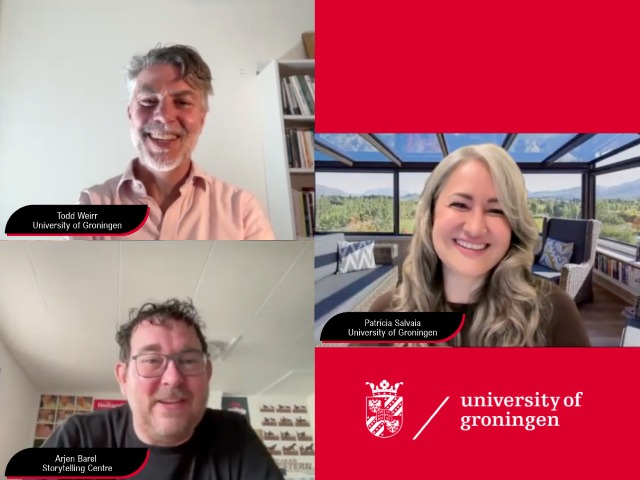
To explore this further, I interviewed Todd Weir and Arjen Barel, from the Storytelling Centre Amsterdam, about storytelling and the community-based Heritage Trails developed through MIRETAGE.
Our conversation considers how personal narratives can help people connect with places and discover aspects of religious heritage that may otherwise remain less visible.
It also raises a question I find particularly interesting: can hearing someone else's story change our sense of who belongs to a place?
If you would like to explore that question, watch our conversation with Todd Weir and Arjen Barel on YouTube.
What If We Tried a Different Way of Learning?
These conversations have also made me think about how we learn.
At university, reading and discussing theories helps us develop ways of understanding the world. But there is something valuable about seeing how those ideas can inspire activities that invite people to participate, share experiences and ask questions of their own.
The two REBELAH publications offer an opportunity to explore this connection.
The Creative and Inclusive Heritage Education: Handbook introduces perspectives on heritage, identity and inclusion, while the Creative and Inclusive Heritage Education: Activity Book offers 29 practical activities involving creativity, storytelling and intercultural dialogue.
Both books are open access and free to download. You can explore them whether you are a student, educator, museum professional or simply someone curious about different ways of learning from cultural heritage.
What appeals to me about these resources is that they do not ask us only to understand ideas. They invite us to do something with them: experiment, discuss, listen and reflect.
Learning to Listen Differently
I have not participated directly in the Heritage Trails, but following the development of these projects and interviewing people involved in them has helped me think differently about the relationship between academic learning and practice.
One lesson I take from these conversations is that understanding heritage requires more than knowing its history. It also means paying attention to how people experience it, which stories receive recognition and which perspectives we may not have considered.
For students, this offers a reminder that the questions we explore at university do not remain within academic discussions. They can shape how we approach communities, interpret cultural differences and understand the places we share.
And perhaps that is what I find most meaningful about heritage education: it encourages us to remain curious, even about things we think we already know.
Heritage, after all, is not only something we inherit. It is also something we discover through the stories we share — and the stories we are willing to hear.
About the author
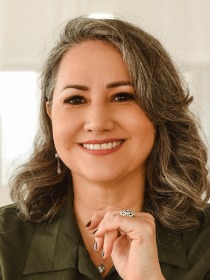
Patricia Salvaia is a Research Master's student at the University of Groningen, with a background in psychology. Her research interests include religion, identity, collective memory, scapegoating and witch-hunting, with a particular focus on how societies construct narratives of belonging and exclusion.