
A conservative VVD member or a progressive radical: P.J. Oud was all of these
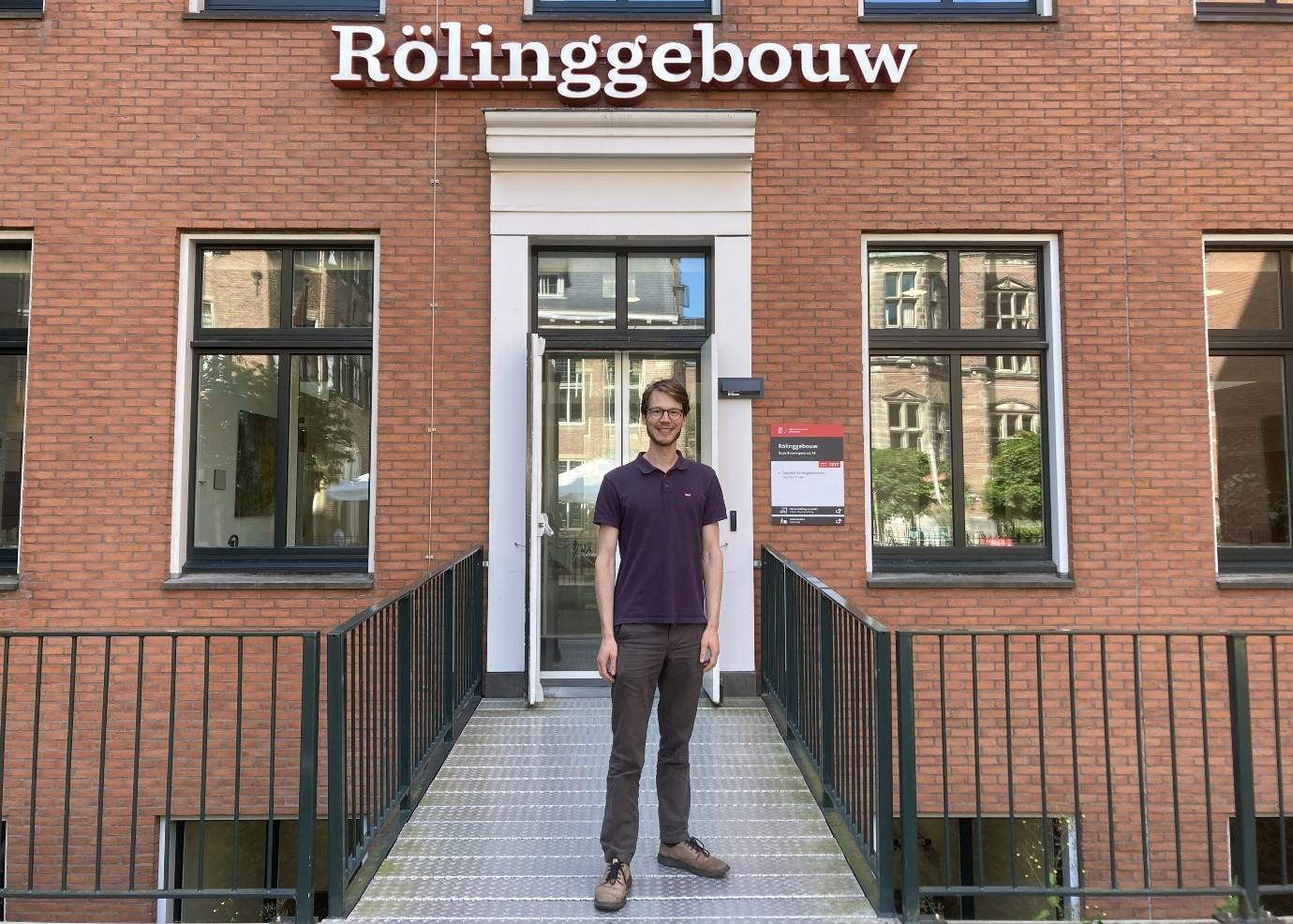
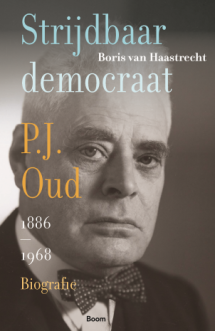
Pieter Jacobus Oud (1886–1968) lived through two world wars, was a prominent member of the Liberal-Democratic Union, one of the founders of both the PvdA and the VVD and – amongst many other roles – Minister of State. Yet he faded into obscurity. Until now. Historian and political scientist Boris van Haastrecht will defend his PhD thesis on 10 September on the biography Strijdbaar democraat (Combative Democrat).
Text: Esther van der Meer
Why this book?
“That is actually thanks to the biography of PvdA politician and Mayor of Rotterdam André van der Louw, written by Chris Hietland. At the book launch, someone asked: why isn’t there a scholarly biography of the far more important Rotterdam wartime mayor, Pieter Oud?
There was only a biography by Henk Vonhoff, former Queen’s Commissioner in Groningen. That was published in 1969, shortly after Oud’s death. That biography is dated and, to be honest, not particularly objective or scholarly either. Vonhoff wrote it whilst he was a newly elected Member of Parliament: he had little time for an in-depth study. And he was a great admirer; he even had Oud proofread the text.
Gerrit Voerman, then director of the Documentation Centre for Dutch Political Parties, Hans Renders, then director of the Biography Institute, and Paul van de Laar, professor of the history of Rotterdam, set about working on an academic biography at that time.
I had just finished my studies at the University of Amsterdam myself, and Oud’s versatility appealed to me enormously. I had also previously studied 19th-century liberalism. Oud struck me as a fine transitional figure to modern politics.”
What made you want to write a biography?
“By following a person’s life story, you end up exploring all sorts of different topics. Oud grew up in Purmerend, so as a biographer you have to delve into that history; for his school years, you have to look into the education system around 1900, and so on.
You can also grow tired of a person by delving into them for so long, but because Oud has been dead for so long, you actually end up gathering more about the era in which he lived than about him personally. My book must do justice to Oud but, above all, say something about Dutch politics through the lens of his life. As a person of the 21st century, you cannot understand someone from a hundred years ago without the historical context.”
Do you have an example of that?
“Oud was active in the campaign for women’s suffrage, something about which very little has been written before. For example, he gave public speeches for the Association for Women’s Suffrage, of which Aletta Jacobs was chair. He said: men must also make an effort for women’s rights. Nowadays, we take that for granted. But back then, it was a radically progressive statement that provoked resistance.
Oud’s image has become fixed as that of a conservative VVD leader. But you can also see him as a young advocate for women’s suffrage. I want to showcase all those different facets of his personality and his development over time.”
Your thesis is entitled 'Combative democrat'. To what extent does that sum him up?
“Combativeness characterised his nature. From a young age, he wanted to be the best and to keep proving himself throughout his life. If he met with opposition, that was precisely a reason for him to press on and get what he wanted. And he wasn’t afraid; he dared to challenge existing norms.
Democracy was a sort of magic word for him; the concept fascinated him immensely. At the start of his life, the Netherlands did not yet have a fully-fledged democracy: the right to vote was still restricted. He considered that fundamentally unjust. As a lawyer, he also wrote textbooks on constitutional law and local government law. Moreover, the term ‘democrat’ aptly describes all three of the parties of which he was a member.”
How did he come to switch from the PvdA to the VVD?
“After the war, the liberal democrats sought to form a larger progressive bloc, which led to a merger with the SDAP in 1946. Oud became a member of the executive committee of the new PvdA. But the left wing considered him unsuitable: under Colijn, he had served as Minister of Finance during the financial crisis of the 1930s, and that cabinet had pursued a harsh, right-wing austerity policy. Oud was keen to become a member of the Senate for the PvdA, but he was denied this opportunity.
He then decided to found a party of his own, where he would have greater influence. This is how he became involved in the founding of the VVD in 1948, of which he immediately became the political leader. As party leader, he had already campaigned for the Liberal Democrats in 1937 under the slogan ‘for freedom and democracy’.
He felt it was important for those terms to feature in the name of the new party, as well as the word ‘people’s party’. After the war, he embraced liberalism mainly out of pragmatism; I think he would have preferred to remain a liberal democrat.”
How would he view the course his VVD is now taking?
“That’s difficult to say, because Oud lived in a completely different world. Oud was an advocate of progressive politics; he had a very strong belief in progress and considered the pursuit of social justice to be a fundamental political principle. You see that taking less of a prominent role within the VVD today.”
Did you come across any other interesting facts about Groningen during your research?
“I spoke to his grandson. He had some previously unpublished childhood memories of his grandfather tucked away in the loft. He also had two notebooks in which Oud had meticulously recorded exactly where and when he spoke, from his first public speech in 1907 right up to his last in 1966. That’s more than 1,700 public speeches.
You can see that Oud spent a lot of time in Groningen during election campaigns. He went into the villages, out to meet the people. That was truly groundbreaking at the time. It was quite different from how things are done nowadays: he went to tell people how things stood; he wasn’t there to come and listen to them.”
Before you started your thesis, you didn’t know much about him either. Would you have liked to have had a drink with him?
“He was certainly a very multifaceted man. There are many different accounts of Oud – some favourable, some unpleasant and almost dictatorial; he was a man of character, not grey or dull. But readers can make up their own minds; I’m not going to impose my view.”
You now have a new topic to throw yourself into: you’re going to be researching the constitutional conscience. Will you come across Oud again in that context?
“That research is about how we ensure that parliament and the House of Representatives can act with authority. I’m going to investigate what role the personal authority of MPs plays in this. A fundamental idea here is that, regardless of your political preferences, you must be able to agree on the rules of the political game. That was something that was fundamental to Oud. Just as he had great respect for parliament.
As a political scientist, I believe it is important that we have a well-functioning system, and as a historian, I find it interesting to make a contribution – however small – to what is needed to achieve that. History allows you to place the present in a broader perspective.”
The commercial edition of the thesis Strijdbaar democraat will be published on 10 September by Uitgeverij Boom in Amsterdam.
More news
-
28 September 2026
‘The law should be there for everyone’
-
21 September 2026
Disinheritance is about much more than money
-
31 August 2026
A digital game of cat and mouse