
There’s work to be done: the integrity procedure in academia needs an overhaul
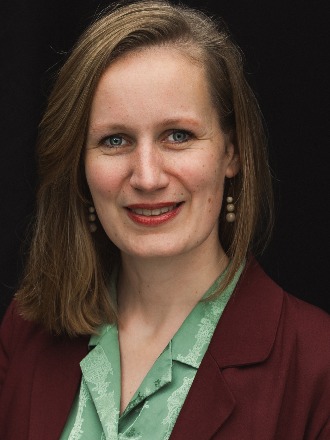
However, only a fraction of breaches of scientific integrity in the Netherlands are brought to light through the integrity procedure. When they are, no disciplinary action is taken in 45 per cent of cases. It is high time that the integrity procedure in academia was overhauled, argues Judith Zweistra-Immink in her thesis.
Text: Esther van der Meer/Photo: Ebru Kesler
Zweistra-Immink investigated how fair and legitimate the procedure used in Dutch academia is for investigating suspected breaches of integrity.
Anyone in the Netherlands who suspects a breach of scientific integrity, such as data manipulation, can lodge a complaint with the institution where the researcher works. The Scientific Integrity Committee (CWI) then examines the complaint. It subsequently advises the Executive Board, which decides whether the complaint is substantiated and whether sanctions should be imposed. If the complainant or the accused disagrees with this decision, they may appeal to the National Body for Scientific Integrity (LOWI). LOWI also ultimately issues a recommendation, following which the institution makes a final decision.
The procedure is not independent enough
So the butcher is judging his own meat: “I do see a weakness there: the procedure is not independent enough. If you suspect that a colleague or professor has breached academic integrity, you have to bring a case against someone on whom you may well be dependent, at the institution from which you both receive your salaries. That creates a barrier.”
Moreover, the institution may well have to take decisions that reflect not only on the researcher in question, but also on the institution itself. “So self-interest also comes into play.”
Sanctions unclear
It is also unclear what sanctions a researcher might face. “For example, there is no catalogue of measures as there is in other disciplinary proceedings, and institutions do not coordinate sanctions with one another. There is little legal certainty for researchers, whilst an accusation of a breach of integrity places an enormous burden on them.”
Her PhD research is being published just before Dutch research institutions are due to adopt a new code of conduct for scientific integrity on 1 January 2027, and shortly after one of the biggest cases of scientific fraud in the Netherlands since Diederik Stapel: nine publications by senior lecturer in occupational and organisational psychology Yannick Griep were retracted and he lost his job.
Tip of the iceberg
The fact that the Griep case came to light is almost bigger news than the scientific fraud he committed. Zweistra-Immink: “We know from anonymous self-reports that breaches of scientific integrity occur, but very few cases actually come to light during the proceedings. This is just the tip of the iceberg.”
What is frequently reported, however, are what Immink calls ‘minor issues’. “These concern, for example, the order of authors in the publication of a scientific article.”
There are also many complaints about plagiarism. What is striking here is that PhD students seem to be punished more severely than senior academics.
Complaints about socially sensitive topics
In addition, we are also seeing an increasing number of complaints about scientific research into socially sensitive topics, such as our colonial past or the climate. “In such cases, people may, for example, disagree with the design of the research. These complaints are tricky, because they touch on the very academic freedom that we are trying to protect. This can have a chilling effect: scientists may resort to self-censorship and think, ‘I’m not going to carry out that type of research.’”
Zweistra-Immink puts forward a list of ideas: “Make the procedure more independent. One possibility is regionally or even nationally organised CWIs that can issue binding rulings. Institutions should then establish a clear framework of measures and sanctions.
In addition, establish an institutional ombudsman: an independent body that is the sole authority capable of initiating proceedings. This might make it easier to report complaints whilst also allowing cases to be screened. Furthermore, this institutional ombudsman could also put relevant developments in the field of academic integrity on the agenda.
Revoking a doctoral degree
And finally: enshrine in law, once and for all, that a doctoral degree can be revoked. At present, this is only possible if a thesis has been falsified, but not in the case of subsequent work. This has been under discussion since the Diederik Stapel affair, but it has still not been regulated.”
In short: there is work to be done for the Universities of the Netherlands and the Royal Netherlands Academy of Arts and Sciences. “They are the driving force in the field of scientific integrity; I would hope that they take action on this.”
Judith Zweistra-Immink will defend her PhD thesis on Monday 23 November at the Faculty of Law of the University of Groningen. The defence can be followed live from 4.15 pm.
More news
-
03 November 2026
Holding states accountable for cyberattacks?
-
-
22 October 2026
Seven UG and UMCG researchers awarded Vidi grant