
How accessible is the music industry really?
How does queerness become visible in the live music industry, and to what extent do gender and talent development shape one's opportunities within the sector? Furthermore, what makes a festival or venue truly accessible? Experience shows there is still plenty of room for improvement. This has prompted the University of Groningen (UG), the Municipality of Groningen, ESNS, and Stichting GROENN and other partners to address these challenges during a knowledge-sharing event focused on inclusivity and accessibility in the Northern live music industry.
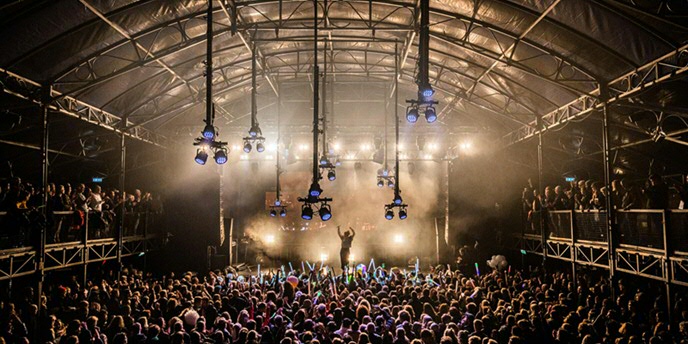
Inclusivity and accessibility are key themes within the cultural sector. Many organizations state that these issues are important to them, yet putting them into practice often remains challenging. Why is that? And what is needed to bring about change? In other words: what does it take to create an inclusive and accessible music scene in the Northern Netherlands? Key partners from the live music sector, policymakers, and academics are joining forces to discuss the answers to these questions.
Making music happen
Chris Tonelli is an Assistant Professor in the Popular Music and Sonic Cultures program at the University of Groningen and is actively involved in organizing the event. ‘With this knowledge-sharing afternoon, we aim to reach everyone who plays a role in making music happen in the North—whether you are a creator, own a recording studio, run your own label, or are a policymaker. And we deliberately look beyond just the professionals, to foster a conversation with everyone who plays a role in the music cultures in our region. That is why we focus on everyone who makes music happen.’
The inclusive music industry
Inclusivity is not just about who stands on stage. It also concerns who has access to talent development, grants, professional networks, and spaces for making music. Furthermore, it involves the accessibility of festivals and venues, as well as the question of who gets a say in the sector's future.
This has implications for aspects such as representation and queer visibility within the international music industry. For instance, University of Groningen PhD candidate Marjan Wynia, who will lead a session at this event, is investigating how gender plays a role in the Dutch music industry. In doing so, she specifically examines decision-making processes in leadership roles and how artistic talent is evaluated.
Power dynamics in the music industry
Implementing change in the music industry proves difficult. Research by the University of Groningen, for instance, reveals how existing networks, habits, and power dynamics can determine who gets opportunities and who struggles to gain a foothold. Research conducted by the Master’s students in the Popular Music and Sonic Cultures program has already demonstrated that programming decisions are influenced not only by quality and popularity but also by existing professional and personal networks.
Practical experiences
The knowledge-sharing event also places a strong emphasis on the experiences of people working in the sector on a daily basis. ESNS, for example, has extensive experience with diversity, equity, inclusion, and accessibility within the international music industry. Stichting GROENN focuses, among other things, on social accessibility within the cultural sector. Additionally, other partners who will be present at the event, like the women’s platform Collective RIOT—which works to create more space for female creators in electronic music—and Bevrijdingsfestival Groningen, bring their own experiences regarding programming and audience reach.
From challenges to change
During this knowledge-sharing afternoon, researchers from the University of Groningen (RUG) will engage in direct dialogue with professionals and other participants from music cultures of our region. Academic insights will be juxtaposed with real-world practical experiences: what do we already know, where do blind spots remain, and which solutions actually work? This fosters a conversation that goes beyond merely identifying challenges; it creates an opportunity for academia and the music industry to challenge and learn from one another.
The organizers of the event - Inclusivity and Accessibility in the Northern Live Music Industry - are working towards practical goals. Tonelli explains: ‘By sharing experiences, we aim to clarify exactly where problems arise, how we can solve them, and what is required to do so. We also hope to bring new partners into our research collaborations.’
-
When : Friday 2 October 2026, 2 - 5 p.m.
-
Where : Harmonie building, Oude Kijk in ’t Jatstraat 26
-
Language : English
-
Participation: Free
Followed by drinks and live music until 6 p.m.
Click here for the programme and an overview of the speakers.
More news
-
14 September 2026
Dementia in migrants: does care in the native language help?
-
14 September 2026
Cesspits reveal what the Dutch ate centuries ago
-
01 September 2026
Resilient local communities essential for reconstruction