
Revealing hidden decisions on economic sanctions
Governments often use economic sanctions during international crises as an alternative to military force. But do sanctions actually lead to the intended result? This project uses historical archival documents to investigate how sanctions were discussed, modified, or avoided during crises in the past. The NWO is making €50,000 available for this research within the framework of the SGW Open Competition XS 2026.
Yuleng Zeng explains that the project examines how governments use economic sanctions during international crises, especially as an alternative to military force. ‘A key challenge in existing research is that we often rely on public information, such as news reports, which tells us relatively little about how sanctions are debated, adjusted, or avoided behind closed doors.’ The project uses historical archival documents to examine how sanctions become part of crisis diplomacy.
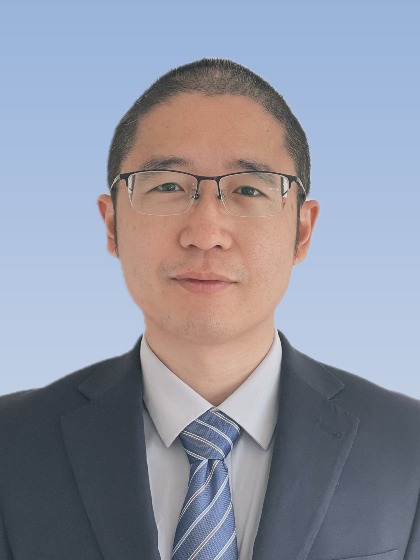
Zeng has three goals in mind with his project: ‘I hope to develop a proof-of-concept dataset based on archival documents that captures how sanctions were discussed and used in past crises. Second, I hope to show whether computational and AI-assisted coding, combined with human validation, can help researchers study large collections of diplomatic documents more systematically. Third, I hope the project will generate initial findings that can form the basis for a larger research agenda on sanctions, crisis bargaining, and economic security.’
As sanctions have become one of the most frequently used instruments in contemporary foreign policy, we still know too little about whether they help manage crises or contribute to escalation. They are often presented as a middle ground between diplomacy and military force.
This project can lead to a more fine-grained view of how policymakers actually think about sanctions in practice: when they consider them useful, when they worry about unintended consequences, and how sanctions interact with other instruments of pressure and reassurance. Zeng's research is part of a broader study into sanctions by the Santions Group. Within this framework, work is being done from various disciplines to understand sanctions and their effects.
More news
-
22 October 2026
Seven UG and UMCG researchers awarded Vidi grant
-
14 October 2026
The Change: menopause is more than just a hormonal matter
-