
‘Schepen, puike tabak en tragiek’ schetst beeld Curaçao in de Nederlandse krant

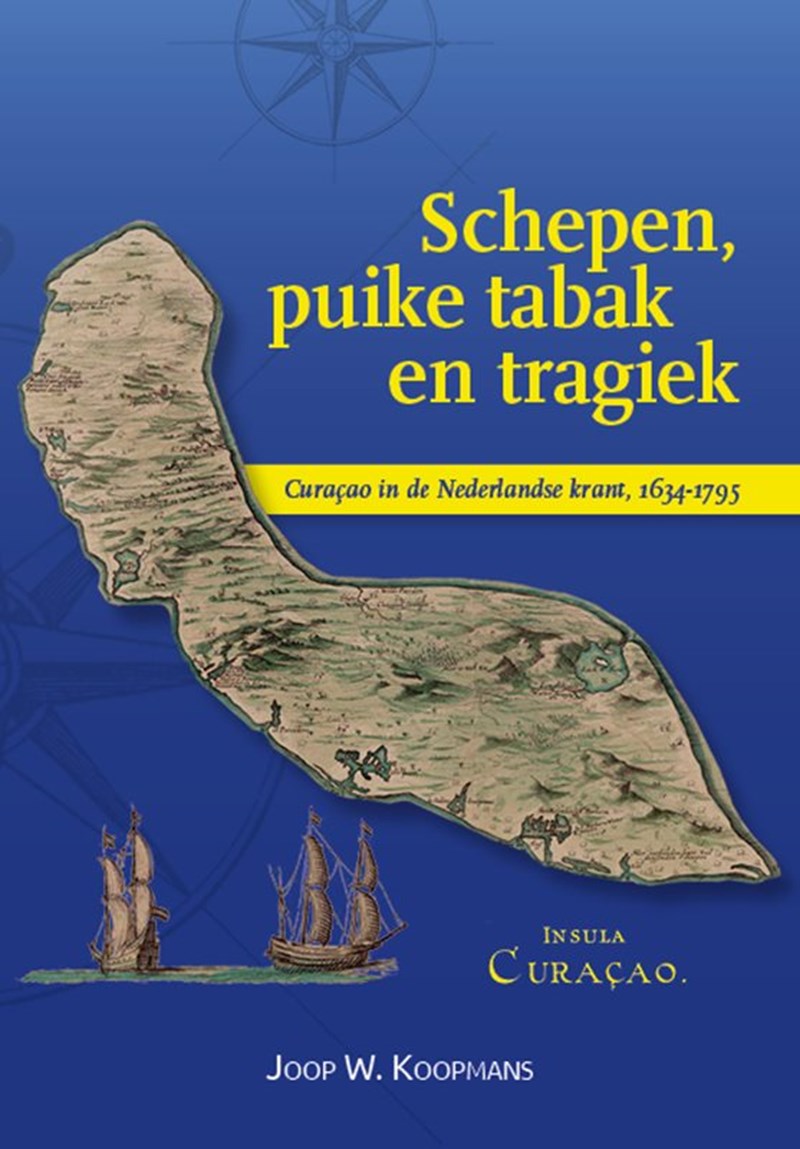
Eind vorige maand ging hij met pensioen. Op de valreep publiceerde hij nog even een boek. In 'Schepen, puike tabak en tragiek: Curaçao in de Nederlandse krant, 1634-1795' schetst Joop Koopmans het beeld zoals Nederlanders dat in de zeventiende en achttiende eeuw van Curaçao konden hebben door kranten te lezen.
Curaçao: eens een kolonie, nu een populaire vakantiebestemming. De banden tussen Nederland en dit Antiliaanse eiland gaan meer dan drie eeuwen terug. Dankzij de digitalisering zijn we tegenwoordig direct op de hoogte van belangrijke gebeurtenissen. In de jaren tachtig van de vorige eeuw was communicatie via de luchtpost nog gebruikelijk. Twee eeuwen geleden was het nog lastiger om nieuws over en weer uit te wisselen. Nieuws was vele weken, zo niet maanden, onderweg.
In 'Schepen, puike tabak en tragiek' duikt Koopmans in de Nederlandse kranten van 1634 tot 1795. Aan de hand van nieuwsberichten en advertenties laat hij zien wat lezers toen te weten konden komen over Curaçao en hoe deze informatie hun beeld van de kolonie vormde. Daarmee opent het boek een venster op een onderbelicht aspect van de mediageschiedenis: de berichtgeving over de buiten-Europese wereld.
Knooppunt
Koopmans beschrijft in het boek hoe Curaçao in de Nederlandse pers vooral werd gezien als knooppunt van scheepvaart en handel. Maar ook ander nieuws bereikte Nederland. Vooral als het ging over oorlog, de kaapvaart, het bestuur en rampen. Daarnaast kregen de trans-Atlantische mensenhandel, slavernij en verzet daartegen een plaats in de berichtgeving. Ook wordt duidelijk hoe advertenties – over goederen, overledenen, publicaties en veel meer – bijdroegen aan de beeldvorming rond het eiland.
Dit boek werpt al met al nieuw licht op de vroege geschiedenis van Curaçao als Nederlandse kolonie. Het toont hoe media al vroeg een rol speelden in het framen van verre gebieden en samenlevingen. Juist in het licht van de huidige aandacht voor het slavernijverleden biedt deze studie waardevolle historische context.
Joop Koopmans was tot vorige maand universitair hoofddocent Vroegmoderne Geschiedenis aan de Rijksuniversiteit Groningen.
Meer nieuws
-
14 september 2026
Dementie bij migranten: helpt zorg in de moedertaal?
-
14 september 2026
Beerputresten vertellen wat Nederlanders eeuwen geleden aten
-
01 september 2026
Veerkracht lokale gemeenschappen is essentieel voor wederopbouw