

Invisible energy savings: small steps, big impact for a sustainable University of Groningen
The University of Groningen (UG) is actively committed to saving energy and reducing CO₂ emissions. Within the Energy & Sustainability program, numerous initiatives are being tackled in close collaboration with the Real Estate Department and the Facilities Department. These initiatives are often invisible to everyday users, but they certainly have an impact on the university's sustainability goals. The RUG aims to be CO₂-neutral by 2035.
Below are four examples of invisible energy savings that have recently been started or completed.
Insulation of pipes and appendages in technical rooms
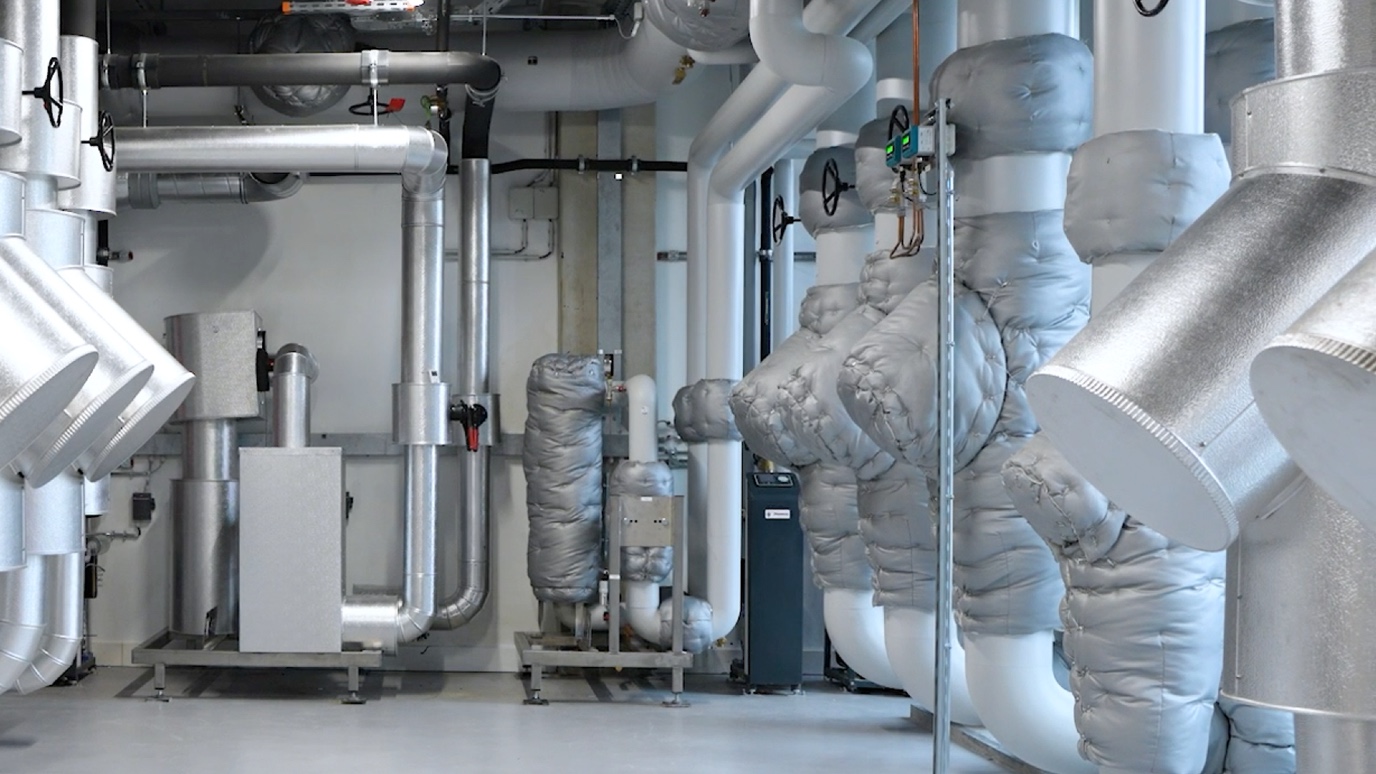
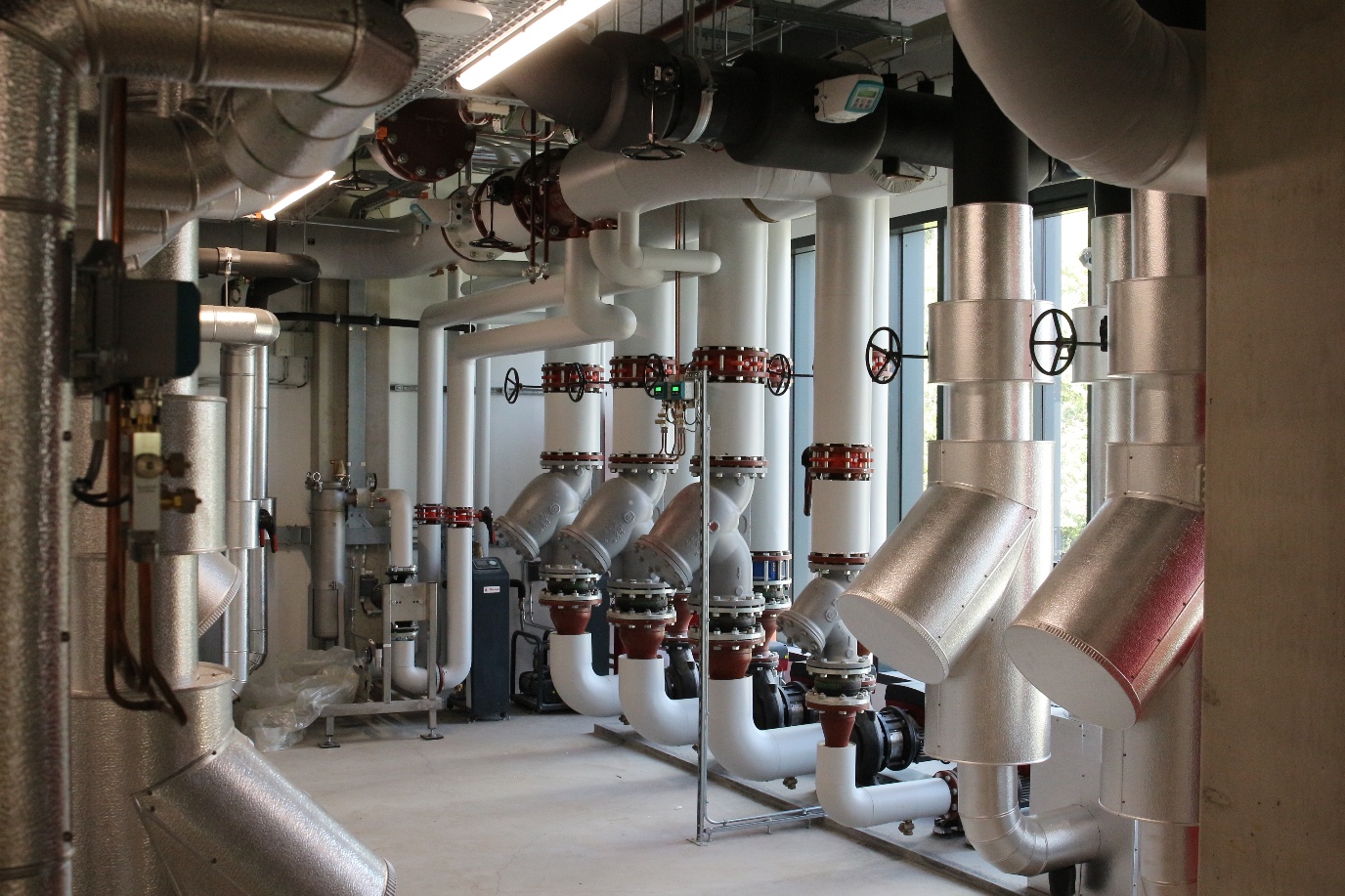
The University of Groningen has started insulating pipes and ventilation ducts in unheated technical rooms, including appendages. These are small, additional components on pipes, such as couplings, bends, and valves, which were often overlooked in the past due to the higher costs involved. Due to rising energy prices, insulating these ‘more difficult’ parts is now also cost-effective (expected to pay for itself within five years). By preventing heat loss, this initiative contributes to lower energy bills and to the ambition to reduce CO₂ emissions. Work has started at the University of Groningen buildings in the Hortusbuurt neighborhood. This year, the other University of Groningen buildings in the city center, on the Healthy Ageing Campus, and on the Zernike Campus will follow. In total, this involves hundreds of pipes and associated components. The work is being carried out in technical rooms, so there is no inconvenience to users. The university is working with Spie, Unica, and Equans to carry out the work.
Printers are sleeping again
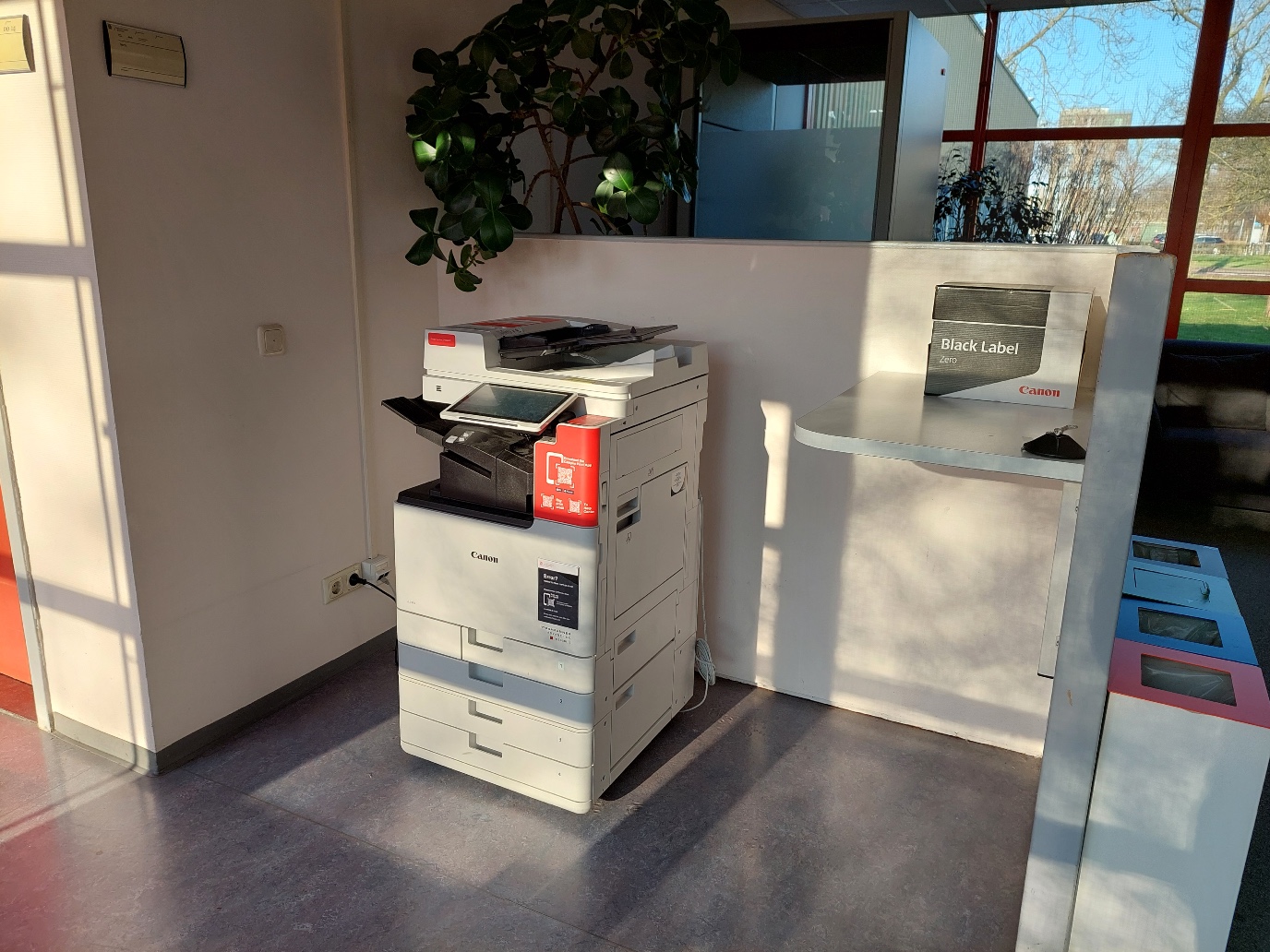
A small technical adjustment with a big impact: printers within the University of Groningen did not automatically go into sleep mode. At the request of the E&D program team, Canon made this adjustment. As a result, the university now saves approximately 130,000 kWh per year – a significant contribution to its sustainability goals and equivalent to the annual consumption of approximately 52 households. In total, this concerns around 400 printers within the University of Groningen.
Energy-guzzling dishwasher in the Bernoulliborg kitchen
The dishwasher and hot water supply in the Bernoulliborg's scullery turned out to be bizarre energy guzzlers. The hot water boiler for this dishwasher was located on the 6th floor of the building, while the dishwasher itself was downstairs. The hot water lost a lot of heat along the way due to the long circulation pipes, resulting in enormous gas consumption. Thanks to effective monitoring by the Energy & Sustainability program, this has now been rectified: there is a new dishwasher and a different heating system. The result: a 50% reduction in water consumption and no less than a 90% reduction in energy consumption (85 cubic meters of water and 4,000 m3 of gas). A great collaboration between contract managers from Food & Drinks, FSE, and the Real Estate Organization.
Klusbus: small changes, big impact

With the Klusbus, the University of Groningen is focusing on small, accessible improvements that can sometimes have a big impact. Think of draft strips, brushes under revolving doors, or turning off unnecessary equipment. These measures save energy and increase comfort in the workplace. Small solutions in one place can often be applied elsewhere in the University of Groningen, such as printers that now go into sleep mode. With the Klusbus, we encourage not only top-down but also bottom-up initiatives. After all, employees know their workplace best. Help us make the University of Groningen even more sustainable!
The Klusbus was already active at the Faculty of Spatial Sciences in Mercator and will soon start in the Smitsborg and building 5415 (the former Rekenhal). It will also visit other University of Groningen buildings later on.
Towards a CO2-neutral university
All these initiatives demonstrate that the University of Groningen is working on energy conservation and sustainability on various fronts. Through smart adjustments and collaboration with internal and external partners, steps are being taken towards becoming a CO2-neutral university by 2035. Often invisible, but with a big impact!
Questions or comments?
Please contact the Energy & Sustainability program at the University of Groningen.
More news
-
-
26 June 2026
Stevin Prize for Iris Sommer
-