

University of Groningen steadily approaching a gas-free Zernike Campus
The University of Groningen (UG) is making significant progress in its ambition to make all buildings on the Zernike Campus gas-free starting in 2026. Thanks to intensive collaboration with the public heating company WarmteStad, most UG buildings were connected to the sustainable heating network last year, eliminating their need for natural gas. This transition already results in an annual saving of over 1.6 million m³ of natural gas, which is more than half of UG’s total consumption. Within two years, an additional 180,000 m³ will be saved, bringing the campus closer to a fully gas-free future.
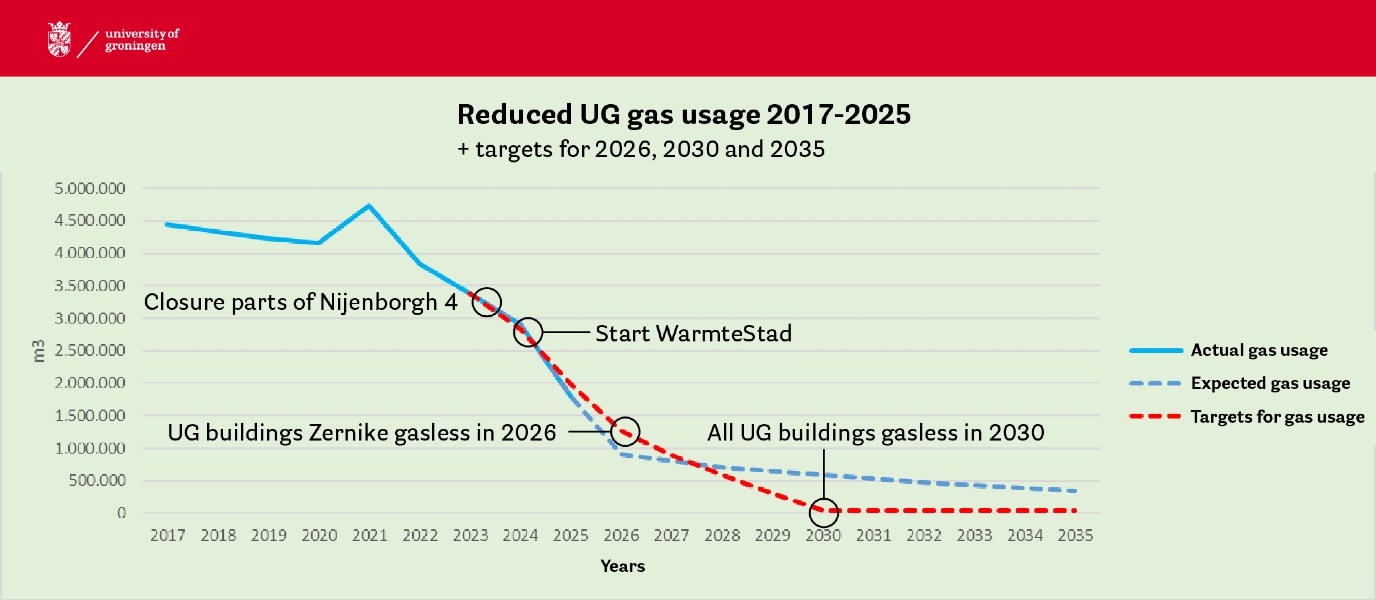
Over 1.6 million m³ less gas
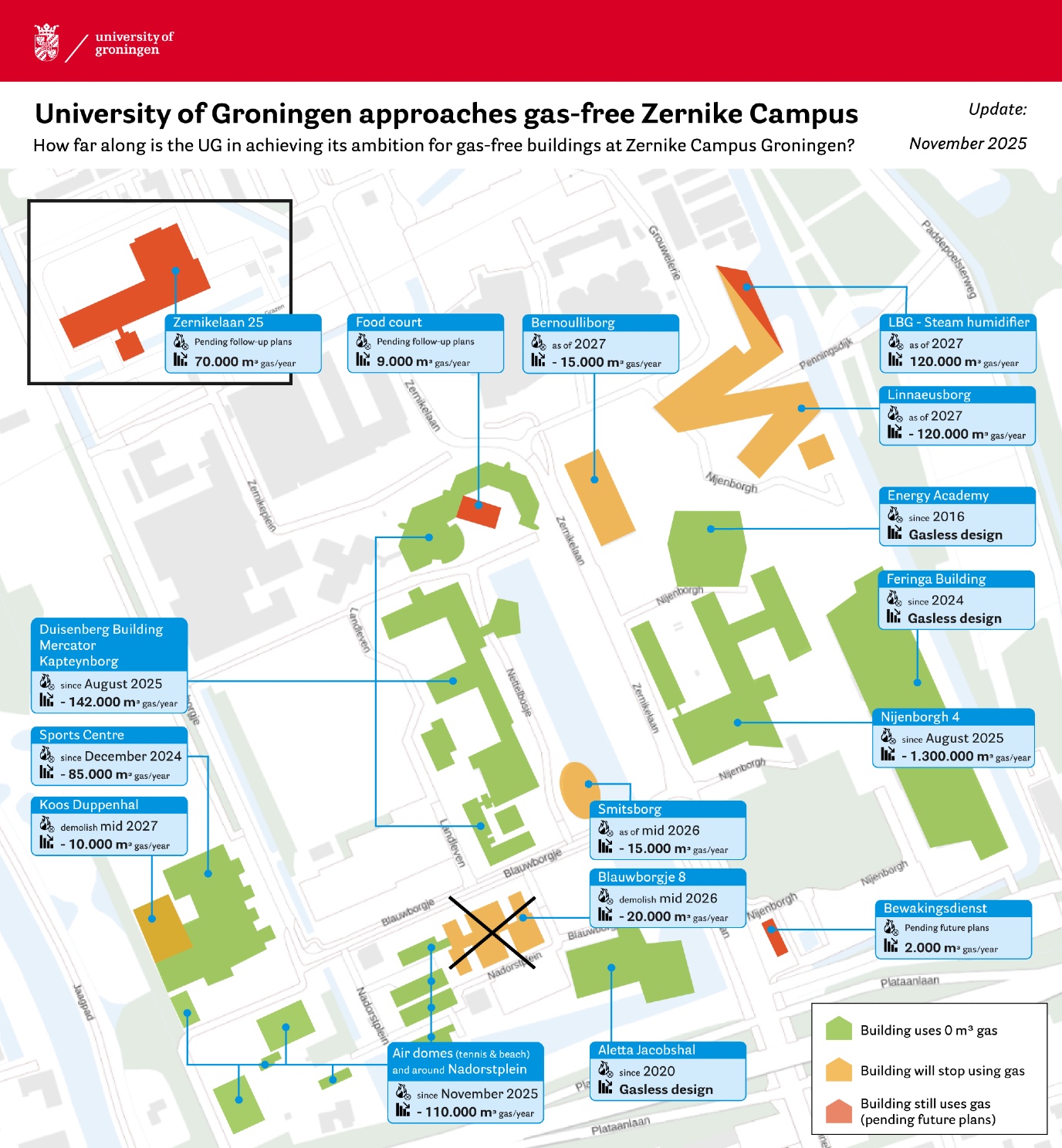
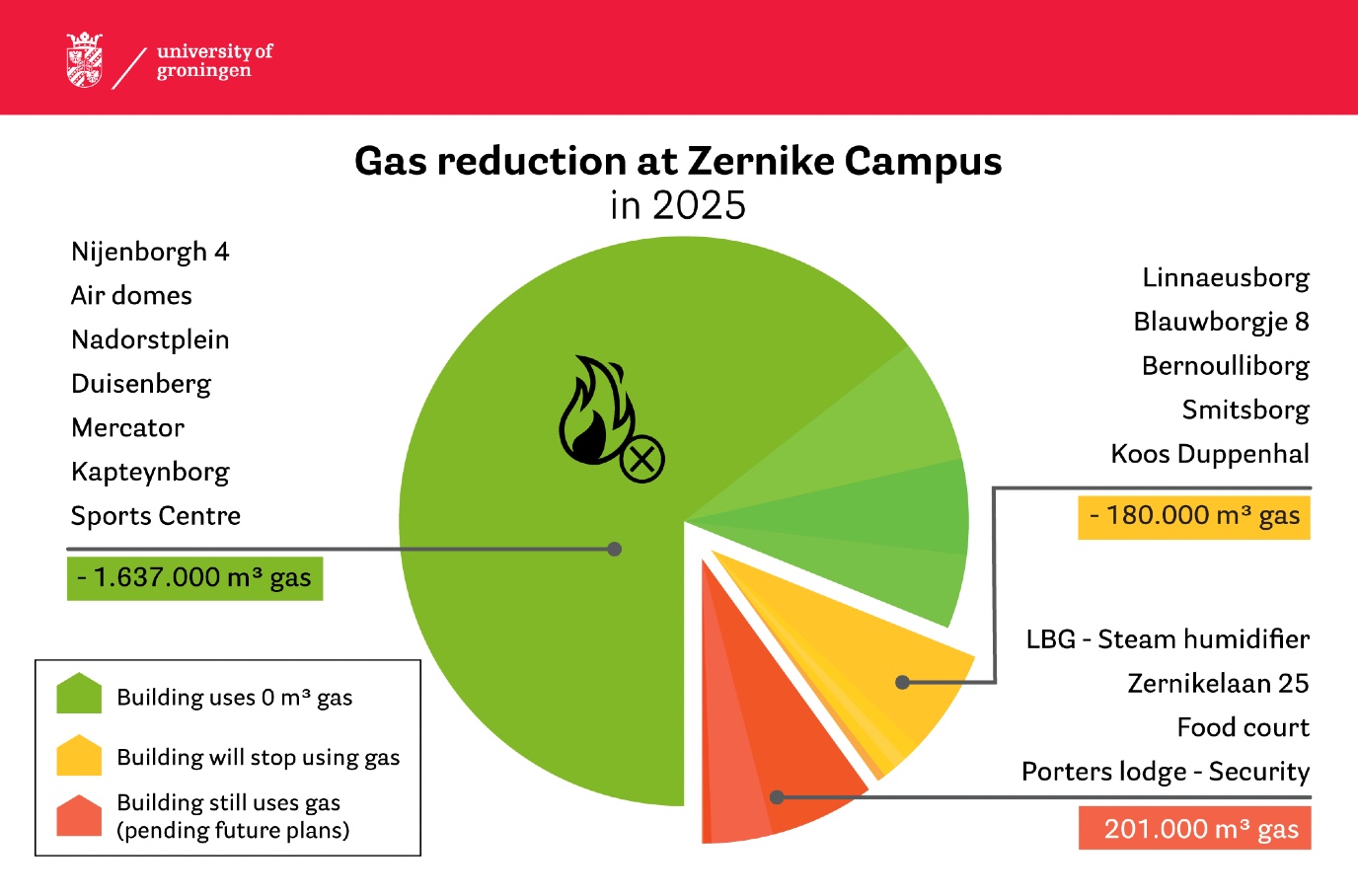
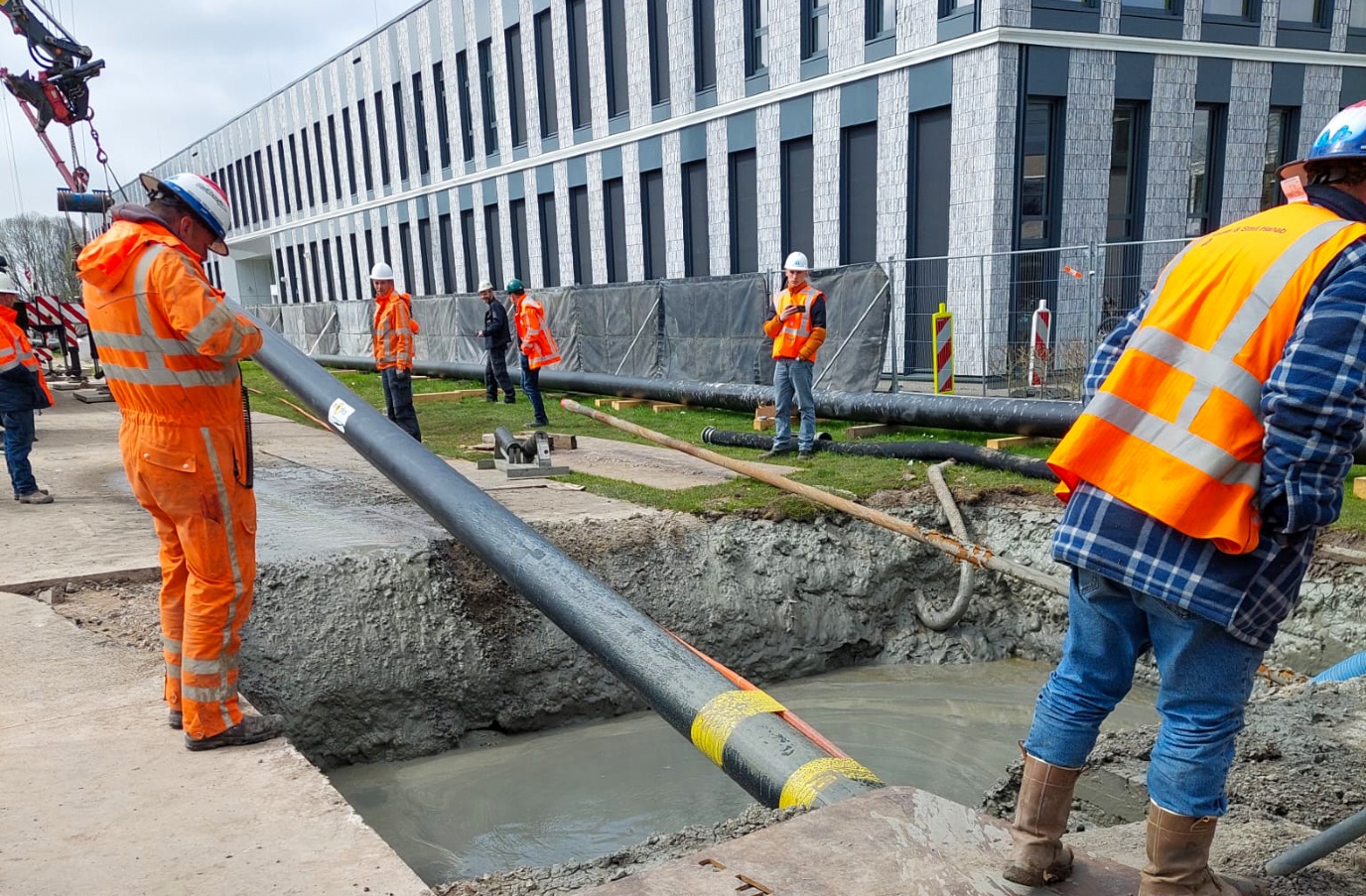
Last year, significant progress was made to expand the heating network, and many UG buildings on the Zernike Campus were connected to Groningen’s district heating network operated by WarmteStad. Buildings such as the Sportcentrum, Duisenberg building, Mercator and Kapteynborg, Nijenborgh 4, the air domes (for beach volley and tennis) and UG buildings around Nadorstplein no longer require natural gas for heating. This saves UG over 1.6 million m³ of natural gas annually, equivalent to a reduction of 2,950 tons of CO₂.
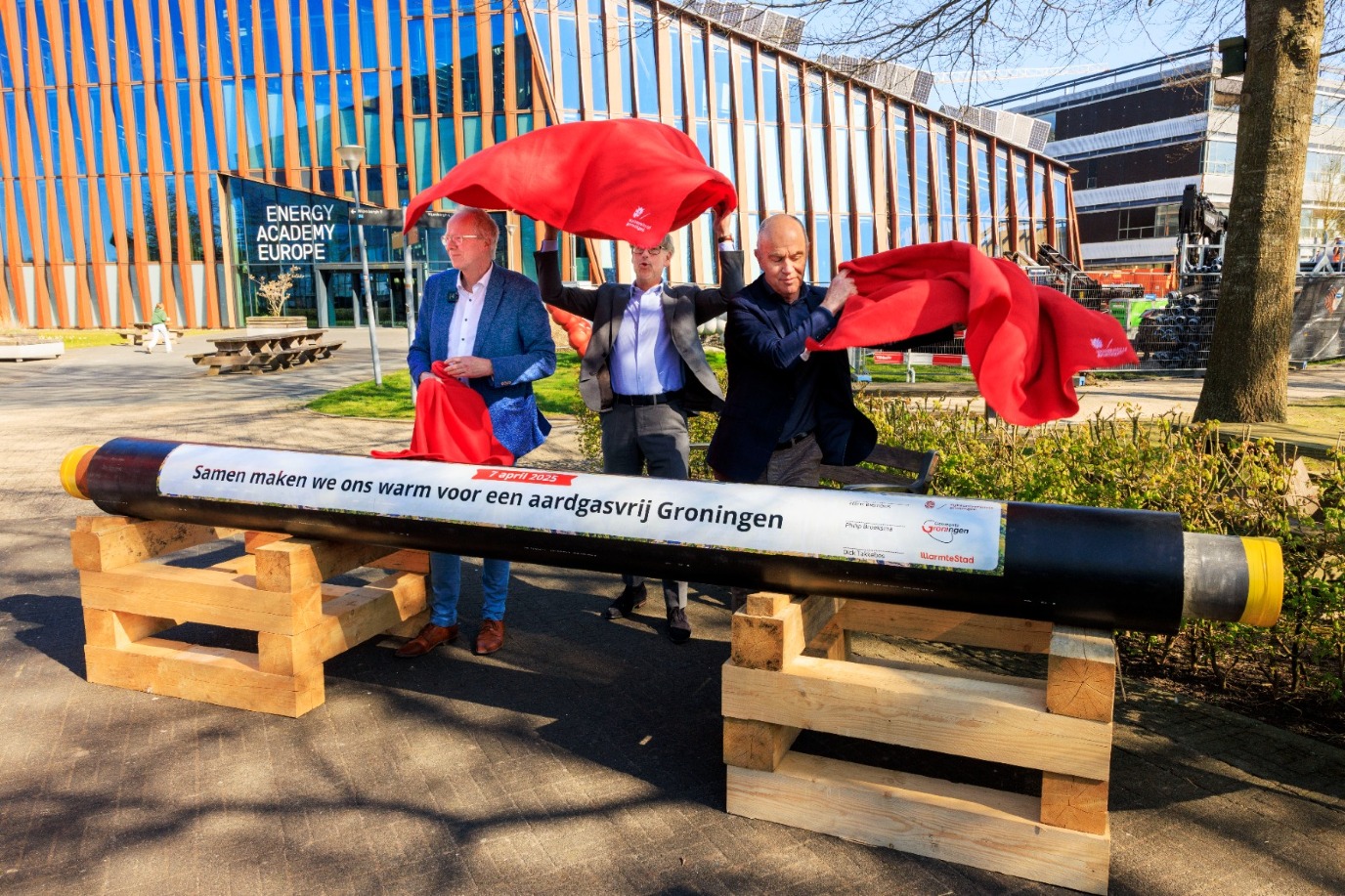
Sustainable campus
With these developments, UG is steadily approaching its previously set goal of making all buildings on the Zernike Campus gas-free by 2026. The collaboration with WarmteStad proves to be a crucial link in making the campus more sustainable and reducing dependence on fossil fuels.
“This milestone shows how we are working together to build a more sustainable campus,” says Eise Ebbelink of UG’s Real Estate Organization. “The road closures and detours over the past period were sometimes challenging, but they have led to this wonderful result. We are particularly pleased that the transition has gone so smoothly and that the sustainable solutions are already proving their value. Achieving this without compromising comfort or continuity is a remarkable accomplishment. We look forward with confidence to the next steps in this sustainability process.”
Further gas reduction
UG has concrete plans to make the Bernoulliborg, Linnaeusborg (mostly), and Smitsborg gas-free within two years. Additionally, Blauwborgje 8 and the Koos Duppenhal (Sportcentrum) are scheduled for demolition. With these measures, the university will save an additional 180,000 m³ of natural gas annually. After completion, an estimated 200,000 m³ of gas consumption will remain on the Zernike Campus, requiring further plans to reduce gas usage. UG is also working on additional measures at the Healthy Ageing Campus and in the city center to minimize gas consumption.
About WarmteStad
WarmteStad, established by the Municipality of Groningen and Waterbedrijf Groningen, supports the city’s goal of becoming CO₂-neutral. To achieve this, WarmteStad is expanding the district heating network, which is powered by sustainable sources such as residual heat from data centers and WarmteCentrale Zernike. These sources are being further developed, including the newly built Zonnewarmtepark Dokwerd, one of Europe’s largest solar thermal parks, adding sustainable heat to the network. Currently 9,000 households and buildings are connected to WarmteStad and the company is also involved in developing new urban areas like Stadshaven and Suikerzijde.
Energy & Sustainability program
The connection to WarmteStad is part of UG’s Energy & Sustainability Program. This program focuses on significantly reducing energy consumption, phasing out fossil fuels, and investing in sustainable energy generation, such as geothermal, solar, and wind energy.
More news
-
-
03 September 2026
Ming Cao reappointed as scientific director of the Jantina Tammes School
-
01 September 2026
Evrim Ursavas appointed scientific director Wubbo Ockels School