

Rethinking commitment in international business through a ‘high involvement, low investment’ foreign operating mode
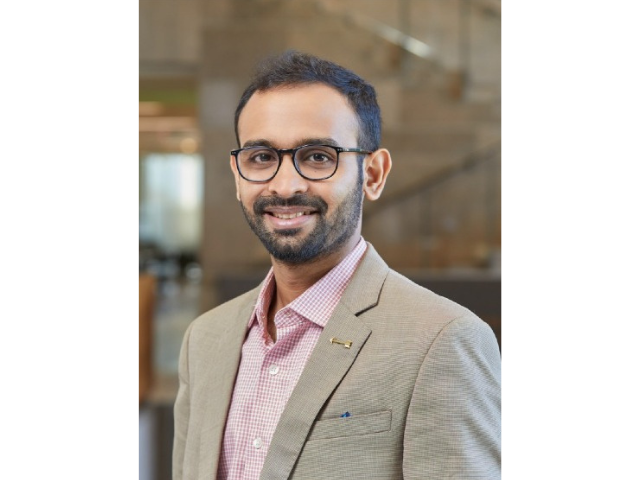
How can multinational enterprises (MNEs) succeed abroad without making major foreign investments? This is a question central to Assistant Professor Rishiraj Kashyap’s research, in which he studies MNE strategies in emerging markets. In a recent paper published in Journal of International Business Studies, FEB researcher Kashyap and his co-authors study Indian multinational enterprises operating in emerging markets and show how many use a “high involvement, low investment” model.
Rather than relying mainly on subsidiaries or acquisitions, MNE’s using a high involvement, low investment model work through local partners while remaining deeply involved in selling, service, training, and growth planning. In their paper, Kashyap and co-authors Andreas Schotter (Vienna University of Economics and Business), Prakash Satyavageeswaran (Indian Institute of Management Udaipur), and Elizabeth L. Rose (Indian Institute of Management Udaipur) explain how this people-intensive approach can help firms build trust, access local networks, and sustain successful foreign operations over long periods.
Intrigued by a puzzle in international business, Kashyap and co-authors decided to start studying the topic. “Established theory often suggests that when firms depend on local relationships and market knowledge abroad, they should prefer equity ownership or direct investment. Yet in practice, many Indian firms seemed to be succeeding in emerging markets through long-term contractual partnerships instead. That raised an important question: how were these arrangements working so well despite theory predicting they should be fragile? We wanted to uncover the managerial processes behind this pattern and better understand how firms can operate successfully abroad with relatively low investment.”
Investing managerial effort instead of capital
The researchers found that foreign success does not always require high financial investment. In many emerging markets, Indian multinationals succeed by investing managerial effort instead of capital. These MNE’s work closely with local partners, help them generate demand, train their staff, support customers directly, and build long-term trust. Kashyap: “This high involvement makes non-equity partnerships much more effective and durable than many theories would predict. Put simply, firms can sometimes do very well abroad not by owning more, but by being more present, more supportive, and more committed.”
The researchers were surprised to find how much time and effort these firms put into partner support and how long these non-equity relationships could last. “Even without owning local operations, some managers were heavily involved in joint selling, technical problem-solving, marketing events, and even helping partners redesign their internal structures. In several cases these non-equity relationships between partners lasted well over a decade. This is striking because standard theory often treats such arrangements as unstable. Instead, we found that they can be highly durable when firms actively build trust and stay closely engaged.”
Rethinking commitment in international business
Their findings lead the researchers to believe that we need to rethink what “commitment” in international business really means, which is usually measured in terms of capital, ownership, or Foreign Direct Investment (FDI). “Our findings show that managerial involvement is another important form of commitment and can be highly effective, especially in uncertain emerging markets. This matters for firms looking to expand internationally without taking on large irreversible risks. It also suggests that policymakers and scholars should pay more attention to non-equity forms of internationalization, which may be more resilient and more common than conventional theory assumes,” Kashyap states.
Rethinking commitment in international business matters because it shapes how firms create jobs, build business ecosystems, and deliver products and services in emerging markets. Kashyap: “When foreign firms work effectively through local partners rather than bypassing them, they can strengthen local capabilities, transfer knowledge, and support entrepreneurial growth. Our study also shows that trust, training, and long-term collaboration can matter as much as financial investment. That has societal relevance in a world where many countries want international business engagement, but also want local firms to benefit rather than be displaced by large foreign investors.”
Does the model work in other contexts?
For future research, Kashyap is interested in exploring whether and when this model travels beyond the contexts the researchers studied. “For example, can high involvement, low investment work equally well for firms from other countries, or in developed markets where institutions are stronger and relationships may matter differently?” He is also interested in the limits of the model: when does partner trust begin to erode, especially as firms expand and seek more direct local presence? “More broadly, I would like to understand how geopolitical risk and regulatory uncertainty are reshaping foreign operating modes today.”
Questions? Please contact Rishiraj Kashyap.
Kashyap, R., Schotter, A., Satyavageeswaran, P. et al. High involvement–low investment foreign operating mode: considering Indian MNEs in emerging markets. J Int Bus Stud (2026). https://doi.org/10.1057/s41267-026-00842-1