

Impact case: improving menstrual health in low-income and crisis-affected settings

Menstrual health is a significant global health challenge, especially in low-income and crisis-affected settings. Poor menstrual hygiene management (MHM) increases the risk of infections, reinforces stigma, and negatively impacts women’s education, labor participation, and well-being. Professor Kristina Czura’s research identifies key barriers to hygienic MHM – such as lack of information, product availability, and cultural taboos – and demonstrates how evidence-based interventions can drive meaningful change.
Through collaborations with NGOs, industry partners, and local communities, Czura's research has informed the design and distribution of menstrual health products, improved educational interventions, and expanded access to resources for women in need. The findings have not only enhanced female well-being, but also inspired innovative product designs and scaled up outreach efforts, benefiting thousands of women across Bangladesh, Nepal, Mali, the Central African Republic (CAR), Somaliland, and beyond.
Underpinning Research: Understanding Barriers and Testing Solutions
Over the past 8 years, Czura has conducted several field experiments in different parts of the world, collaborating with NGO’s such as Oxfam and Nidisi. In a large randomized field experiment from 2018 to 2020, Czura assessed the effects of distributing sanitary pads and delivering educational information sessions to female garment workers in Bangladesh on their health and labor outcomes. The study revealed several key insights:
-
Educational interventions improved hygienic menstrual health practices, especially for those using traditional menstrual materials.
-
Access to modern menstrual products increased usage, leading to better health outcomes.
-
Labor outcomes (such as absenteeism and earnings) were not significantly affected, likely due to the high-pressure work environment.
-
Health improvements were notable, with a reduction in urinary tract infections (UTIs) among participants
In another study in Bangladesh, Czura looked at menstrual stigma and taboos among female artisan workers. The study found that information campaigns increased knowledge about menstruation and shifted social norms, resulting in fewer mobility restrictions for women. However, deep-rooted beliefs about harmful practices (e.g., washing menstrual cloths on latrine floors or storing them damp) persisted. This illustrates how stigma and cultural taboos continue to constrain proper menstrual hygiene practices, such as washing menstrual cloths in non-private spaces, and it highlights the limitations of information alone in changing behavior.
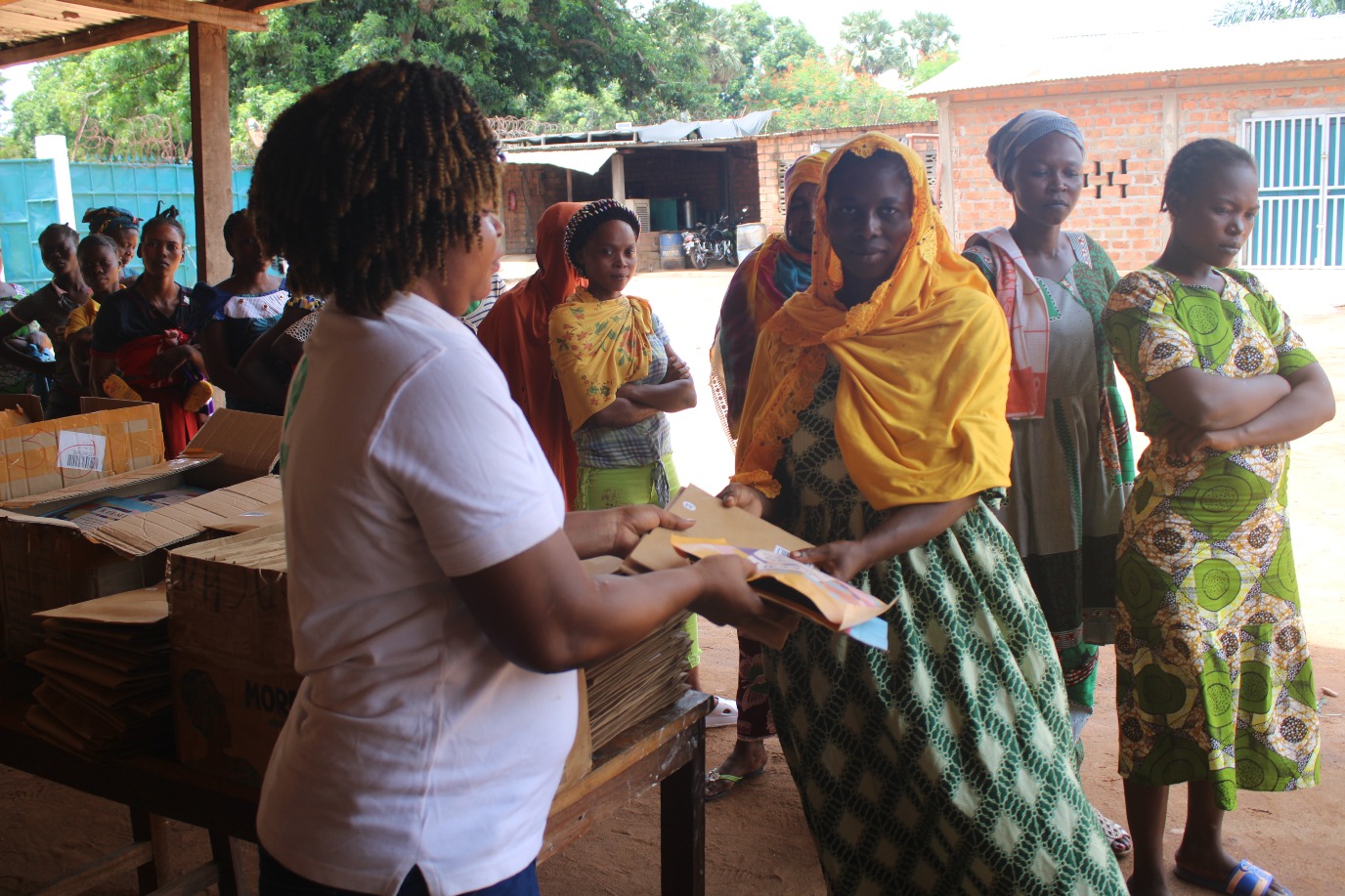
Since 2023, Czura partners with Oxfam to evaluate the effects of educational interventions for women and men and the distribution of innovative menstrual products – menstrual underwear – in displacement camps in Mali, CAR, and Somaliland. The first results suggests that satisfaction with the menstrual underwear is high, nearly all women have adopted menstrual underwear to manage their menstruation, and UTI symptoms have decreased. In ongoing research with the NGO Nidisi, Czura sheds light on harmful social norms and stigma, and how these can be addressed in school-based anti-stigma information campaigns in Nepal. The research finds that excluding boys results in a significant backlash, including reduced support from boys against menstrual discrimination. Additionally, social image concerns among peers increase support for ending harmful menstrual norms.
Conclusion: Research-Driven Impact and Future Directions
This body of research has led to significant improvements in menstrual health programs. By identifying critical gaps and testing innovative solutions, the work has:
-
Enhanced female well-being through reduced UTIs, increased knowledge, and improved hygiene practices.
-
Informed product design, leading to more effective, stigma-sensitive menstrual health products, such as washing and drying bags for a discreet and hygienic treatment of menstrual underwear.
-
Improved provision of educational information, addressing stigma and taboos alongside biological facts about menstruation and the hygienic treatment of menstrual products.
-
Expanded outreach, enabling NGOs to scale up distribution and reach more women in need.
The findings highlight the importance of combining education, product innovation, and stigma reduction to address menstrual health challenges comprehensively. Ongoing and future research will continue to explore how involving male household members and adapting interventions to different cultural contexts can further amplify impact.
Ultimately, Czura’s research demonstrates the power of evidence-based approaches in transforming menstrual health outcomes, ensuring dignity, comfort, and better health for women and girls worldwide.

Raissa Azzalini Public Health Advisor Global Humanitarian Team, Oxfam
“At Oxfam, addressing menstrual health in crisis settings is vital for women’s dignity and safety. Our collaboration with Kristina Czura, her research team, and Reemi has been transformative. Traditionally, our menstrual hygiene kits include items such as soap, shampoo, detergent and disposable sanitary pads. Disposable pads posed supply and waste challenges, while reusable options often lacked quality. Menstrual underwear emerged as a sustainable, highquality alternative, but adoption required evidence. Kristina’s research provided that evidence. By engaging with women in Mali, Somaliland, and the Central African Republic, we learned that women overwhelmingly prefer menstrual underwear for its comfort and durability. This empowered Oxfam to scale distribution – even in rapid-response crises like in Gaza and Lebanon – where skepticism once existed. This partnership has reshaped our approach, placing women’s preferences and quality at the forefront. We’re now advocating for these innovations globally, confident in their impact. Oxfam is deeply grateful for this collaboration, which has advanced menstrual health and dignity for women in the world’s most vulnerable settings.”

Kristina Czura is Professor of Development Economics within FEB’s Department of Economics, Econometrics, and Finance. Her expertise is in the field of Development Economics, Experimental Economics, Applied Micro-economics and Behavioral Economics. Her work is informed by behavioral insights of how psychological, cultural and social factors influence economic decisions. She obtained her PhD at the Goethe University Frankfurt and previously held positions at the University of Munich (LMU München), the European University Institute (EUI), and the CERDI - Université d'Auvergne, France.