Narrative and Authority
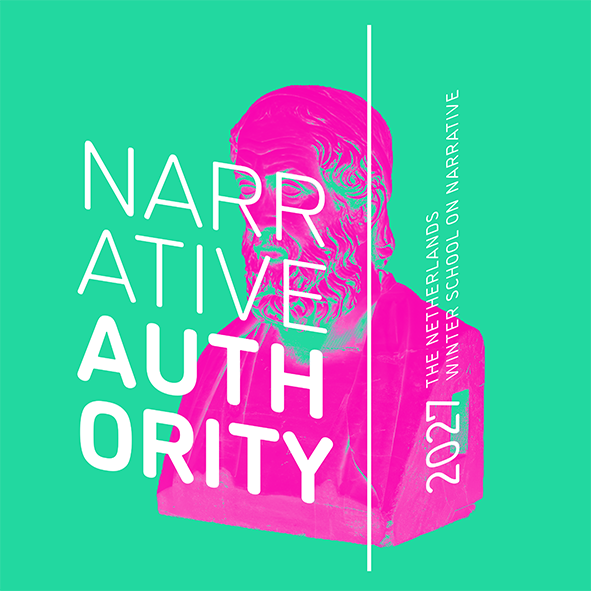
Personal storytelling is everywhere. Whether in marketing, consultancy, counselling, journalism, or politics, people are constantly sharing their or others’ stories to make a point. Storytelling is used, on a daily basis and almost automatically, for moral positioning, conveying experiential knowledge, and engaging in public identity work.
We take a step back to reflect, from a critical distance, on the relationship between narrative and authority. Who has the right to tell stories, and which stories may be told? How is narrative used, overtly or insidiously, to establish, or undermine authority?
Much has been made of the emancipatory potential of stories, of how narratives carry authority of experience, thereby giving voice to the marginalized. With the global rise of illiberal politics and authoritarianism, however, it has become clear that narrative can be a tool for marginalization and oppression just as well.
Teaming up with the AUTOSTORY project, the Netherlands Winter School on Narrative offers a one-week course consisting of lectures and workshops in which this fraught relationship between narrative and authority is examined.
The set-up of the winter school is strongly interdisciplinary, combining a variety of perspectives on narrative, from diverse fields such as psychology, literary and cultural studies, and cognitive science.
On the final day, the symposium “Authors of the Story Economy” will offer presentations on authorship and storytelling in the 21st-century story economy.
Practical information
|
Dates & location
|
18 - 22 January 2027, Groningen, Netherlands |
|
Level
|
PhD students; Master students; early career researchers; professionals interested in storytelling |
|
Fees
The fee includes: access to all learning activities; lunches from Monday to Friday; drinks on Monday; dinner on Wednesday
For the 2027 edition, the affiliated organisations are Twente University, Amsterdam University of Applied Sciences, Tampere University, University of New South Wales, King’s College London, University of Turku, Helsinki University, Aarhus University, Shanghai International University and Sheffield Hallam University
|
€ 150 for University of Groningen students and staff € 325 for staff and students of affiliated organisations (excluding housing) € 400 for staff and students of affiliated organisations including housing in a dormitory from Sunday (17 January) to (Friday 22 January) € 425 - regular participation fee (excluding housing)
€ 500 - regular participation fee including housing in a dormitory from Sunday (17 January) to (Friday 22 January)
|
|
Academic committee
|
Dr. M. Mäkelä
Dr. S.J. Moenandar |
|
Contact
|
narrative.winterschool rug.nl
|
Target group
Who is this summer school for?
This summer school is designed for PhD students, Master students, early career researchers and professionals interested in storytelling.
It is expected that the participants have a sufficient command of the English language to actively participate in the discussions and to present their own work in English.
Learning outcomes & workload
Learning outcomes
Upon completing the summer school, the participants will be able to:
1. Assess current debates about links between narrative and authority.
2. Argue for the necessity of “narrative literacy” in specific circumstances.
3. Appraise a wide array of narrative theories
4. Argue for the relevance and feasibility of research projects on the interrelatedness of narrative and authority in a way that testifies of informed critical thinking.
Workload
All participants in the winter school will receive a Certificate of Attendance.
Participants who wish to earn study credits through the winter school will be given an additional assignment. This assignment will be evaluated by the winter school staff, and if deemed satisfactory, the participant will receive a signed statement indicating a workload of 140 hours (28 hours corresponds to 1 ECTS). Students can then apply to the relevant authorities at their home institutions for recognition of these credits. Consequently, the final decision regarding the awarding of credits lies with their home institutions. We will be happy to provide any further information that may be requested in addition to the Certificate of Attendance.
Course schedule
Please find the preliminary course schedule below.
Lecturer bios
Speakers include Paul Dawson, Alexandra Georgakopoulou, Alison Gibbons, Mengchen Lang, Maria Mäkelä, Gerben Westerhof, Samuli Björninen, Anneke Sools, Stefan Kjerkegaard, Sjoerd-Jeroen Moenandar, and Steven Willemsen.
Application
To apply, please fill out the online application form. Please note that you will be asked to upload the following documents:
-
CV (brief overview of professional background)
-
Letter of motivation (max 1 page)
The application deadline is 15 November 2026.
Partners