The Future of Climate Adaptation
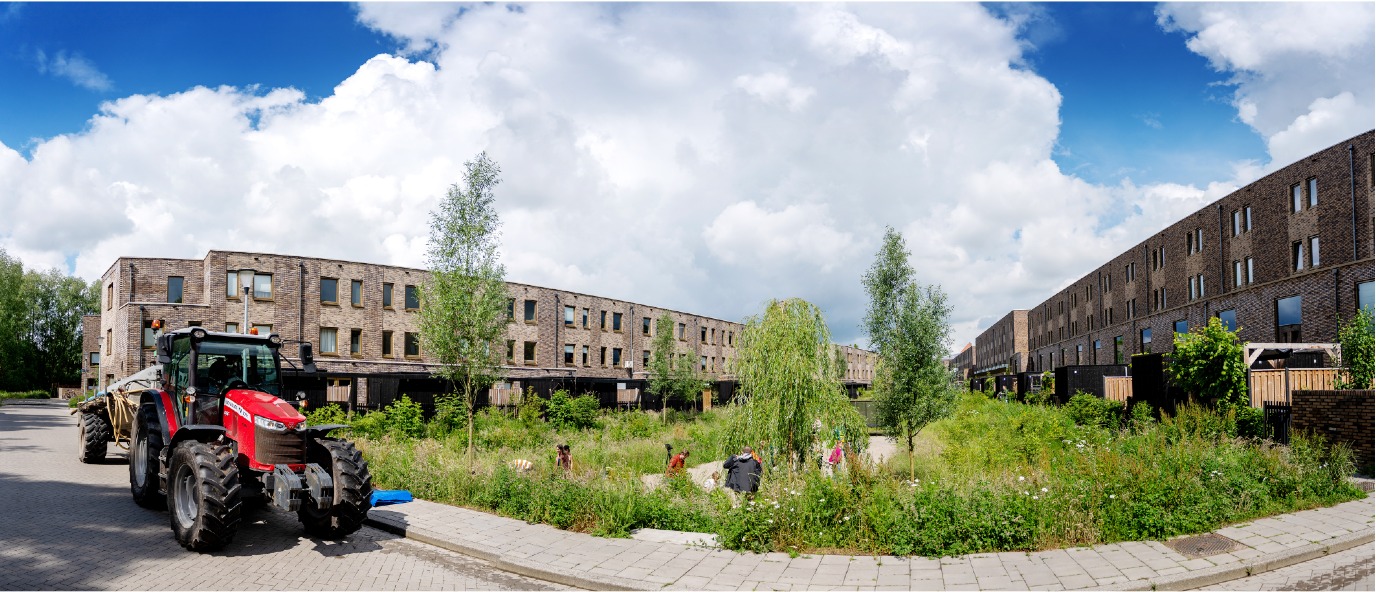
Global climate change is increasing the frequency of extreme weather events, including drought, heatwaves, and heavy rainfall that can cause flooding. Across the world, these events significantly affect livability, food security, economic stability, public health, and safety. Climate adaptation prepares societies and ecosystems to respond effectively to both long-term climate trends and extreme events.
The summer school, organised by Hanze University of Applied Sciences and the University of Groningen in the Netherlands, introduces participants to climate adaptation through an interdisciplinary curriculum covering engineering, economic, spatial, governance, and ecological perspectives.
Participants will address challenges and research questions linked to the Floating Future Project, which explores large-scale floating developments in the Netherlands as climate adaptation and mitigation strategies. These developments may include housing, public facilities, energy generation, and food production. Building on water offers solutions to space scarcity, land subsidence, and sea level rise. Floating infrastructure also enables experimentation with dynamic, modular, and mobile structures that adapt to changing environmental conditions. Participants will analyse case studies, such as floating solar installations and floating neighbourhoods in coastal, inland, offshore, and delta regions, to assess the resilience of floating solutions.
Lecturers from the RUG and Hanze will guide students through the complexities of their respective disciplines. This theoretical framework is complemented by immersive experiential learning, including engagements with regional stakeholders and site visits to Hanze’s cutting-edge test facilities. There, students will examine practical green infrastructure innovations, such as bio-swales and advanced pavements, and then present their collaborative research findings to their peers.
Practical information
|
Dates
|
24 - 28 August 2026
|
|
Location
|
Groningen, the Netherlands
|
|
Level
|
MA/PhD/Postdoc/Practitioners |
|
Fees
including lunches, coffee, and closing dinner for all participants
|
€ 650 Travel, accommodation, and dinner are at the participants’ own expense
|
|
Academic coordinators
|
Maaike de Heij – Wubbo Ockels School /RUG Margo van den Brink & Mac Afee – Spatial Science/ RUG Floris Boogard – Noorderruimte/Hanze University of Applied Sciences
|
|
Contact |
climateadaptation@rug.nl
|
Requirements
Who is this summer school for?
This summer school is for master students, PhD students, postdocs, and practitioners who are interested in the state of the art about both theoretical and practical research and innovation on climate adaptation and its perspectives for the future. The summer school is interesting for participants with a diverse background in disciplines such as spatial science, climate governance, political science, ecology, environmental management and law, built environment, civil engineering.
It is expected that the participants have a sufficient command of the English language to actively participate in the discussions and to present their own work in English.
Learning outcomes
Learning outcomes
After this course, you will be able to:
1. Learn about climate adaptation and mitigation strategies by using floating system solutions.
2. Conduct fundamental and applied research on climate adaptation
3. Design flexible systems for a climate-resilient society by addressing social, economic, and institutional challenges.
4. Address climate adaptation to relevant transitions, such as the energy transition
Workload
-
Preparation: 16 hours
-
Lectures: 32 hours
-
Presentation: 8 hours
Upon successful completion of the programme, the Summer School offers a Certificate of Attendance that mentions the workload of 56 hours (28 hours corresponds to 1 ECTS). Students can apply for recognition of these credits to the relevant authorities in their home institutions, therefore the final decision on awarding credits is at the discretion of their home institutions. We will be happy to provide any necessary information that might be requested in addition to the certificate of attendance.
Application procedure
To apply, kindly fill out the online application form. Please note that you will be asked to upload the following documents:
- Curriculum Vitae (max. 2 pages)
- Motivation letter, clearly stating why you want to join this summer school, what you will bring to the school and what you hope to learn (max. 1 page)
The deadline for application is 8 May 2026. Participants will be informed of the outcome of the selection procedure by 12 May 2026.