Weekend of Science at Campus Fryslân
It’s time for Science Weekend again! Come to the Beurs at Campus Fryslân on Saturday, October 3, to discover some amazing science!
Doors open at 10.30, and we’ll be kicking off at 11.00! After the opening speech by Mátyás, there’ll be loads of fun and interesting activities.
Will we see you on Saturday 3 October?
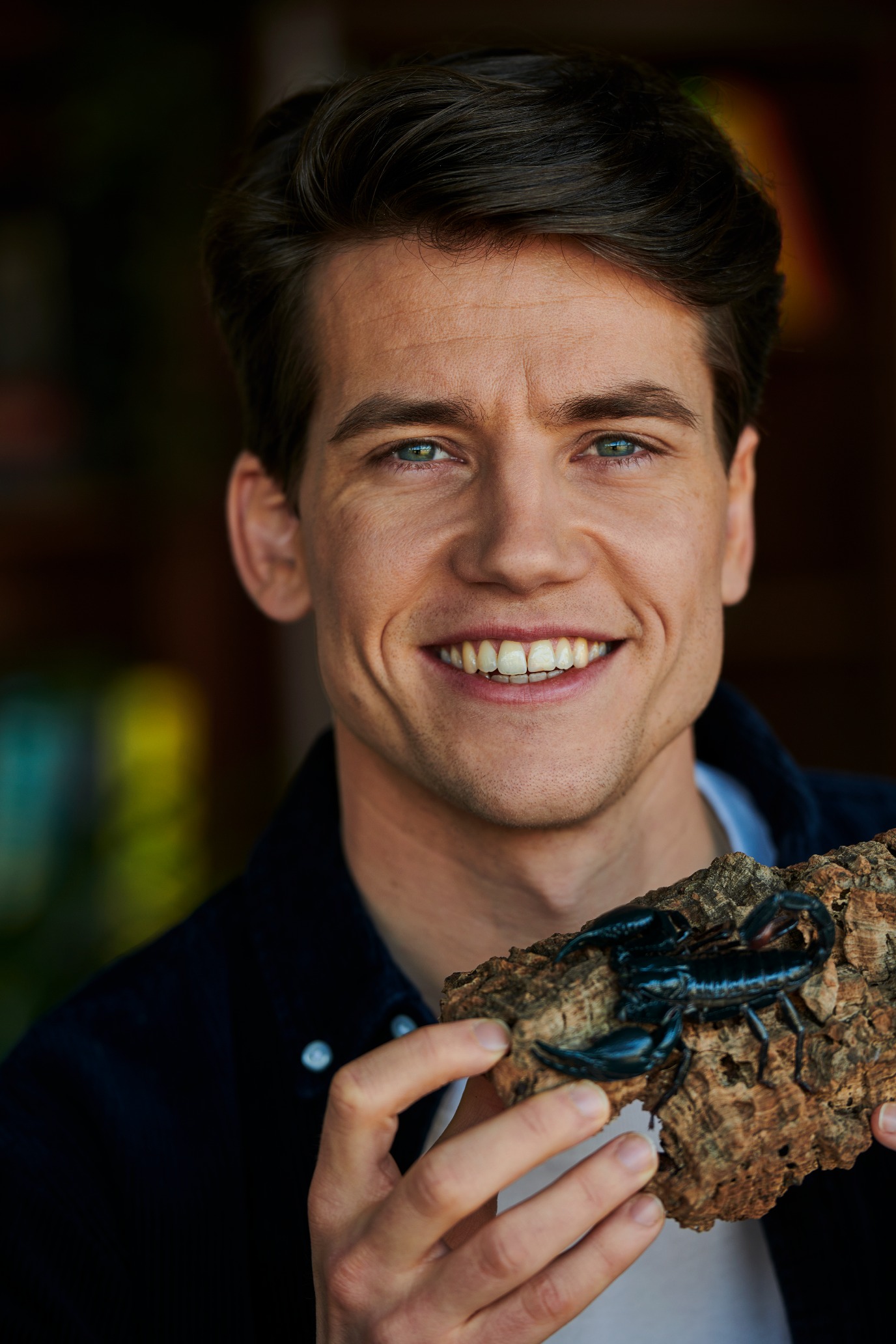
Mátyás Bittenbinder -
Poison in the animal kingdom
Time: 11.00 a.m. - 11.45 a.m.
Poisonous animals are amazing. Do you know why? They don’t have to roar menacingly like a lion or a tiger. They don’t have to be big or strong to protect themselves from attackers. No. Poisonous animals have come up with a different, clever solution: poison. Because imagine if someone broke into your house, tried to steal your candy, or attacked you to eat you. What would you do? Wouldn’t that make you poisonous, too?
About Mátyás Bittenbinder
Mátyás Bittenbinder is a biologist, writer, and a true animal lover. When he was just seven years old, he fell in love with snakes while on vacation. Ever since then, he has been fascinated by nature and loves to share the most exciting stories about animals and plants.
You may know Mátyás from shows like Het Klokhuis and Zin in Zappelin, among others. He wrote the children’s books Poison in the Animal Kingdom and Danger in the Plant Kingdom, in which you discover just how extraordinary and surprising nature is. He also conducts research on snake venom and is committed to protecting nature.
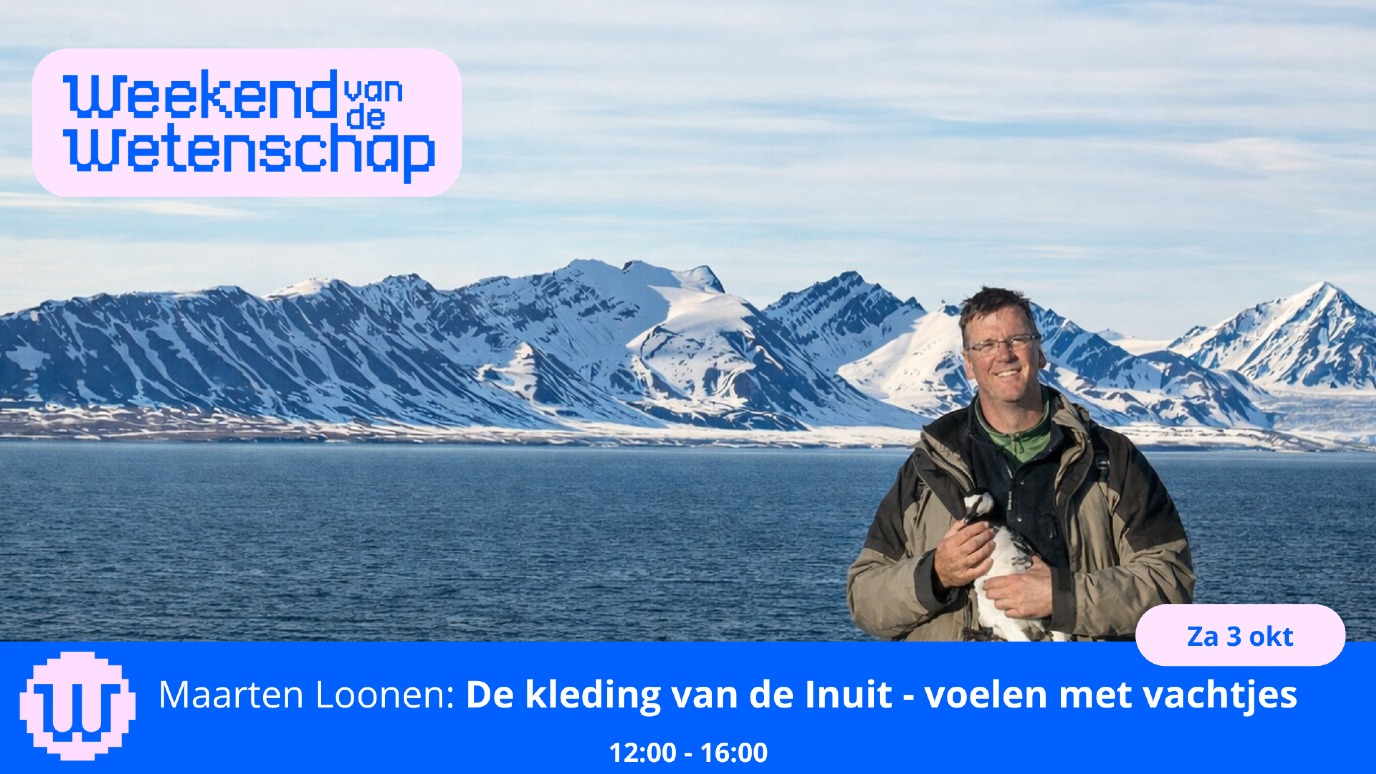
Dr. Maarten Loonen talks about Inuit clothing
Time: 12.00 - 4:00 p.m. (ongoing)
When you’re cold, you put on an extra sweater, and when you go outside, you slip on your gloves. Maybe you even picked them out yourself at the store. What kind of clothes do the Inuit in Greenland and Canada wear when they go hunting? Maarten Loonen knows all about it. He has been traveling to the cold Arctic region for research for 36 years.
Maarten encountered polar bears and arctic foxes, and he conducted research on barnacle geese, among other things. He observes the effects of climate change on their habitat, the Arctic. Maarten often talks about this when he returns to the Netherlands.
Today, Maarten will tell us about how the Inuit dress and make use of the properties of the fur of local animals, such as the arctic fox. You can feel the differences using the materials he has brought along.
Would you like to feel the pelts too? Then come on in to Campus Fryslân and learn all about the clever use of hides and their properties.

Join us on an expedition and discover the North Pole with VR -Arctic Experience
Time: 10.30 a.m. - 4:00 p.m. (ongoing)
The Earth is slowly warming up. We call this climate change. It’s a major problem that’s nowhere more visible than at the North Pole. That’s why a group of scientists is going on an expedition to find out how we can save the North Pole. There’s still room for a few more expedition members… We’ll take you on a VR journey to the far north, 3,000 kilometers from the Netherlands. You’ll see with your own eyes what’s happening right now to the ice, the glaciers, and the animals. And you’ll discover what we can do to save this beautiful region.
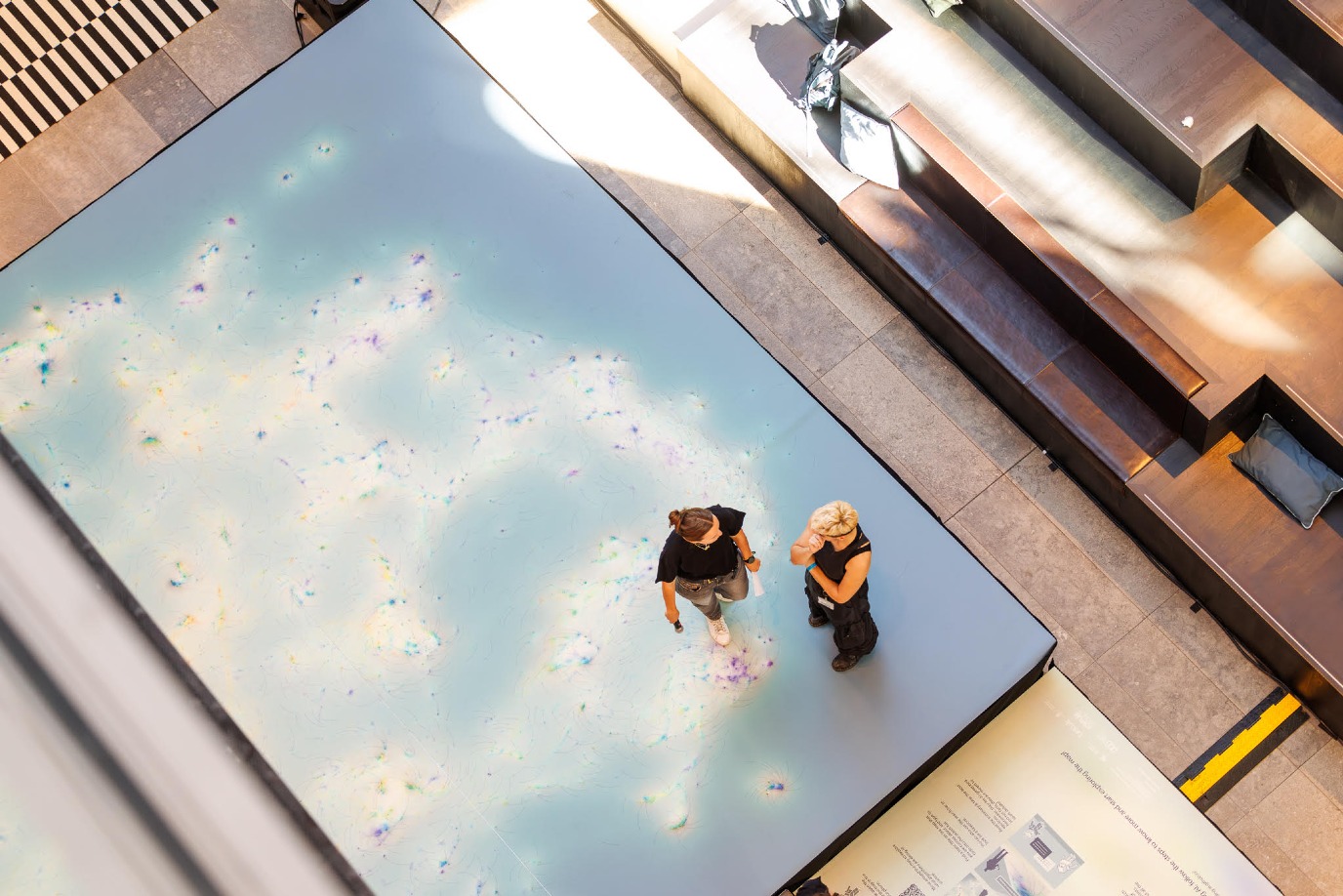
Step into the world of smart computers!
Matilde Ficozzi and dr. Dario Rodighiero (RUG/Campus Fryslân)
Time: 12.00 - 4:00 p.m. (ongoing)
Discover Grounding AI, a unique interactive activity where you can walk across a giant floor map that shows how scientists around the world explore artificial intelligence (AI).
As you move through this walkable landscape of ideas, you will discover how smart computer systems connect different topics and uncover surprising links between them. Along the way, you can ask questions to special AI assistants built into the map, helping you learn more as you explore.
You do not need any previous knowledge about AI. By walking, looking, and discovering for yourself, you will learn how algorithms organise information and help scientists make sense of huge amounts of research.
This interactive installation was created by researchers from University of Groningen and Aalborg University, and has already been presented at the Danish Museum of Science and Technology and Forum Groningen.
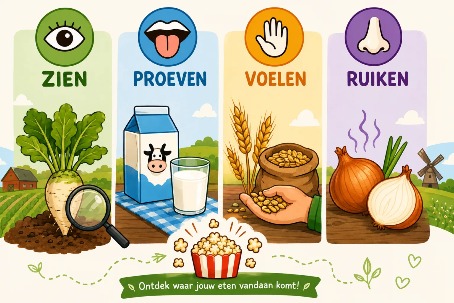
Taste, look, smell, and feel: discover what you’re eating!
By the Centre for Sustainable Agriculture Transition (RUG/Campus Fryslân)
Time: 12:00 – 4:00 p.m. (ongoing)
What are french fries and bread made of? Which crop makes you cry? What is made from sugar beets? Do you know what you’re eating? Did you know that popcorn is made from corn?
Discover and taste it for yourself today at the University of Groningen’s Center for Sustainable Agricultural Transition in the Beurs.
Experience firsthand what agricultural products look, feel, smell, and taste like! Learn more about farms, the countryside, and the origins of your daily food.
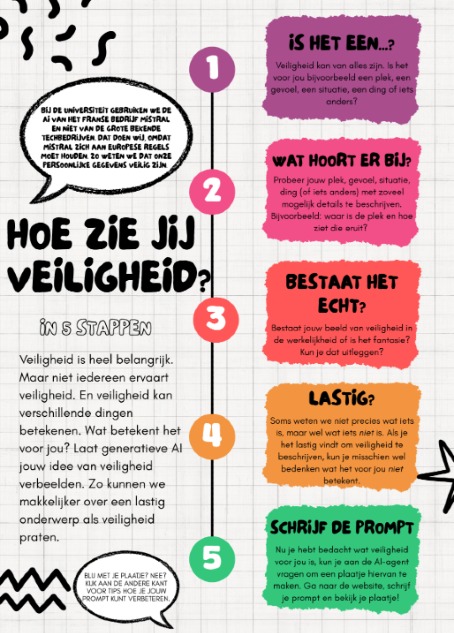
How do you view safety? Let AI help you capture your idea of safety
By Natascha van der Zwan (University of Groningen/Campus Fryslân)
Time: Ungoing between 12:15 - 1:15, and 2:00 - 3:30 p.m. 10 - 15 minutes per session.
Safety is very important. But not everyone feels safe. And safety can mean different things to different people. What does safety mean to you?
Let generative AI visualize your idea of safety. This makes it easier for us to talk about a difficult topic like safety.
Natascha will take you on a journey into the world of AI. You’ll learn how it works, and you’ll get to take your image home with you. For everyone ages 8 and up!
Please note: it is biligual (Dutch and English)
Omrin VR Waste Experience - The journey of a plastic bottle
Tijd: 12:00 – 4:00 p.m. (ongoing)
From soda bottle to new raw material — discover what happens after you hand in your bottle! With a VR headset on your head, you literally step *into* the adventure and follow every step of the recycling process as if you were there yourself. You see how your bottle is sorted, processed, and transformed into a new product.
Join us on this interactive mini-adventure, especially for children who are curious about what happens behind the scenes. It feels like you are standing in the factory yourself, watching the machines run, and experiencing up close how waste gets a second life. Learning, playing, and experiencing come together here!
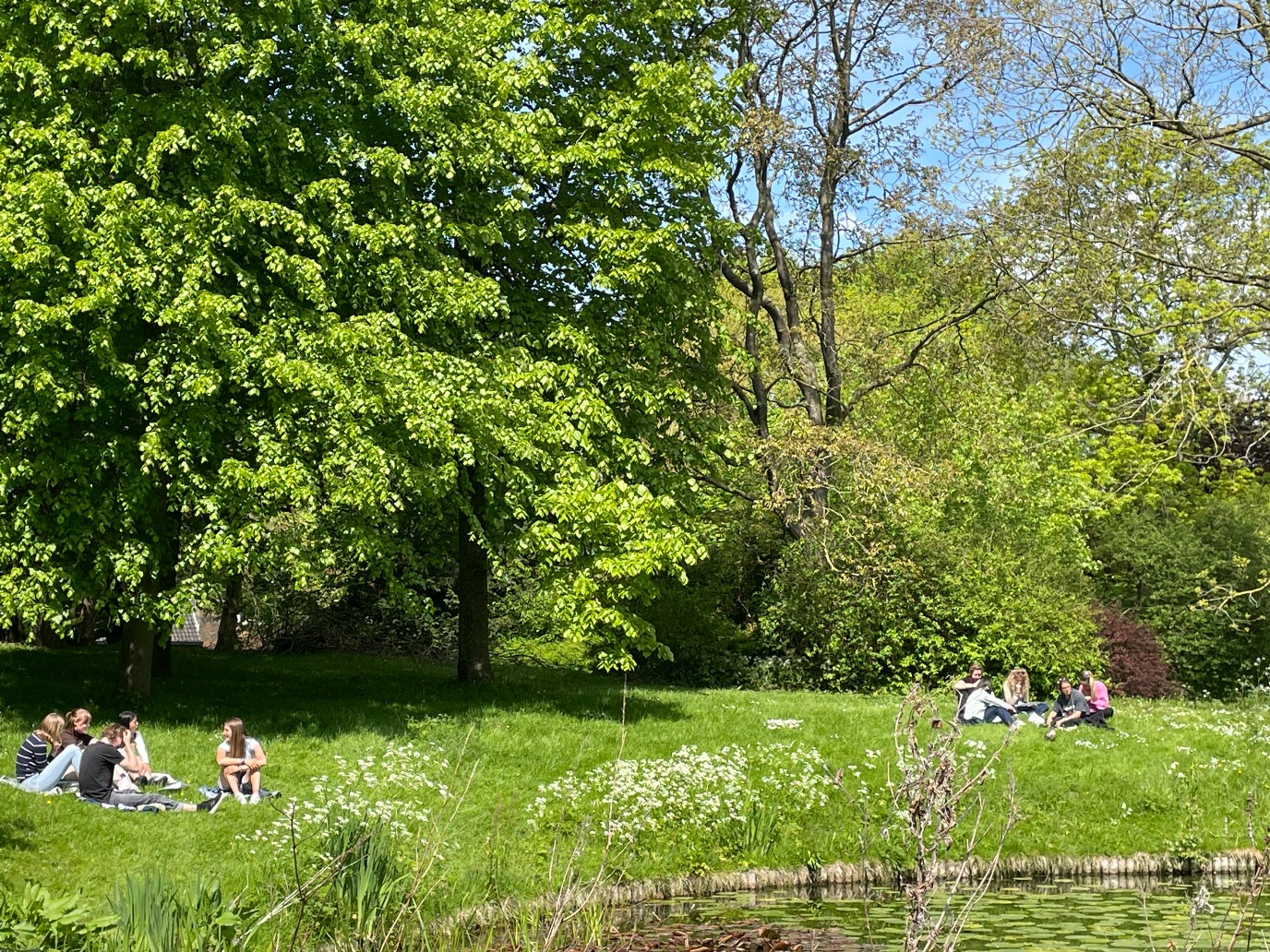
Once upon a forest. The past, present and future of forest in the Netherlands
Lecture by Carol Garzon Lopez (RUG/Campus Fryslân)
Time: 2.00 p.m. - 2.30 p.m.
The relation between societies and forests has evolved, from those diverse forests portrayed in famous dutch landscape paintings, to the small patches of nonnative forest we see today. More and more, we are starting to recognize its importance for climate and for our wellbeing and, starting to revive our connection to them in cities like Leeuwarden, through its parks and monumental trees. During this talk, we will rediscover the past, learn about the present and imagine the future of our connections with forests in The Netherlands.
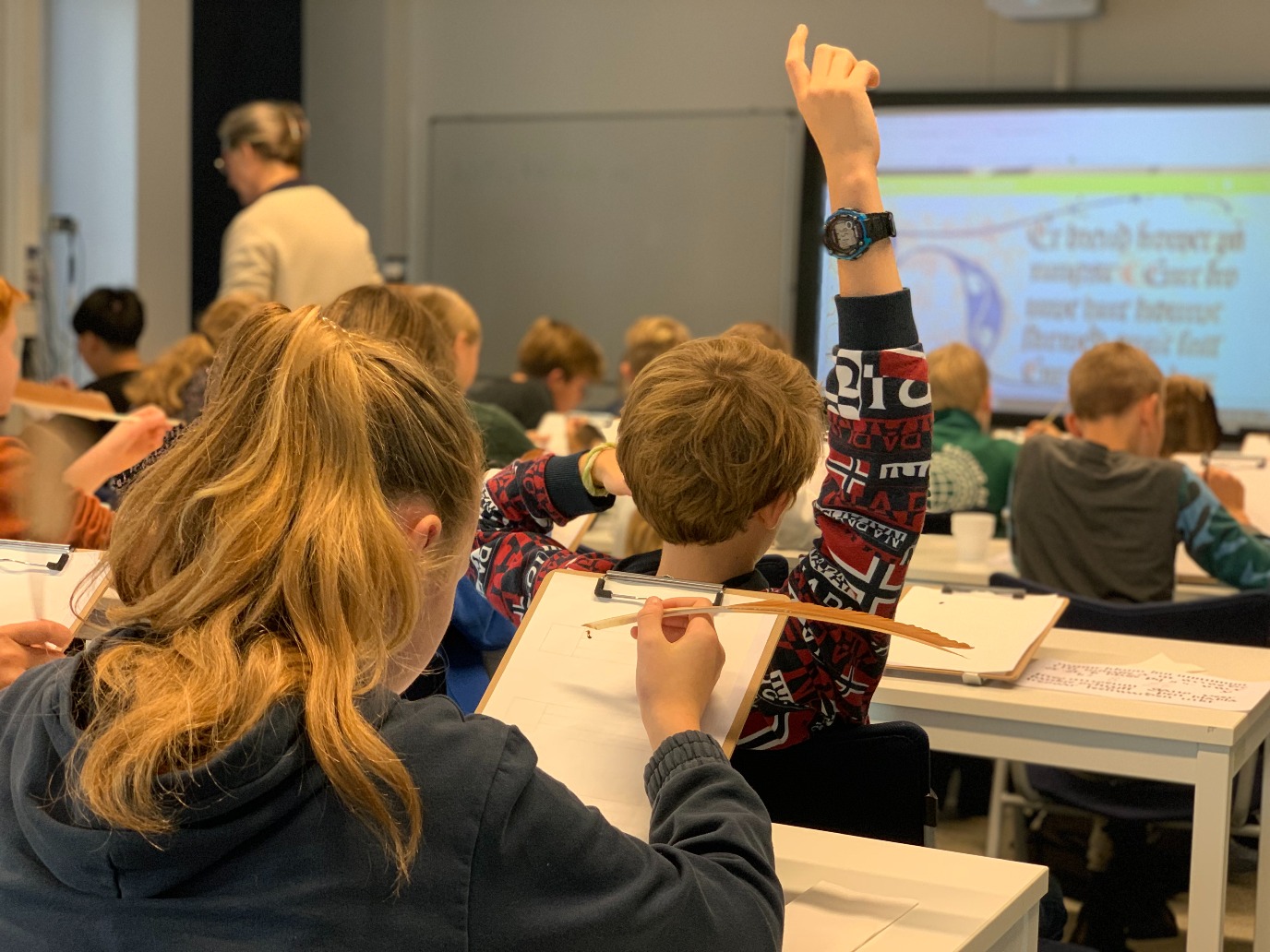
Monastic Script Workshop—How Do You Write with a Quill Pen?
This workshop is led by Jacob Roep (Tresoar).
Time: 12:00–12:45, 12:45–1:30, 1:30–2:15, 2:15–3:00, and 3:00–3:45 p.m.
How were ancient manuscripts created in the Middle Ages? Who was able to write during that time? You’ll discover all of this at Tresoar’s workshop on monastic script. Write with a quill just as the monks did in the Middle Ages.
We’ll be writing in the Carolingian script, which originated around the year 800. Discover how parchment feels and compare it to paper. The goal of this workshop is to show how Tresoar’s oldest manuscripts were created and preserved. Tresoar’s oldest manuscript is also written in Carolingian script and dates back to the year 836!
Open to everyone ages 8 and up!
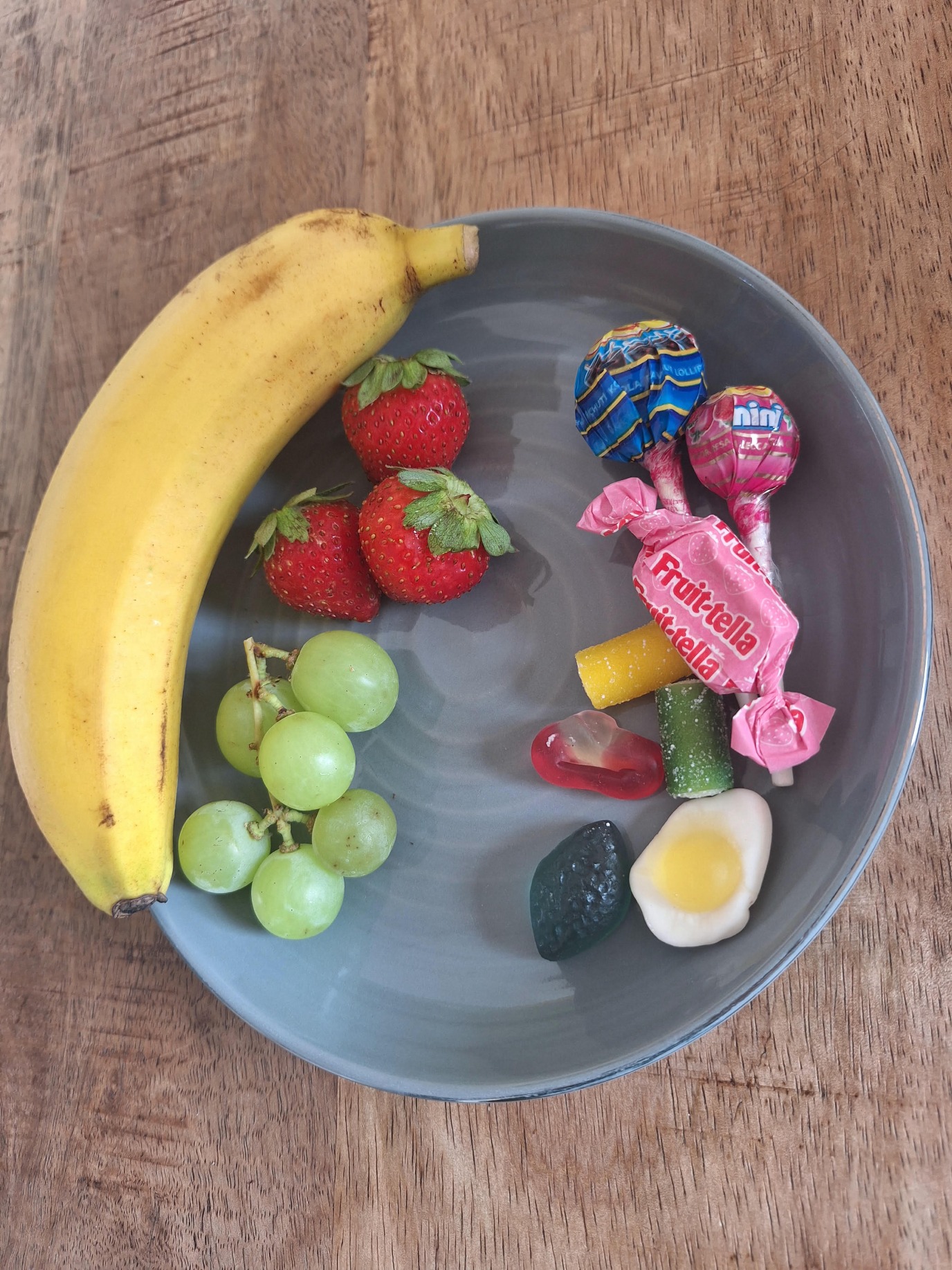
The power of color: how the food industry uses our instincts against us
Workshop by Tim van Zutphen, University of Groningen/Campus Fryslân
Time: 12:00 - 01.00 p.m.
More and more people are struggling with being overweight—now half of all adults. Unfortunately, this leads to many chronic diseases and increasing pressure on the healthcare system. Our environment contributes to this by encouraging a sedentary lifestyle and unhealthy eating habits. For example, the vast majority of products in the supermarket are unhealthy. Good advice is also buried under a deluge of slick marketing that encourages us all day long to consume sweet or fatty products. Whereas the red color of meat or the orange of fruit once helped us in prehistoric times to find nutritious food, those instincts are now being used against us. In this workshop, Tim van Zutphen will discuss the tactics used to influence our food choices, and we’ll test whether our brains can resist them.
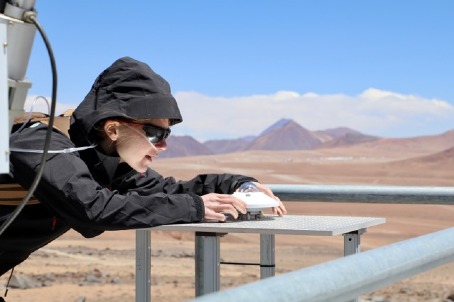
Invisible energy! Discover how light, heat and air move
By Sarah Feron (RUG, Campus Fryslân)
Time: 13:00 – 16:00 10 minutes (ongoing)
You’ll investigate how materials such as sand, soil and water heat up and cool down again. Using a heat lamp, you’ll see which materials heat up quickly and which retain heat for longer. You’ll also discover why some surfaces reflect a lot of light whilst others absorb heat. This will help you better understand why it can sometimes get particularly hot in a city.
Afterwards, you’ll get to work as an inventor yourself. You’ll build a simple structure and test how heat can make air move. Using temperature sensors, you’ll see what happens. This way, you’ll discover how heat can set energy in motion!
For curious children aged 8–14; younger children must be accompanied by an adult. Are you older? Take part in the challenge.
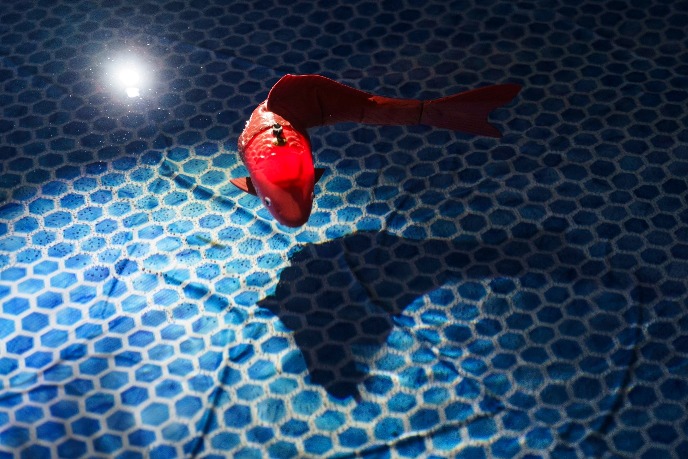

How do robotic fish work together, and can they really swim?
Time: 12:00 – 4:00 p.m. (ongoing)
How do fish actually know where to go? Fish swim together in a school without a leader. Can robots learn to do that too? During this activity, you’ll see robot fish from the University of Groningen swimming and “talking” to each other in the water. Scientists are learning from real fish to build smart robots that work together. Maybe these robot fish will one day help detect leaks or damage in dikes and water pipes. Discover how these remarkable underwater robots move and work!
You can even make them swim yourself! Want to join in? Read more about the research and the robots’ applications of the Jantina Tammes School of Digital Society, Technology and AI.
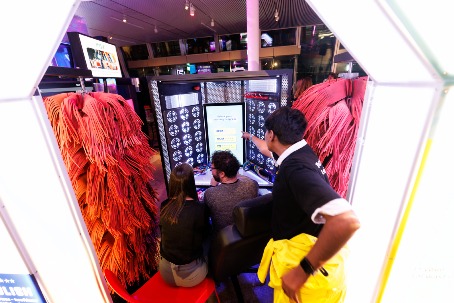
Datawash – How do you clear out your digital clutter?
Time: 12:00 – 4:00 p.m, 5–10 minutes (ongoing)
Photos, large files, cheerful posts on social media. We’re generating more and more data. The vast majority of that data is only used for a short time and then lies around unused. Did you know that storing this digital waste consumes an enormous amount of energy? With Datawash, you can help clear up our growing mountain of digital waste.
The washing brushes are spinning – will you choose your own wash programme?
Datawash is a joint initiative of the Jantina Tammes School of Digital Society, Technology and AI and the Wubbo Ockel School for Energy and Climate, which are collaborating on the topic of Twin Transition.
For ages 15 and over.
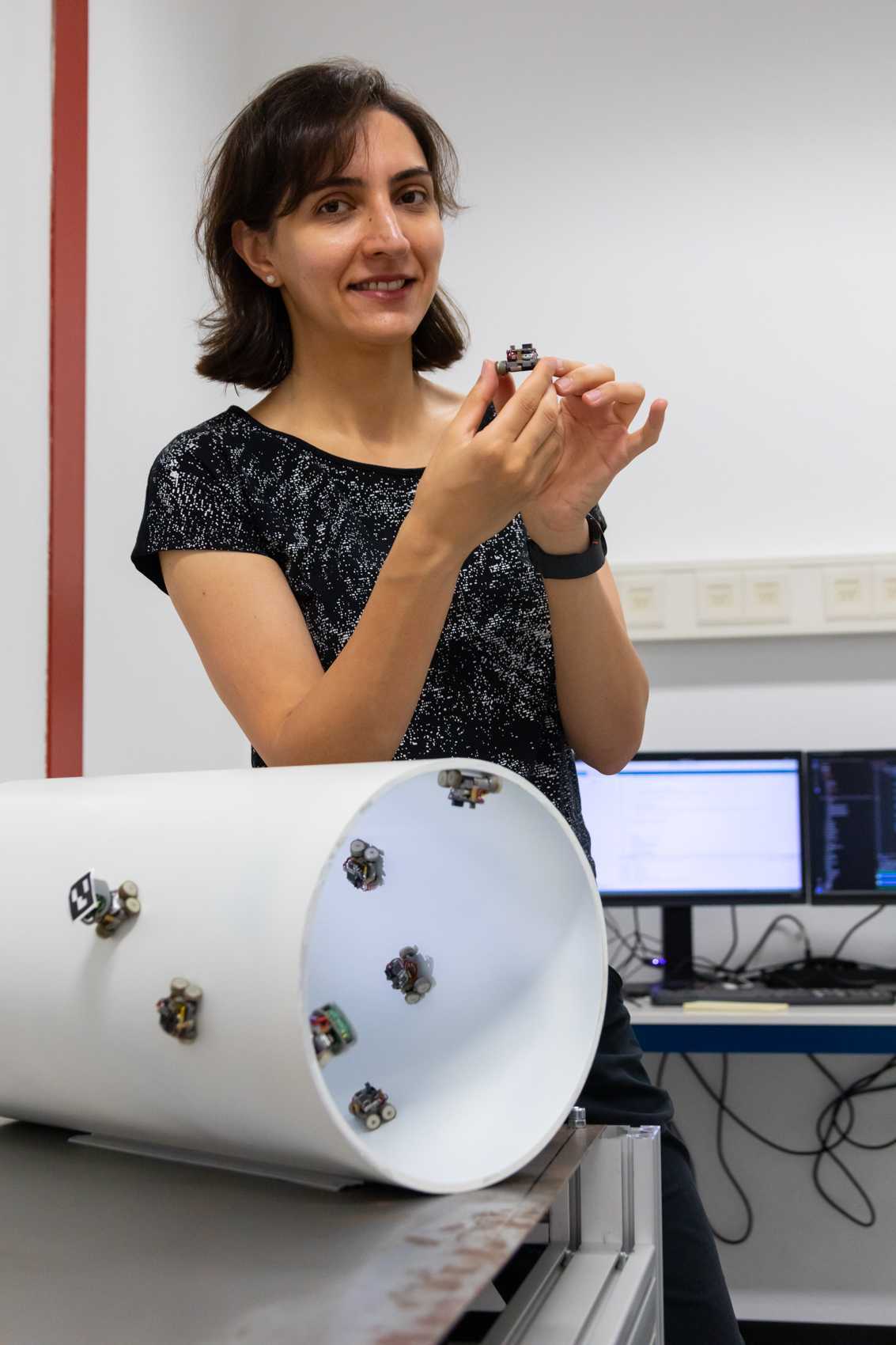
Knock, knock... the robots are listening!
By Bahar Haghighat (RUG, Faculty of Science and Engineering)
Time: 12:00 - 4.00 p.m. (ungoing)
Give the metal plate a knock and watch the robots react!
These tiny robots move around using magnetic wheels and can sense vibrations traveling through the metal. When they detect your knock, they stop, toggle their lights, and turn around.
Come try it yourself and discover the science behind how robots can use vibrations to sense their surroundings. In our research, we explore how groups of small robots can move across metal structures, measure vibrations, and work together to detect damage in large structures such as bridges.
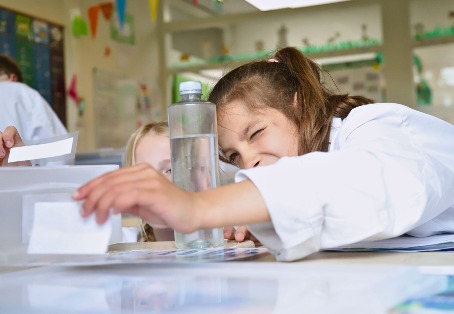
Come visit the water professor at Wetsus
Time: 11:00 a.m. – 4:00 p.m. (ongoing; 10 children per session)
Come visit the water professor and explore water technology. Roll up your sleeves and join us in creating a water ballet. Discover the science behind the truly remarkable substance that is water—a substance that seems so ordinary at first glance, but appearances can be deceiving.
Get to know Wetsus!

Discover the secrets of language, scents and the Frisian soil
Time: 12:00 – 4:00 p.m. (ongoing)
How is it that we find Viking treasures in our Frisian soil? And why do people in northern Germany also speak Frisian? What does Friesland actually smell like, and what does that say about who we are?
Join linguists and historians from the Fryske Akademy to discover how languages are interconnected, what lies hidden in the Frisian soil and which scents make Friesland so special. Find out just how multilingual you secretly are, dig for traces of the past and let your nose do the work.
For curious visitors of all ages. You don’t need to speak Frisian to take part: all languages are welcome!
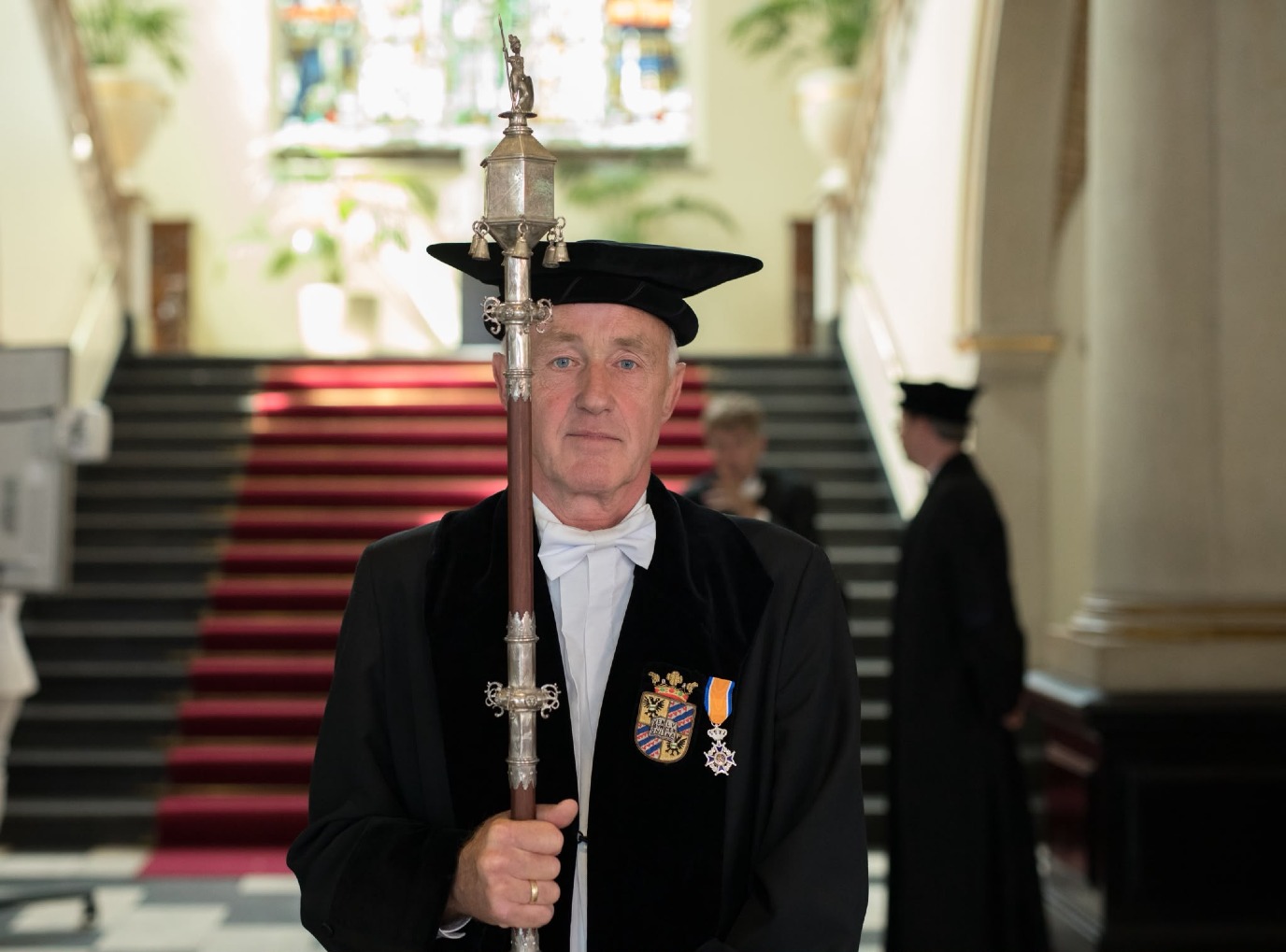
A lovely slice of academic history - academic rituals
Time: 12:00 – 16:00 (ongoing)
‘HORA FINITA’ cries the beadle as the time allotted for a thesis defence comes to an end, whilst he or she enters the hall with a staff in hand. But what is a beadle? And what does a beadle do? And, more importantly… Why? Bert Kamstra has supervised a few thousand PhD candidates in Groningen and here in Leeuwarden. He’ll answer any questions you have about academic rituals such as inaugural lectures, the opening of the academic year and other special ceremonies. A lovely slice of academic history. Will you have your photo taken with Bert?
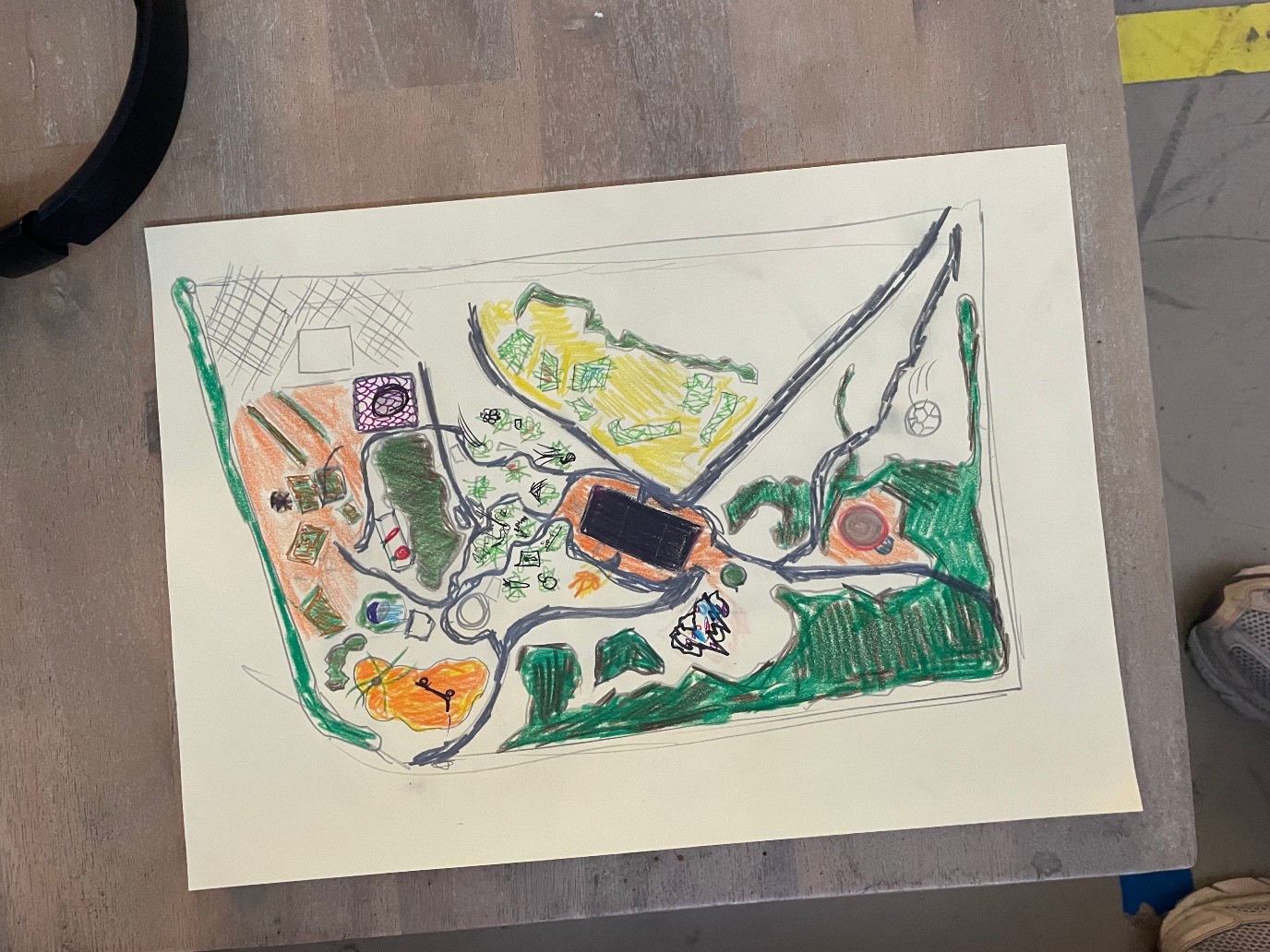
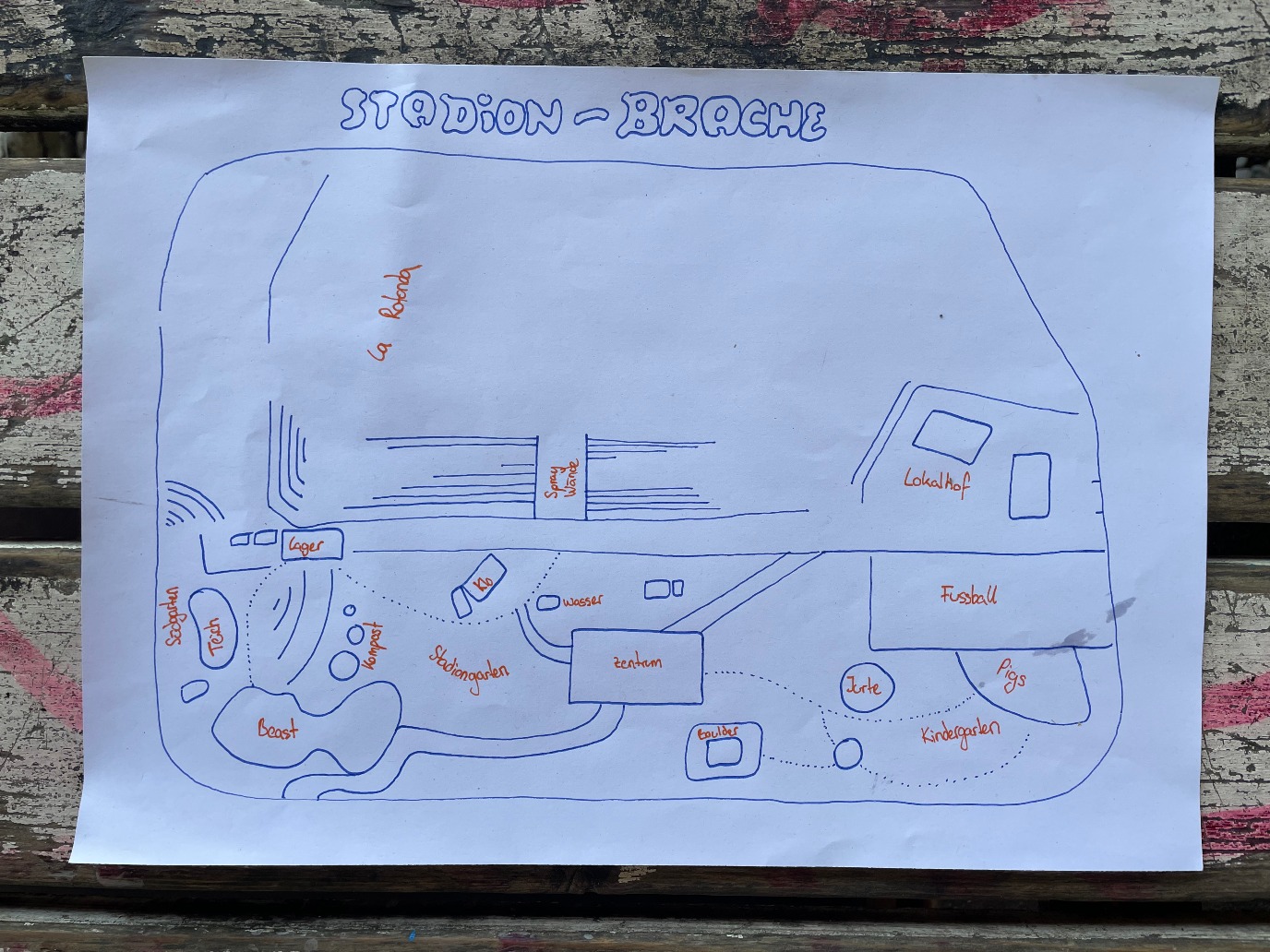
Make A Map Of Your Friesland
By Anya Naumova (RUG/Campus Fryslân)
Time: 12:00 – 4:00 p.m. (ongoing)
How do you map a place not by its roads, but by your feelings? In this hands-on workshop, visitors take part in a live mental-mapping study — the same method that cultural geographers and cognitive scientists use to find out how people actually experience a place, rather than how it appears on an official map.
Working at open stations, visitors respond to a series of prompts using museum object photos, drawings, single words, and their own printed photos: What do we put in a "Friesland starter kit”? What one word captures Friesland for you? What would you put on its flag instead? If Friesland was a creature, what would it look like? Every contribution is a real data point — a piece of qualitative research data, collected on the spot.
By the end of the workshop, all contributions are assembled into a single collaborative Atlas, which will remain on display at Campus Fryslân. No prior knowledge needed; people can join for two minutes or twenty.
I See, I See, What You Don’t See
by Cecile Wiersema (RUG/Campus Fryslân)
Time: 12:00–12:30 p.m., 1:00-1:30 p.m., 1:30-2:00 p.m., 2:30–3:00 p.m., 3:15–3:45 p.m.
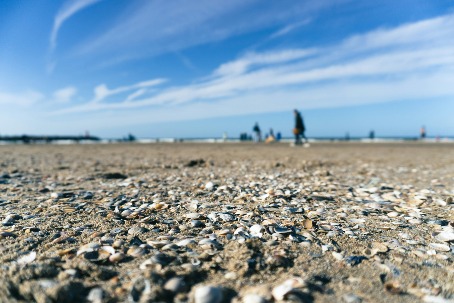
What do you find when you really look closely in the sand? During this interactive workshop, you’ll go on your own journey of discovery. Dig your hands into the sand, search for unusual finds, and try to figure out what you’ve actually found. You’ll recognize some things right away, while others might be a complete mystery...
Together, we’ll examine your finds and discover where they come from, how they ended up on the beach, and what they can tell us about nature and the plastic problem. You’ll learn more about beachcombing, plastic, and the ocean in an active and playful way. And who knows—after this workshop, you might even see the beach in a whole new light! Who’s it for? For children ages 8–12. Parents and guardians are welcome to join in. Please note: During this workshop, you’ll actually be digging your hands into the sand to look for beach finds. Your hands and clothes may get dirty.

Get your picture taken as a scientist (with a green screen)
Time: 12:00 – 4:00 p.m. (ongoing)
Have you always wanted to be a scientist? Today’s your chance! You might already have a rough idea—or even a preference—for a specific scientific topic. How fun would it be to top off the day by having your picture taken as a scientist in your field of interest!? Astronaut, political scientist, marine researcher, linguist, economist, philosopher, or something completely different? Get your picture taken and discover what you love!
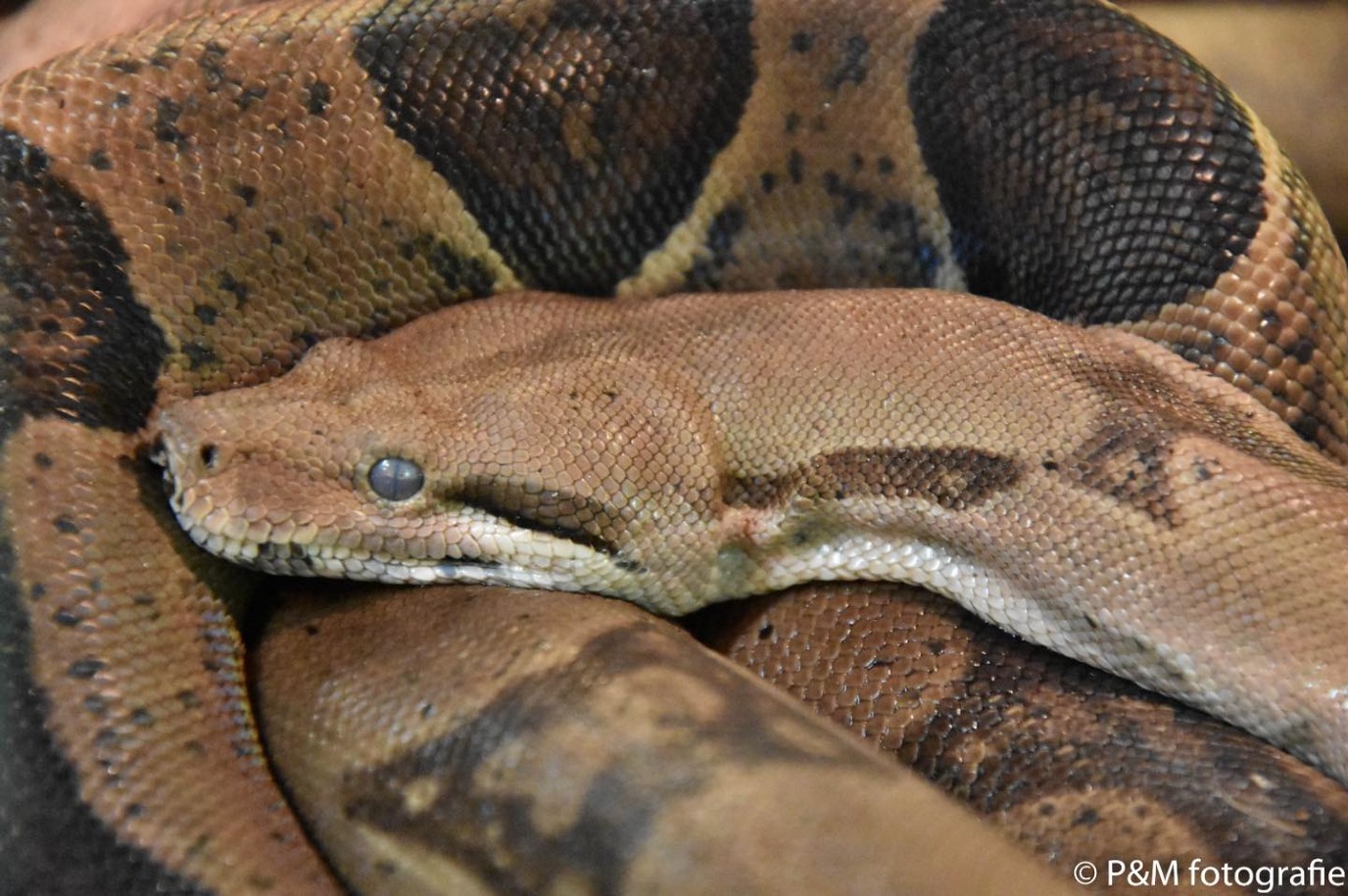
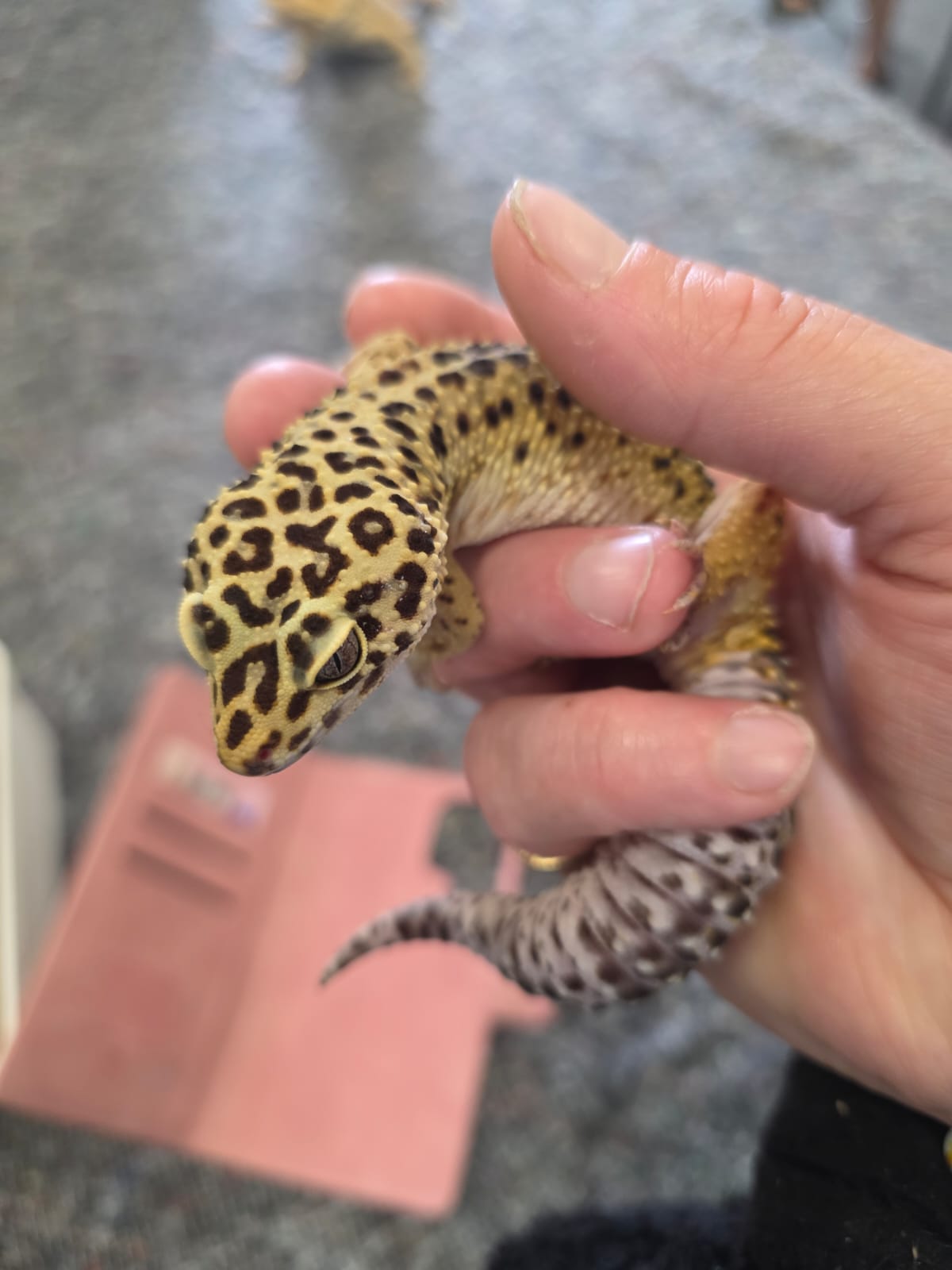
Get to know reptiles - visit Repticura
Time: 12:00 – 4:00 p.m.
Has Mátyás Bittenbinder’s talk on 'Poison in the animal kingdom' made you even more curious about reptiles? Then do pop along to Repticura. Meet snakes, a bearded dragon, a leopard gecko, a giant snail, a millipede and a tortoise. You’ll learn all about these reptiles and you might even be allowed to touch them...
From Returned Bread to a Delicious Ingredient
by Bakery Sweets Center
Time: 12:00 p.m. – 4:00 p.m. (ongoing)
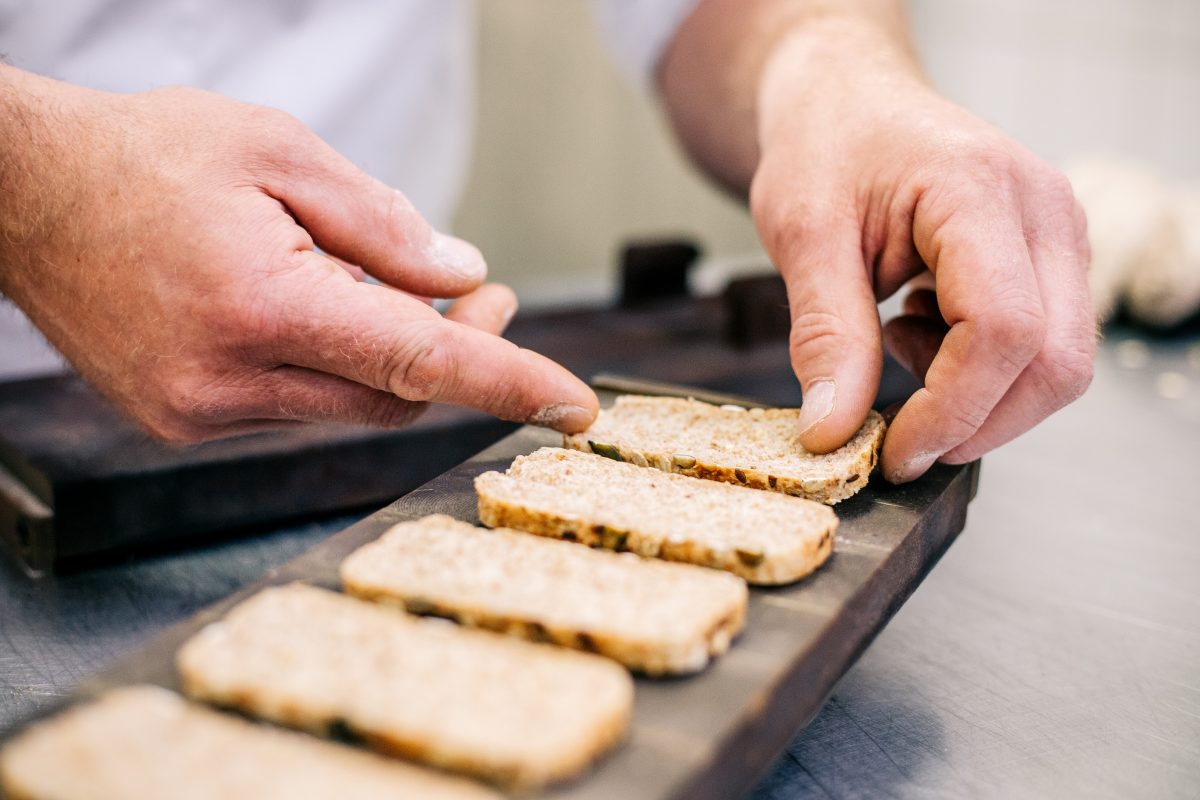
What if returned bread became the basis for something new? Yesterday’s bread gets a second life. Leftover bread is processed into a natural, sweet-tasting paste that can replace sugar in all kinds of baked goods and food products, among other things. This is how Bakery Sweets Center tackles food waste and adds value. Good for the world—delicious and circular.
Bakery Sweets Center brings together the strengths of education, government, and the business community. Will you stop by for a taste?
Make your own key ring
Time: 10:30 a.m. – 4:00 p.m. (ongoing)
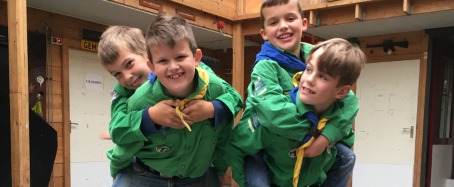
Building huts, making fires, walking through the mud: you name it, we do it at Scouting! During Science Weekend, you’ll discover that there’s science and technology behind many Scouting activities. In Pioneering, for example, we use rope and wood to build sturdy structures. How do you make sure everything stays in place? Get stuck in and find out for yourself! This will give you a little taster of what we get up to at Scouting. Whether you like getting creative, taking on challenges or discovering new things, there’s something for everyone to explore at Scouting.
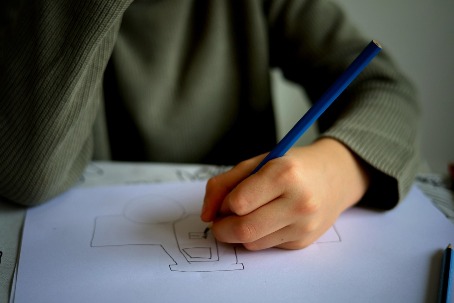
Relaxation Room
Time: 12:00 - 4:00 p.m. (ungoing)
Do you feel like drawing and/or just want some quiet time? You can do that in the relaxation room.
Make yourself comfortable. Have fun!
About the Weekend of Science
Science Weekend is all about making science understandable and accessible to children. Through cool experiments, fun activities, and interesting speakers, we want to give you a fun and, above all, educational afternoon.
Our Partners
We collaborate with various partners to bring you Science Weekend. This year, we are partnering with: