
Speech Technology Day: Seeing Interdisciplinarity At Work
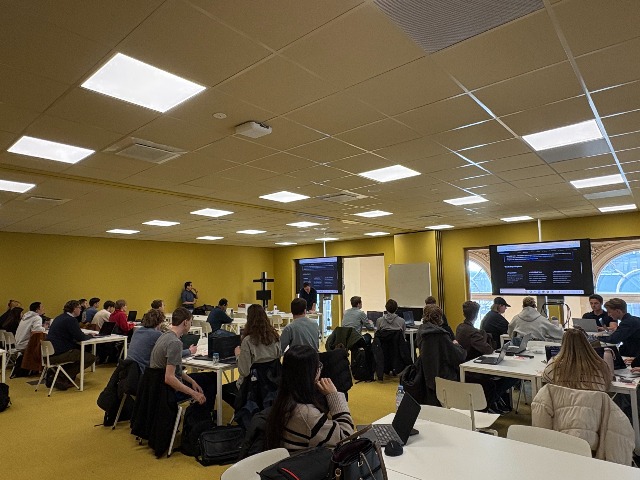
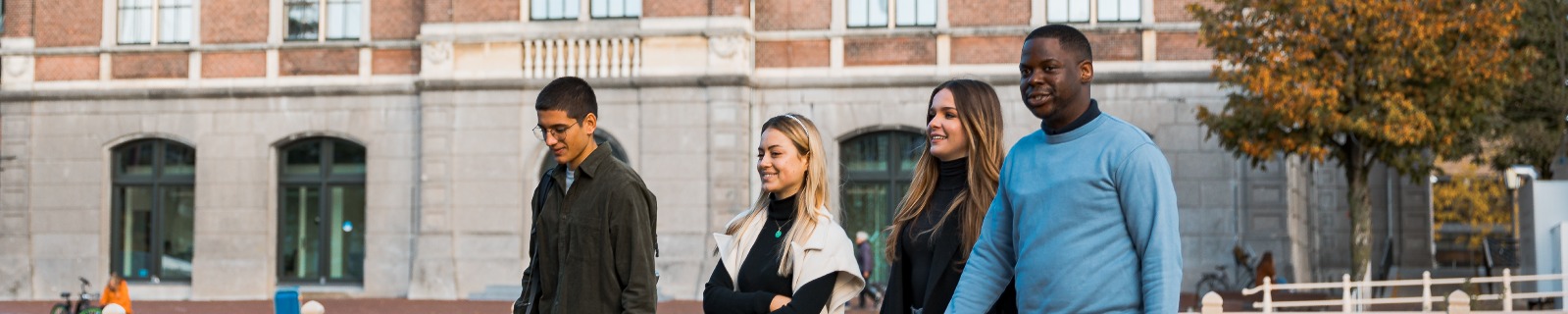
On March 27th, we hosted its first-ever “Speech Technology Day” at Campus Fryslân. It brought together MSc Speech Technology (ST) students, undergraduate BSc Data Science and Society (DSS) stuednts, and a group of NHL Stenden students for a full day of demos, a hands-on workshop, and a research poster session.
What made the event stand out was not only the technology itself, but the mix of people in the room: students encountering Speech Technology for the first time worked side-by-side with MSc students already developing speech recognition projects of their own. The result was a day full of experimentation, curiosity, and hands-on learning.
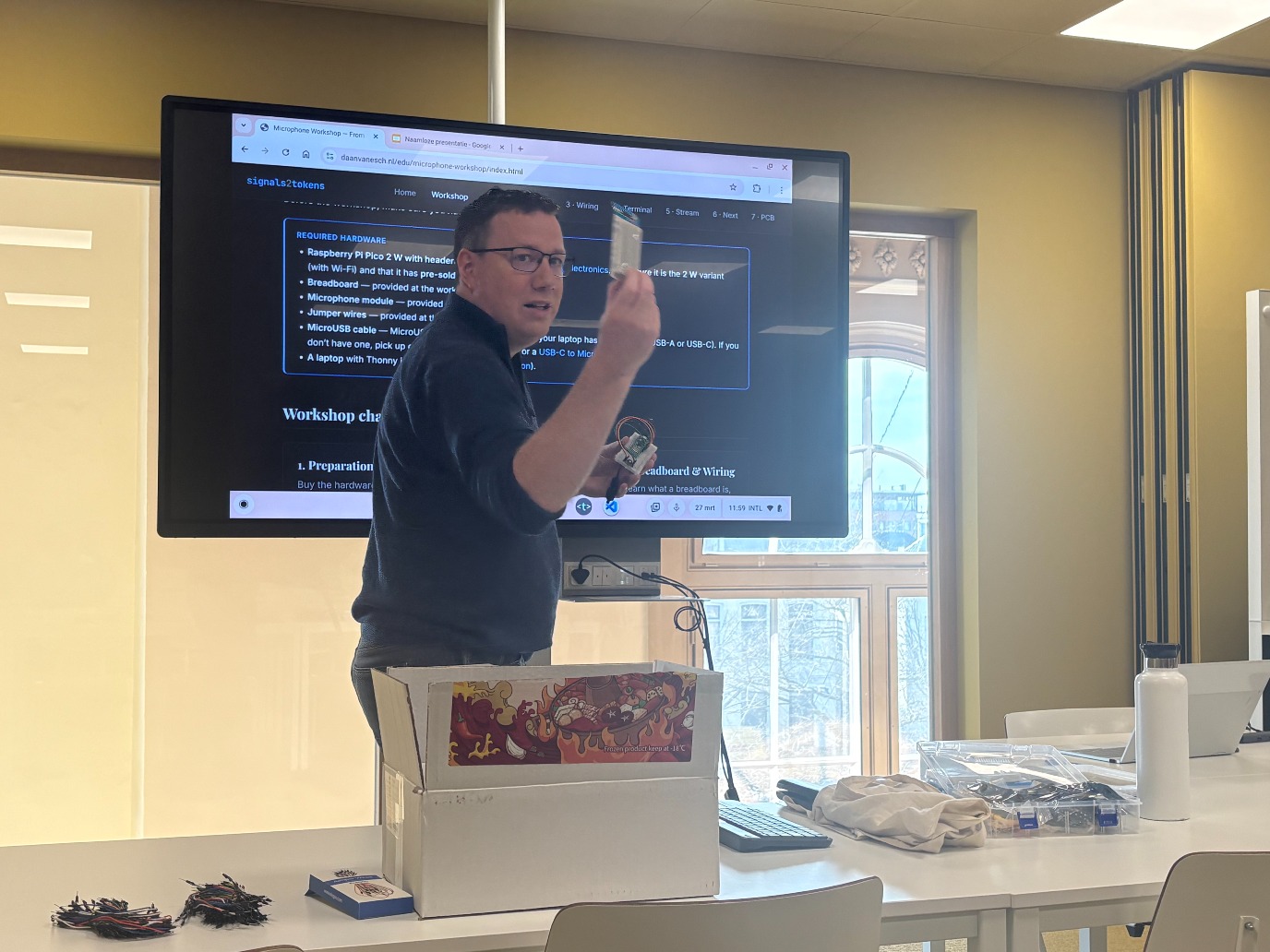
The highlight of the day was a workshop led by Daan van Esch from Google Amsterdam. Students built a voice-controlled device from scratch using a Raspberry Pi microcontroller, microphones, breadboards, wires, and USB cables. No soldering or prior hardware experience was required.
According to lecturer Matt Coler, the workshop offered students a rare opportunity to move beyond purely digital work and explore the physical side of Speech Technology:
“It also showed students that speech technology is not just code on a screen. There is a physical layer to it, and getting your hands on that layer changes how you think about the whole pipeline from microphone to model.”
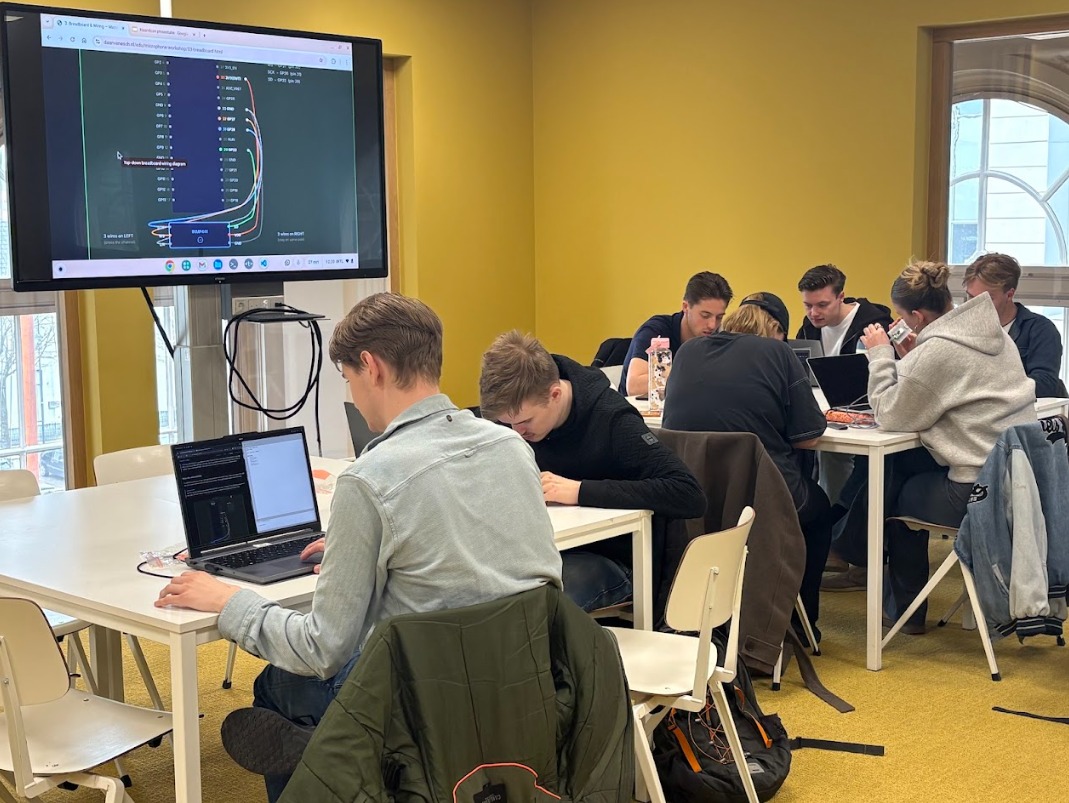
Throughout the session, students wired components together, troubleshot hardware issues, and streamed live audio directly into their browsers. Screens filled with bouncing sound wave visualisations as participants tested their devices in real time. For many, it was their first experience working with hardware in an academic setting.
Victor, an ST student, described his highlight of the day:
“The highlight was when we finally got the microphone working and could actually transcribe what we spoke into it. It was a fascinating way to get a better understanding of the systems that underpin speech technology.”
He also reflected on how the simplicity of the setup contrasted with the complexity behind speech systems:
“It made me appreciate how much complexity sits behind something as simple as speaking into a microphone.”
For Nika, a DSS student more accustomed to working with datasets and code, the workshop provided a completely different perspective on technology:
“Most of my work lives in the digital realm with datasets, models, and code. Suddenly there were wires, a Raspberry Pi, and a microphone on the table in front of me.”
Although not every setup worked perfectly, the experience itself became part of the learning process:
“The session was fast-paced and not everything went to plan (my microphone didn’t cooperate) but it was still a very interesting experience.”
The event also created valuable opportunities for students to communicate across disciplines. MSc students presented their research projects to undergraduates, while DSS students brought fresh perspectives and questions into discussions around speech recognition and AI systems. As Matt Coler explained:
“The DSS students brought curiosity and fresh questions. The MSc students got to explain their work to people outside their bubble, which is a skill in itself. That kind of cross-pollination is exactly what Campus Fryslân is good at.”
Beyond the classroom, Speech Technology Day also highlighted the growing connections between Campus Fryslân and industry leaders. Having a specialist from Google lead the workshop demonstrated the kind of professional exposure students can expect within the programmes. As Matt poses:
“Having someone from Google walk into a classroom in Leeuwarden and build something together with students sends a clear message about the kind of network and professional exposure our programme offers”
The workshop was fully designed and organised by Daan van Esch, who volunteered his time and even sourced the components himself. Following the success of this year’s event, Campus Fryslân is already planning to make Speech Technology Day a recurring tradition, already thinking about next year.
About the author
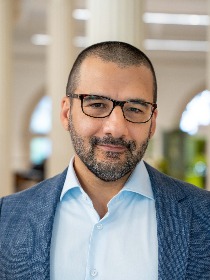
Matt Coler is an Associate Professor of Language & Technology at the University of Groningen (Campus Fryslân), where he is Director of the MSc Speech Technology programme and Department Head of Governance & Technology. His research spans speech technology, AI ethics, and low-resource languages. He chairs the Ethics Committee for Interspeech and has been a European Commission evaluator since 2018.
> View Matt's full profile