
The InfraCARE Project is One of the ENLIGHT 2025 Call Winners!
We are excited to announce that the InfraCARE Project, coordinated by a team at the UG, has been selected as one of the 2025 ENLIGHT Call winners! This project aims to advance research and education on urban climate justice through care and repair of infrastructures. Find out more about InfraCARE and the people behind it below!
Latest Updates
Updates will be posted here as the project progresses.
The ENLIGHT Thematic Network InfraCARE project team met in Galway to discuss how cities can ensure climate action benefits all residents, particularly vulnerable groups. The meeting highlighted the role of social infrastructure in supporting inclusive and equitable climate transitions and marked an important step in the project's ongoing collaboration, with a follow-up workshop planned in Bern later this year.
What is the main goal of the project? Who are your collaborative partners?
The InfraCARE project investigates urban climate justice by analysing the intersection of care and infrastructure within European cities. Addressing the climate crisis, the initiative seeks to establish inclusive, reparative conditions through collaborative local action. By facilitating knowledge co-production among diverse stakeholders, the network (led by Dr. Ethemcan Turhan, University of Groningen, with partners from University of the Basque Country, University of Bern and University of Galway) fosters mutual learning and strengthens research on social infrastructures. This interdisciplinary partnership—spanning geography, political ecology, and planning —integrates participatory and feminist methodologies. Ultimately, InfraCARE aims to cultivate long-term cooperation to drive equitable, transformative climate strategies that prioritise social equity in urban environments.
What inspired this project idea?
Climate change is a pressing global challenge, and cities are at the forefront of both contributing to and mitigating its impacts. Being “home to 57% of the world’s population, responsible for over 70% of global consumption–related carbon emissions and contributing to over 80% of gross domestic product”, cities have shifted from the periphery to centre stage in climate action. This led to the IPCC (Intergovernmental Panel on Climate Change) starting a special report cycle with a focus on cities. As urban areas continue to grow inequitably, and climate impacts accelerate, it is crucial to address the issue of climate action in cities through the lenses of justice, equity and transformation. Urban infrastructures with their social and physical manifestations are at the frontline of such climate action.
Why is this international collaboration essential to your work?
The InfraCARE project aims to generate high-quality, high-impact scientific knowledge through co-production with local stakeholders, in addition to training the next generation of early-career researchers, to inform future equitable, just and transformative climate action in urban settings. So far, most progress on climate change adaptation at the local level has happened in big cities and metropolitan areas. In contrast, many small-to-medium-sized municipalities, such as the ENLIGHT partner cities in Groningen, Vitoria-Gasteiz, Bern and Galway, face significant barriers to climate change adaptation due to challenges around financing, planning and/or implementation. InfraCARE’s international team will address these barriers through a comparative and relational perspective.
How did this collaboration come together?
Building on two successful BIP (Blended Intensive Programme) collaborations within the ENLIGHT network, the InfraCARE thematic network aims to expand high-quality, high-impact research collaboration in the field of urban climate studies. While two universities (University of Groningen and University of the Basque Country) were part of these BIPs, the other two partners were in our academic networks with their cutting-edge research outputs and engagements. So, the team demonstrates a fine balance between long-time academic partners and new partnerships emerging through InfraCARE; a clear gender balance, with a strong complementarity of skills and disciplines, various levels of academic seniority represented as well as intergenerational and geographic diversity.
What impact do you expect this project will have for the University of Groningen and the ENLIGHT network?
Achieving transformational changes in cities for mitigation and adaptation inevitably requires engaging with multiple scales of governance and multiple actors. Local governments are key among these multiple actors, together with universities, civil society and environmental movements in facilitating just, equitable and transformative climate action in urban areas. InfraCARE aims to align cutting-edge research with local climate experiences. The project will enhance transdisciplinary capacity for urban climate justice research in RUG through collaborative workshops, while simultaneously cultivating a new generation of scholars via summer schools for early-career researchers in the ENLIGHT network. To ensure a lasting legacy, our network will use visual methodologies—such as photovoice—to document perceived injustices and communicate core research values in 4 ENLIGHT university cities. By integrating these educational, investigative, and community-driven pathways, InfraCARE will establish a robust foundation for long-term impact and equitable climate action.
Does your project connect to other research, teaching or outreach activities you are involved in?
InfraCARE is directly related to my long-term research agenda on urban social movements and climate justice, as well as my teaching commitments, such as the Master’s level course, Critical Approaches to Global Sustainability Challenges offered by the Department of Spatial Planning and Environment, and receives students from many different faculties. Thus, the InfraCARE project collaboration will both strengthen the research and teaching components.
What's next?
The InfraCARE thematic network is dedicated to delving into the multifaceted dimensions of urban climate justice through a comprehensive and collaborative knowledge co-production approach. It engages diverse stakeholders at the local level to expand and deepen research collaboration on social infrastructures of urban climate justice. By centring local authorities, civil society organisations, social movements, and other community actors as key co-production partners, our network fosters inclusive decision-making processes that prioritise the voices and needs of marginalised urban populations.
The team at the UG:
-
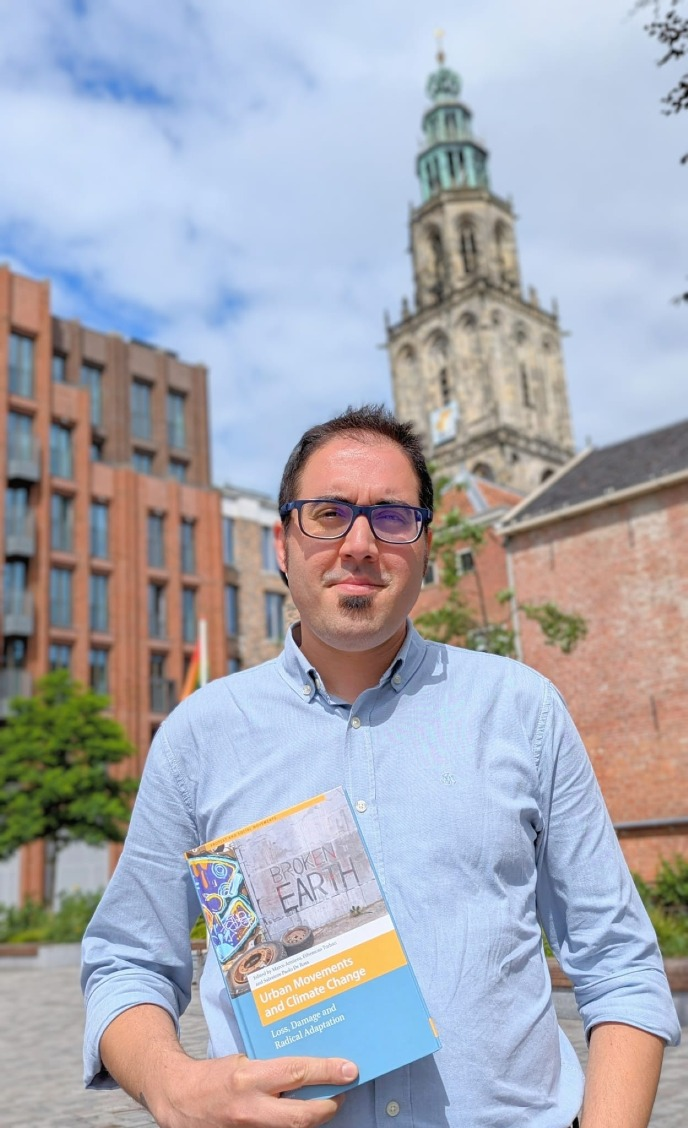
Dr. Ethemcan Turhan (Principal Investigator) is Assistant Professor of environmental planning at the Department of Spatial Planning and Environment, Faculty of Spatial Sciences, with research and teaching interests situated in the broadly defined field of political ecology.
-
Dr. Özlemnur Ataol is Assistant Professor of Spatial and Institutional Design at the Faculty of Spatial Sciences. She is an urban researcher, planner & designer specialised in participatory urban research and collaborative urban planning with underrepresented groups, such as women and children.
-
Prof. Ina Horlings is Full Professor of Socio-Spatial Planning at the Faculty of Spatial Sciences. Her research focuses on sustainability, place-based development, climate change and adaptation and sense of place among others.
We are happy for the InfraCARE team and are excited for the outcomes of this project!
More news
-
-
03 September 2026
Ming Cao reappointed as scientific director of the Jantina Tammes School
-
01 September 2026
Evrim Ursavas appointed scientific director Wubbo Ockels School