
The HHiP Project is One of the ENLIGHT 2025 Call Winners!
We are excited to announce that the HHiP Project, with a team from the UG in participation, has been selected as one of the 2025 ENLIGHT Call winners! This project focuses on the many ways people experience, understand, articulate, and express health and wellbeing. Find out more about HHiP and the people behind it below!
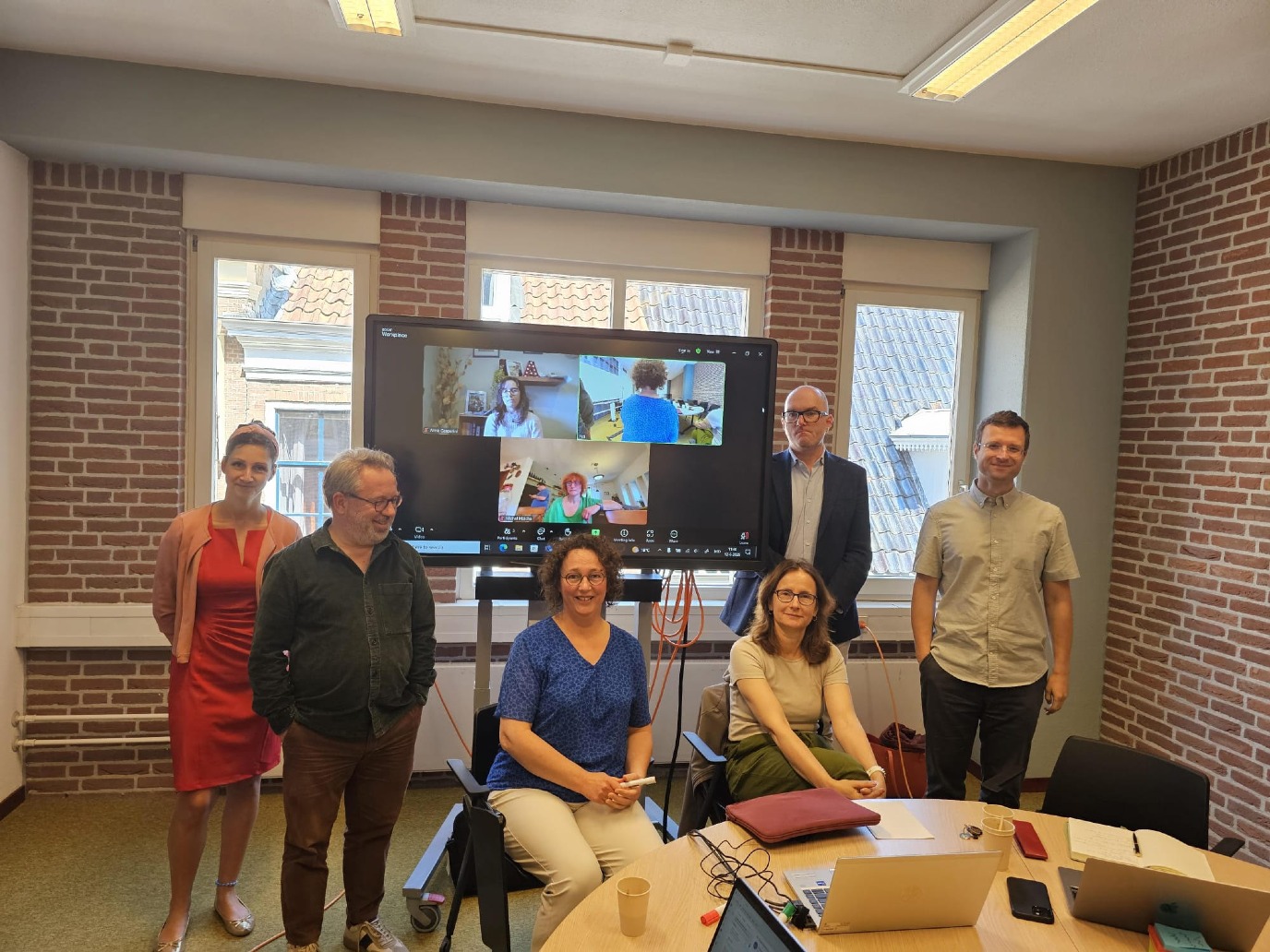
What is the main goal of the project? Who are your collaborative partners?
Health Humanities in Practice (HHiP) works on an application for a joint MA (funded by the Erasmus Mundus Joint Master Scheme) in Health Humanities.
Health Humanities is an interdisciplinary field combining the humanities and health sciences. It focuses on the many ways people experience, understand, articulate, and express health and wellbeing. Their collective ‘lived experience’ determine the success or failure of health interventions, as well as the many ways in which people engage with the adversities of ageing, ill health and death. More knowledge of ‘lived experience’ is necessary in dealing with key future health challenges, and HHiP envisions educating a new generation of health humanities prafessionals with a strong humanities profile, who can bring hands-on knowledge about ‘lived experience’ and ‘culture sensitive care’ to healthcare practices and in policy making.
Collaborative partners: University of Ghent, Comenius University of Bratislava, University of Galway.
What inspired this project idea?
Three key developments inspired the setting up of the proposal:
-
In the immediate future, Europe will be confronted with crucial challenges in healthcare. The impact of climate change, ageing populations, increasing mobility of populations, the growing importance of digital technologies and artificial intelligence, as well as building resilience in young people in the face of multi-crises, requires a rethink of our healthcare ecosystems. In order to meet these challenges, the labour market needs culturally and ethically informed professionals trained in creative healthcare solutions that include the lived experience of people.
-
Methodologically, HHiP will offer an antidote to what George Mulgan has named the “crisis of the imaginary.” This crisis is a serious one and is the result of a deficit of social imagination. We increasingly find it easier to think in terms of disaster and dystopia; or to imagine new generations of technology. Yet, we find it much harder to imagine a better society with a healthy, liveable and sustainable future. HHiP explores and offers methods that amplify our imagination and spark creative and novel ways of thinking and doing, based on the many different ways people experience and express health.
-
There is a strong need for a programme that emphasises the importance of health humanities in a European context. So far the field has been strong in Anglo-Saxon context, with little attention for other European health cultures and languages.
Why is this international collaboration essential to your work?
European cultures of healthcare are central to the programme. It goes without saying that you need European collaboration to ensure European diversity in content and approach.
How did the collaboration come together?
The project builds on an already existing health humanities network in the context of Enlight. Starting in 2022 with a series of online webinars focused on presentations of ongoing work, we not only discovered shared research interests and a striking similarity of regional health challenges, but we also discovered how our knowledge and expertise is complementary. Thus, the strong Groningen focus on history of medicine, health communication and linguistics matches the Ghent expertise on literary studies. Galway brings in perspectives from the social sciences, while Bratislava and Uppsala are connected to medical schools and the context of biomedicine and ethics.
In the Netherlands, the health humanities have always been situated in between faculties of medicine and faculties of humanities. This has always been a complicated position. Even though the discipline is important in both organisations, it has never belonged to the ‘core business’ of any faculty. This means that the health humanities have been an easy target for budget cuts. Over the last year we have seen programmes closing and courses abandoned. So much so that health humanities have all but disappeared from the teaching at humanities faculties, and is now only a small part of medical teaching at the universities of Rotterdam, Utrecht and Nijmegen. In the Netherlands, HHiP will fill the gap left by the budget cuts, and the University of Groningen will be unique in offering a health humanities master also open for non-medical students. In terms of Europe, we do not know of any Master teaching health humanities at a European level, with a focus on lived experience and culture sensitive care.
Does your project connect to other research, teaching or outreach activities you are involved in?
In Groningen, the programme is embedded in the Groningen Centre for Health and Humanities, and has a perfect fit with the thematic focus on ‘health as lived experience’ of the Aletta Jacobs School of Public Health.
What's next?
We, of course, hope our Erasmus Mundus application will be successful. It will guarantee long-lasting cooperations, not only in teaching, but also in terms of research.
The team at the UG:
-
Prof. Rina Knoeff, Aletta Jacobs Chair of Health and Humanities, Faculty of Arts
-
Dr. James Kennaway, Faculty of Arts
-
Prof. Mike Huiskes, Faculty of Medical Sciences
-
Dr. Nadine Voelkner, Associate Professor in International Relations, Faculty of Arts
-
Dr. Tekla Mecsnóber, Faculty of Arts
For more information, you can also consult the website of the Groningen Centre for Health and Humanities
We are happy for the HHiP team and are excited for the outcomes of this project!
More news
-
-
03 September 2026
Ming Cao reappointed as scientific director of the Jantina Tammes School
-
01 September 2026
Evrim Ursavas appointed scientific director Wubbo Ockels School