
Insects react differently to light
Insects do not react randomly to light in the dark. Their response depends on the species and the type of light used. Various measures are therefore needed to better protect insects from the negative effects of artificial light. This is evident from research by Gabriel Charvalakis. He will defend his PhD thesis on 1 December at the University of Groningen.
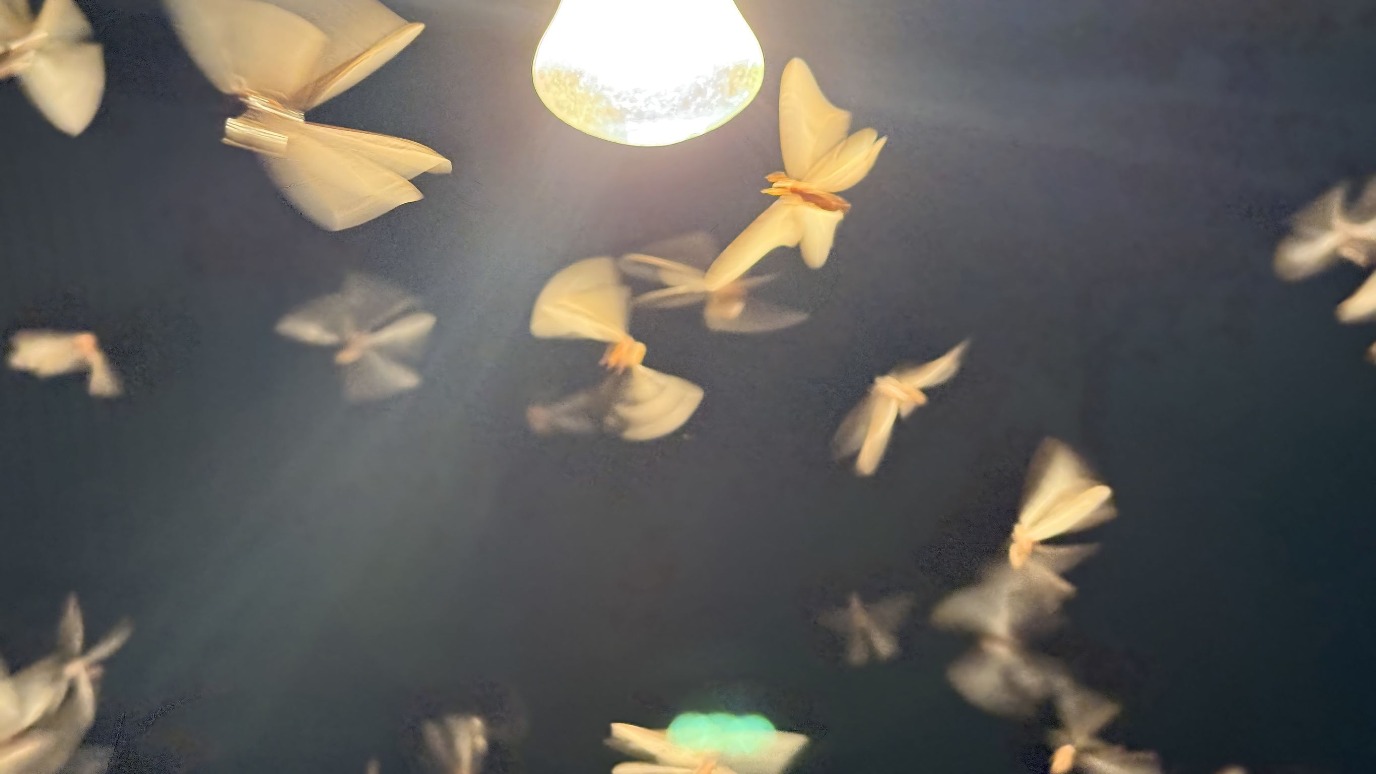
Artificial light at night is becoming increasingly common, especially in cities. However, its effects are often underestimated. All this light has negative consequences for insects. They become disoriented and die from exhaustion due to flying around a lamp or because they become easy prey. Gabriel Charvalakis investigated how different types of light affect insects and their development.
No ‘one size fits all’
Charvalakis discovered that insects are not randomly attracted to light. Their response depends on the species and the type of light used. In general, insects are more strongly attracted to light with short wavelengths, such as ultraviolet and blue light, than to light with longer wavelengths, such as red light. However, not all insects react the same way. Moths, for example, are strongly attracted to ultraviolet light, while mosquitoes also respond to green light or combinations of colours. This means that simply removing blue light from lamps is not sufficient to protect insects. Charvalakis: ‘One size fits all solutions to reduce light pollution will probably not work. A high light intensity of red light can still be harmful. It is better to combine various measures, such as reducing light intensity, choosing less harmful light colours, and dimming lighting. Shielding lamps so that light does not spread in all directions and placing lamps deeper in fixtures can also help.’
Peak hours
The timing of lighting during the night also plays an important role. Many insects are only active at certain times. By reducing lighting during peak hours of insect activity, cities can limit harmful effects. For example, lamps could be programmed to turn on only when necessary or to dim during seasons or hours when insects are most active.
Effect on egg hatching
The effects of light pollution extend to all life stages of an insect, from egg to adult. Charvalakis’ research shows that dimmed night light does not change the moment at which the eggs of a moth species hatch or the number that successfully hatch, but it does extend the hatching period. ‘A longer hatching period can mean that the small larvae are exposed to predators and environmental risks for longer. These early effects show that light pollution may influence insects at an earlier stage of their life cycle than previously thought,’ says Charvalakis.
New monitoring system
Reliable tools that reduce costs are a major challenge in ecological monitoring of insect populations. To better understand and monitor insect activity during the night, Charvalakis has developed an automated monitoring system that can track insects using cameras and artificial intelligence. This system can help track insect activity without additional AI training, and the results proved comparable to human detection results.
More information
More news
-
13 November 2026
Royal Honour for Jan Post
-
-