
A.P.P. (Adrien) Remund, Dr
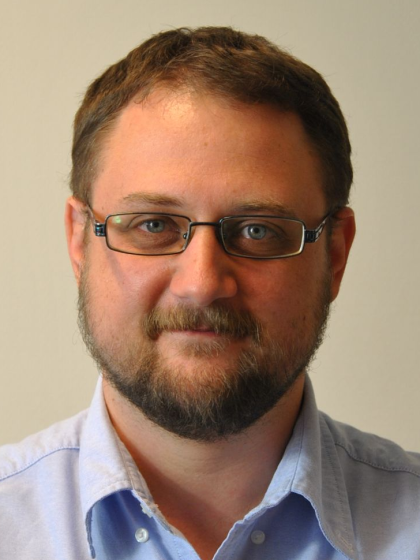
Adrien Remund is assistant professor of Population Studies at the Department of Demography, Faculty of Spatial Sciences, University of Groningen, the Netherlands. He holds a Bachelor (BA) and a Master (MA) in Social and Economic History from the University of Geneva (Switzerland), and a Master (MSc) in Demography from the University of Lund (Sweden), obtained as part of the European Doctoral School of Demography.
In May 2015 he obtained a PhD in Demography from the University of Geneva, based on his dissertation entitled 'Vulnerable youths ? Measures, components and causes of the young adult excess mortality' under the supervition of Pr. Michel Oris. From 2010 to 2018, Adrien Remund was a member of the Swiss National Centre of Competence in Research LIVES—Overcoming Vulnerability: Life
Course Perspectives.
From 2015 to 2018, Adrien Remund was a part-time lecturer at the Institute of Demography and Socioeconomics (University of Geneva). He also obtained a 18-month Early Postdoc.Mobility scholarship from the Swiss National Science Fundation, as well as several research grants from the Société académique de Genève and the Swiss National Cohort. Thanks to these fundings, he spent two years as a postdoc researcher at the Institut national d'études démographiques (Paris), and was part of the MODICOD and DIMOCHA projects on cause-of-death analysis.
In September 2018 Adrien Remund joined the Population Research Centre at the University of Groningen as an assistant professor in Population Studies. Since then, he has taught several courses in the Bachelor Human Geography and Planning and the Master Population Studies, which he coordinates since 2024. His research interests cover different aspects of demographic dynamics, such as social inequalities in (healthy) life expectancy, health selection among immigrants, and the historical context of the demographic transition. He notably co-supervised multiple PhD candidates on topics related to return migration, health differentials between migrants and natives, and the history of the demographic transition in Western Africa.