

Farewell Interview Frans Sijtsma: 'A People-centered Approach is Essential'
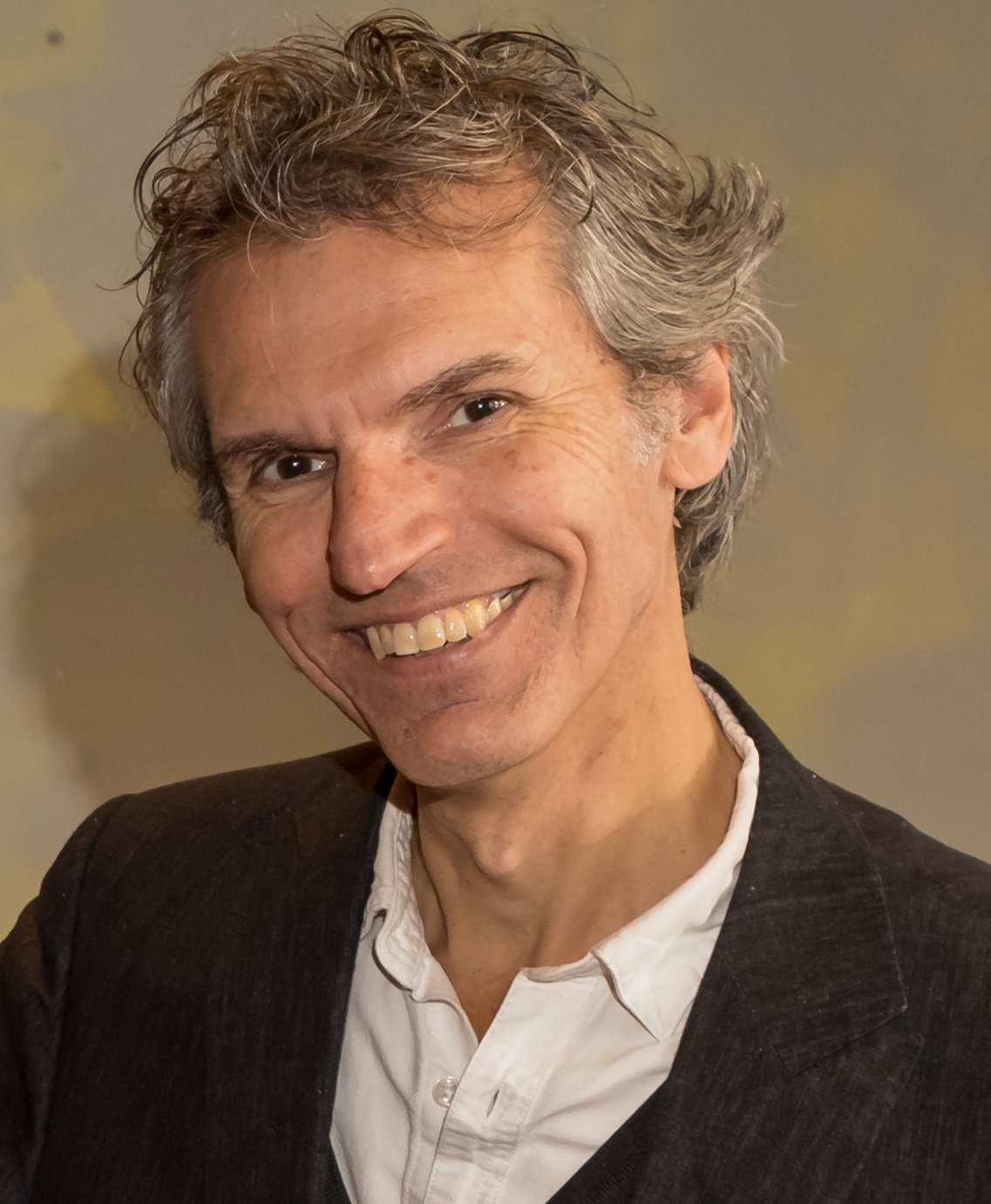
Our scientific director, Frans Sijtsma, has announced that he will be leaving as of the 1st of September. Like you, we wanted to understand why and to hear his reflections on legacy, impact, reflection, and future outlook. An interview with 10 questions.
Q1: Frans, why are you leaving?
‘There are actually two reasons. One is directly related to the Schools. My term as director would end early next year, but because the four Schools are being reorganized, I decided to step down a few months earlier. The four Schools are currently being streamlined: we will have one support organization for all Schools under University Services, and one board of deans for all four Schools. As part of this reorganization, the UG board and College of Deans suggested a slight shift in themes within Wubbo Ockels School for Energy and Climate (WOS) and Rudolf Agricola School for Sustainable Development (RAS). The idea is for WOS to focus on Energy and Environmental Sustainability, and for RAS to focus on Social Cohesion, Security, and Resilience. The major changes are set to take effect in September. Lorenzo Squintani's term as director of WOS has already ended, so a new director is sought. For the new orientations of WOS and RAS, it is then best to synchronize both processes. So, two new directors are now being sought for both WOS and RAS.
Second, my own research requires more time. I have recently been granted the UNESCO chair for Sustainable Landscape Governance, Education, and Citizen Science. This implies a strong global expansion of my research work, which is hard to combine with the directorship of the RAS.’
Q2: With what intention and vision did you become the director of Agricola, and why did you decide to say "I do"?
‘I saw the logic of the Schools. Science is growing; we know more and more. The downside of the huge growth is that we overspecialize. ‘Over’ because we are less able to answer societal questions, less able to help solve urgent societal problems. So science has to invent ways of bringing scientists and knowledge from different fields together productively: to synthesize knowledge and merge insights and methods. That is a huge challenge in science today, and that is what the Schools are about: we have to discover how to do that more effectively.
Furthermore, I had always worked at the intersection of science and society. Until that point I had worked at the Science Shop Economics and Business, at the Netherlands Environmental Assessment Agency (PBL), and in loads of externally funded projects related to sustainability and the value of nature and landscape - so I was highly motivated to help build such an integrative initiative, as the RAS.’
Q3: Looking back to when you first stepped into the role of Director of RAS, how has the School’s mission evolved to meet the shifting and diverse needs of sustainability, development, and innovation that we are facing through changing environments?
‘I don't think much has changed, actually. The core is creating strong groups of scientists: innovative groups that are motivated to work together in new ways. You need what we call hybrid governance for that, which includes a governance that supports organic bottom-up ideas and initiatives aimed at working together more, and a governance that steers top-down by catalyzing collaborations. Of course, themes always shift as society changes and new opportunities arise. But there is such huge potential in our scientists that we can handle many shifting themes and changing environments. With well-built processes within the Schools, we can deliver faster and better science to society on any emerging topic.’
Q4: The RAS, like the other Schools for Science & Society, has a backbone in multi-, inter-, and trans-disciplinary research and education. What are the benefits and challenges of breaking away from mono-disciplinary prejudices and silos?
‘I don’t feel, in any way, negatively about monodisciplinarity. It is a logical, powerful, and capable approach to making significant contributions. But science these days has over 2500 disciplinary fields, with separate professors, journals, congresses, etc. From the perspective of the grand challenges that society faces, science has become too fragmented. So, on top of all the monodisciplinarity, you need to devote a limited but serious amount of funds and people to actively work on bringing knowledge together.
The challenge of large-scale interdisciplinarity is that it is uncomfortable. You have to overcome that. The first few meetings you have with different scientists are nice and interesting, but then you are confronted with the task of creating really good stuff together. My experience is that you can best overcome the discomfort of interdisciplinarity by bringing in stakeholders with urgent problems.’
Q5: Beyond citations and grants provided (and obtained by fellows), what is one impact that makes you especially proud of the work of RAS?
I'm proud of the spirit we created. With a small, but very motivated and dedicated team, we were able to create and serve a community of over 385 Fellows. I remember one fellow saying to me: “Frans, I feel liberated by Agricola” because we make new and powerful things possible.
This spirit led to a huge wave of groups eager to join RAS and work together. A solid mix of fledgling, growing, and mature groups have evolved within the four research themes of Agricola. Yes, in the end you want to have mature groups that are relatively independent impact research centers but you cannot choose the winners from the get-go. So you need to create an environment in which different groups can develop and grow. We managed to support the growth of mature groups, the list of which is long. For instance: The groups on circularity, on sustainable food systems, on sustainability technology, on inequality, poverty and deprivation, on human mobility and migration, on cascading disasters, to name a few.’
Q6: What has been the working environment within RAS?
‘To me, the combination of the Agricola team and the Agricola community stands out.'
The team was basically saying yes to initiatives every day. Saying yes means you have to work hard, and this is what the team did. We worked on developing and optimizing what we started to call the ‘impact chain’. The impact chain is a combination of support activities. Both organic and catalytic activities: building a PhD community and interdisciplinary PhD training, stimulating new cross-cutting education and educational formats, innovative ways of funding and project control, designing and organizing impact events, stakeholder engagement, and impactful communication. It is amazing how far our team has come with this in just three years.
And the community has continuously surprised me and us. There are so many clear-headed, warm-hearted scientists at our university who became fellows because they were eager to collaborate more. It is really moving and energizing to encounter them on a daily basis, having the privilege to learn from their insights, and support their group initiatives or tempt them to contribute to an emerging group effort.’
Q7: Sustainability and development are, of course, as much about people as they are about science - in your view, how has the research culture and effort transformed in this regard?
‘A people-centered approach is essential. The School has only a few scientists on the payroll. So we are all about fueling enthusiasm, initiative, and motivation within people.’
Q8: In what way has your own philosophy on sustainability been challenged or altered by the work within RAS? And how are you going to bring/apply this transformation to your new role?
I experienced a lot of joy. The joy of discovery and community.
In my role as director, I’ve found that with a stronger sense of community and more effective, joyful ways of collaborating, science can move mountains.
Science is, in its essence, free-floating, but you need to organize to some extent. Yet one easily ‘over-organizes’ and then the fire is gone. As a team and as Schools collectively, we learned quite a bit about that subtle process.
In my new role as UNESCO chair, I hope to use that collaborative wisdom effectively.’
Q9: What is an important and unwritten rule to keep in mind when leading a School dedicated to the planet’s present and future?
‘The planet suffers because of carelessness, collective blindness, and pushing through. The whole sustainability agenda, in a way, is about collective softening, about paying more attention to the tender, caring, uplifting, and creative side in us. This side is always there, even amid the most urgent crises and the most dreadful situations. True innovation requires tapping into that side more, being more careful and connected. Then we will find new ways.’
Q10: What will you miss the most about being a director for Agricola?
‘I will miss many individual scientists. And I will miss all the members of the Agricola team, all for different reasons. But I will mention one team member that I will miss especially, the one team member with whom I worked longest, the ‘hidden director of Agricola’: Astrid Bakker.’
More news
-
19 October 2026
From research to business: RUG Ventures helps ideas move forward
-
-
03 September 2026
Ming Cao reappointed as scientific director of the Jantina Tammes School