

Beyond the plate: How food systems hold the key to sustainable development
Text: Arnau Domènech
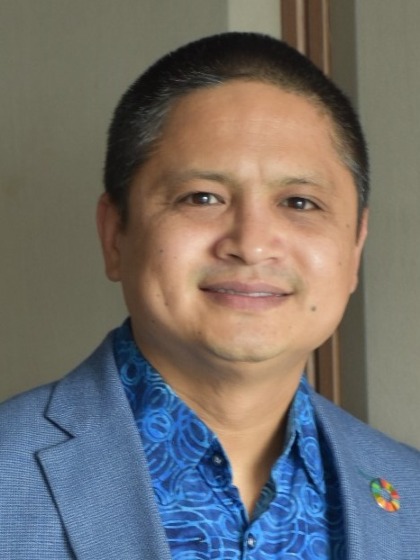
Food systems and sustainable development are more deeply intertwined than is often recognised. Transforming the way we produce, distribute, and consume food is not merely one step towards sustainability but a vital condition for it, one that reaches far beyond the ambitions of the Sustainable Development Goals (SDGs). This transformation is crucial for ensuring global stability, health, and well-being.
This is the premise of the recently published The Elgar Companion to Food System Transformation for Sustainable Development, co-edited by RAS Fellow Prajal Pradhan (Faculty of Science and Engineering, University of Groningen). Bringing together theoretical insights and practical applications, the Companion draws on regional case studies spanning every continent to map both the current challenges and future prospects for sustainable food systems. Contributors examine the synergies and trade-offs between the SDGs and their relation to systems thinking, including the water-energy-food nexus, while also interrogating governance from state, market, and voluntary-sector perspectives. One of the conclusions that runs through its chapters is the urgent need to reshape resilient, equitable, and sustainable food systems.
Interdisciplinarity and transdisciplinarity were essential
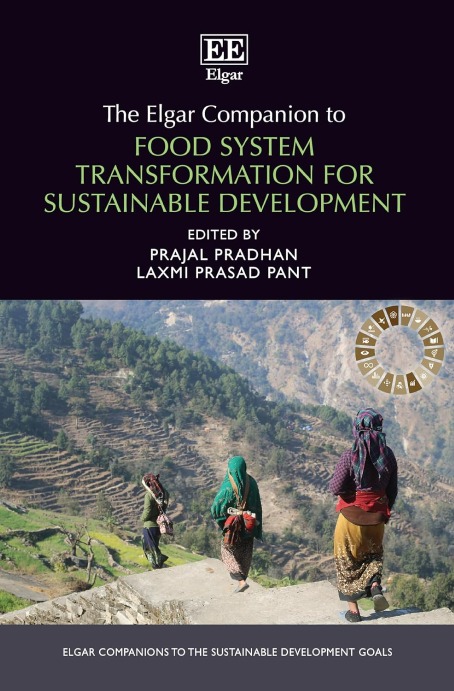
One of the book's main contributions is the interdisciplinary and transdisciplinary lens through which it was conceived. Pradhan points out that this was crucial to ensure that the multiple dimensions of food system transformation were properly taken into account and that, without it, the book's ambition to shape the post-2030 agenda and serve as a resource for students, scholars, policymakers, advocacy groups, and civil society across disciplines and themes would have gone unfulfilled. To achieve this, the editors invited contributors from different disciplines and occupations, bringing together researchers and practitioners who all work on food systems linking to one or more SDGs. Contributors were also asked to anchor their chapter to a specific SDG and its targets, bringing their diverse perspectives to bear on that topic. Pradhan notes with enthusiasm that featuring both successful and less successful regional case studies was equally important and that the richness of the material could easily have filled many more pages.
From local workshops to a global agenda
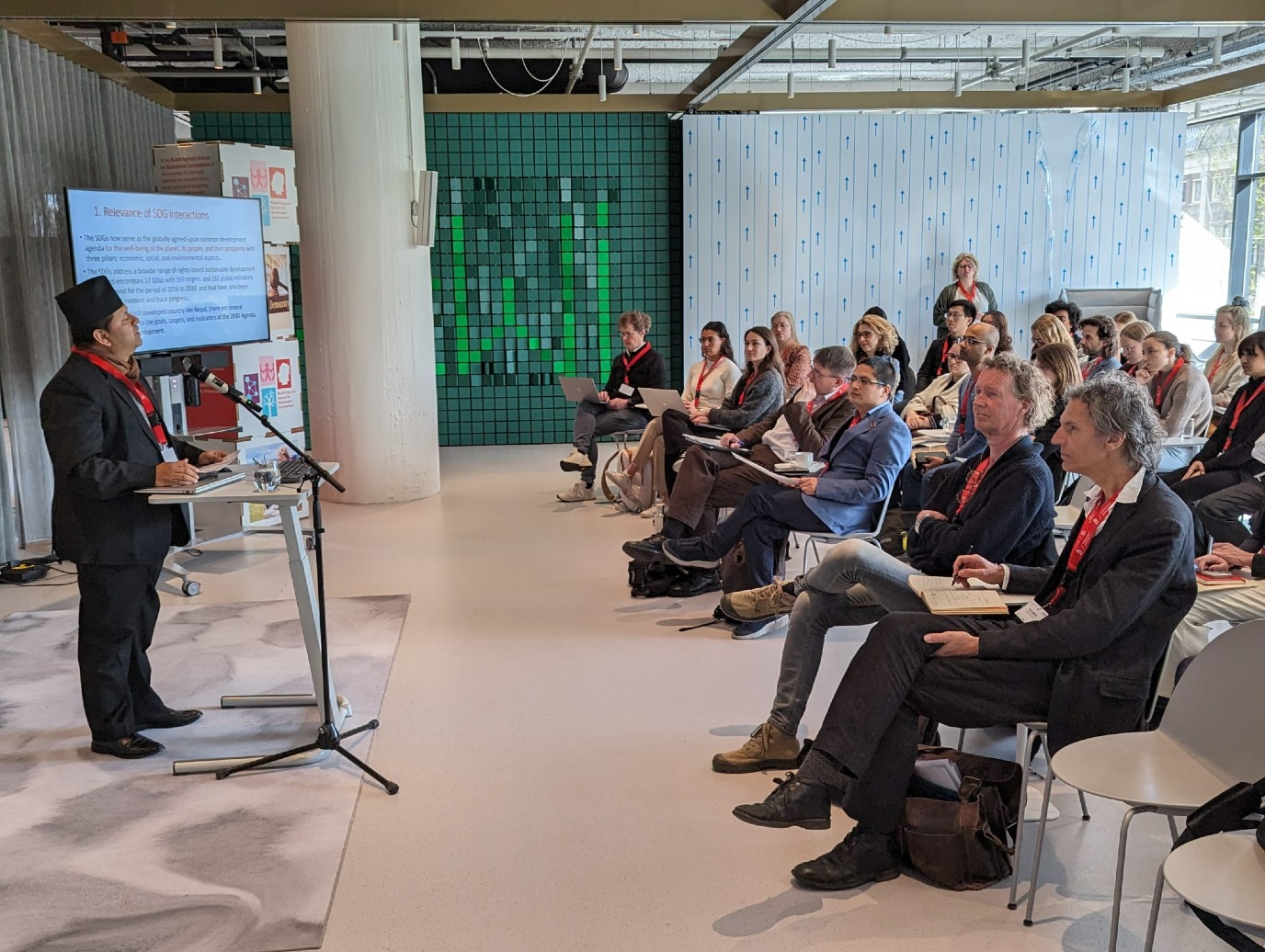
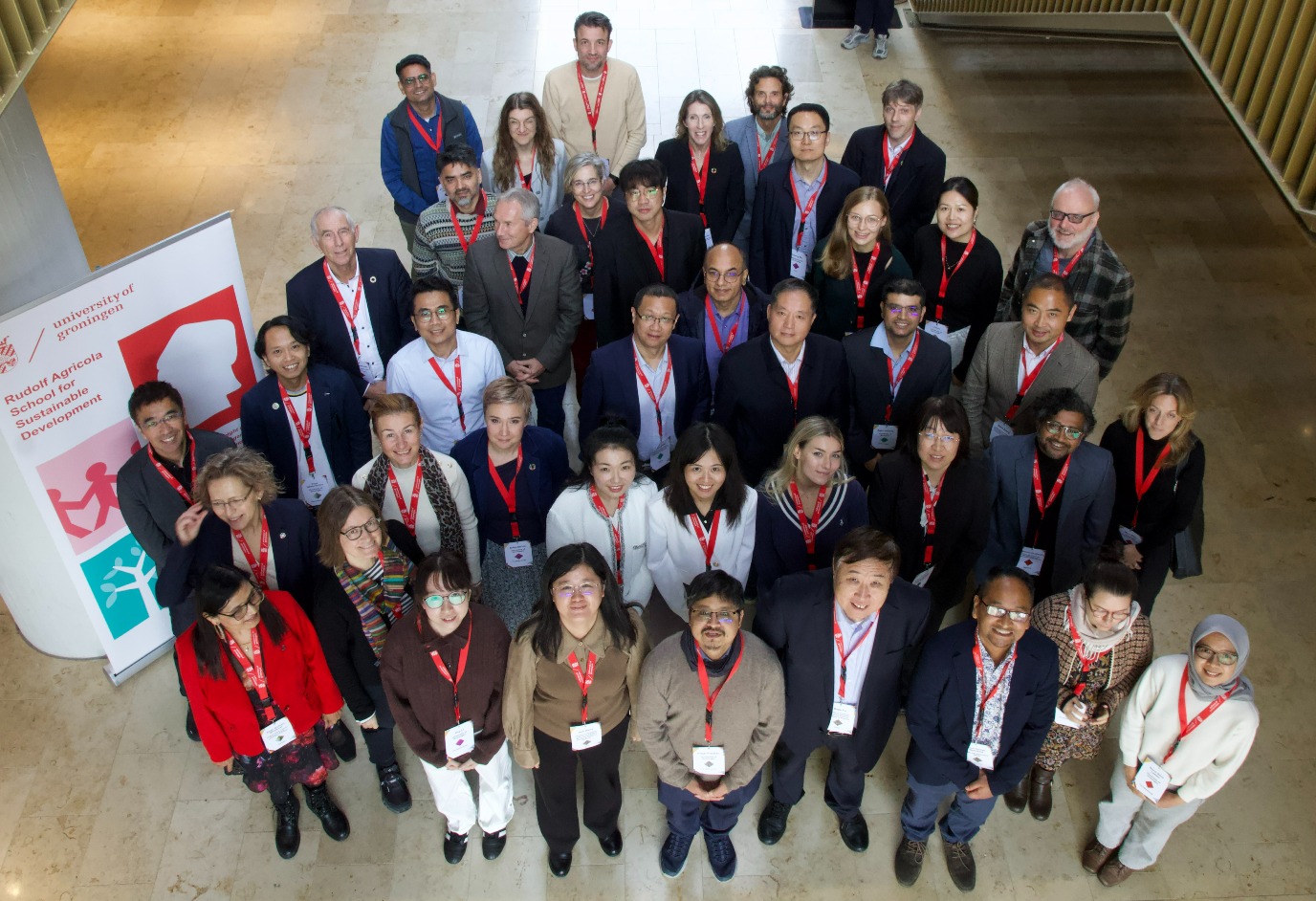
Pradhan is grateful to the RAS for its support in hosting multiple SDG workshops in 2024 and 2025. Through these events, he was able to seek out contributors working across the different SDGs, enrich his work through participant input, and showcase the book's findings to a wider, cross-disciplinary audience. In his words, "these events lead to very enriching interactions."
Beyond the book itself, these workshops are also the seed of something larger: the Groningen Sustainability Conference, taking place from 5 to 10 April 2027, which will put Groningen on the map in this field. As Pradhan puts it, "the inputs, experiences, and connections created during these past events at the RAS, as well as the publications and their insights created thanks, in part, to them, will enrich the upcoming discussion on the wider sustainability of our future. I hope that through them we can contribute to the 2027 Final UN SDG Summit and the post-2030 Agenda."
A wider RAS contribution
Pradhan was not the only RAS Fellow to contribute to this publication. RAS Fellows Ina Horlings and Pablo Tittonell co-authored Chapter 13 ('Provisioning sustainable food for cities and human settlements: principles and examples'), which explores how food systems can support sustainable cities and communities. Taking a place-based and post-growth perspective, they argue that transformation is needed not only in production but also in consumption, distribution, governance, and interactions with the broader ecosystem, illustrating this with examples from around the world that reconnect farmers and citizens across rural and urban areas.
Moreover, RAS Fellows Jorien Zevenberg and Henny J. van der Windt co-authored Chapter 21 ('Insights into three alternative agriculture practices to foster food systems transformation for life on land'), which addresses a pressing challenge: the way we currently farm is a major driver of biodiversity loss and environmental decline, yet the shift towards more sustainable alternatives remains slow. Examining three alternative agriculture practices in the Netherlands, the authors explore where and how meaningful change in our food systems can take root.
Curious to learn more?You can read a news article of a recently published article by Pradhan and co-authors on European urban agriculture which was featured in Time, the 'Event recap: The future of SDGs in a rapidly changing world' from the 2025 workshop hosted by the RAS, or a 2024 RAS article on Pradhan's co-authored megastudy on the pros and cons of urban agriculture in reaching the SDGs. For a deeper dive, Pradhan and colleagues also published a peer-reviewed article in Nature Communications proposing three interconnected science-policy focus areas, covering SDG interactions, modelling, and tools, to overcome the siloed approaches that hinder SDG implementation and accelerate progress towards their integrated and indivisible goals. Our news article offers an accessible summary of the article's key findings. |
More news
-
19 October 2026
From research to business: RUG Ventures helps ideas move forward
-
-
03 September 2026
Ming Cao reappointed as scientific director of the Jantina Tammes School