
News
Graduation Lise Kleinbekman
22 September 2026
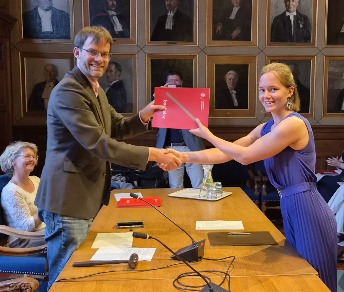
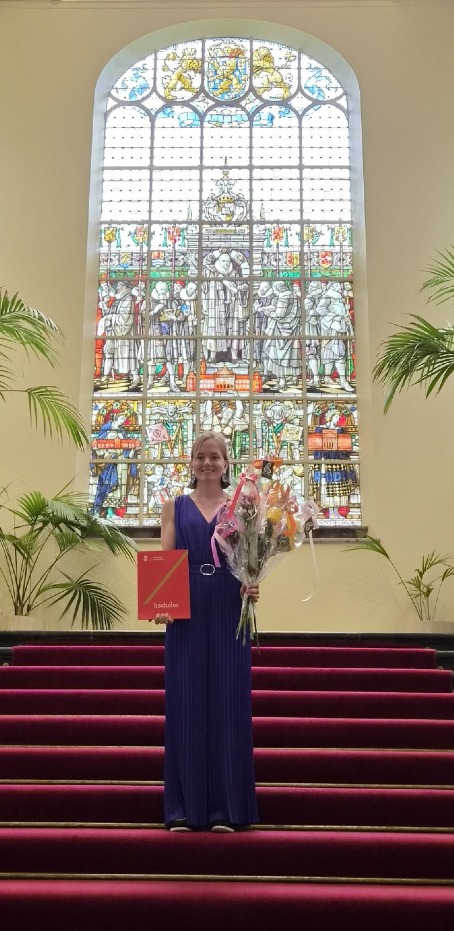
Congratulations to Lise Kleinbekman for receiving her bachelor's degree Life Science and Technology at the University of Groningen on Tuesday September 22nd. Lise spent a year in our group. Initially working on her bachelor research project on tartrazine-based tissue clearing. She decided to continue to complete this project to explore with Langjian Dong and Daan Roos (UMCG) whether tetrazine tissue clearing can be used in combination with fluorescence-guided surgery. We plan to publish the results shortly.
After completing both high school and her bachelor's degree in Groningen, Lise has decided to move to the ETH-Zurich (Switzerland) to pursue a master in medical physics. We wish her well and success.
De Zernike Institute for Advanced Materials Vlieland Workshop 2026
June 2026
The Bio-Nanotechnology group joined the biannual Zernike Institute for Advanced Materials Vlieland Workshop from 7-9 June 2026.
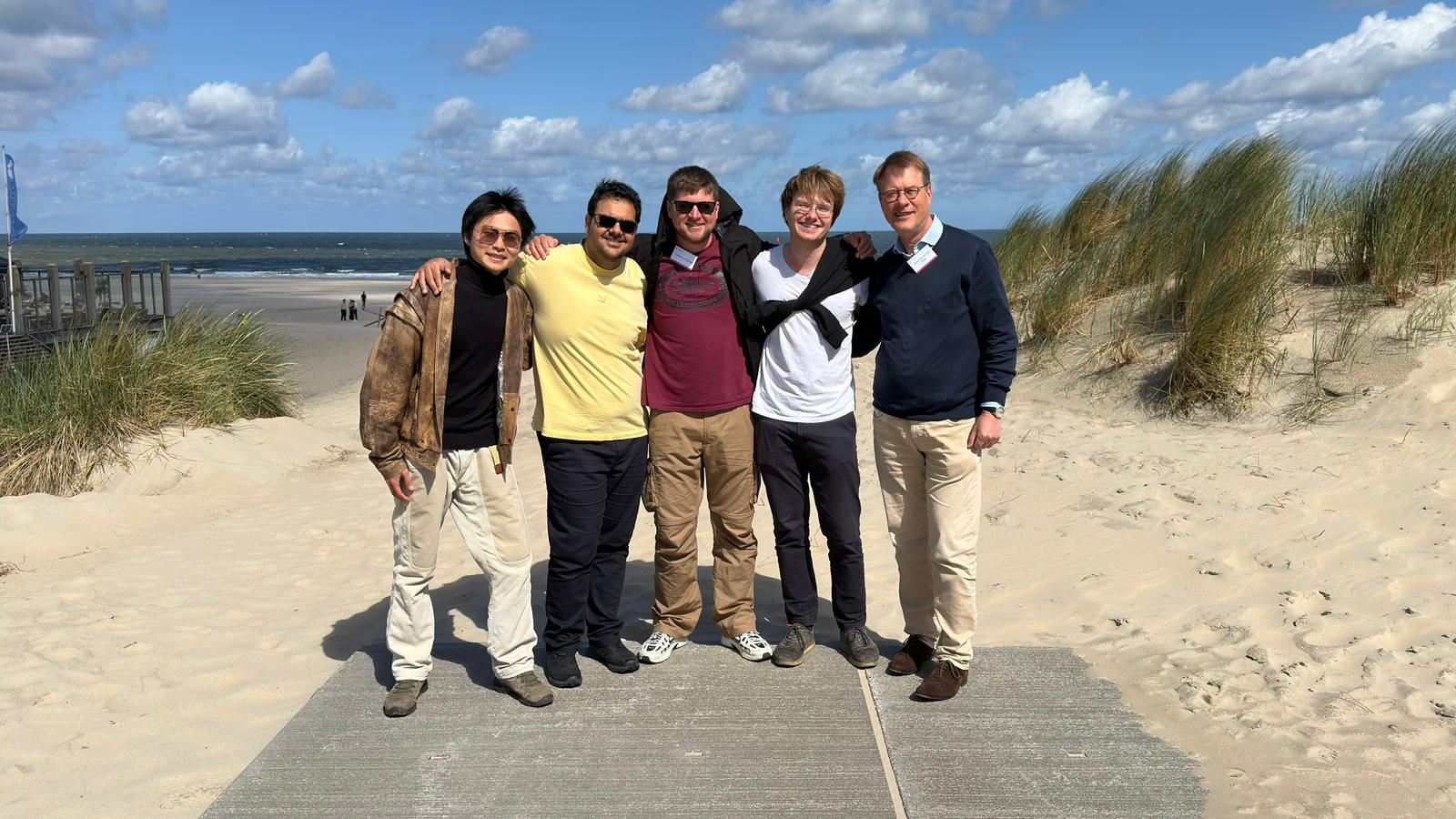
F.l.t.r. PhD students Langjian Dong, Ali Fakhrolmobasheri, Leander van Boven and Alwin Jansen and
Prof. Pieter van der Zaag.
Inaugural Lecture Pieter Jan van der Zaag
29 May 2026
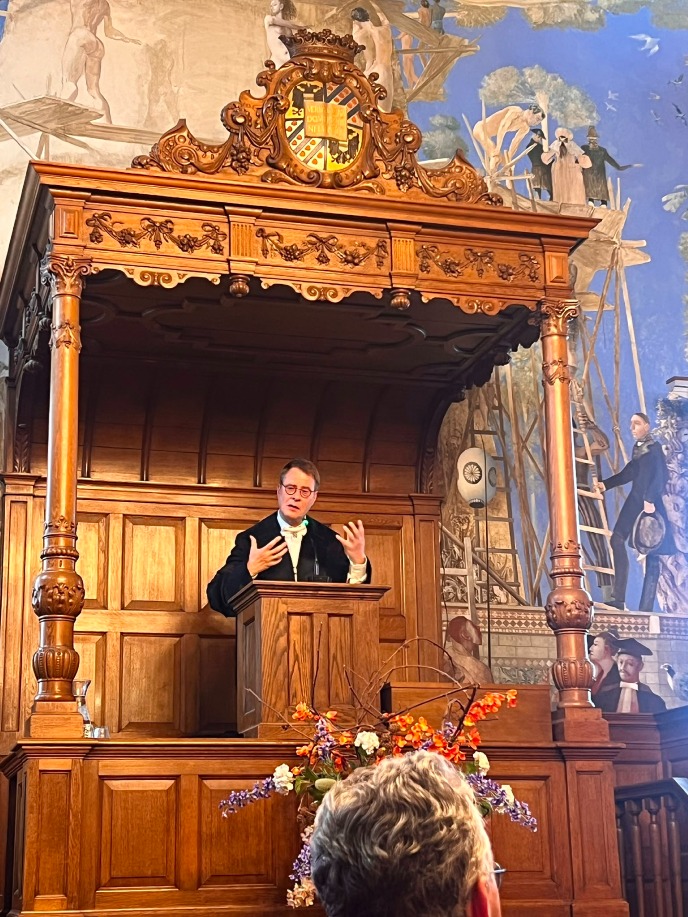
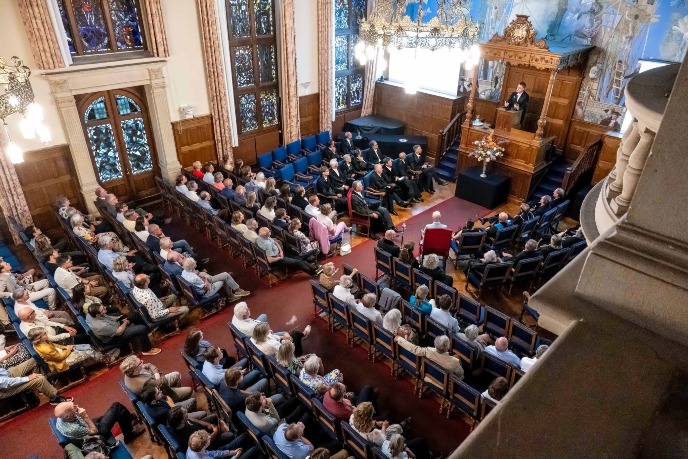
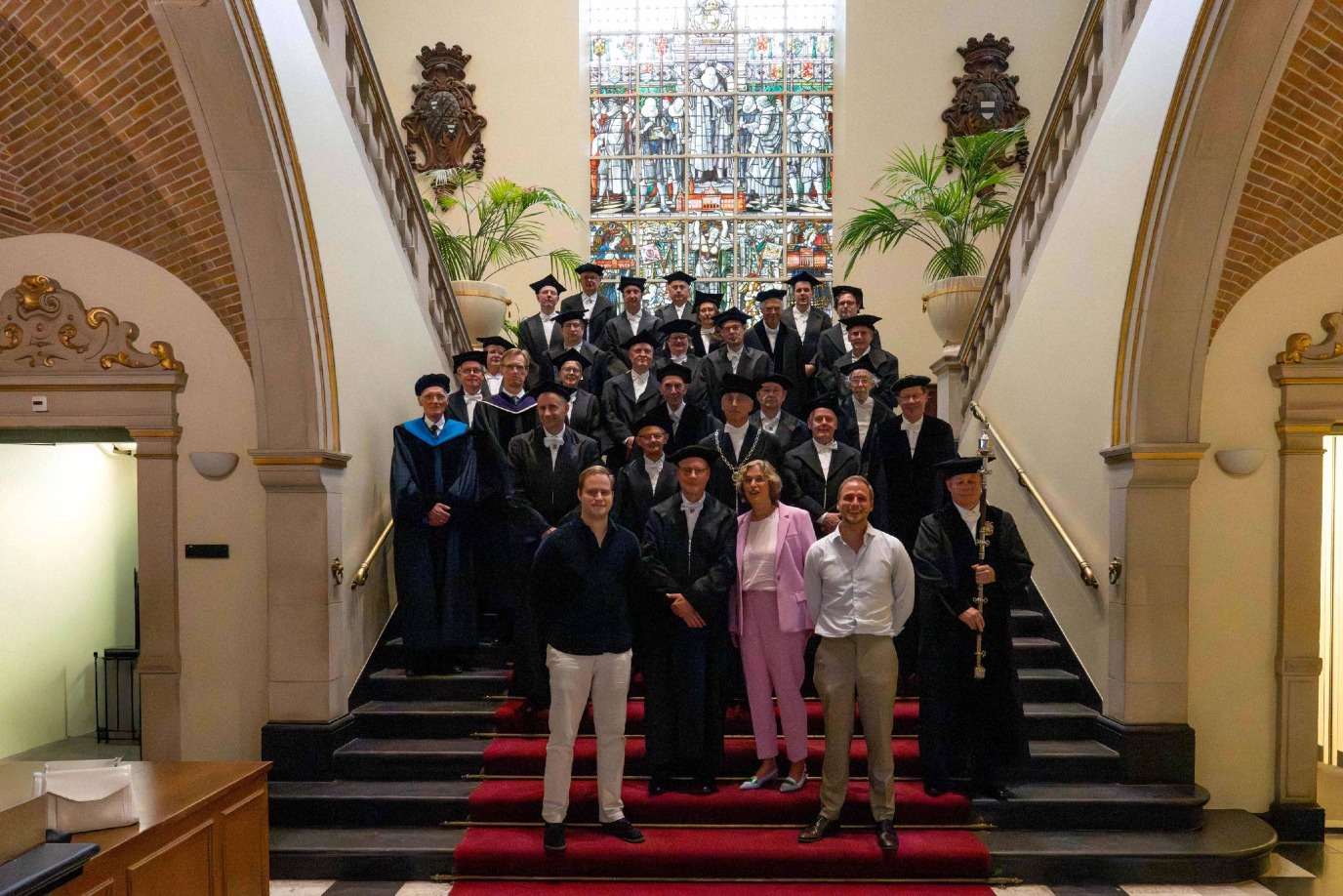
On 29 May 2026 Pieter Jan van der Zaag delivered his inaugural lecture entitled:
How shall you eke order out of chaos?
He has been appointed Professor of Bio-Nanotechnology at the Faculty of Science and Engineering and also Professor of Molecular Imaging at the Faculty of Medical Sciences.
Leander van Boven starts as PhD student
1 April 2026
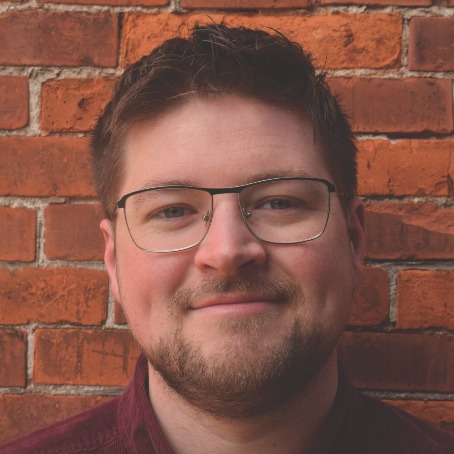
I am Leander van Boven, age 27 (26 when I started my PhD), and since the first of April 2026 a PhD student at the Molecular Biophysics (MBP) department at the RUG also employed at the department Nucleaire Geneeskunde en Moleculaire Beeldvorming (NGMB) at the UMCG, performing research to improve Fluorescent Guided Surgery (FGS). My research will primarily be focused at the computational and image processing side of FGS, as a result of my Artificial Intelligence background. Next to my research I like to be active in various sports, like running, cycling, swimming, kickboxing and racket sports. When I am not active, I play video games or do some side projects involving programming, micro-controllers and small electronics.
Paper Ali Fakhrolmobasheri and Thom Nijboer (UMCG)
November 2025
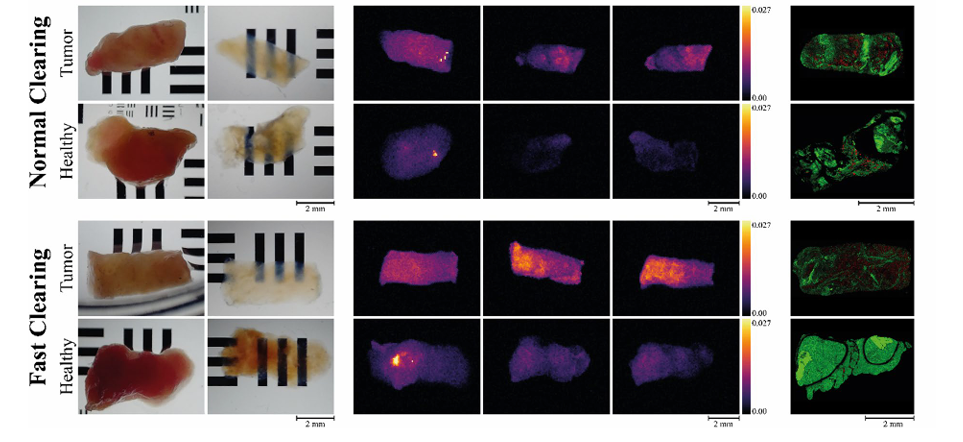
Congratulations to Ali Fakhrolmobasheri and Thom Nijboer on their first paper showing that tissue clearing is feasible on clinical samples taken from fluorescence-guided surgery and can be done on biopsis in one hour. This paper was published in Scientific Reports in November.
Paper Langjian Dong and Gijs Luiten
August 2025
Congratulations to Langjian Dong with the first paper of his PhD project published and to Gijs Luiten for having his first ever paper published on "Temporal and spatial evolution in transparency in tissue clearing" in Biophysics Reviews.
See also the movie which shows an example of what they have studied.
Langjian Dong and Daan Roos win the Rudolf Agricola Interdisciplinary Collaboration Award
June 2025
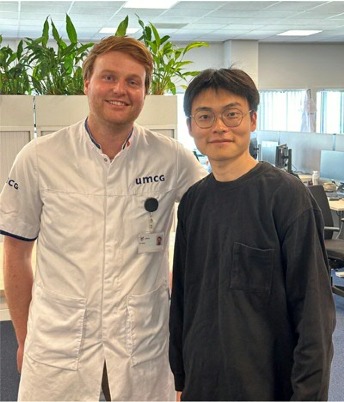
Langjian Dong, PhD candidate at the Zernike Institute under supervision of Professor Pieter van der Zaag, together with Daan Roos, PhD candidate at the University Medical Center Groningen (UMCG) under the supervision of Professor Max Witjes (Professor of Maxillofacial Oncology), has won the 2025 Rudolf Agricola Interdisciplinary Collaboration Award. This prize, awarded by the Rudolf Agricola School for Sustainable Development at the University of Groningen, comes with a €2,000 grant.
With this funding, they aim to further develop their idea to support surgeons in a sustainable way during the assessment of surgical margins in real time. Oncological resections in cases of oral cavity cancer are particularly challenging, as they require precise removal of the tumor along with a 5 mm margin of healthy tissue in a delicate area. At the UMCG, extensive research is being conducted to support this process using (molecular) fluorescence imaging.
Making the resection margins transparent could enhance the effectiveness of fluorescence imaging—a concept currently being explored at the Zernike Institute. Existing methods rely on optical imaging techniques that use chemicals which are not environmentally friendly.
In September 2024, a study published in the leading journal Science (Z. Ou et al., Science 385, 1061 (2024)) showed that tissue in mice could be made transparent using tartrazine, a dye commonly used in the food industry. Daan and Langjian now want to investigate whether this approach can be applied to human tissue. If successful, this could make the process more sustainable and potentially highly suitable for oncological resections in the head and neck region.Langjian Dong, PhD candidate at the Zernike Institute under supervision of Professor Pieter van der Zaag, together with Daan Roos, PhD candidate at the University Medical Center Groningen (UMCG) under the supervision of Professor Max Witjes (Professor of Maxillofacial Oncology), has won the 2025 Rudolf Agricola Interdisciplinary Collaboration Award. This prize, awarded by the Rudolf Agricola School for Sustainable Development at the University of Groningen, comes with a €2,000 grant.
With this funding, they aim to further develop their idea to support surgeons in a sustainable way during the assessment of surgical margins in real time. Oncological resections in cases of oral cavity cancer are particularly challenging, as they require precise removal of the tumor along with a 5 mm margin of healthy tissue in a delicate area. At the UMCG, extensive research is being conducted to support this process using (molecular) fluorescence imaging.
Making the resection margins transparent could enhance the effectiveness of fluorescence imaging—a concept currently being explored at the Zernike Institute. Existing methods rely on optical imaging techniques that use chemicals which are not environmentally friendly.
In September 2024, a study published in the leading journal Science (Z. Ou et al., Science 385, 1061 (2024)) showed that tissue in mice could be made transparent using tartrazine, a dye commonly used in the food industry. Daan and Langjian now want to investigate whether this approach can be applied to human tissue. If successful, this could make the process more sustainable and potentially highly suitable for oncological resections in the head and neck region.