
Groningen Programme on Social Evolution
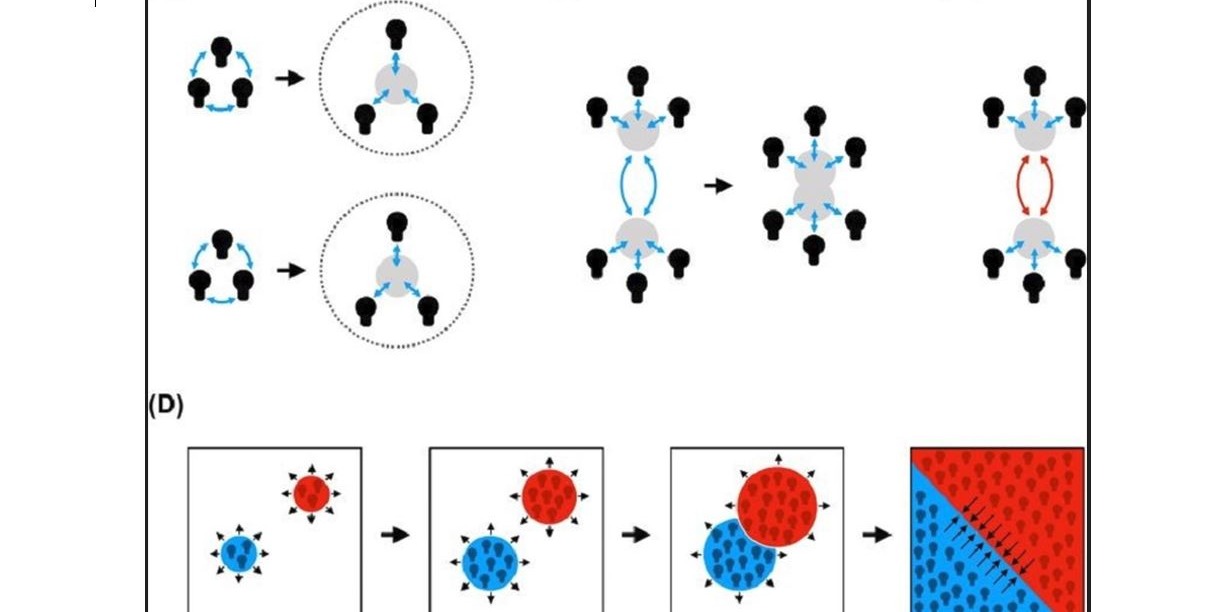
Whereas group-living is ubiquitous throughout nature, how group-living is structured takes myriad forms from ephemeral aggregations in microbes and anonymous swarms of insects to schools of fish and flocks of birds, and from small groups of mammals sleeping and foraging together to complex multi-level societies seen in some insect and primate species.
Social evolution concerns how and why animals – human and non-human – live together. Integrating an unprecedented range of perspectives developed in the behavioural and social sciences, in business and economics, and in biology, GroPSE asks how cooperation, spite, altruism and selfishness create and shape the myriad forms of social organization seen throughout nature. And it asks how the ways animals are socially organized shape the micro-foundations of society at the neurogenetic, cognitive and behavioural level.
Answers and break-throughs can be of use – to improve animal welfare and to treat psycho-social disorders and pathologies in humans. At scale, our science can inform policy for preventing and de-escalating destructive conflict, and for helping societies, human and non-human, to flexibly confront and survive external pressures and existential threats.
GroPSE communicates with colleagues within the University of Groningen by organizing regular workshops and developing interdisciplinary research. GroPSE communicates with other scholars worldwide by organizing the yearly Groningen Symposium on Social Evolution (GroSyS).