
SAPIENS-TaalX Talks: Stories (Re)Contextualized: Language, Culture, Politics
Interdisciplinary research lecture series co-organized by sector plan group TaalX: Language in Context and the ICOG theme group Storytelling as Power – Identity, Equity, iNclusion, Sustainability (SAPIENS). Lead organizers: Joanna Chojnicka (TaalX) and Tekla Mecsnóber (SAPIENS).
Upcoming talk
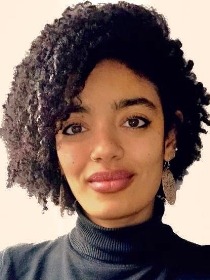
Friday 8 May 2026, 15:00-17:00 (room 1314.0042, Harmoniegebouw)
Mayada Madbouly (University of Groningen):
"Whose “Divas”? Exhibition, gender, and the international circulation of a contemporary “Arab” artistic memory"
Abstract
How gender, nostalgia, and memory are intertwined? How does displaying non-Western artistic references in Western cultural institutions produce practices of othering entangled with the national context where exhibitions are designed? How does the use of women to narrate the artistic memory of the other reveal a complex relationship with colonialism? To answer these questions, this presentation takes the “Arab divas” exhibition (2020-2024) as a departure point to reflect on exhibitions as sites where national and international politics are entangled. It does so by focusing on the politics of nostalgia, their representations, and their experiences in exhibitions. The presentation explains the role of exhibitions in Western cultural institutions in producing colonial nostalgia. It argues that colonial nostalgia becomes gendered when these institutions use women as an instrument to celebrate a selected past labelled as “Golden age.” This presentation mobilizes two main methodological tools: discourse analysis (the exhibition, its online pedagogical platform, and its published edited book) and auto-ethnography. I use my visiting experience (observations, feelings, and questions) in the exhibition as an auto-ethnographic tool to reflect on heritage, gender, nostalgia, and colonialism in the context of western cultural institutions.
About Mayada Madbouly
Mayada is a sociologist specialized in the making of memories and heritage work in the Middle East and North Africa. Her research interests analyze memorial practices, social movements, and racialization in the Modern MENA region. She lectures on political sociology, cultures studies, and sociology of international relations.
________________________________________________________________________
Past talks

Shonaleigh Cumbers:
"Walking the stories back home: Practicing the Jewish Drut’syla storytelling tradition today"
Friday 20 March 2026, 14:00-16:00 (Engelse Zaal, Academiegebouw)
Abstract
Join Shonaleigh Cumbers for an intimate exploration of the ancient Jewish Drut’syla storytelling tradition. Experience stories from the family repertoire told in the traditional way, learn about the roots of this oral heritage and Shonaleigh's journey as both learner and teacher, and engage in conversation about keeping tradition alive in contemporary times.
Shonaleigh will share a typical sample of stories from the family tradition in live telling, and talk about the roots of the tradition and her personal experiences learning and teaching it, before looking ahead to the future. There will be plentiful opportunities for questions and general discussion.
About Shonaleigh
Having learned the Drut’syla tradition from the age of four, Shonaleigh carries thousands of oral stories from the Jewish tradition and shares their magic, mystery and wisdom with audiences around the world. Shonaleigh performs at storytelling festivals and events in Europe, America and Australasia as well as working with acclaimed organisations including the BBC, Hull Truck Theatre and appearing as a special guest at The International Conference of World Affairs. A passionate advocate for the development of storytelling as a cultural and educational tool, Shonaleigh has been involved in several projects around Holocaust memorial as well as running training for the Leo Baeck Rabbincal College, and has served as an associate lecturer in the University of Derby’s Creative Writing programme. She is senior lecturer for the House of the West Wind / College of Storytelling.
More information
This is a practice-based event in the interdisciplinary 2025-2026 SAPIENS-TaalX Talks series focusing on “Stories (Re)Contextualized: Language, Culture, Politics,” co-organized by sector plan group TaalX: Language in Context and the ICOG theme group Storytelling as Power – Identity, Equity, iNclusion, Sustainability (SAPIENS), with additional support from the Middle Eastern Studies department and the Research Centre for Historical Studies (CHS), and financial support from the Groningen Research Institute for the Study of Culture (ICOG).
For further information, please visit Shonaleigh’s website or read this article in Dutch about her connection with the Netherlands. For those interested in oral storytelling as a living practice, there are opportunities to attend a session and a workshop with her in the Grand Theatre, Groningen, on 20 and 21 March 2026.
________________________________________________________________________
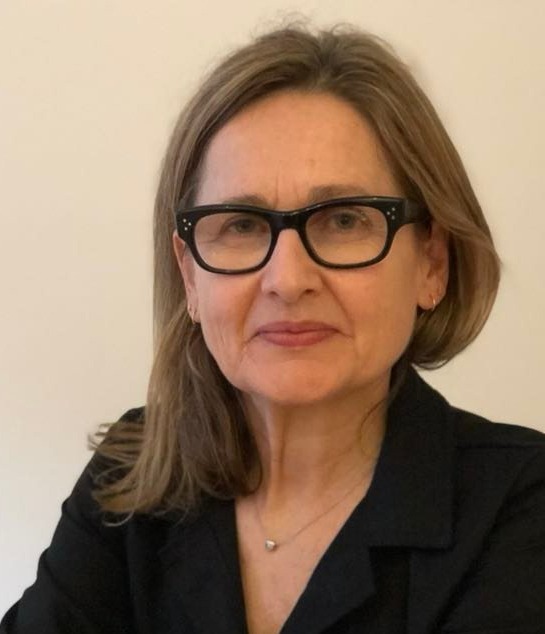
Sarah Gleeson-White (University of Sydney):
“Little Harlem’s Little Magazines: Black Literary Los Angeles Between the Wars”
Tuesday 16 December 2025, 15:30-17:00 (room 1314.0042).
Abstract
New York City and, more recently, Chicago, Philadelphia and Washington DC, are the sites that continue to inform scholarly approaches to and understandings of the New Negro Renaissance of the 1920s. One consequence of such spatial framing has been the obscuring of the contemporaneous near-frenzy of Black cultural production taking place on the West coast.
In this paper, building on important histories of early twentieth-century Black California—Douglass Flamming’s, Emily Lutenski’s, Catherine Parsons Smith’s, Daniel Widener’s, Alison Rose Jefferson’s—I unearth the thriving Black literary scene of 1920s and 1930s Los Angeles.
Clustered around Central Avenue, this “little Harlem,” as Chandler Owen described it in 1922, included authors (Wallace Thurman, Arna Bontemps), journalists (Fay Jackson) and musicians (Harold Bruce Forsythe), and was supported by several Black periodicals and literary societies. (Owen Chandler, “From Coast to Coast,” The Messenger May 1922, 409.)
Here, I focus on two Black ‘little magazines’ that have attracted next-to-no scholarly attention: The Outlet (1924-1925) and Flash (1929-1930). Thurman, who founded and edited The Outlet, declared it “the first western Negro literary magazine,” and in many ways, it was a rehearsal for his better-known, 1929 Harlem-based little magazine, Fire!!. Jackson, with James W. McGregor, edited Flash, a magazine that Alice Dunbar Nelson described as “a miniature Tatler.” Both The Outlet and Flash published columns about Los Angeles’ social, political and cultural life, in addition to fiction and poems, and book reviews, among much else. These important, albeit short-lived, little magazines provide invaluable insights into Black Los Angeles of the interwar period. They also remind us of the centrality of periodical culture to the New Negro Renaissance, and more, that Harlem’s own cultural flourishing did not emerge out of nowhere—nor from the Great Migration from South to North alone. As it turns out, it had been percolating in California.
About Sarah Gleeson-White
Sarah Gleeson-White is Associate Professor in English at the University of Sydney. Her scholarship in early-20th-century U.S., including African American, literature and film has appeared in PMLA, Modernism/modernity, American Literature, African American Review and elsewhere. Her books include William Faulkner at Twentieth Century-Fox (Oxford UP 2017) and most recently Silent Film and the Formations of U.S. Literary Culture: Literature in Motion (Oxford UP 2024), and she is the lead editor of The New William Faulkner Studies (Cambridge UP 2022). Her current book project, generously supported in part by a 2025 Groningen Faculty of Arts Senior Research Fellowship, is Wallace Thurman, 1922-1934: Black Authorship and Print Culture Between the Wars.
________________________________________________________________________

Steven Gilbers (University of Groningen):
“Criminal Slang”: The Role of Language in Hip-Hop Storytelling
Friday 10 October 2025, 15:00-17:00 (room 1314.0042)
Abstract
In hip-hop culture, language plays a central role. Hip-hop heads typically have extensive knowledge about language, and they see language not simply as “a means of communication,” but “as a series of choices that represent beliefs and have consequences” (Morgan, 2001, p. 190). The language of hip-hop is in great part shaped by “[hip-hop] heads’ unabated drive for stylistic distinction, creativity, manipulation of grammar and pronunciation, and the politics and pleasure involved in their use of the verbal art of slang” (Alim, 2015, p. 850), and nothing exemplifies this notion like the art of hip-hop lyricism, also known as the poetics of rap.
In this talk, I will dissect how hip-hop lyricists manipulate language to shape the narratives of their music. I will address how rappers use street slang to intentionally obfuscate meaning, how they play with grammar and phonology to create ambiguity, and how this all ties into some of the central tenets of hip-hop culture and Black Atlantic creative practice. Ultimately, the talk aims to highlight the importance of language in hip-hop storytelling, showing how a linguistic approach can be used to better understand the nuances of rappers’ cultural and political commentary.
About Steven Gilbers
Steven Gilbers (September 25, 1991) is an assistant professor in English Linguistics at the University of Groningen, specialized in the field of hip-hop linguistics. His research focuses on the connection between language and music in a hip-hop context, regional variation in African-American English speech and rap flows, the role language plays in hip-hop culture, and the phonetics of hip-hop lyricism (i.e., the poetics of rap). Gilbers is a former Fulbright scholar (NYU and UCLA), and is currently co-organizing the upcoming interdisciplinary European Hip Hop Studies Conference in Groningen (March 18-21, 2026). Aside from his academic endeavors, he is also active as a rapper affiliated with American music label FiveSe7en Collective, and he is involved with Dutch hip-hop platform Homebase.