
Conference Program
Thursday 21 May: Settler Colonialism in the Modern and Contemporary Period
|
09:00 - 09:15
|
Opening & Introduction conference theme
|
|
9:15 - 10:45
|
Panel 1: Settler Colonial Paradigms Under Strain: Non-Binary Formations and Long Decolonizations
|
|
10:45 - 11:15
|
Coffee
|
|
11:15 - 12:45
|
Panel 2: Reception studies and (Early) Modern Settler Colonial Discourses
|
|
12:45 - 14:00
|
Lunch
|
|
14:00 - 16:00
|
Panel 3: Settler colonialism today: manifestations, consequences, and resistance.
|
|
16:00 - 16:30
|
Coffee
|
|
16:30 - 17:30
|
Key-Note Lecture: Lorenzo Veracini (Swinburne University of Technology's Institute for Social Research)
|
|
17:30 - 18:30
|
Drinks
|
|
19:00 - 22:00
|
Conference dinner
|
Panel 1: Settler Colonial Paradigms Under Strain: Non-Binary Formations and Long Decolonizations
Panel 1: Settler Colonial Paradigms Under Strain: Non-Binary Formations and Long Decolonizations (09:15 - 10:45)
This panel interrogates the conceptual and empirical boundaries of settler colonialism by examining its complex, often contradictory manifestations across diverse historical and geographical contexts. Moving beyond binary or linear understandings of settler colonial projects, the papers collectively challenge the notion that settler colonialism operates according to a singular, modern logic. Instead, they reveal how settler colonial structures are shaped by intra-communal racialization, protracted decolonization processes, and dynamic power assemblages that defy traditional hierarchies. The papers demonstrate how racialization, protracted decolonization, and relational power struggles reshape our understanding of settler colonialism as a long-term, evolving structure—one that continues to influence contemporary societies. The panel invites reflection on the theoretical and empirical implications of these findings for Settler Colonial Studies, particularly in light of the conference’s focus on the deep historical roots and enduring legacies of settler colonialism.
Coordinators:
Maria Bonaria Urban (Royal Netherlands Institute in Rome) & Karène Sanchez-Summerer (Groningen University)
Speakers:
Laura Almagor (Utrecht University), "Complicating Settler Colonialism: North African Jews, racialization, and decolonization"
Emanuele Ertola (Università degli Studi di Siena), "Italian settler colonialism and its long decolonization: multiple “returns" and many ends"
Nikos Moudouros (University of Cyprus), "Beyond the Binary: Settler Colonialism and the Fourfold Power Struggle in Northern Cyprus"
Panel 2: Reception studies and (Early) Modern Settler Colonial Discourses
Panel 2: Reception studies and (Early) Modern Settler Colonial Discourses (11:15 - 12:45)
This panel examines how classical and biblical models and narratives shaped and legitimized (early) modern colonialism. In doing so, it contributes to ongoing debates on the practical and ideological frameworks underpinning settler-colonial structures. Rather than seeking a single, universal logic, the panel approaches colonialism as a historically and culturally contingent process. To this end, it brings together both theoretical reflections on the interaction of the various disciplines and practices involved, and case studies that investigate these dynamics of reception in greater detail. More specifically, the panel aims to foster dialogue between scholars of classical and biblical reception studies—two fields that are central to this topic yet have largely developed in isolation from one another.
Coordinator:
Susanna de Beer (Royal Netherlands Institute in Rome)
Speakers:
Dan-el Padilla Peralta (Princeton University), "Reading for the Settler-Colonial Apocalypse: The Desert of Montesinos"
Mathura Umachandan (University of Exeter), "Complicity with scholasticide: what classical reception studies’ silence about Palestine tells us about its relationship to empire"
Yvonne Sherwood (University of Oslo), "Dramas of Reception/Rejection and Justification: The Use of the Bible and the Classics in the Narration of the ‘Conquest’ of Peru (Cajamarca, 1532)"
Panel 3: Settler colonialism today: manifestations, consequences, and resistance.
Panel 3: Settler colonialism today: manifestations, consequences, and resistance. (14:00 - 16:00)
This panel seeks to identify settler colonial patterns specific to our contemporary world, understand its consequences both for societies and international relations, and discuss ways people found to resist. More specifically, it investigates how (imperial) states and societies utilise confinement, banishment and (re)settlement to establish and deepen control over land and people; which domestic social processes foster settler colonial dynamics; how demographics function as a tool of governmentality, security and social engineering; how settler colonial approaches facilitate resource extraction and other forms of economic control; and how individuals and communities organise themselves when confronted with settler colonial patterns including, but not limited to, open resistance.
Coordinators:
Clemens Six (Groningen University) & Klaas Stutje (NIOD)
Speakers:
Jan-Bart Gewald (Leiden University), "Settlers and Miners: The centrality of mining capitalism in the establishment of settler societies in the South African Empire, 1807-2012."
Jo Smith Finley (Newcastle University), "Where Fear Is Normal: State Terror and Genocidal Practices in the Service of China’s Contemporary Settler Colonialism"
Emine Ziyatdin (documentary photographer, Co-Founder of Ukrainian Warchive) & Yuliya Hilvevych (Groningen University), "The Heritage of Soviet Settler Colonialism: Crimea"
Hinke Piersma (NIOD)
Friday 22 May: Settler Colonialism before Modernity?
|
09:00 - 09:15
|
Introduction conference theme
|
|
9:15 - 10:45
|
Panel 4: New DNA and Bioarchaeological Approaches to Settler Colonialism in First-Millennium BCE Italy
|
|
10:45 - 11:15
|
Coffee
|
|
11:15 - 12:45
|
Panel 5: Settler Colonial Theory for the Middle Ages? |
|
12:45 - 14:00
|
Lunch
|
|
14:00 - 16:00
|
Panel 6: Settler Colonialism in Early Modernity: The Case of the Dutch Empire
|
|
16:00 - 16:30
|
Coffee
|
|
16:30 - 17:30
|
Key-Note Lecture: Krishan Kumar (University of Virginia)
|
|
17:30 - 18:30
|
Drinks
|
|
19:00 - 22:00
|
Conference dinner
|
Panel 4: New DNA and Bioarchaeological Approaches to Settler Colonialism in First-Millennium BCE Italy
Panel 4: New DNA and Bioarchaeological Approaches to Settler Colonialism in First-Millennium BCE Italy (09:15 - 10:45)
This panel examines whether the concept of settler colonialism offers a useful lens for analyzing colonialism and migration in ancient Italy during the first millennium BCE. In particular, it considers whether these processes might be understood as a “logic of elimination,” as proposed by Wolfe for the modern period. The panel opens with an overview of historical and archaeological scholarship on the impacts of colonial and migratory dynamics in ancient Italy. It then presents contributions exploring how bioarchaeological approaches, especially ancient DNA studies, might help advance this discussion. Contributors will consider the potential of these methods for shedding light on the demographic consequences of ancient colonial migrations and whether they could indicate population changes comparable to those suggested for modern settler colonial contexts. A key focus will be a critical discussion of the possibilities, limitations, and ethical considerations of using these datasets to explore questions of colonial impact, migration, and population dynamics in the ancient Mediterranean.
Coordinators:
Jeremia Pelgrom (Groningen University) & Tesse Stek (Royal Netherlands Institute in Rome)
Speakers:
Quentin Bourgeois (Leiden University),
Simon Stoddart (Cambridge University), "Multiple strategies towards understanding the mobility of nucleation in the first millennium BC of central Italy"
Alfredo Coppa (Sapienza University), "Roman expansion and local populations: replacement, integration, or resilience? A genomic and anthropobiological approach"
Panel 5: Settler Colonial Theory for the Middle Ages?
Panel 5: Settler Colonial Theory for the Middle Ages? (11:15 - 12:45)
This panel seeks to examine whether the practices and ideologies of settler colonialism can be identified in medieval contexts. How did medieval societies establish territorial control, legitimize land appropriation, or reshape legal and social structures in ways that parallel settler colonial frameworks? Speakers will reflect on the usefulness and limitations of applying settler colonial theory to medieval case studies. Does settler colonial theory help us to place the Middle Ages in a longer time frame of European colonisation, or do we encounter differences that render it inadvisable to apply these theories? The session covers Scandinavia, the Baltic, Ireland, and the Mediterranean.
Coordinator:
Dinah Wouters (Groningen University)
Speakers:
Ivo Wolsing, "The First Crusade and the Development of a Settler (Colonial) Ideology, 1095-1145"
Patrick Meehan & Erik Wolf (Aarhus University), "Un-settling Ostsiedlung: Reframing Settler Colonial Histories in the Baltic Sea Region, ca. 1200-1500"
Diarmuid Ó Seancháin Dálaigh (University College Dublin), "First as Tragedy? Invasion and Plantation in Medieval and Early Modern Desmond"
Panel 6: Settler Colonialism in Early Modernity: The Case of the Dutch Empire
Panel 6: Settler Colonialism in Early Modernity: The Case of the Dutch Empire (14:00 - 16:00)
Few empires are better suited than that of the Dutch Republic for testing the applicability of the settler colonial paradigm to the early modern world. The historiography of the Dutch overseas empire has long framed it as an empire of trade rather than settlement, emphasizing commercial expansion through chartered companies. However, recent scholarship has challenged this binary by revealing how trade was intertwined with warfare, land appropriation, coerced labor, the imposition of colonial governance, and genocide. This raises the question to what extent the modern framework of “settler colonialism” can be applied to the early modern Dutch empire, and how this framework relates to alternative models such as venture colonialism. This panel critically assesses these paradigms and their underlying assumptions. By juxtaposing case studies from across the Dutch imperial world in the seventeenth and eighteenth centuries, it explores the usefulness and limits of applying the category of “settler colonialism” to the development of empire before modernity.
Coordinators:
Mark Thompson (Groningen University) & Arthur Weststeijn (Utrecht University)
Speakers:
Susanah Romney (New York University), "Does there need to be a colony before we can call it settler colonialism? The Dutch on the Oyapoc River in the Seventeenth Century"
Timo McGregor (Leiden University), "Inter-imperial Settler Colonialism: Property, Subjecthood, and Violence in Dutch Atlantic Settlements"
Paul van der Linde (Nijmegen University/University of Cape Town), "Co-opted by the Company or Capitalising on Freedom? Formerly Enslaved Landowners and Dutch Settler Colonialism at the Cape, 1652-1702"
Pepijn Brandon (VU Amsterdam)
Saturday 23 May: Settler Colonialism and Heritage
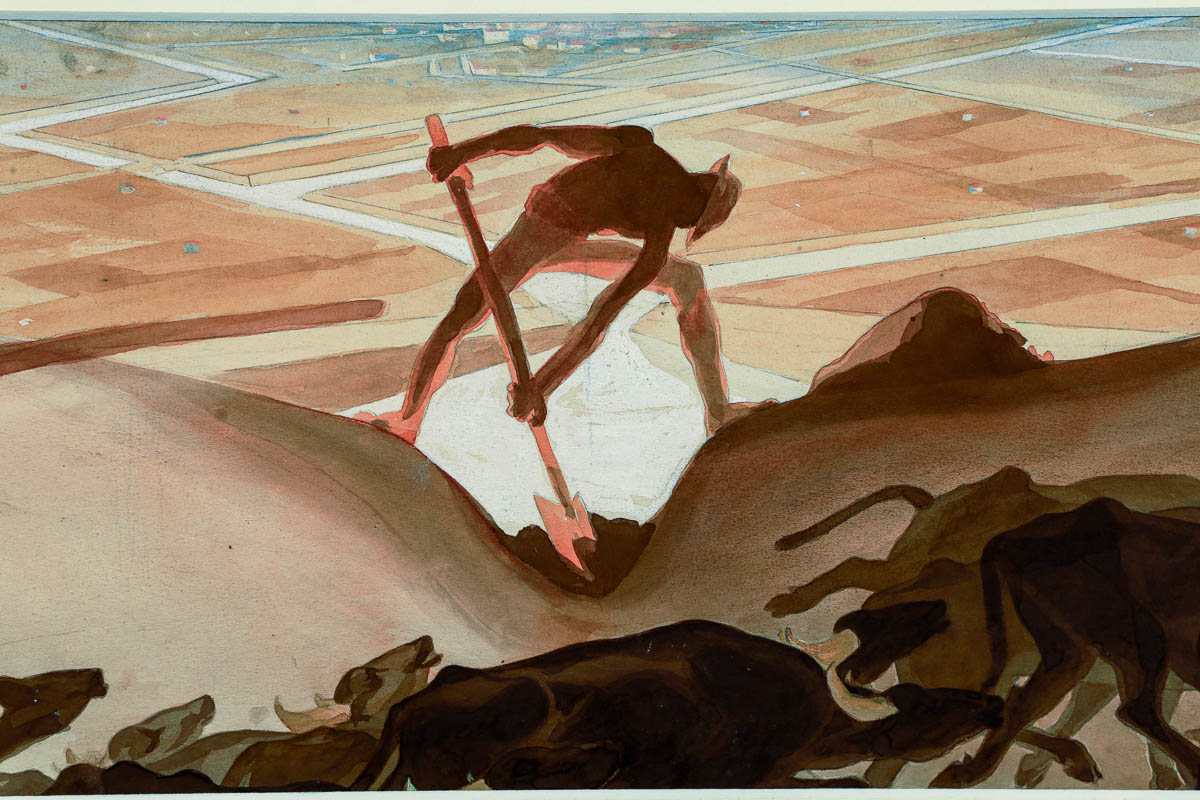
On the final day of the conference, we will go on an excursion to the Dutch Colonies of Benevolence. These domestic colonies were established in the early nineteenth century as an attempt to emancipate the urban poor. In their organization, ideology, and demographic composition, they share many similarities with settler colonial structures, although a clear logic of the elimination of native populations appears to be absent. The Colonies of Benevolence were granted UNESCO World Heritage status in 2021. During this final panel, we will visit Frederiksoord, one of the best-preserved and most thoroughly musealized examples of such colonies. Throughout the visit, we will discuss the similarities and differences between these domestic colonies and the more familiar overseas forms of settler colonialism. Moreover, in a concluding panel, we will address the complex issue of settler colonialism and heritage. How should these colonies be remembered, and which stories should be told? In particular, the panel will explore the tension between the role of these colonies in foundation narratives and identity formation, on the one hand, and their darker histories of replacement, elimination, and oppression, on the other.
Coordinator: Maarten Zwiers (Groningen University)
Confirmed Speakers: To be announced
|
8:30 - |
Departure to Frederiksoord from Groningen Centre |
|
10:00 - 11:30 |
Roundtable: Settler Colonialism and Heritage |
|
11:30 - 13:00 |
Excursion Frederiksoord |