

Testimonials
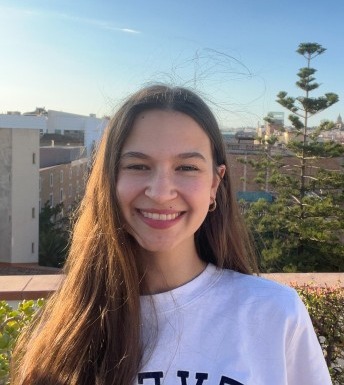
'Attending the 'Data Science and AI in Health' Summer School 2026 at UMCG has been an amazing experience! I gained valuable insights into how AI is transforming healthcare, from its exciting potential to the challenges and risks of implementing it in practice. Learning from experts at an institution leading AI innovation made it even more impactful.
The best part, though, has been the people. Meeting participants from diverse backgrounds, exchanging ideas, and learning from different perspectives has been incredibly inspiring. I'm especially excited to work with my multidisciplinary team on the final pitch project.
I would highly recommend this summer school to anyone interested in AI and healthcare. It offers cutting-edge knowledge, thought-provoking discussions, and a collaborative environment that makes the experience both enriching and memorable.'
Maria Chatziaslani, PhD Candidate in Bioinformatics at Josep Carreras Leukaemia Research Institute (IJC), Badalona, Barcelona, and participant Summer School 2026
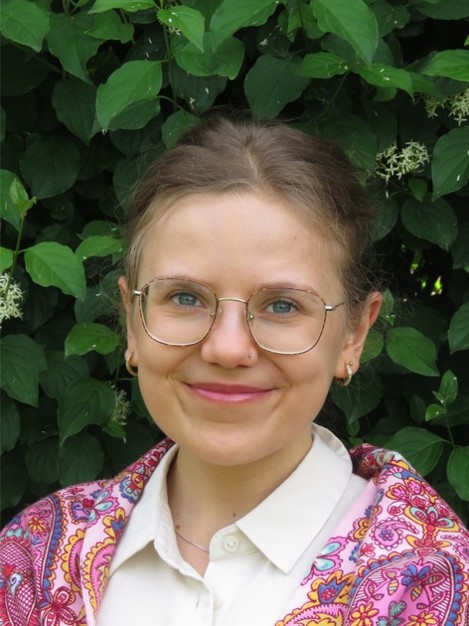
'Attending the Summer School ‘Data Science and AI in Health’, edition 2026 was an incredibly valuable and enjoyable experience. The programme included two preparatory courses, a packed face-to-face course week with practical workshops, excursions and social activities and the opportunity to take part in a hackathon, which includes a prize for the group pitch.
AI in healthcare is inherently multidisciplinary and this was illustrated by the breadth of the programme. We explored not only the technical side of AI, but also the business, design, legal, ethical, societal, clinical, and practical implementation aspects. This included workshops on cleaning and synthesising data, practical sessions in Google Colab, lectures from a business perspective, and a design workshop focused on generating a healthcare product. We also covered the ELSA (ethical, legal, and societal implications) aspects of AI, as well as compliance laws and regulatory considerations.
There were also more technical components, including understanding and mitigating LLM hallucination, quantifying model uncertainty, and exploring physical representations for lifelong interactive robot learning during an excursion to the Faculty of Science and Engineering (FSE), University of Groningen.
We were shown examples of AI implementation in clinical practic at the University Medical Center Groningen (UMCG), such as the use of AI to support the diagnosis of laryngeal cancer during flexible endoscopy. Another memorable activity was a board game designed to stimulate critical thinking about AI implementation. It challenged us to balance time, budget, human-patient interaction, legal aspects, feasibility, and efficiency.
In my opinion, the strongest part of this summer school was the diversity of the participants which complimented the diversity of the programme accordingly. The group included PhD students, medical students, clinicians, data scientists, law students, engineers, the list goes on. This changed the learning environment completely. The discussions were not only technical, and they were not only clinical. It stimulated collaboration and understanding each other’s perspectives. This was especially relevant for the hackathon following the face-to-face week, where everyone’s expertise has a role to play.
Most days ran from around 9 to 5 (with ample coffee breaks) and every day offered something new. Despite the intensity, the atmosphere was welcoming and energising. We got on incredibly well as a group, and the programme created a strong sense of collaboration and community.
The organisers also put a lot of thought into the social side of the summer school. Every day we received lunch vouchers that were more than enough to buy a hot meal. We also enjoyed organised excursions, a BBQ boat ride through the canals of Groningen, and a dinner at one of the best Italian restaurants in the city of Groningen.
Overall, I would highly recommend this summer school to anyone interested in AI in healthcare, regardless of whether they come from a technical, clinical, legal, business, or academic background. You do not need to be an experienced programmer, data scientist, or AI expert to benefit from it. The strength of the programme lies in its broad coverage, multidisciplinary nature, and emphasis on collaboration. It provided a practical and thought-provoking introduction to the many dimensions of AI in healthcare.'
Lucy de Korte, Medical Student, University Medical Center Groningen, University of Groningen, and participant Summer School 2026
‘The summer school was really interesting. With a mix of several aspects related to AI, we saw how ethics is a complicated yet important facet of AI, how to set up a project from the start taking into consideration the data and methods needed to achieve a certain goal, how to identify the source (and reliability) of available data, how big data and medical imaging provide opportunities for AI, and finally had really nice networking with people from several different backgrounds and countries.

It really was a shame we couldn’t be together in Groningen due to the pandemic. However, the interactive platforms that were used provided a lot of opportunities for interaction, collaboration, networking, and social activities. TAs were always available to help with any technical issue or with the assignments. The python notebooks that were provided will be a nice reference for future work. Also, the lectures on ethics and setting up projects will definitely be guiding my future work.
I would recommend the summer school ‘Data Science and AI in Health’ for people that want an overview introduction of what can be done with AI in medicine.’
Guilherme Domingues Kolinger, PhD student at the Medical Imaging Center, University Medical Center Groningen (UMCG)
'The Summer School Data Science and AI in Health offered a great introduction into research in data science and AI in medical research. Something I really liked about the summer school was how much attention was given to the planning and possible pitfalls of projects utilizing data science and AI. Ethical issues, project planning and data issues are subjects which might be less exciting, but they are very important to consider when setting up a project and often neglected by those not very familiar with data science and AI.

For me personally, the examples of the usage of more advanced AI techniques and the practical assignments where we got hands-on experience fitting the models was the most directly useful part of the summer school. I had been thinking of applying some of these in my research, but it is a pretty big hurdle to take without any experience. Everyone was really eager to answer any questions we might have, both during lectures as well as during the practical assignments. I would advise those without programming experience to really follow the Python course offered by DataCamp, which was assigned to us prior to the Summer School, because some of the assignments will require some understanding of Python code.
The Summer School really went over and above my expectations and I am very happy I was able to attend. I would definitely recommend this Summer School to other people (in fact, I already have!). For those in medicine interested in using data science and AI or those in data science interested in their options in the medical field, the Summer School really has a lot to offer.'
Mila Roozen, PhD student Biomedical Data Science at Groningen Institute for Evolutionary Life Sciences (GELIFES), University of Groningen
The summer school was an exciting experience! We covered various AI-related topics, including the complexities of ethics, how to plan a project considering data and methods, how to assess data sources and reliability, deal with trustworthy AI, and the potential of big data and medical imaging in AI. Additionally, meeting people from different countries and backgrounds was incredibly valuable.
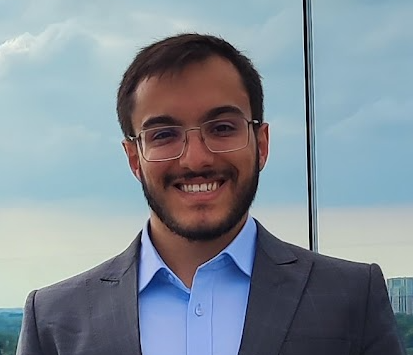
Being in Groningen made the experience even better, as it allowed for meaningful discussions, collaboration, and networking beyond the sessions. The group development was a key aspect of the program, and it was impressive how, in just one week, we managed to structure our project. The TAs were always available for support, and the lectures on ethics and project planning will also guide my next steps.
I highly recommend the summer school for anyone seeking an introduction to AI applications in medicine.
Felipe Gouhie, Summer School participant 2024