
GBB Seminar Series – PhD edition; Anthi Psoma; Thursday, March 26 / 4.15pm / room 5159.0029 / Energy Academy
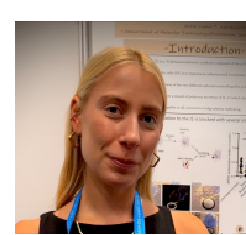
Anthi Psoma
Molecular Immunology
Reverse MHC class I signaling drives MTOC recruitment for polarized release of IL-12 at the immunological synapse
Microbes perform an astonishing range of biochemical reactions that are essential for life on Earth. While genomic analyses are powerful tools for predicting novel processes, truly understanding how microbes function requires validation at the biomolecular level. InInterleukin-12 (IL-12) is a key immunostimulatory cytokine produced by dendritic cells (DCs) in response to infection and plays a central role in the activation and differentiation of cytotoxic T cells. IL-12 is secreted in a highly polarized manner from late endosomes or lysosomes at the dendritic cell–T cell interface, known as the immunological synapse; however, the cellular mechanisms governing this spatially restricted cytokine release remain poorly understood. Here, by using confocal microscopy we show that in activated DCs, IL-12 accumulates at the Golgi apparatus prior to polarized secretion. Using artificial T cell mimics—beads coated with T cell surface ligands—we demonstrate that antigen recognition triggers recruitment of the microtubule-organizing center (MTOC) and the Golgi apparatus to the immunological synapse through reverse MHC class I signaling. This reorientation enables the localized release of IL-12 directly at sites of T cell engagement, likely allowing DCs to focus their stimulatory capacity on responsive T cells within the densely populated environment of secondary lymphoid organs. Moreover, by employing spatially patterned antibody arrays targeting MHC class I with microcontact printing techniques, we show that MTOC polarization is biased toward regions exhibiting the strongest reverse MHC class I signaling. These findings suggest that IL-12 is preferentially delivered at synapses formed with T cells of higher T cell receptor affinity, providing a potential mechanism for the selective activation of the most potent T cells.