
NWO-KIC for CUT4CARE project for a smarter production of medical-grade contact lenses
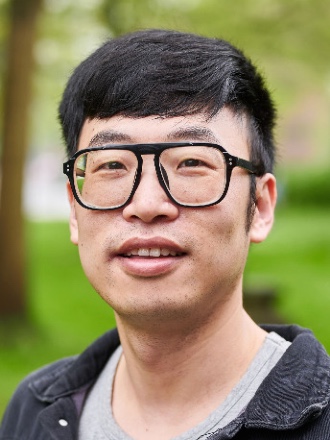
Liangliang Cheng, affiliated with the Engineering and Technology Institute (ENTEG) at the University of Groningen, has been awarded funding for CUT4CARE, a project focused on enhancing the reliability, efficiency, and traceability of ultra-precise manufacturing for medical-grade soft contact lenses. As the main applicant, Cheng heads a consortium with a €2.5 million budget, with €1.3 million earmarked for the University of Groningen.
The consortium includes a diverse team of co-applicants from the University of Groningen (Bayu Jayawardhana, Francesco Maresca, and Andrea Giuntoli), Hassan Hossein Nia Kani (Delft University of Technology), and Willem Jellema (Space Research Organisation Netherlands). Together, they collaborate with industry partners like Menicon, whose Automated Lens Production (ALP) line will serve as the validation platform for the research.
Better lenses, less waste
Custom-made soft contact lenses are increasingly used in eye care, for example to slow myopia progression in children and to treat complex corneal conditions such as keratoconus. This creates high demands on manufacturing: lenses must be accurate, consistent and fully traceable.
In soft-lens production, however, the lens is shaped while dry, but its quality is only assessed after hydration. Defects and process variations are therefore often detected late, leading to remakes, waste and less predictable delivery times.
CUT4CARE will combine multiscale modelling, multimodal sensing, in-situ optical metrology and bounded process steering. The aim is to detect and respond to variations during manufacturing, rather than after the lens has been hydrated. The project will be validated on Menicon’s Automated Lens Production line.
Groningen's contribution
Researchers at the Faculty of Science and Engineering (FSE) will contribute expertise in soft-polymer mechanics, nonlinear structural dynamics, condition monitoring and advanced optical metrology.
They will develop models that explain how dry-state lathing affects lens geometry and performance after hydration. They will also combine different sensing methods with optical surface measurements during machining to identify process variations and emerging defects at an early stage.
This will link the manufacturing process to measurable indicators of lens quality, providing a scientific basis for more reliable production and process control.
Consortium and funding
CUT4CARE brings together researchers from the University of Groningen, TU Delft and SRON, together with companies and knowledge institutes from the Netherlands and abroad. The consortium also includes co-funders: Menicon, Demcon, STT Products, Siemens Industry, Flanders Make, K. Peeraer BV and Ansys part of Synopsys. Healthy Technology Research & Public Knowledge Institute, Queen Mary University of London and MathWorks are involved as collaboration partners.
The grant was awarded through the NWO Knowledge and Innovation Covenant (KIC) call System design in mechatronics and optomechatronics. The call supports interdisciplinary consortia that develop technologies to make complex high-tech systems more accurate and reliable.
Read more: Five grants awarded for research into optomechatronic technologies (NWO)
More news
-
-
19 October 2026
From research to business: RUG Ventures helps ideas move forward
-
03 September 2026
Ming Cao reappointed as scientific director of the Jantina Tammes School