
In Memoriam Louwrens Hacquebord (1947 - 2026)
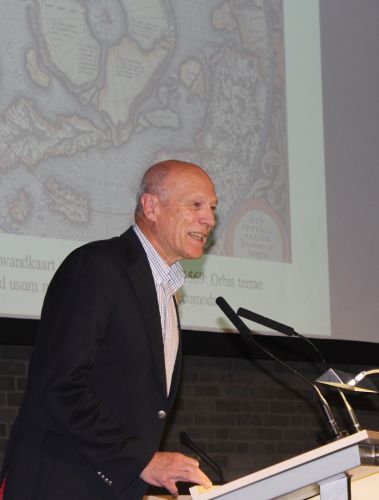
On April 30, 2026, former director of the Arctic Centre, Louwrens Hacquebord, passed away. Louwrens laid a strong foundation on which the Arctic Centre continues to thrive to this day.
Louwrens joined the Arctic Centre as a researcher in the late 1970s. He gained national recognition as the leader of the excavations of the whaling settlement Smeerenburg in the northeast of Spitsbergen. He completed his doctoral research with highest honors (cum laude) in 1984. The excavations at Smeerenburg have captured the imagination of many; in particular, the textiles found in the graves of the whalers proved to be of exceptional quality and offer a unique glimpse into the clothing worn by 17th-century whalers during their hunting activities. The significance of this discovery is underscored by the fact that the Rijksmuseum organized an exhibition based on the excavations. The display case featuring hats remains part of the museum’s permanent collection.
His later research took him to many other locations on Spitsbergen, not only to study the remains of the whaling industry but also those of early mining activities, particularly coal mining. His work was not limited to Spitsbergen; it also brought him to Jan Mayen, Antarctica, and Novaya Zemlya. On Novaya Zemlya, a notable expedition took place in 1992, when Louwrens and colleagues investigated remains of the “Behouden Huys,” the shelter used during the overwintering of Willem Barentsz and 16 crew members.
But Louwrens was much more than a researcher. He brought his work to a wide audience through numerous media appearances, public lectures, and books. In doing so, he became an important link between polar research and Dutch polar policy. This public engagement led, among other things, to his representation of the Netherlands in the International Arctic Science Committee (IASC) from its founding in 1992. In 2000, he became vice-chair, and for eight years he served on the IASC Executive Committee.
Louwrens played a crucial role in securing observer status for the Netherlands in the Arctic Council. He closely followed international developments in the years leading up to the Council’s establishment and, thanks to his extensive international network, ensured that the Netherlands participated from the outset in the AMAP and CAFF working groups. He also made major contributions to the Netherlands’ involvement in Antarctic governance. He led the Dutch expedition to Antarctica in 1990–1991, which resulted a year later in the country being granted consultative status (decision-making authority) under the Antarctic Treaty.
In many respects, Louwrens was a pioneer and a modern researcher ahead of his time. He built partnerships with industry to fund fieldwork, maintained an extensive international network, excelled in what we now call “education and outreach,” and engaged stakeholders in research at a time when science was often still conducted from an ivory tower. Louwrens also meant a great deal to young researchers; his encouragement proved crucial for many in launching careers in polar research.
In 2011, Louwrens was appointed Officer in the Order of Orange-Nassau in recognition of his defining role in Dutch polar research and his central position within an entire generation of Dutch polar scientists.
More news
-
-
03 September 2026
Ming Cao reappointed as scientific director of the Jantina Tammes School
-
01 September 2026
Evrim Ursavas appointed scientific director Wubbo Ockels School