
Kidfluencing under the microscope: is it actually okay to use your child as content?
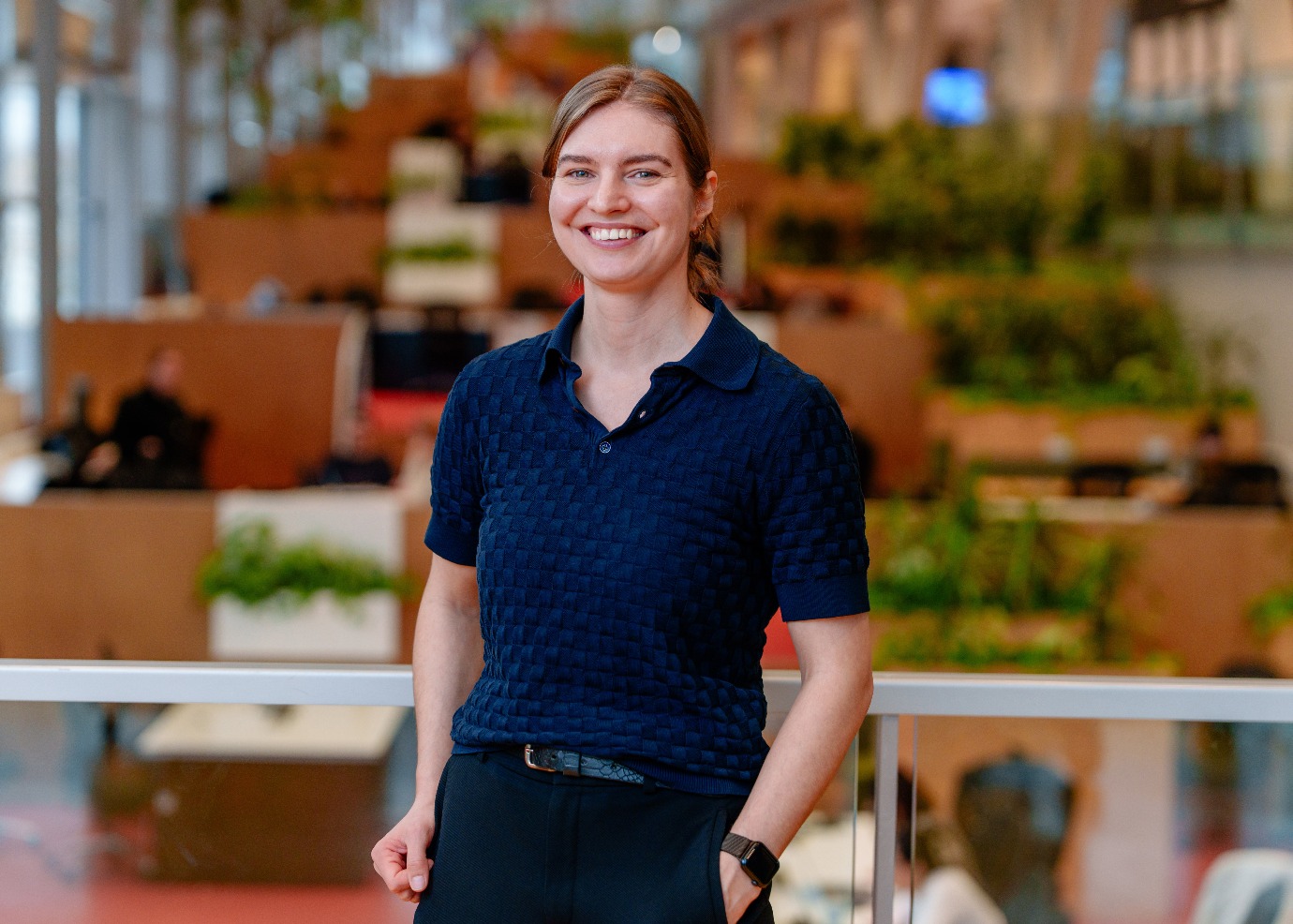
Working as a researcher at NHL Stenden and pursuing a PhD at the University of Groningen: that’s what Noël Oppel is doing. She is writing her PhD thesis on the child’s perspective behind ‘childfluencing’. When does a child become a revenue model?
A large vlogging family with hundreds of thousands of subscribers and an equally substantial income stream, a parent showing a toddler’s potty training online, and a twelve-year-old sharing a twelve-step skincare routine. These are different stories and accounts, but they have one thing in common: a child plays the leading role. Sometimes that child enjoys being in the spotlight. But do they really understand the consequences?
‘Kidfluencing’ and ‘sharenting’: these are terms that have only just entered our vocabulary. But anyone who used to be hooked on *Toddlers & Tiara’s* and always watched Supernanny Jo’s parenting tips knows this: content about children is a hit – and not just a little one. Reason enough for vloggers – or entire vlogging families – to document their lives online. But there’s one major difference: in the past, producers called the shots; now, a parent is often the driving force.
Wearing two hats
This last point fascinated Noël Oppel from the Organisations and Social Media research group, who is completing her PhD at the University of Groningen in the field of kidfluencing and children’s rights. “I was seeing more and more videos featuring children of different ages. Sometimes in very vulnerable situations, such as during a tantrum.” She wondered: what impact does it have if, as a child, you already have an online career before you can decide for yourself whether you want one? And what role do parents play in this? “Parents are often the managers of their child’s account or the family vlog account,” says Noël. “At the same time, you’re also just a parent. And that can cause friction. Because as a parent, you have the freedom to bring up your child as you see fit. But you also have a duty not to harm them.”
From fun to a chore
And that’s precisely the crux of the matter. Because when does something harm your child? And when does something go from being simply fun to a chore or a money-making scheme? Noël is currently researching this as part of her PhD programme, together with colleagues from the fields of media studies, education and law. She does, however, already see one key difference compared to the past: “When children appeared on TV, it was clearly defined. Once the cameras were switched off, the work was done. Now, work can take place at any time of the day. After all, you always have your phone in your pocket.” Moreover, in the past, the television screen acted as a buffer between the child and the reactions from the living room. “With social media, children are now directly confronted with criticism and insults.”
Why do we share our children?
Yet parents still show their children off to the full. “First and foremost, parents are simply proud of their children or want to be a source of inspiration for others,” says Noël. “They want to be seen, and that’s a very human need.” When parents share a photo of their children, we call it sharenting. But that sharing becomes more complex when parents profit from it financially. Because that’s what kidfluencing is. It’s hard to say exactly where ordinary sharing ends and the revenue model begins. “A child can easily become part of a revenue model, even if they don’t appear in sponsored videos themselves,” says Noël. “The child might, for example, be a reason why people follow an account. In that case, they are very much part of the brand.”
Child labour behind closed doors
But is that actually work? The government wants to regulate commercial vlogging by making it a criminal offence to vlog with children up to the age of 15. According to Noël, special permission is already required if children under the age of 13 earn money from vlogging or other activities on social media. “Audiovisual work is already covered by the ban on child labour. It’s just difficult to enforce when that ‘work’ takes place in a private setting. You can’t just ring the doorbell and ask what a family is doing on TikTok.” According to Noël, the problem lies not only in the vlogging itself, but also in everything surrounding it. “Such as who owns the money, whether it ever reaches the child, where a child can turn to object to the distribution of footage, and what happens if the child wants everything taken offline.”
The conversation at the kitchen table
Because enforcement isn’t currently reaching behind closed doors, a great deal of responsibility lies with parents, Noël believes. That’s why she contributed to the Guide to Vlogging with Children. It’s intended for parents of children up to the age of 13 who (want to) vlog with a commercial focus and helps them have the conversation with their child. In four steps, you identify the risks, have a conversation with your child, draw up a plan and review the situation regularly: do we carry on, or do we stop? “Perhaps the most important question is: does your child really want this, and do they understand what they’re getting themselves into?”
Media literacy for parents
When we think of media literacy, we often picture children having to learn how to deal with screens, ‘likes’ and (hate) comments. With kidfluencing, however, the question actually lies with adults: with parents who decide what goes online, with brands that send free products, and with everyone who follows content featuring children and thereby boosts viewing figures. According to Noël, science cannot provide a definitive answer as to where the boundaries of what is ‘normal’ lie. “That’s something we determine as a society. And in doing so, our primary aim is to protect the child and children’s rights. After all, you can’t have a conversation about media literacy with a two-year-old. If a child cannot understand what they are saying ‘yes’ to, someone else must do that for them.”
More news
-
03 November 2026
Holding states accountable for cyberattacks?
-
-
22 October 2026
Seven UG and UMCG researchers awarded Vidi grant