

‘Fingerprints tell the story not found in history books’

Assistant professor Džemila Šero is researching human traces on objects using advanced imaging and artificial intelligence (AI). During a HAICu meeting, she stumbled upon a wealth of information: the fingerprints on the wax seals of medieval charters in the Overijssel provincial archive.
Text: Jelle Posthuma
About HAICu
Within HAICu, AI tools are being developed to make heritage collections easier and more accessible to search. The HAICu consortium consists of various parties, including heritage institutions, companies, universities of applied sciences, and universities. From the University of Groningen, the Bernoulli Instituut and the Jantina Tammes School of Digital Society, Technology & AI are involved in the project.
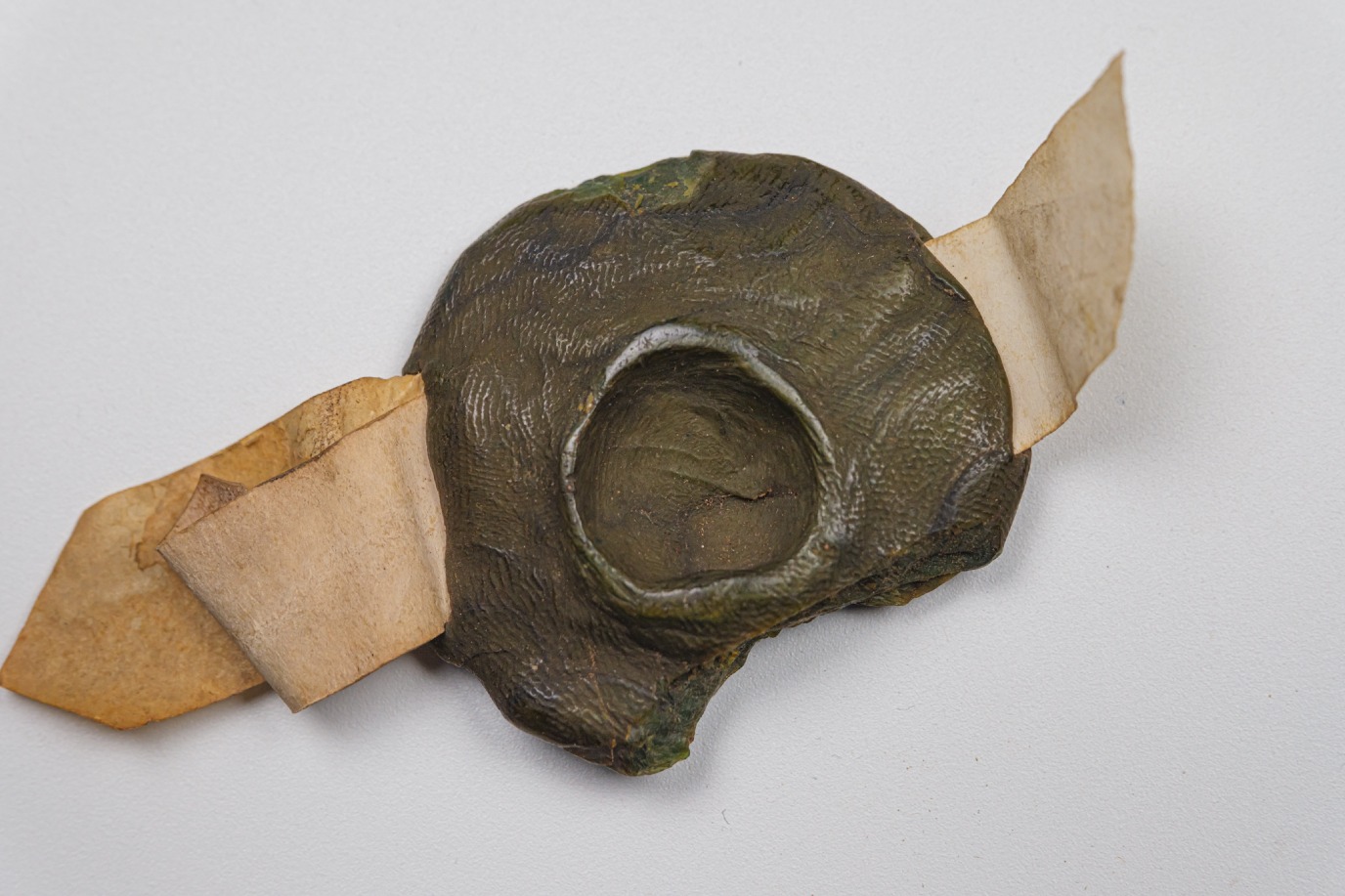
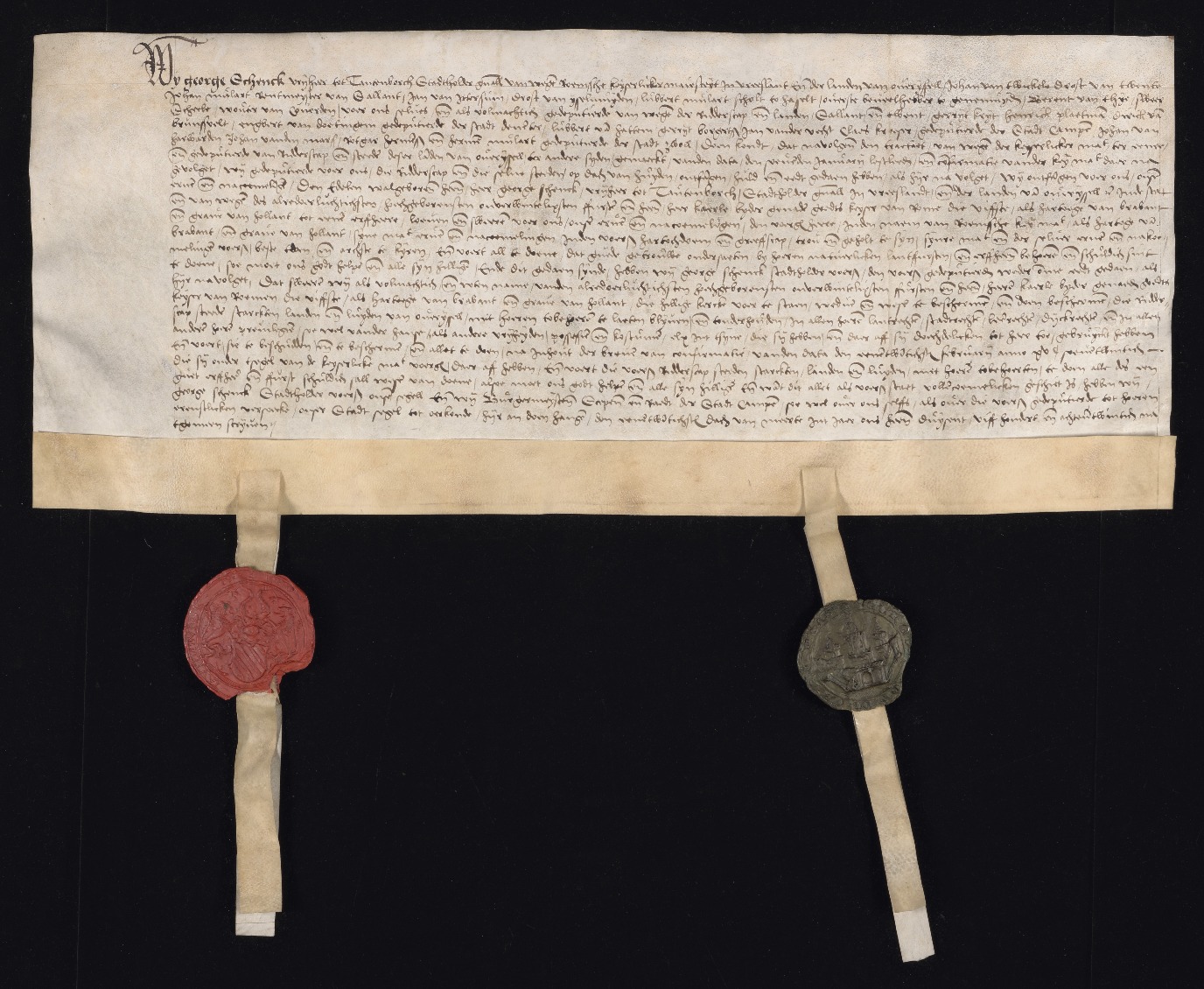
During the annual HAICu conference, Džemila Šero was invited to give a keynote speech about her work. Jos Mooijweer, a collection broker at Collectie Overijssel, was in the audience. ‘Afterwards, she asked for examples of archives containing biometric data,’ he recounts. ‘I was happy to raise my hand, because in our archive, we have thousands of fingerprints on the backs of wax seals from medieval charters.’
The seals were used to sign medieval deeds – or, literally, to seal them. These charters officially recorded rights, possessions, and agreements. Pressing the wax firmly into a stamp to produce a clear imprint left fingerprints on the back of the seal. Mooijweer had known about the existence of the charters with fingerprints for years. ‘I always thought: something beautiful could definitely come from this.’
Wax seals are not normally Šero’s area of research. As an engineer at the University of Twente, she investigates human traces on artworks – from fingerprints to brushstrokes and knife marks. Using high-resolution imaging and CT scans, she analyses these traces with the help of AI. For example, she studies ceramic sculptures from the collection of the Rijksmuseum. ‘Our technology is not only suitable for sculptures,’ says Šero, ‘but also for the seals.’
Unheard voices
After the meeting at the HAICu event, Šero visited the archive at Collectie Overijssel. ‘In the archive, I found an incredible number of seals with fingerprints. Jos, with his enormous knowledge of the archive, was able to help me get started.’ According to Mooijweer, there are various questions to be asked about the fingerprints on the seals, which can now finally find answers with Šero’s research. ‘For example, who was present during the signing? These may seem like trivial details, but they could be very interesting in combination with the content of such a charter.’
Mooijweer and Šero emphasise that the fingerprints provide new insights into the networks and spheres of influence of that time. Moreover, the ‘unheard’ voices from history can be brought to the forefront, Šero states. ‘With art objects, we also try to uncover this. Like scientific work, a work of art is often a team effort, but you don’t see that in the final product. With fingerprints, we can make this visible.’
According to her, the research gives recognition to those who previously did not receive it. ‘For example, were all sculptures made by men, or did women also work on the object? We can ask the same question about the characters: were women present at the meetings? This is not reflected in the documents, but perhaps it is in the fingerprints.’
Andreas Weber, associate professor at the University of Twente and scientific project lead of HAICu, believes this aligns perfectly with the goal of the HAICu research project. ‘Artificial intelligence enables us to trace the “silent voices” from history,’ he explains. ‘This is what we want to achieve with HAICu by presenting and making archives searchable in a new way. It is about the stories of people who are not yet in the history books.’
The fingerprints also appeal to Weber. ‘The combination of fingerprints and text fits very well with the idea of HAICu, where multimodality is central. It is not just about text from the archives, but also about images, sound, and in this case, biometric data. Using responsibly developed AI, we can link this data together.’
Opportunities for regional institutions
Technology such as AI offers great opportunities for heritage institutions. ‘But for smaller, regional institutions, these developments are often difficult to keep up with,’ Weber knows. ‘Moreover, it is still very expensive.’ HAICu offers a solution for regional institutions, he continues. ‘By collaborating in the HAICu project, smaller institutions can also use modern technology in the future to make collections more searchable and accessible.’
Mooijweer agrees: ‘Large institutions like the Royal Library (KB) or the Rijksmuseum often have the resources. If only their collections are made accessible, we are missing a lot. That would be a shame – after all, it does not give a complete picture.’ Šero is also enthusiastic about the collaboration with the regional archive. ‘The research into the Rijksmuseum’s collection is fantastic. I would be very happy if, with future research into the charters, I could also contribute to the heritage of Overijssel, where my own university is located.’
Whether the research into the fingerprints on seals will continue depends on future funding. Šero: ‘The next step is to attract sponsors to further investigate the seals.’ Mooijweer is, in any case, satisfied with the meeting during the HAICu event. ‘Thanks to HAICu, we can find our way to each other much more easily and sooner. Without that meeting, the contact with Džemila would never have happened.’
HAICu is celebrating its third anniversary this year. The next HAICu Day in Utrecht is scheduled for Wednesday 25 November 2026, at Neude 11 (Utrecht Public Library).
More news
-
19 October 2026
From research to business: RUG Ventures helps ideas move forward
-
-
03 September 2026
Ming Cao reappointed as scientific director of the Jantina Tammes School