


Exhibition: History of testing
How can you measure intelligence? Psychologists and educators have been working on this for over a hundred years, from the famous Binet-Simontest to, more recently, the Cito test. Test developers have also worked at the University of Groningen, such as the Snijders-Oomen couple, who developed the widely used SON test.
The ADNG Erfgoedcentrum voor de Nederlandse Gedragswetenschappen has organised an exhibition on the history of testing.
Display 1: Intelligence becomes measurable
At the beginning of the twentieth century intelligence was conceived as a measurable characteristic of the individual.[1] This development was closely connected with the rise of pedagogy as a science, the expansion of mass education, and the need to classify pupils systematically.[2] A crucial step was the development of the Binet–Simon test in France (1905), which defined intelligence as the ability to make practical judgments, understand and reason.[3] The test consisted of a series of age-related tasks, with which the mental level of a child was determined in relation to his chronological age.[4] In this way the concept of “mental age” emerged, which offered an apparently objective measure to determine learning ability. In Binet’s test intelligence was not operationalized as an innate capacity but as something that developed and gained meaning in pedagogical contexts.[5] With the introduction of compulsory education in various European countries, education was confronted with a greater diversity of pupils. In this context an increasing need arose for tests as an instrument to determine normality and deviation. Within education intelligence tests were therefore used in the selection and referral of children to special education. Especially in the education and care for “backward” or “feebleminded” children intelligence tests acquired a central role in selection and referral.[6] The Binet–Simon test was therefore developed for this purpose.
Although the Binet–Simon test had great international influence, it was never simply adopted literally.[7] In every country a process of translation, selection and reinterpretation took place, in which the test was adapted to national education systems, language use and dominant views about intelligence and upbringing.[8] Test items that were strongly cultural or school-specific were replaced or rewritten. In this way not only the form changed, but also the meaning of what was being measured. This process shows that intelligence tests were not neutral measuring instruments, but carriers of cultural and ideological assumptions. By adapting them to their own society, foreign ideas about intelligence were “translated” into national problems and policy goals.
The comparison between the Netherlands and the United States makes clear that intelligence was not viewed in the same way, despite the shared starting point in Binet–Simon. In the Netherlands the test was translated by school physician Dirk Herderschêe (1877–1969).[9] The Binet–Herderschêe test was developed as an aid in the selection of pupils for special education.[10] This test formed part of a broader medical-pedagogical assessment, in which observations of physicians and teachers also carried significant weight. Test results were interpreted with caution and were not regarded as absolute truth.[11] In the United States, by contrast, the use of intelligence tests soon acquired a much broader application. Under the influence of eugenics and the belief in hereditary intelligence, tests were used for large-scale classification, among other things in education, the army and immigration policy.[12] The First World War was a decisive moment for the use of tests; their popularity only increased afterwards. Test results acquired a more deterministic character: intelligence was more often seen as innate and relatively unchangeable. Whereas in the Netherlands the test was mainly regarded as a supporting instrument, in the United States it became a decisive instrument for selection and legitimation.[13]
In France, the Netherlands and the United States there existed a clear need for intelligence tests, but the underlying motives differed.[14] In France the Binet–Simon test arose from a practical pedagogical question: how can children who do not keep up in regular education be recognized in time and receive appropriate education? The test explicitly aimed to prevent children from being unjustly labeled as “uneducable”.[15] In the Netherlands the need lay mainly in the organization of special education and the efficiency of the school system.[16] With the introduction of compulsory education and the growth of schools for special education it had to be determined which children belonged there.[17] Intelligence tests offered a “scientific” criterion to legitimize this selection, although discussion remained about misplacements and the limited explanatory power of IQ scores.[18] In the United States, alongside educational motives, there was also a strong social and political need. Tests were used to create social order in a rapidly industrializing and migrating society. Although there were similarities in the search for objective classification, the national goals clearly diverged. The Binet–Simon test offered a flexible framework that allowed room for adaptation to local norms, institutions and interests. In the Netherlands the test was embedded in a medical-pedagogical culture focused on care and educability, whereas the same test in the United States was used to support meritocratic and sometimes exclusionary practices. This history shows that intelligence tests were not universal measuring instruments, but nodes where science, policy and culture came together. The way in which they were translated and used therefore says at least as much about societies as about intelligence itself.
[1] Nelleke Bakker, "Professional competence and the classification and selection of pupils for schools for “feebleminded” children in the Netherlands (1900–1940)," Paedagogica Historica 57, no. 6 (2021), https://doi.org/10.1080/00309230.2020.1762681, https://dx.doi.org/10.1080/00309230.2020.1762681., 728-729
[2] Ibidem
[3] Alicia Bolaños-Medina and Víctor González-Ruiz, "Deconstructing the Translation of Psychological Tests," Meta 57, no. 3 (2012), https://doi.org/10.7202/1017088ar. http://dx.doi.org/10.7202/1017088ar., 716
[4] Bakker, "Professional competence and the classification and selection of pupils for schools for “feebleminded” children in the Netherlands (1900–1940).", 729-730
[5] Ibidem
[6] Idem, 730-731
[7] Bolaños-Medina and González-Ruiz, "Deconstructing the Translation of Psychological Tests.", 716-717
[8] Ibidem
[9] Fedor De Beer, "Dr. D. Herderschêe en het bepalen van wezenlijke achterlijkheid," Tijdschrift voor Orthopedagogiek 51 (2012)., 15
[10] Ernst Mulder and Frieda Heyting, "The Dutch curve: The introduction and reception of intelligence testing in the Netherlands, 1908-1940," Journal of the History of the Behavioral Sciences 34, no. 4 (1998), https://doi.org/10.1002/(SICI)1520-6696(199823)34:4<349::AID-JHBS1>3.0.CO;2-M, http://dx.doi.org/10.1002/(SICI)1520-6696(199823)34:4<349::AID-JHBS1>3.0.CO;2-M., 354
[11] Idem, 356
[12] Ibidem
[13] Idem, 360
[14] Idem, 362
[15] Bakker, "Professional competence and the classification and selection of pupils for schools for “feebleminded” children in the Netherlands (1900–1940).", 742
[16] De Beer, "Dr. D. Herderschêe en het bepalen van wezenlijke achterlijkheid.", 14
[17] Jan Brandsma, "Strijdmakkers : ontstaan, groei en professionalisering van het Buitengewoon Onderwijs in Nederland, ca. 1895-1950" (University of Groningen, 2022)., 31
[18] Idem, 35-37
Display 2: Testing the mind of the perpetrator
What do tests tell us?
Psychological tests from the twentieth century tell us not only something about individuals, but above all about the way in which societies wanted to measure, understand and judge people. Tests are never neutral instruments. They are embedded in historical contexts, ideological convictions and institutional practices.[1] In the twentieth century, a period characterized by war, totalitarianism and massive bureaucratization, confidence grew in scientific methods to objectify the human character.[2] Psychological tests offered the promise that personality, intelligence and even moral disposition were measurable and classifiable. In that sense, tests reveal not only something about those who were tested, but also about the image of humanity held by the society that developed these tests. Tests reflect the need to judge the negative sides of the human being not only legally, but also to understand and explain them psychologically.[3] They suggest that behind actions hidden personality traits are present that can be uncovered. In this way psychological tests contribute to an image of humanity in which the human being is understood as a psychologically knowable being with a measurable inner core. The Nuremberg Trials form a crucial historical case in which these developments come together.[4]
Tests in Nuremberg: measuring evil
During the Nuremberg Trials (1945–1946) several high-ranking Nazis were subjected to psychological and psychiatric tests.[5] The question was not only whether they were legally guilty, but also: what kind of people were they? Were they insane, sadistic, morally defective or ‘normal’? Under the leadership of, among others, psychologist Gustave Gilbert and psychiatrist Douglas Kelley, IQ tests, personality tests and projective tests were administered.[6] The outcomes were unsettling: many of the defendants scored average or even above average on intelligence and there was no evidence of insanity that could explain their actions.[7] This undermined the idea that horrific, inhuman acts are the product of pathology.[8] Psychological tests were used as an instrument for moral investigation.[9] Not to determine guilt, that is the task of the court, but to gain insight into the psychological constitution of perpetrators of extreme violence. Tests thus functioned at the intersection of science and morality: they attempted to make the incomprehensible comprehensible.
Projective tests: access to the unconscious
In this context projective tests acquired particular significance. Projective tests are based on the psychoanalytic idea that people project their unconscious drives onto ambiguous stimuli.[10] By letting respondents interpret, for example, inkblots or photographs, one would gain access to deeper layers of their personality. The Rorschach test, developed by Hermann Rorschach (1884–1922), consists of ten inkblot plates.[11] The interpretations given by test subjects are analyzed for structure, emotional tone and symbolism. During and after the Nuremberg Trials this test was used to gain insight into the personality structure of Nazi leaders.[12] The hope was that deviant or psychopathological patterns would become visible in their answers. Projective tests were considered particularly suitable for this purpose, because, in contrast to direct interrogation, they were assumed to work through the unconscious and would therefore be less susceptible to socially desirable answers from suspects. Remarkably, the test results of many Nazi leaders did not show extreme deviations.[13] This fueled the later discussion about the ‘banality of evil’ (Hannah Arendt): the idea that perpetrators of large-scale crimes are not necessarily demonic or insane, but ordinary people who follow orders without critical reflection.[14]
Szondi test
The Szondi test, developed by Leopold Szondi (1893–1986), is a less well-known but influential projective test.[15] Test subjects are shown series of photographs of psychiatric patients and must indicate which faces attract or repel them. According to Szondi they thereby project their own repressed tendencies and drives. A famous application of the test took place during the trial of the high-ranking SS officer Adolf Eichmann in Jerusalem in 1961.[16] Eichmann was regarded as one of the main persons responsible for the logistical organization of the Holocaust. The results of Eichmann on the Szondi test were sent to the test developer Szondi himself[17] and he concluded the following: Eichmann had a strong sadomasochistic syndrome, an insatiable drive for power, and intense homicidal impulses: “This man is a criminal with an insatiable intention to kill […]”. It is however important to note that Szondi himself was Jewish and although the results were sent to him without mentioning that it concerned Eichmann, Bergstein does not exclude the possibility that he did know that it concerned Eichmann.[18] This note of criticism aligns with analyses that consider Eichmann not as a monster, but rather as a cog in a system. The Szondi test illustrates the human need to understand how individuals are capable of horrific acts, as well as the belief that ‘evil’ is anchored in the unconscious and can be exposed through projection. Although the Szondi test is hardly used today, a Belgian study still appeared in 2019 in which 431 prisoners were subjected to the test.[19] The aim of that study was to establish connections between the most important variables and the effect of age, gender and legal status on them.
Tests as an instrument in the courtroom
The use of psychological tests in legal contexts raises fundamental questions. In the courtroom the focus is on responsibility, criminal responsibility and intention. Psychological tests promise insight into inner disposition, but they operate within a probabilistic and interpretative framework. During the Nuremberg Trials tests did not have decisive legal status. They functioned rather as a supplementary diagnostic instrument: they were used to assess whether someone was mentally ill, but not whether someone was guilty. Nevertheless, they had symbolic value. They expressed the need to understand the ‘evil’ in human beings. In contemporary legal practice psychological tests and projective tests are still used, for example in forensic psychiatric examinations of criminal responsibility or risk assessment. Projective tests such as the Rorschach test are however approached more critically because of questions regarding reliability and validity.[20] The court demands objectivity and reproducibility, whereas projective tests are strongly dependent on interpretation.
A reflective view: meaning then and now
Seen through a reflective lens, the projective tests that were used during the Nuremberg Trials show how strongly people in the twentieth century believed in psychological comprehensibility. People searched for the unconscious that could explain evil. What do psychological tests mean today in the courtroom? They medicalize behaviour by linking crime to personality structure or disorder. They also individualize responsibility, even when crimes are collective or systemic. In addition, tests suggest that “morality” is measurable, as if intention and guilt can be determined objectively through psychology. At the same time, they are also a protection: they can demonstrate that someone has diminished criminal responsibility, or conversely that someone acted consciously. The history of the use of projective tests in the context of the Nuremberg Trials and in Eichmann’s trial in Jerusalem confronts us with an uncomfortable conclusion: evil cannot easily be isolated psychologically. Tests reveal just as much about our need for explanation as about the tested person themselves.
[1] Joel E. Dimsdale, "Use of Rorschach tests at the Nuremberg war crimes trial: A forgotten chapter in history of medicine," Journal of Psychosomatic Research 78, no. 6 (2015), https://doi.org/10.1016/j.jpsychores.2015.04.001, http://dx.doi.org/10.1016/j.jpsychores.2015.04.001., 518
[2] Alette Smeulers, "Een steekje los?:Over de geestesgesteldheid van daders van internationale misdrijven: van Neurenberg tot Den Haag," Smeulers, A 2015, 'Een steekje los? Over de geestesgesteldheid van daders van internationale misdrijven: van Neurenberg tot Den Haag', Ontmoetingen : Voordrachtenreeks van het Lutje Psychiatrisch-Juridisch Gezelschap, pp. 1-15. < http://www.lutjepjg.nl/publicaties > (2015). https://research.rug.nl/en/publications/4216126d-0943-4d8b-abe9-2bf103c0a6f2., 1-2
[3] Ibidem
[4] Dimsdale, "Use of Rorschach tests at the Nuremberg war crimes trial: A forgotten chapter in history of medicine.", 515-518
[5] Smeulers, "Een steekje los?:Over de geestesgesteldheid van daders van internationale misdrijven: van Neurenberg tot Den Haag.", 1-3
[6] Idem, 3-5
[7] Ibidem
[8] Ibidem
[9] Ibidem
[10] Dimsdale, "Use of Rorschach tests at the Nuremberg war crimes trial: A forgotten chapter in history of medicine.", 515-516
[11] Ibidem
[12] José Brunner, "Eichmann's Mind: Psychological, Philosophical, and Legal Perspectives," Theoretical Inquiries in Law 1, no. 2 (2001), https://doi.org/10.2202/1565-3404.1013, https://dx.doi.org/10.2202/1565-3404.1013., 8-10
[13] Ibidem
[14] Smeulers, "Een steekje los?:Over de geestesgesteldheid van daders van internationale misdrijven: van Neurenberg tot Den Haag.", 3-5
[15] Mary Bergstein, "Photography in the Szondi Test: ‘The Analysis of Fate’," History of Photography 41, no. 3 (2017), https://doi.org/10.1080/03087298.2017.1304625, https://dx.doi.org/10.1080/03087298.2017.1304625.
[16] Idem, 237
[17] Ibidem
[18] Ibidem
[19] Benjamin Thiry, "Norms for the Szondi Test on a prison sample," 39 (08/01 2020)., 1-2
[20] Igor Areh, Fanny Verkampt, and Alfred Allan, "Critical review of the use of the Rorschach in European courts," Psychiatry, Psychology and Law 29, no. 2 (2022), https://doi.org/10.1080/13218719.2021.1894260, https://dx.doi.org/10.1080/13218719.2021.1894260.
Display 3: Measuring without words
The SON intelligence test (1943) is a non-verbal intelligence test that is used with deaf children.[1] The test makes little appeal to language ability, which is often less developed in deaf children. This is connected to the educational practice that remained dominant until the 1960s. In deaf education the so-called oral method was used for a long time: deaf children had to learn to speak and lip-read, and the use of sign language was discouraged or even forbidden. As a result, many children received only limited access to a fully developed language in their early development, which could have negative consequences for their language development and school performance.[2] A test that is as little dependent as possible on spoken language therefore makes it possible to assess their cognitive abilities more reliably. In addition to mental age, the SON intelligence test also measures the degree of abstract thinking, as well as characteristics of the character and behaviour of the child during the examination.[3] The underlying idea is that a child is not done justice when it is assessed solely based on a numerical test score. The observations of the researcher during the execution of the tasks, for example how a child approaches problems, responds to feedback and deals with difficulties, provide additional information about the cognitive functioning and the learning style of the child.[4]
The first version of the SON intelligence test was developed in 1943 by Nan Oomen, who worked as a psychologist at the Institute for the Deaf in Sint-Michielsgestel.[5] In 1958 she and her husband Jan Snijders, professor of psychology at the University of Groningen, published a first revision of the test. An important adjustment was that the test was standardized for both hearing and deaf children. As a result, the performances of deaf children could be better compared with those of peers in general. In later years the test was further developed into a series of modern versions, such as the SON-R tests, which can be administered completely or largely without spoken instructions and are therefore suitable for people with limited language ability or a different mother tongue than that of the test administrator.[6]
An important characteristic of later versions of the SON-R is that the test makes use of visual and practical tasks, such as pattern construction, analogies or spatial puzzles.[7] The instructions can be given with natural gestures, and the test administrator gives feedback during the administration about correct or incorrect answers.[8] In addition, the items are often presented adaptively: depending on the performance level of the child it receives difficult tasks. In this way a reliable picture of the general intelligence level can be obtained within a relatively short time. Research shows that modern variants of the SON-R form a valid instrument to measure cognitive abilities and that the test can also be a reasonable predictor of later school performance, for example in subjects such as mathematics.[9] This confirms that a non-verbal intelligence test can be a valuable alternative to traditional tests that are strongly based on language.
The SON intelligence test illustrates the changing social views in the twentieth century about children with a disability. In the 1950s the awareness grew that these children should not only be cared for but also have the right to education and development at their own level.[10] At the same time the test connects with the growing pursuit of equal opportunities in education. Children should not be assessed on factors that have little to do with intelligence, such as language disadvantage, cultural background or a hearing impairment.[11] By using a non-verbal test psychologists and educationalists could obtain a fairer picture of the cognitive possibilities of deaf children.
For deaf children the SON intelligence test therefore meant an important step toward recognition of their intellectual capacities and better developmental opportunities. The test made visible that a language delay does not automatically equal a lower intelligence. In this way the SON test contributed not only to psychological diagnostics, but also to a broader change in how people viewed education, developmental possibilities and inclusion of children with a disability.
[1] Marjolijn Winkel and Peter J. Tellegen, "Intelligentietests voor jonge kinderen: deson-r2½-7 en andere intelligentietests," Kind en adolescent 22, no. 3 (2001), https://doi.org/10.1007/BF03060809, http://dx.doi.org/10.1007/BF03060809., 93
[2] Tom Humphries et al., "Avoiding Linguistic Neglect of Deaf Children," Social Service Review 90, no. 4 (2016), https://doi.org/10.1086/689543, http://dx.doi.org/10.1086/689543., 594
[3] Winkel and Tellegen, "Intelligentietests voor jonge kinderen: deson-r2½-7 en andere intelligentietests.", 95
[4] Francien Geerds, "De SON-R 6-40: een niet-verbale intelligentietest," Neuropraxis 19, no. 6 (2015), https://doi.org/10.1007/s12474-015-0104-1, http://dx.doi.org/10.1007/s12474-015-0104-1., 163-164
[5] Peter van Drunen and Henk Jan Conradi, Bezielde wetenschap : een halve eeuw Nederlandse psychologie in vijf portretten (Assen: Van Gorcum, 1998).
[6] Geerds, "De SON-R 6-40: een niet-verbale intelligentietest.", 163-164
[7] Idem, 164-165
[8] Ibidem
[9] Jasmin T. Gygi et al., "The Predictive Validity of Four Intelligence Tests for School Grades: A Small Sample Longitudinal Study," Frontiers in psychology 8 (2017), https://doi.org/10.3389/fpsyg.2017.00375, https://doi.org/10.3389/fpsyg.2017.00375., 1-2
[10] Humphries et al., "Avoiding Linguistic Neglect of Deaf Children.", 594-595
[11] Ibidem
Display 4: Equal opportunities or unfair selection?
At the beginning of the twentieth century testing played a modest and selective role in Dutch education.[1] Tests were not administered as standard to all pupils but were mainly intended for children who stood out because of learning problems or, on the contrary, exceptional performance. Measurements served primarily as a diagnostic tool: they supported decisions about placement in special education and were strongly connected with care and guidance. There was not yet any question of large-scale selection based on tests. This situation changed drastically in the second half of the twentieth century with the introduction of the Cito test. In 1968 the Mammoth Act was introduced in the Netherlands.[2] The education types mulo, mms and hbs were abolished and replaced by mavo, which later became vmbo, havo and vwo. Following the American example a standardized final test was developed under the leadership of professor of applied psychology A.D. de Groot (1914–2006).[3] A standardized final test was necessary because there was a need for a national selection method for progression to secondary education. The Cito test, since 2023 the transition test, consisted of multiple-choice questions about language, arithmetic and general knowledge.[4] It was presented to promote equal opportunities in the transition to secondary education and as a fairer alternative to the judgment of teachers. With the introduction of the Cito test, testing became a national practice. No longer only “special” pupils, but all children were tested at the end of primary school.[5]
It is often thought that almost every country has a comparable final test, but this is not the case. Germany selects pupils already around the age of eleven, but without a national final test.[6] Earlier school performance is decisive there. In France and England selection generally takes place only around the age of fifteen. Only a small group of English pupils take an entrance examination for a grammar school at the age of eleven, comparable to the Dutch gymnasium.[7] In this international comparison it stands out that the Netherlands distributes pupils across different educational levels already around the age of eleven through a national, standardized test.
Already from its introduction in 1970 this national test provoked social debate. Newspaper articles from the 1960s and 1970s show that there was considerable criticism of the Cito test, particularly of the use of multiple-choice questions.[8] Opponents argued that multiple-choice questions encouraged guessing and that pupils with a good test strategy sometimes scored better than pupils with more insight. As a result, the test would measure language ability rather than actual knowledge and understanding. Supporters, on the other hand, emphasized that precisely the fixed structure and standardization of multiple-choice questions made comparison between pupils possible.[9] This tension between reliability and meaningful measurement forms to this day a central point in the debate about national testing.
Over the years the Cito test grew into an important instrument for selection and progression within the Dutch education system.[10] The test acquired a central position in the school recommendation and therefore in the distribution of pupils across vmbo, havo and vwo. Researchers have shown that this early selection has major consequences for school careers and later social opportunities. In this context the school is sometimes described as a “sorting machine”[11], in which test scores contribute to a relatively fixed distribution of pupils across educational levels. At the same time recent studies indicate that these selection mechanisms can reinforce inequality of opportunity, especially when test scores do not sufficiently take learning potential and social background into account.[12]
In addition to the changing function of tests, their form also changed. Whereas tests were initially delivered in suitcases and administered exclusively on paper, new forms of testing gradually appeared. Listening tests made it possible to measure language ability more broadly than only through written assignments, or to give children who score low on a test, for example because of dyslexia, the opportunity to perform better on a test. Later the digitalization of tests followed, which made administration more efficient and allowed results to be analysed more quickly and in greater detail. Digital tests and pupil monitoring systems also made it possible to follow pupils structurally from a young age, which further increased the role of testing in educational decisions.
Finally, it is important that these tests not only have meaning for educational practice, but also for historical and scientific research. The ADNG preserves school tests, psychological tests, assignments, manuals and accompanying documents. These materials are accessible to students and researchers and provide insight into the development of testing, selection and policy choices in Dutch education. In this way they show how an instrument that began as a means for objective measurement grew into a determining factor in the life course of almost every schoolchild.
[1] Bakker, "Professional competence and the classification and selection of pupils for schools for “feebleminded” children in the Netherlands (1900–1940).", 728-729
[2] Karen Heij, "Van de kat en de bel: Tellen en vertellen met de eindtoets basisonderwijs" (2021), https://research.tilburguniversity.edu/en/publications/5eb16782-c25c-4c0c-a657-f740174f50bb., 121
[3] Idem, 134
[4] S. Scheider et al., "Educational inequality due to lack of validity: A methodological critique of the Dutch school system," International Journal of Educational Research 117 (2023), https://doi.org/10.1016/j.ijer.2022.102097, http://dx.doi.org/10.1016/j.ijer.2022.102097., 14
[5] Heij, "Van de kat en de bel: Tellen en vertellen met de eindtoets basisonderwijs.", 36
[6] Idem, 60
[7] Idem, 230
[8] Idem, 93
[9] Idem, 285
[10] J. Terwel, "Terwel, J. (2006). Is de school een sorteermachine? Schoolkeuze en schoollloopbaan van leerlingen van 10-16 jaar," Amsterdam : Vrije Universiteit Amsterdam, (2006), 57 pp. (2006). https://research.vu.nl/en/publications/974be733-aaef-41a1-8a1f-d8fe0c2714ff., 7
[11] Idem, 4
[12] Scheider et al., "Educational inequality due to lack of validity: A methodological critique of the Dutch school system.", 10
References
Areh, Igor, Fanny Verkampt, and Alfred Allan. "Critical Review of the Use of the Rorschach in European Courts." Psychiatry, Psychology and Law 29, no. 2 (2022): 183-205. https://doi.org/10.1080/13218719.2021.1894260. https://dx.doi.org/10.1080/13218719.2021.1894260.
Bakker, Nelleke. "Professional Competence and the Classification and Selection of Pupils for Schools for “Feebleminded” Children in the Netherlands (1900–1940)." Paedagogica Historica 57, no. 6 (2021): 728-44. https://doi.org/10.1080/00309230.2020.1762681. https://dx.doi.org/10.1080/00309230.2020.1762681.
Bergstein, Mary. "Photography in the Szondi Test: ‘The Analysis of Fate’." History of Photography 41, no. 3 (2017): 217-40. https://doi.org/10.1080/03087298.2017.1304625. https://dx.doi.org/10.1080/03087298.2017.1304625.
Bolaños-Medina, Alicia, and Víctor González-Ruiz. "Deconstructing the Translation of Psychological Tests." Meta 57, no. 3. (2012): 715-39. https://doi.org/10.7202/1017088ar. http://dx.doi.org/10.7202/1017088ar.
Brandsma, Jan. "Strijdmakkers : Ontstaan, Groei En Professionalisering Van Het Buitengewoon Onderwijs in Nederland, Ca. 1895-1950." University of Groningen, 2022.
Brunner, José. "Eichmann's Mind: Psychological, Philosophical, and Legal Perspectives." Theoretical Inquiries in Law 1, no. 2 (2001). https://doi.org/10.2202/1565-3404.1013. https://dx.doi.org/10.2202/1565-3404.1013.
De Beer, Fedor. "Dr. D. Herderschêe En Het Bepalen Van Wezenlijke Achterlijkheid." Tijdschrift voor Orthopedagogiek 51 (2012): 13-23.
Dimsdale, Joel E. "Use of Rorschach Tests at the Nuremberg War Crimes Trial: A Forgotten Chapter in History of Medicine." Journal of Psychosomatic Research 78, no. 6 (2015): 515-18. https://doi.org/10.1016/j.jpsychores.2015.04.001. http://dx.doi.org/10.1016/j.jpsychores.2015.04.001.
Drunen, Peter van, and Henk Jan Conradi. Bezielde Wetenschap : Een Halve Eeuw Nederlandse Psychologie in Vijf Portretten. Assen: Van Gorcum, 1998.
Geerds, Francien. "De Son-R 6-40: Een Niet-Verbale Intelligentietest." Neuropraxis 19, no. 6 (2015): 163-66. https://doi.org/10.1007/s12474-015-0104-1. http://dx.doi.org/10.1007/s12474-015-0104-1.
Gygi, Jasmin T., Priska Hagmann-von Arx, Florine Schweizer, and Alexander Grob. "The Predictive Validity of Four Intelligence Tests for School Grades: A Small Sample Longitudinal Study." Frontiers in psychology 8 (2017): 375. https://doi.org/10.3389/fpsyg.2017.00375. https://doi.org/10.3389/fpsyg.2017.00375.
Heij, Karen. "Van De Kat En De Bel: Tellen En Vertellen Met De Eindtoets Basisonderwijs." 2021. https://research.tilburguniversity.edu/en/publications/5eb16782-c25c-4c0c-a657-f740174f50bb.
Humphries, Tom, Poorna Kushalnagar, Gaurav Mathur, Donna Jo Napoli, Carol Padden, Christian Rathmann, and Scott Smith. "Avoiding Linguistic Neglect of Deaf Children." Social Service Review 90, no. 4 (2016): 589-619. https://doi.org/10.1086/689543. http://dx.doi.org/10.1086/689543.
Mulder, Ernst, and Frieda Heyting. "The Dutch Curve: The Introduction and Reception of Intelligence Testing in the Netherlands, 1908-1940." Journal of the History of the Behavioral Sciences 34, no. 4 (1998): 349-66. https://onlinelibrary.wiley.com/doi/10.1002/(SICI)1520-6696(199823)34:4%3C349::AID-JHBS1%3E3.0.CO;2-M
Scheider, S., S. Rosenfeld, S. Bink, and N. Lecina. "Educational Inequality Due to Lack of Validity: A Methodological Critique of the Dutch School System." International Journal of Educational Research 117 (2023). https://doi.org/10.1016/j.ijer.2022.102097. http://dx.doi.org/10.1016/j.ijer.2022.102097.
Smeulers, Alette. "Een Steekje Los?:Over De Geestesgesteldheid Van Daders Van Internationale Misdrijven: Van Neurenberg Tot Den Haag." Smeulers, A 2015, 'Een steekje los? Over de geestesgesteldheid van daders van internationale misdrijven: van Neurenberg tot Den Haag', Ontmoetingen : Voordrachtenreeks van het Lutje Psychiatrisch-Juridisch Gezelschap, pp. 1-15. < http://www.lutjepjg.nl/publicaties >. (2015). https://research.rug.nl/en/publications/4216126d-0943-4d8b-abe9-2bf103c0a6f2.
Terwel, J. "Terwel, J. (2006). Is De School Een Sorteermachine? Schoolkeuze En Schoollloopbaan Van Leerlingen Van 10-16 Jaar." Amsterdam : Vrije Universiteit Amsterdam, (2006), 57 pp. (2006). https://research.vu.nl/en/publications/974be733-aaef-41a1-8a1f-d8fe0c2714ff.
Thiry, Benjamin. "Norms for the Szondi Test on a Prison Sample." 39 (08/01 2020): 76-91.
Winkel, Marjolijn, and Peter J. Tellegen. "Intelligentietests Voor Jonge Kinderen: Deson-R2½-7 En Andere Intelligentietests." Kind en adolescent 22, no. 3 (2001): 93-99. https://doi.org/10.1007/BF03060809. http://dx.doi.org/10.1007/BF03060809.



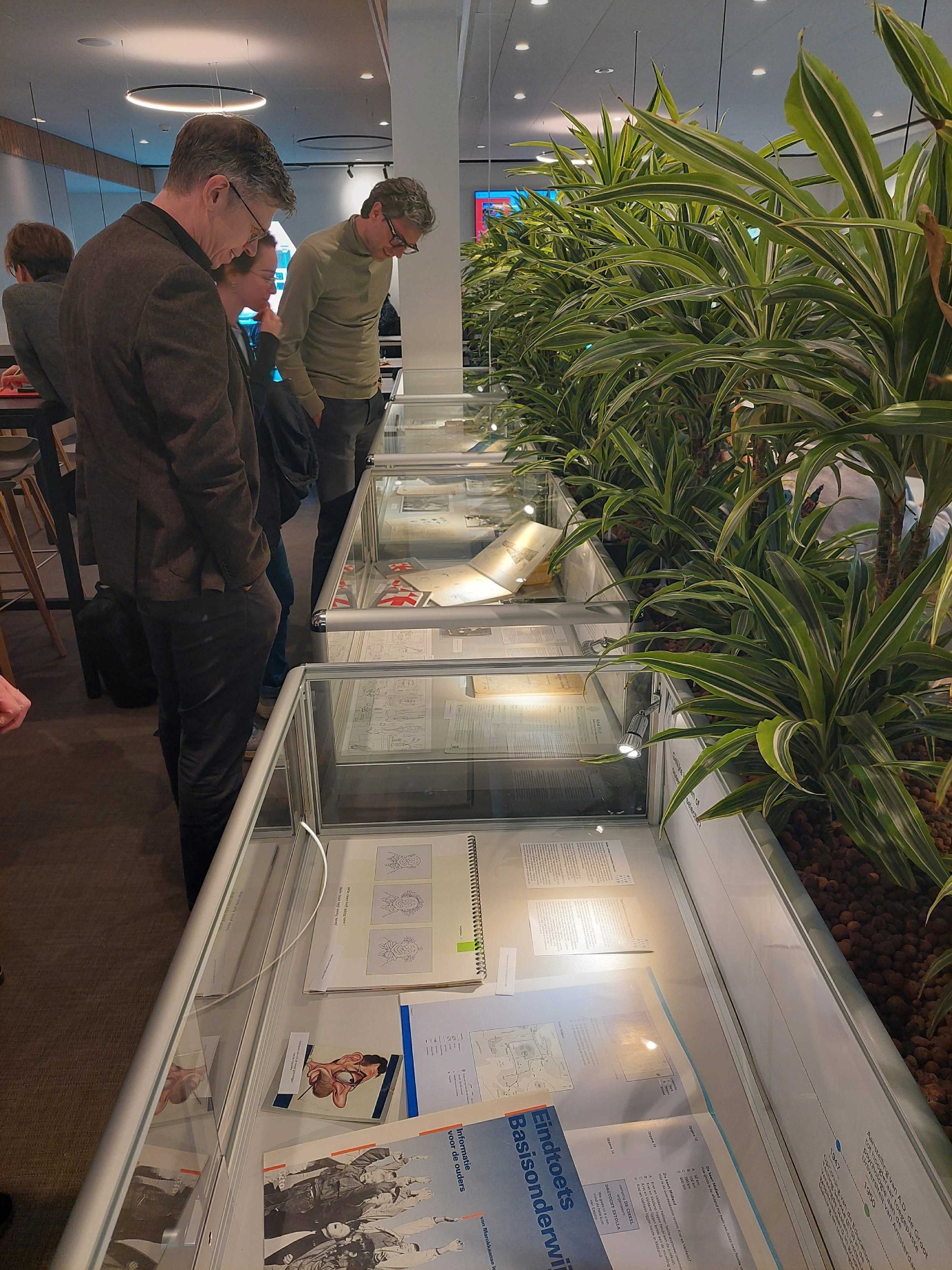
The exhibition shows that tests were not objective measuring instruments but, as products of their time, reflected social attitudes and psychological theories.