

Studying the transformation of employment in Africa: ERC Consolidator Grant for Jutta Bolt

Jutta Bolt recently received a Consolidator Grant of two million euros from the European Research Council (ERC). The Professor of Global Economic History was awarded the grant for her research on the transformation of employment in Africa between 1920 and 2020. In her project Africa@Work, Bolt aims to examine how work and livelihoods in Sub-Saharan Africa have evolved. She talked to FEB Research about her research plans.
Professor Jutta Bolt’s research focuses on long-term comparative patterns of economic development, particularly in Africa. In her current research projects, she contributes to our understanding of long-term health inequalities and the historical origins of presentday income inequality in Africa. One of her research projects focuses on the historical development of local and central government capacity in Africa. And in her latest project, for which she was awarded an ERC Consolidator Grant, Bolt turns her attention to the evolving landscape of African labour markets. Covering 33 countries spanning the former British, French, Portuguese, and Belgian empires, Africa@ Work will reconstruct detailed occupational structures from 1920 to 2020, using colonial censuses, labour surveys, and post-independence microdata. The central aim of the project is to explain why certain employment patterns – such as the high prevalence of informal work and the persistence of strongly gendered occupational outcomes - have persisted, and to identify where new opportunities for work have emerged.
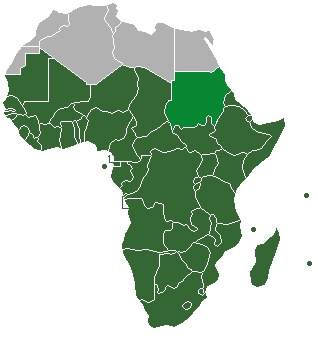
Sub-Saharan Africa (SSA) is shaped by both profound challenges and considerable dynamism, making it a highly relevant region of study. Bolt explains: “The region has one of the youngest labour forces in the world, and its fast-growing population, rising education levels, and rapid urbanization create signifi cant economic potential. At the same time, many workers remain in low-productivity or informal employment. Around 82% of jobs remain informal, and large numbers of young people – particularly women – face constraints in accessing secure, wellpaid work. Formal manufacturing has expanded more slowly than in other world regions, and has even declined in some countries. The service sector has grown rapidly, but much of this growth is concentrated in small-scale or low-return activities. These challenges are real and shape the everyday experiences of workers across the continent. Yet, they coexist with patterns of adaptation, enterprise development, sectoral diversifi cation, and episodes of successful transformation that remain insufficiently understood because the long-run data have been missing.” Africa@Work responds to this longstanding empirical gap.
Key research themes
The project focuses on five themes: shifts in occupational structures; the influence of cashcrop expansion on employment opportunities; the dynamics of urbanization and migration; the role of informal labor in development and transformation; and changing gendered labor patterns. First, Africa@ Work will track long-run shifts in occupational structures across all countries, highlighting variations in the timing and nature of labour transitions. This includes examining when labour moved out of agriculture, which types of non-agricultural jobs expanded, and how formal and informal employment evolved.
Second, the project examines how the expansion of cash-crop agriculture created new opportunities for income generation and skill development, while also shaping labour mobility and constraints. Bolt says: "Colonial economies introduced new incentives and pressures for African households. In Ghana, Nigeria, and Senegal, smallholders developed robust cocoa, palm produce, and groundnut sectors, generating new skills and forms of market participation. Yet in settler economies like Zimbabwe or plantation economies like Malawi, African farmers often faced restrictions that pushed them into wage labour or migration. By comparing these models, my project analyzes both the opportunities created by commercial agriculture and the limits imposed by colonial institutions – showing how these historical legacies continue to shape rural employment opportunities today.”
Urbanization, migration, informality and gendered labour patterns
In her project, Bolt also analyzes the dynamics of urbanization and migration, exploring how cities became sites of both expanding new services and limited industrial growth. Urbanization in SSA has unfolded under highly diverse conditions. In resourcerich economies such as Zambia and Angola, mining and oil revenues encouraged early and rapid urban growth, often centred on public sector employment and services. In Côte d’Ivoire, agricultural expansion supported vibrant urban centres and trade-based employment. “While African cities have not always experienced large-scale industrialization, they have become hubs for small business formation, consumer services, education, and increasingly modern services,” Bolt explains. “In my project, I investigate both the challenge of limited formal industrial jobs and the opportunities generated within expanding urban service economies,” Bolt says.
Bolt views informality as one of the central challenges and defining features of African labour markets. “Many workers rely on self-employment or family enterprises because formal wage opportunities remain limited. At the same time, informal economies can host dynamic clusters in which workers innovate, train apprentices, and upgrade equipment. In my project, I examine when informality has acted as a response to structural constraints, when it has supported enterprise growth, and when it has enabled transitions into more formal or capital-intensive activities. Understanding this dual character is essential for designing policies that recognize both the limitations and the possibilities of informal work.”

Women’s work has historically been under-recorded, yet women have always been central contributors to African economies — as farmers, traders, household producers, educators, and increasingly participants in the urban service sector. Bolt therefore studies how gendered labour patterns have changed over time and which pathways have existed, or emerged, for greater inclusion. “Colonial labour systems structured opportunities differently across regions: women in Kenya often worked on settler farms; in Uganda, shifts in cash-crop cultivation reshaped gendered divisions of labour; in Botswana, mining growth offered limited formal opportunities for women but stimulated other forms of urban activities. My project reconstructs these long-run changes to identify both persistent barriers and emerging opportunities for women’s economic participation.”
Importance of European–African collaboration
The ERC grant enables Bolt to contribute to deepening our understanding of how work and livelihoods in Africa have evolved over the past century. “With this support, we can finally build the long-run empirical foundation needed to explain why certain employment patterns persist, uncover where new employment opportunities have emerged, and clarify how these insights can support more inclusive and productive economic futures across the continent. The grant also makes it possible to work closely with partners across Africa to reconstruct a century of change in African labour markets, open up new historical evidence, deepen comparative understanding, and strengthen the research communities committed to improving employment opportunities for the future.”
Due to its regional focus and comparative scope, Africa@Work — like many of Bolt’s other research projects — relies on close collaboration between European and African institutions. “Colonial-era labour and census documents are largely housed in European archives, while post-independence censuses and surveys are maintained by African national statistical offices. Collaboration is essential to ensure systematic collection, harmonization, and interpretation of these sources.” Within the project, we will build a publicly accessible database. Together with in-depth case studies for each of the key themes, the database will strengthen research capacity and support more context-specific policy debates on employment, skills, and economic transformation.