
Soms zijn het juist de mensen die stilletjes maar krachtig bezig zijn die het meest inspireren
Wat doe je momenteel?
Ik werk als journalist bij het Visual Investigations-team van The New York Times. Daar combineer ik klassieke onderzoeksjournalist (denk aan op pad gaan, op deuren kloppen, mensen bellen, in archieven graven) met digitale onderzoeksmethoden, zoals het analyseren van satellietbeelden, radioverkeer en andere openbare bronnen, zoals berichten op sociale media — allemaal om grote nieuwsverhalen te doorgronden en machthebbers, wie dat dan ook moge zijn, ter verantwoording te roepen.
De afgelopen tijd heb ik me beziggehouden met een breed scala aan verhalen. We hebben onderzoek gedaan naar handlangers van Assad, nadat hij een jaar terug geleden van zijn troon gestoten werd, met de vraag, waar zijn ze nu? Voor die verhalen ben ik ook wekenlang in Syrië geweest. We hebben ook onderzoek gedaan naar Amerikaanse militaire operaties in Venezuela, de Israëlisch-Amerikaanse aanvallen op Iran (zoals bijvoorbeeld de aanval op de meisjesschool), en de Israëlische militaire activiteiten in Gaza.
Weet je nog het moment toen je hoorde dat je Alumnus van het Jaar was geworden? Wat ging er door je heen? Wat betekende het voor jou om Alumnus van het Jaar te worden? Wat vond je zo leuk aan de titel?
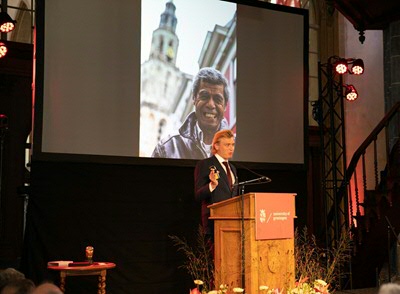
Zeker! Dat was op 4 juni 2019. Ik kreeg een mailtje van de vorige alumnus. En ik dacht.. Hè? Waar gaat dit heen? Het was echt een ongelooflijke eer om te lezen dat ik was verkozen tot alumnus van het jaar, ik had geen flauw idee. Ik was net onderweg van Californie naar Washington, D.C., opdat moment, waar ik een training moest volgen van de krant, waar ik amper een jaar bezig was, voor hostile environments.
Ik weet nog dat ik dacht, woah, niet lang geleden schreef ik nog een stukje voor een studiemagazine, Checks&Balances, over hoe het leven ná Internationale Betrekkingen en Internationale Organisatie was. En toen ik dat stukje schreef, realiseerde ik me nog maar eens hoeveel ik had mogen leren en ontdekken als student in Groningen. En hoeveel van dat wat ik daar deed, nu wordt reflecteert in mijn werk: internationaal recht, het gebrek er aan, noem het maar op.
Ik voel dat ik in een enorm geprivilegeerde positie zit, en heb gezeten, om te mogen doen waar mijn passie zit. Veel collega-journalisten hebben die luxe niet. Dus ik vond het een hele eer om dat jaar het belang van vrije media te symboliseren. Het was ook een dankbaarheid richting Groningen. De stad en de universiteit hebben een grote rol gevormd in wie ik ben.
Het betekende voor mij ook een erkenning van een manier van journalistiek bedrijven die destijds nog als onconventioneel werd gezien. Open source investigation, feiten achterhalen via publiek beschikbare digitale informatie, werd niet altijd serieus genomen. Dat de RUG dit wel deed, voelde als een bevestiging dat deze methode ertoe doet.
Ik heb zulke fantastische jaren gehad in Groningen — van mijn studie IBIO en Filosofie, tot de late nachten aan de Tuinbouwstraat. Magisch, als ik er aan terug denk. En om dan te mogen spreken op de opening van het academisch jaar, met mijn vader en moeder daar, dat was heel bijzonder.
Heeft de titel je iets concreets gebracht?
Zeker. Het heeft deuren geopend voor gesprekken met studenten en jonge journalisten in Nederland die op zoek zijn naar hun weg. Het allerbelangrijkste is misschien wel de motivatie: het is een herinnering aan waar je vandaan komt en wat je wilt bijdragen, en dat, wanneer je dat privilege hebt om te kunnen studeren wat je wilt, je je hart moet volgen in waar je voor staat, wat goed voelt om verder te onderzoeken, en waar je om geeft.
Waarom moeten mensen een Alumnus van het Jaar nomineren?
Niet iedereen die iets bijzonders doet, staat in de schijnwerpers — soms zijn het juist de mensen die stilletjes maar krachtig bezig zijn die het meest inspireren. Door iemand te nomineren zeg je: dit werk telt, en ik zie dat. Ik vond de verhalen van bijvoorbeeld Taku Mutezo en Khalaf al-Khalaf erg inspirerend en kijk uit naar wie de volgende alumnus van het jaar wordt.