
The HATCH Project is One of the ENLIGHT 2025 Call Winners!
We are excited to announce that the HATCH (Humor as a Communication Tool in Healthcare) Project has been selected as one of the 2025 ENLIGHT Call winners! The project develops a joint micro-credential course on the ethical use of humor in healthcare, exploring how humor, creativity, and playfulness can improve communication, trust, well-being, and resilience in healthcare and other people-centered professions. Find out more about HATCH and the people behind it below!
What is the main goal of the project? Who are your collaborative partners?
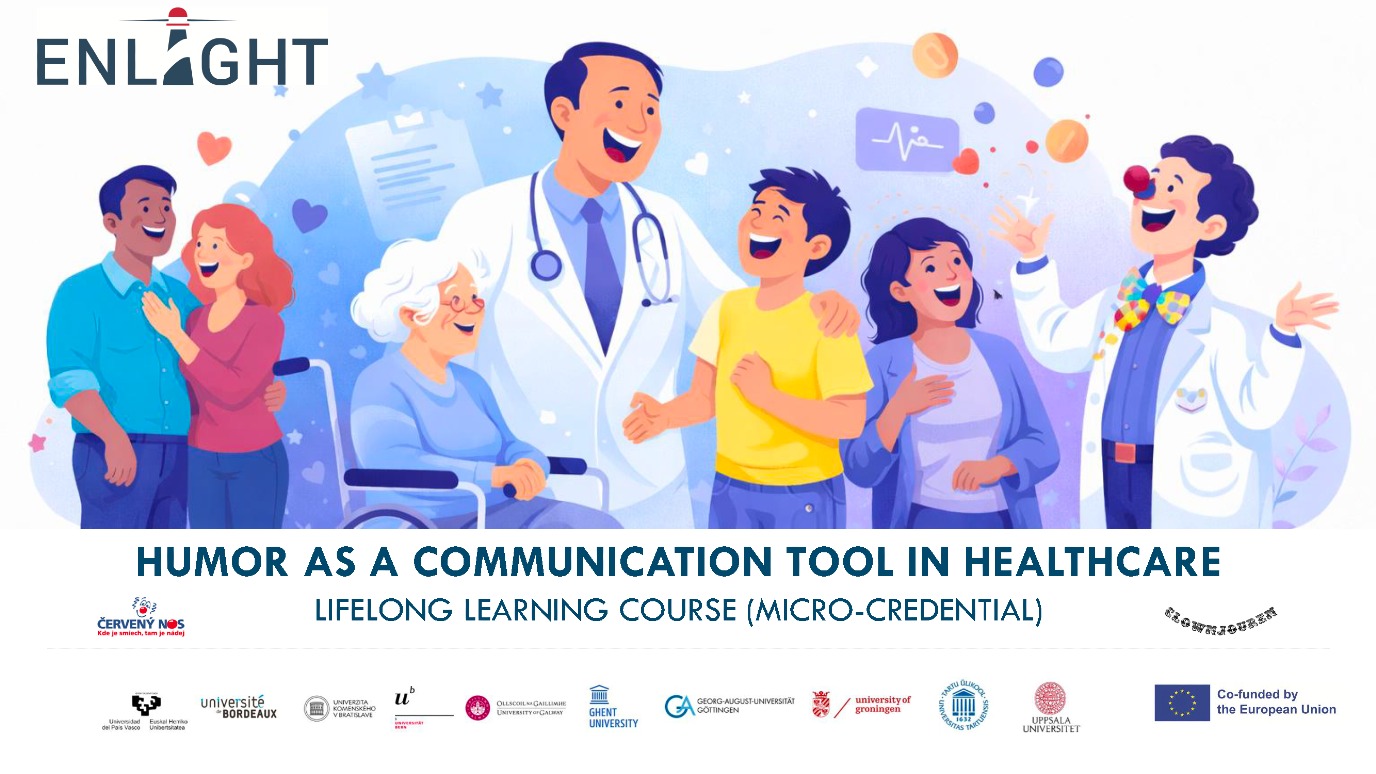
HATCH (Humor as a Communication Tool in Healthcare) aims to develop a joint lifelong learning micro-credential course focused on the ethical and effective use of humor as a communication tool in healthcare. The course combines research-based knowledge with practical training to help participants understand how humor, creativity, and playfulness can improve communication, trust, well-being, and resilience in healthcare and other people-oriented professions. Through interactive online sessions and experiential on-site workshops, participants explore the psychological, social, and cultural dimensions of humor and learn how to apply it responsibly in diverse healthcare and everyday contexts.
The project brings together five ENLIGHT universities—Comenius University Bratislava, the University of Groningen, Uppsala University, the University of Göttingen, and the University of Galway—together with professional healthcare clown organizations ČERVENÝ NOS Clowndoctors from Slovakia and Clowns on Call from Sweden. The main outputs include a jointly developed online micro-credential course, practical workshops, digital credentials and a transferable lifelong learning model that can be used across the ENLIGHT network and beyond.
What inspired this project idea?
Healthcare professionals and others working in people-centred professions increasingly face challenges related to communication, stress, well-being, and maintaining meaningful human connections. At the same time, research demonstrates that humor, when used ethically and appropriately, can strengthen trust, ease tension, support resilience, and improve communication in healthcare and everyday interactions. We saw an opportunity to bring together expertise from medicine, humanities, arts and health, educational sciences, and healthcare clowning to create a unique learning experience that combines scientific evidence with practical application.
The project was also inspired by the growing importance of lifelong learning and digital (micro)credentialing across Europe. As universities develop more flexible learning opportunities for professionals, there is a need to ensure that these educational activities are high-quality, meaningful, and recognized across different institutional and national contexts. Through ENLIGHT, we saw an opportunity not only to develop an innovative course, but also to learn from one another and contribute to shared approaches to microcredential design and recognition.
Why is this international collaboration essential to your work?
International collaboration is essential to HATCH because it brings together expertise that no single institution could provide alone. Partners contribute perspectives from medicine, public health, educational sciences, humanities, arts and health, pediatric care, and healthcare clowning. Working across the ENLIGHT network has enabled us to combine research-based knowledge with creative, practice-oriented approaches and develop a course relevant across diverse healthcare and cultural contexts. Through this collaboration, we have learned from one another’s expertise in teaching, curriculum design, lifelong learning, and digital credentialing. We also hope to strengthen a sustainable network of educators and practitioners who can continue developing innovative, interdisciplinary learning opportunities. Beyond creating a joint course, the collaboration helps us build shared approaches to microcredentials and lifelong learning that can benefit the wider ENLIGHT community.
How did the collaboration come together?
The collaboration grew out of existing connections within the ENLIGHT alliance and a shared interest in innovative approaches to healthcare communication and lifelong learning. Several project partners had already worked together through ENLIGHT activities, particularly colleagues from the University of Groningen and Comenius University Bratislava, who collaborated as experts in lifelong learning and digital credentialing. At the same time, professional healthcare clown organizations, including ČERVENÝ NOS Clowndoctors and Clowns on Call were involved in ENLIGHT as associated partners, creating opportunities for dialogue between academia and practice. HATCH provided a unique opportunity to bring together expertise from medicine, educational sciences, humanities, arts and healthcare clowning into one collaborative initiative. The project strengthened existing relationships while creating new connections between universities and community-based partners.
What impact do you expect this project will have for the University of Groningen and the ENLIGHT network?
University of Groningen
This project will support our work on awarding modules with digital credentials. It enhances transdisciplinary collaboration with international university partners and societal stakeholders, while recognizing and rewarding the expertise of our academic and professional staff.
ENLIGHT network
This project will strengthen collaboration among partner universities and associated partners by building a network of experts, practitioners, and teachers. It will professionalize our mutual skills in designing and implementing short-term educational activities for which a digital credential is issued, enlarge the portfolio of educational modules for professionals, promote collaboration between academia and community-based partners, and demonstrate how international and interdisciplinary collaboration can create innovative educational initiatives that address societal challenges and support professional development across Europe.
Does your project connect to other research, teaching or outreach activities you are involved in?
Yes. The project builds on the University of Groningen’s ongoing research and innovation activities in the field of Arts in Health, which is one of the focus areas of the interdisciplinary Aletta Jacobs School of Public Health. By collaborating with ENLIGHT partners, the project contributes to raising awareness of Arts in Health as an emerging interdisciplinary field and helps strengthen the international network of researchers, educators, and practitioners working in this area.
The project is also closely connected to the University’s educational strategy, which emphasizes interdisciplinary and transdisciplinary learning. Through the development of a joint microcredential, students and professionals engage with complex societal challenges from multiple disciplinary perspectives. This project therefore serves as a practical example of how transdisciplinary education can create added value, while making the benefits of international collaboration and innovative teaching approaches more visible to both learners and staff.
What's next?
Following the pilot phase, we plan to further develop and sustain HATCH by delivering and evaluating the second course iteration in 2027, exploring accreditation within European Continuing Medical Education (CME) frameworks, and offering HATCH beyond the project as an international digital credential course. We will also present the project and its outcomes at the ENLIGHT Teaching and Learning Conference and other international forums, develop a course manual, participant workbook, and a train-the-trainer component to support wider implementation and scalability, strengthen the network of educators, researchers, healthcare professionals, and healthcare clown practitioners established through the project, and share good practices in digital credentialing and lifelong learning across the ENLIGHT network.
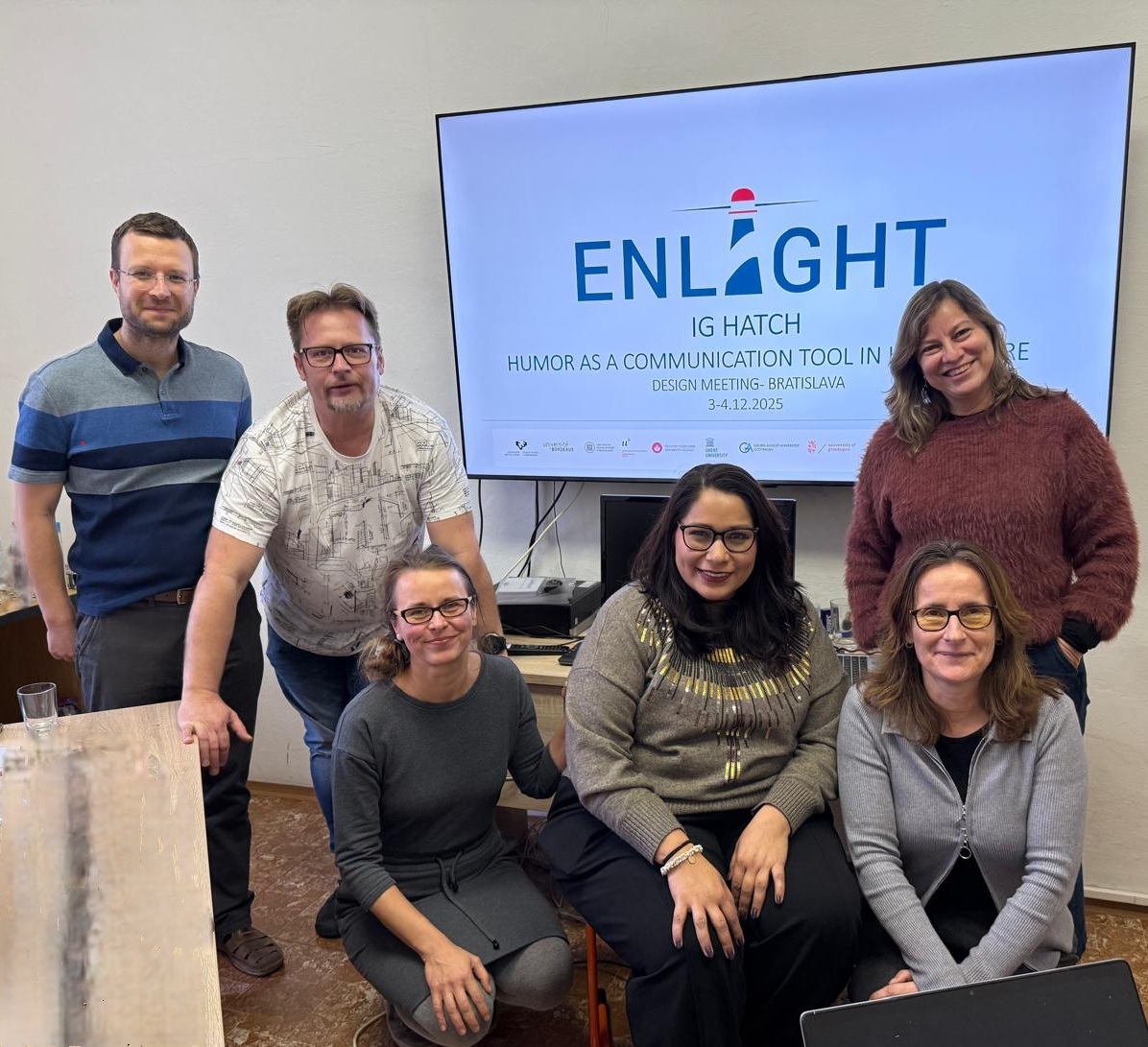
The team at the UG:
-
Dr. Hans Beldhuis, Strategy Department for Education
-
Dr. Fabiola Figueroa Esquivel, Department of Educational Support and Innovation
-
Dr. Adriana Mattos, University College Groningen
Additional information and advice
HATCH is an innovative ENLIGHT lifelong learning micro-credential that combines flexible online learning and experiential workshops, bringing together five universities and healthcare clown organizations to teach how humor can strengthen communication, trust, and well-being in healthcare and everyday interactions.
Advice: build your network before applying by using ENLIGHT activities and contacts across partner universities. Contact your university’s ENLIGHT office early, they can help identify partners and support proposal development. Carefully align your project with the call objectives and ENLIGHT priorities, such as lifelong learning and societal engagement, and involve associated partners and explore collaboration opportunities from the outset. Build a diverse team, including educational experts, course designers, and lifelong learning specialists, and take advantage of complementary expertise across ENLIGHT institutions. Engage partners actively in project planning from an early stage, and plan dissemination from the start. ENLIGHT communication teams can play a crucial role in promoting the project, recruiting participants, and sharing results across the network.
More news
-
-
03 September 2026
Ming Cao reappointed as scientific director of the Jantina Tammes School
-
01 September 2026
Evrim Ursavas appointed scientific director Wubbo Ockels School