
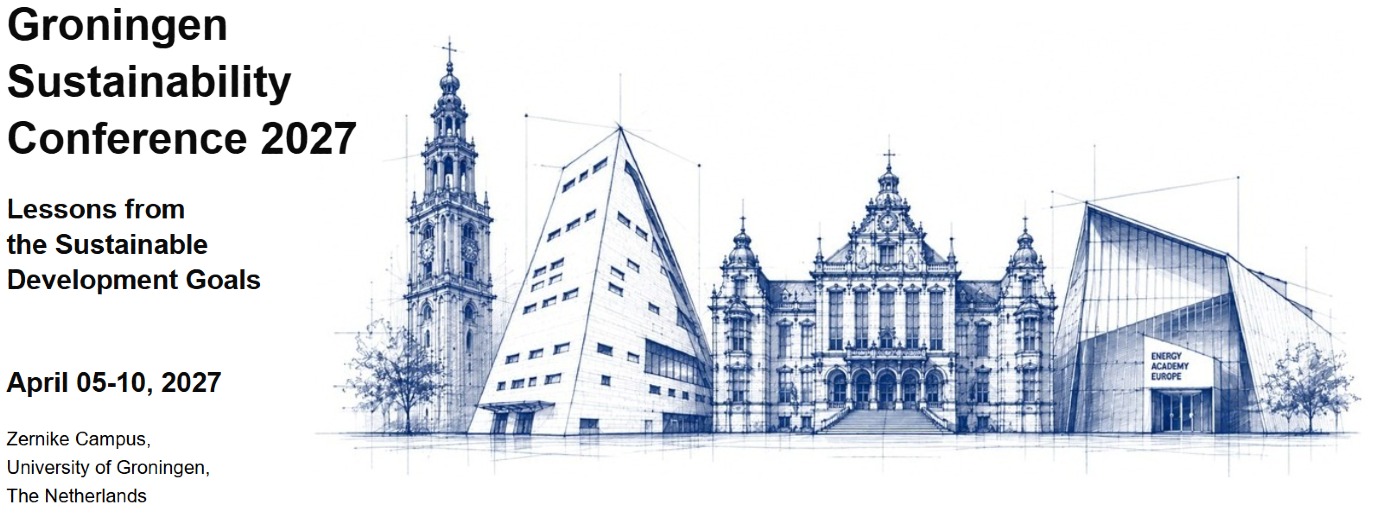
Groningen Sustainability Conference 2027 - Lessons from the Sustainable Development Goals
Accelerating Sustainable Development by 2030 and beyond
As the world approaches 2030, attention is increasingly turning towards how sustainable development can be accelerated in the remaining years of the Sustainable Development Goals (SDGs) while laying the foundations for what comes next.
GSC 2027 provides a global platform for researchers, policymakers and governance experts, the private sector, and civil society to reflect on lessons learned from the SDGs and contribute to the future beyond 2030. Alongside reflection on the SDGs, the conference will engage with the major transformations shaping sustainable futures beyond 2030, including resilient societies, climate action, health and well-being, and the opportunities and risks of AI and digitalization.
Why Groningen?
Groningen is for those who go further. Located in the northern Netherlands, the city combines an international university, a strong culture of innovation, and a region undergoing major sustainability transitions. Groningen is investing in renewable energy, hydrogen, circular innovation, sustainable mobility, and healthier urban living. The city has set an ambitious goal of becoming climate-neutral by 2035, making it a relevant setting for discussing how long-term goals can be translated into concrete local action. The University of Groningen strengthens this setting through interdisciplinary research, education, and partnerships on sustainability science, energy transitions, health and well-being, digitalization, and governance. Many of the conference themes are therefore not only topics of debate but also part of ongoing research, policy, and practice.
Conference Objectives
The conference takes place at a pivotal moment. In 2027, the United Nations will hold its final SDG Summit as it increasingly turns its attention to shaping future sustainability agendas. GSC 2027 offers an opportunity to contribute ideas, evidence, and partnerships to that wider process, while also helping accelerate action in the remaining years of the SDGs.
The specific objectives of our conference are threefold:
-
To bring together various stakeholders to discuss their lessons from the SDGs and share ideas for sustainable development by and beyond 2030.
-
To build and foster stakeholder collaboration to prepare for the 2027 final SDG summit and beyond.
-
To develop the Groningen action points as an input for the 2027 final SDG summit and the post-2030 process.
Five Conference Themes
GSC 2027 comprises five broader themes, each comprising five topics. Its plenary and parallel sessions will address these themes and topics with a diverse geographical focus spanning local, national, regional, and global scales. We invite submissions of abstracts and sessions related to these themes and topics, including the provided keywords.
-
Lessons from the Sustainable Development Goals for sustainable development beyond 2030
-
Building resilience through integrated sustainable transformation across natural and human systems
-
Navigating the climate change–development nexus for resilient, just and equitable transformations
-
Health, well-being, and societal foundations as key drivers of sustainable development
-
Artificial Intelligence, big data, and digitalization as enablers for sustainable development
Important dates
|
24 August 2026
|
Abstract submission open
|
|
25 October 2026
|
Abstract submission deadline
|
|
12 December 2026
|
Conference registration (early bird)
|
|
18 January 2027
|
Conference registration (regular)
|
|
7 March 2027
|
Registration deadline presenters
|
|
21 March 2027
|
Registration deadline participants
|
More information
For more information, the full programme, abstract submission and registration, visit the conference website.