

The interdisciplinary bridging of infrastructure and (post-)growth studies
Text: Arnau Domènech
Until recently, infrastructure studies were separate from growth and post-growth studies. Yet to achieve sustainable development, Malcolm Campbell-Verduyn argues that one must not only confront economic growth with the various post-growth alternatives but also consider how growth and post-growth have been, are and might be entangled in the infrastructures of our lives.
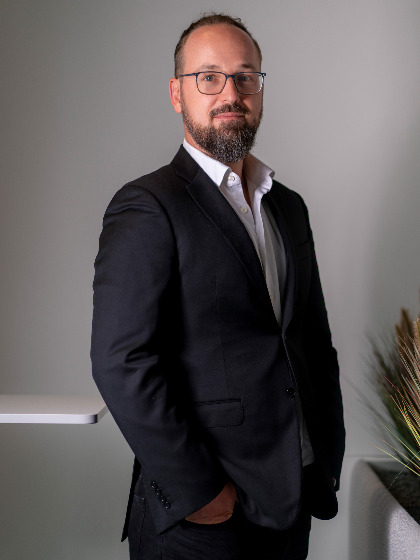
To fill this gap in the literature and to contribute to more sustainable development, RAS Fellow Malcolm Campbell-Verduyn (Faculty of Arts, University of Groningen), academic lead of the MacroFinance, Sustainability, and Ethics Group and the Sustainability Technology (SusTech) group, joined forces with Matthias Kranke (College for Social Sciences and Humanities, University Alliance Ruhr and Faculty of Social Sciences, University of Duisburg-Essen). Together they edited the recently published, open-access special issue of the interdisciplinary journal Economy and Society, in which researchers across disciplines and institutions combined approaches to explore the pathways of overcoming growth infrastructures and enacting post-growth ones. As Campbell-Verduyn points out, the special issue helps mobilise both the 'hard' physical objects that compose our infrastructures and the 'softer' social relations embedded in our policies and institutions, bringing them together in pursuit of a more sustainable future. To celebrate this publication, reflect on how it came to be, and consider its impact, we at the RAS sat down with Campbell-Verduyn.
Bridging two fields
The special issue places the growth and post-growth debate squarely within the infrastructure debate, exposing the relationship between the two fields that had long been taken for granted. It makes evident the role that growth and post-growth dynamics play in shaping infrastructures, and vice versa. In doing so, it broadens the scope of researchers working across both fields and pushes them to revisit the question of what truly matters in the growth debate. For Campbell-Verduyn, the special issue also stands as testimony to the potential for change, pointing to alternatives through which current and future infrastructures might nurture and advance a post-growth agenda, while also fostering a better understanding of the nuances and non-binaries in these relationships.
How did it become a reality?
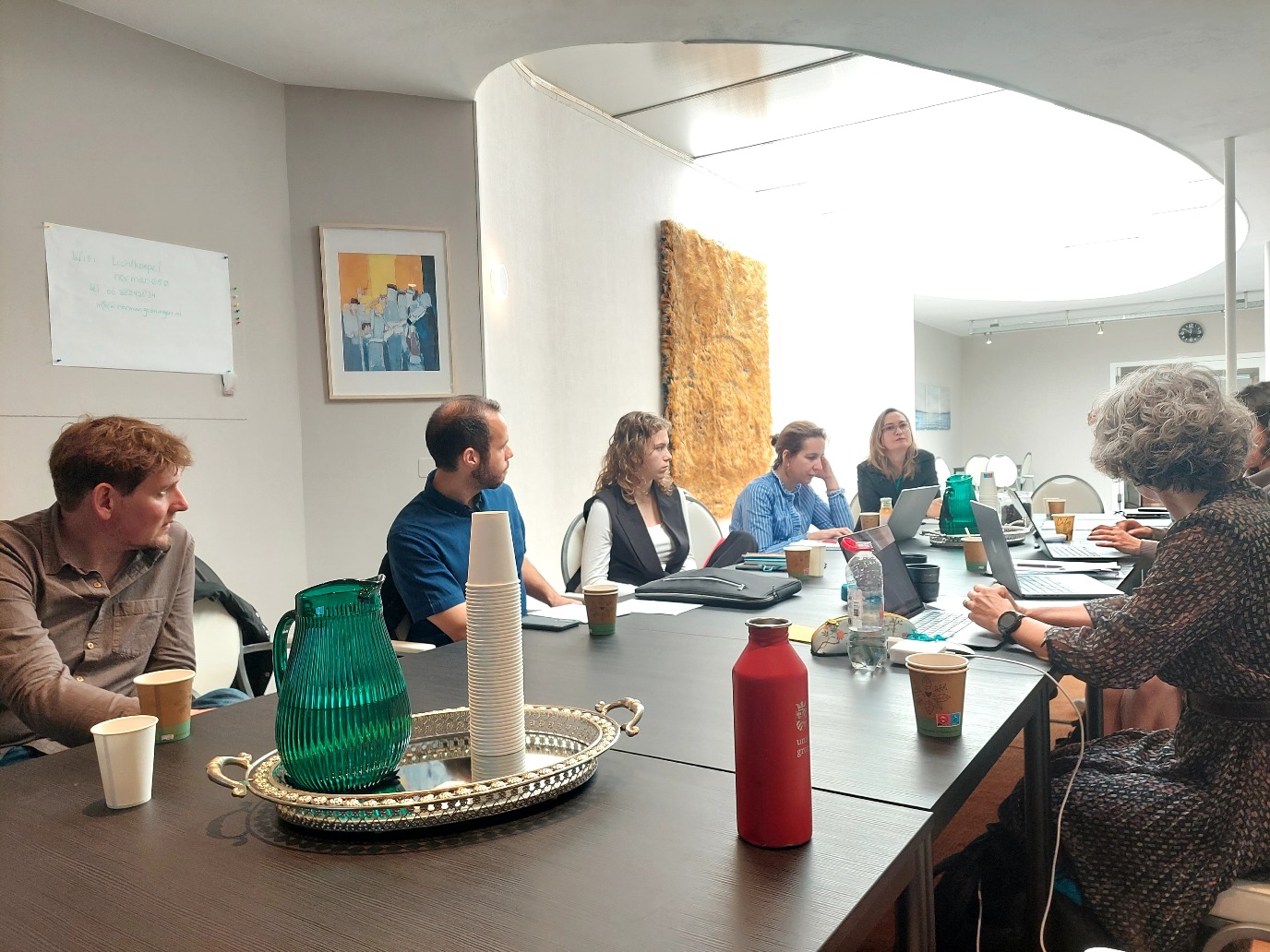
When asked about how everything started, Campbell-Verduyn points to one of the 2023 Amsterdam workshops of the European International Studies Association as the spark. From that gathering came a proposal submission for a special issue of the journal Economy and Society. This was followed by a second workshop in spring 2024 in Groningen, made possible through funding and assistance from the RAS. There, contributors presented their drafts and received structured feedback to help shape their papers ahead of journal submission. Campbell-Verduyn underlines the significance of this step: "This was an important step in order to ensure the later publication of this special issue, given the specificities of the journal, which requires submissions to be interesting for their interdisciplinary readership. In this second workshop, both contributors as well as non-contributors were invited to join and provide feedback to the different articles that ended up composing the special issue."
The value of opening up
He is quick to add that opening the workshop beyond the core group of contributors, by inviting researchers from different disciplines and institutions through the RAS community, proved to be one of the keys to success. Cross-disciplinary feedback pushed authors to sharpen their arguments and strengthen their drafts, with the dialogues across fields visibly enriching the final versions. For Campbell-Verduyn, this cross-disciplinary spirit reflects something larger: Groningen is steadily becoming a key centre in post-growth debate and expertise, with researchers across multiple faculties. An example of this is the public screening of the film ‘The Cost of Growth’ earlier this year.
Bringing it all together
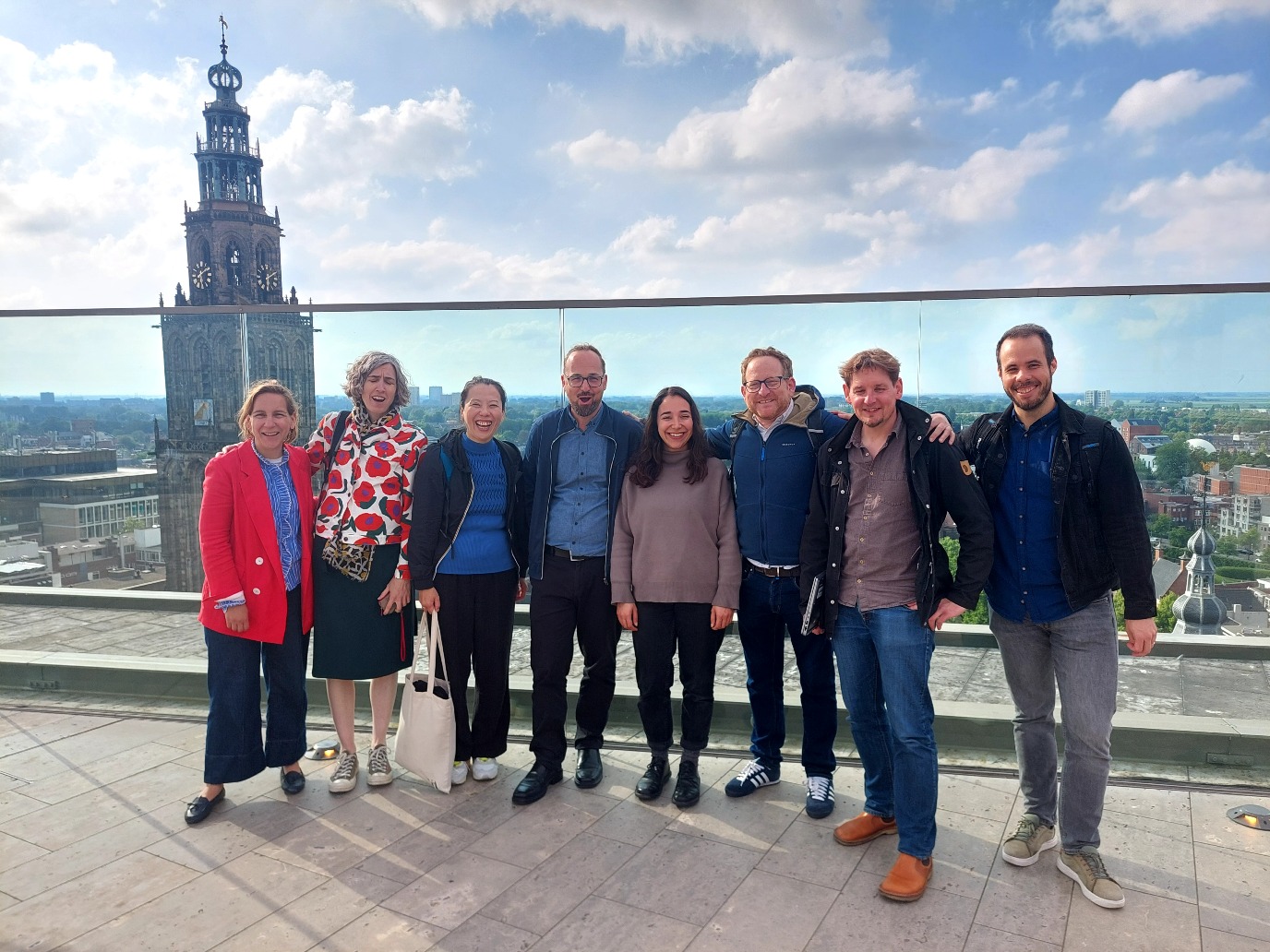
The project reached its conclusion in March 2026, when several contributors reunited in Groningen to share their work with each other and with the broader RAS community. The programme, also made possible with RAS funding and assistance, featured a range of presentations: Key Otsuki (Utrecht University, The Netherlands) on highway development in the Amazon; Aslı Yürük (Universitat Oberta de Catalunya) on Istanbul's first cruise port; Clemens Hoffmann (University of Stirling, UK) on high-speed decarbonisation projects in Africa; and Sylvain Maechler (Geneva Graduate Institute, Switzerland) on green accounting.
Being present at the event, I had the chance to speak with fellow participants about their experience. Emma Bates, a student at the Faculty of Spatial Sciences, shared that the event made her realise that by staying enclosed within our own disciplines, we are "missing out on working, reading, learning or contributing to other disciplines." She added that once one overcomes monodisciplinary tendencies, "disciplines tend not only to overlap but also to fall directly upon each other.
The power of interdisciplinarity
When asked about how it was ensured that taking a multi-, trans-, and interdisciplinary approach would lead to a successful outcome, Campbell-Verduyn shares that "interdisciplinarity was fundamental and essential." He adds that from the get-go the editors and contributors decided to consider both the terms 'growth' and 'infrastructure' through lenses developed across the social sciences and humanities. This is evident not only in the introductory article, but also in the diversity of contributors, who span fields such as human geography, international relations, planning studies, and political economy, among others.
Being clear about assumptions
The only way to speak to one another consistently is to be cognisant that what holds in one discipline may not entirely be the same in another
He highlights that being very clear about the assumptions taken is key: “Every discipline has its own taken-for-granted terms, concepts, approaches, etc. The only way to speak to one another consistently is to be cognisant that what holds in one discipline may not entirely be the same in another, and to recognise that these differences, even if slight, can be very productive in refining one's own work." He adds that scientists should not be afraid to ask each other questions, to specify assumptions together, and to be very reflexive about one's taken-for-granted terms, approaches, and answers. This is what, for him, enables success in working across disciplines.
The bigger picture
On the question of the main takeaways of the special issue, Campbell-Verduyn responds that "our bigger picture answer is that we cannot get truly sustainable development without going 'beyond growth' and we cannot go beyond socio-ecologically destructive growth without quite literally delving into the infrastructures that on the one hand promote such unsustainable development and on the other hand can potentially promote and sow the seeds of more sustainable societies." He notes that research in this area foregrounds the socio-material foundations of how truly sustainable development can work, be promoted and reproduced, and that the seeds of such development may be located in unusual or unexpected places. He illustrates this with examples from the issue itself: cryptocurrencies, some of which at their onset embraced post-growth thinking, and accounting standards, which reveal how a profession historically resistant to change has spent decades broadening its understanding of what counts as material, moving beyond company profits to encompass wider socio-ecological impacts.
Curious to learn more?If you want to get further acquainted with Campbell-Verduyn's work, a 2024 UKrant interview, published during the development of the special issue, is a good place to start: there, he makes the case that while the planet cannot sustain unchecked economic growth, abandoning growth altogether is not the answer either and that reusing existing infrastructure may be one of the keys to finding a better path forward. The special issue sets out to show that this is indeed possible. To hear Campbell-Verduyn expand on these ideas alongside co-editor Matthias Kranke, tune in to episode 33 of the Post-Growth Planning podcast, a series hosted by RAS Fellow Christian Lamker (Faculty of Spatial Sciences, University of Groningen) in which he interviews key thinkers about contemporary planning and the potential for a transformation towards growth-independent roles. There, alongside Lamker, they reflect on the making of the special issue, its impact, and the workshops in Groningen that helped bring it to life. |
More news
-
19 October 2026
From research to business: RUG Ventures helps ideas move forward
-
-
03 September 2026
Ming Cao reappointed as scientific director of the Jantina Tammes School