

The Future of Game-Based Learning and Gamification
How can game-based learning and gamification improve learning outcomes?
We warmly invite you to join us on 13 April for a cross-disciplinary event on gamification, serious games, and game-based learning. We welcome RUG researchers, lecturers, PhD candidates, and students with experience in gamification, as well as those who are simply curious to explore the field.
Participants can look forward to an inspiring program featuring keynote speaker Dr. Benjamin Hoy (University of Saskatchewan), a panel with perspectives from research, education, and game design, and a marketplace showcasing playable demos and works-in-progress. Staff and students from Hanze University of Applied Sciences and Alfa-college are also invited, creating opportunities for collaboration and prototyping. The event will offer space to connect around themes such as education and training, games as a method, health and wellbeing, governance and policy, complexity and systems, and design and development.
Join us to discover projects, exchange methods, find collaborators, and share your own ideas. Interested in presenting a demo or poster? Please indicate this in the registration form.
Programme
Join us for a morning of talks, demos, posters, and conversation on game-based learning, gamification, and playful methods in education and research.
Programme:
09:00 - 9:15 Doors open, coffee, networking, and themes wall
09:15 - 9:20 Welcome
9:20 - 10:10 Keynote and Q&A: Dr. Benjamin Hoy (University of Saskatchewan)
10:10 - 10:25 Coffee break
10:25 - 10:45 Panel discussion: What makes game-based learning and gamification actually work in practice?
Panel members: Daniël Vullings (Rijksuniversiteit Groningen), Arjan van Houwelingen (Hanze Applied University / Dutch Design Guild), Marianna Markantoni (University College Groningen)
10:45 - 10:55 Preview of demos
11:00 - 11.30 Demo round 1
11:40 - 12.10 Demo round 2
12:10 - 13:00 Lunch, free circulation and networking board
Demo rooms
Red Room
Round 1 11:00 - 11:30
This Abled City. Julia Munuera Garcia
Round 2 11:40 - 12:10
UnExpected Values. Sean White and Angelos Konstantinidis
Purple Room
Round 1 11:00 - 11:30
Fridge Crisis. Mariana Melo Santa Rosa, Carolina Luzio Coelho, and Marta Dimitrijevic
Round 2 11:40 - 12:10
Simulation Workshop "Consumer Decision Making". Wander Jager
Green Room
Round 1 11:00 - 11:30
Policing the Sound. Benjamin Hoy
Round 2 11:40 - 12:10
Monster. Oksana Kavatsyuk and Catherine Meissner
Open showcase
Alongside the scheduled demos, the event will feature an open showcase with posters, conversation tables, and interactive project contributions. These stations will remain open during both demo rounds and lunch.
Current showcase contributions include:
-
Arjan van Houwelingen (Hanze University): GRUNN & FRYSK games
-
Marianna Markantoni (RUG): LEGO® Serious Play® showcase
-
Eugene Shenderov (Hanze University): Serious game development
-
Daniël Vullings (RUG): Econometrics and Operations Research (EOR) game simulation showcase
-
Sev Wojtus, Artur Oberle, Bernard Wijbenga (Hanze University): Sk8teChair game
More showcase contributions may be added as new registrations come in.
Bio Dr Benjamin Hoy
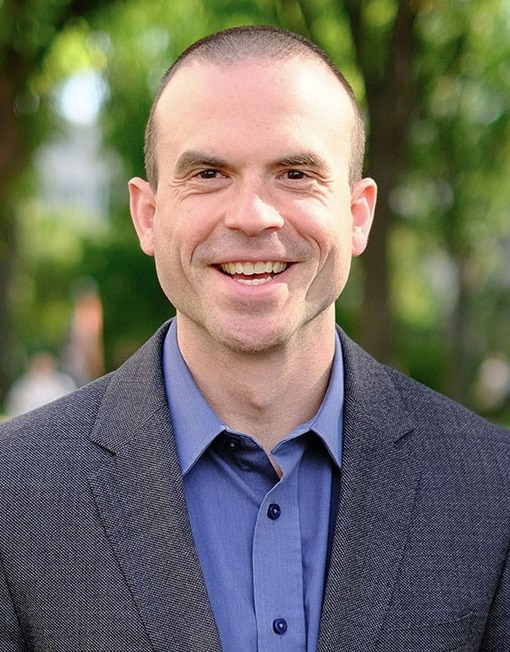
Benjamin Hoy is an Associate Professor of History at the University of Saskatchewan (PhD, Stanford University). His research examines Indigenous history, borderlands, race, demography, and the making and enforcement of the Canada- United States border. He is also a leading practitioner of game-based learning in the humanities, publishing on teaching history through custom-built board games and designing Homesteaders, a serious tabletop game that immerses players in the environmental and social transformations of prairie settlement and has been used with hundreds of learners and public participants.