
Promotie: T. Nghiem
Secularism in post-colonial Vietnam: governance, national identity and negotiations with religion, 1945-2018
|
Promotie:
| |
|
Promotor:
| |
|
Faculteit:
|
Religie, Cultuur en Maatschappij
|
|
Waar:
|
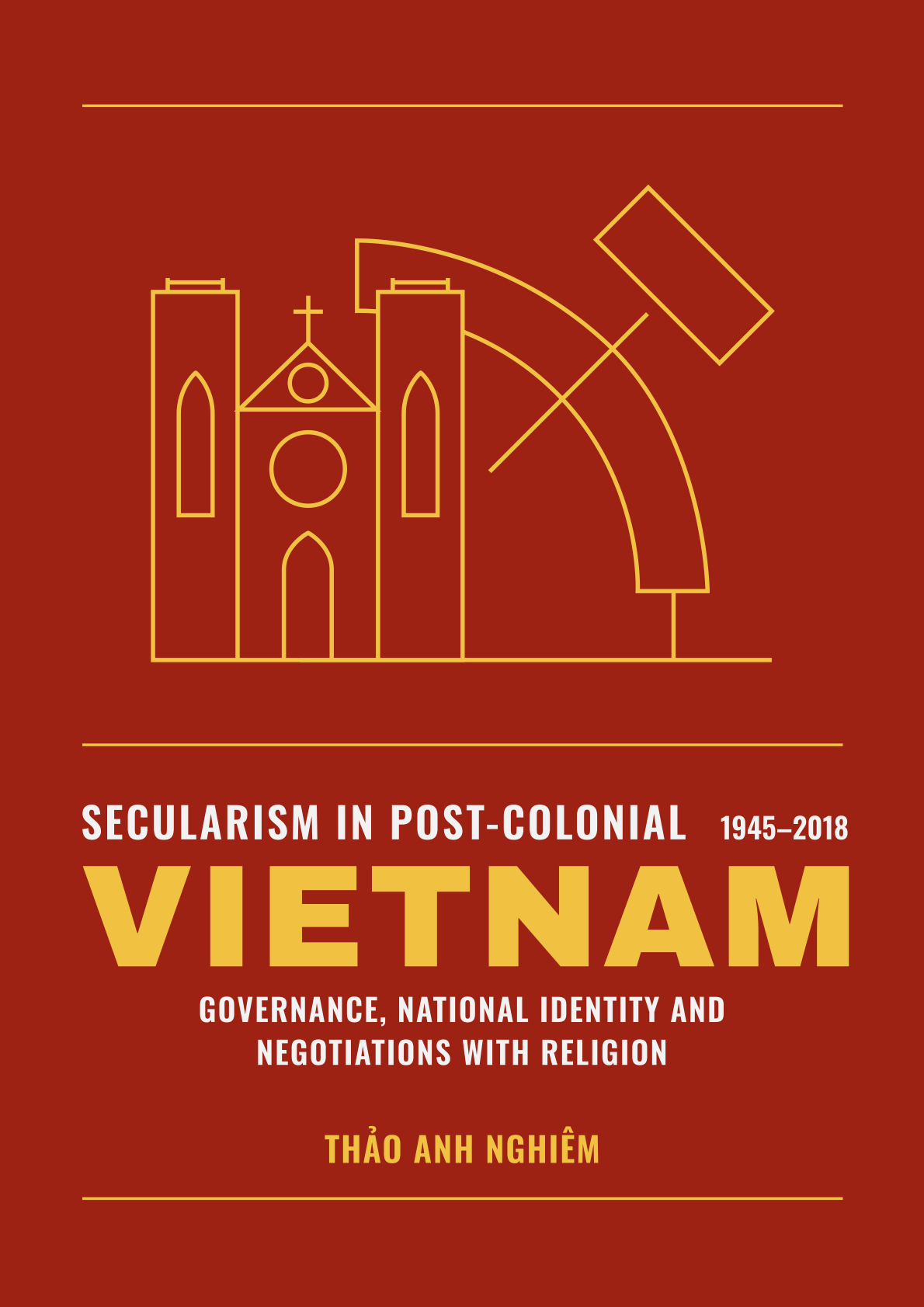
This dissertation examines how the Vietnamese state has managed religion since the end of French colonial rule in 1945. It asks how the state decided which religious practices and organizations were acceptable, which were restricted, and what place religion was allowed to occupy in a socialist society.
Rather than treating secularism simply as the separation of religion and politics, the study approaches it as a changing set of practices through which the state sought to reorganize society and consolidate political authority. Based on extensive archival research and qualitative interviews in Hanoi, the dissertation identifies three interconnected dimensions of Vietnamese secularism. First, governmental secularism used laws, institutions, and policies to regulate religious life, creating controlled space for approved activities while suppressing unauthorized ones. Second, through symbolic secularism, the state promoted a vision of the nation rooted in shared ancestry, historical heroes, collective sacrifice, and national unity, giving these ideas a semi-sacred significance. Third, dialogic secularism developed through negotiation and conflict between the state and religious actors, who did not simply accept government policies but also adapted to, challenged, and sometimes reshaped them.
The study shows that Vietnam’s approach to religion was complex. While presenting itself as modern and secular, the state also borrowed from religious traditions, co-opted leaders, and created socialist rituals. Yet tensions existed between central elites and local officials, urban and rural areas, and different interpretations of religious governance. These contradictions demonstrate that Vietnamese secularism was not a fixed blueprint but a dynamic process, shaped by ongoing interactions between state power and religious communities. The research contributes to understanding how secularism operates as a lived reality in post-colonial societies, simultaneously serving projects of social cohesion and political control.