
Can land rights empower women in Rwanda? Kritika Saxena awarded prestigious NWO Veni Grant
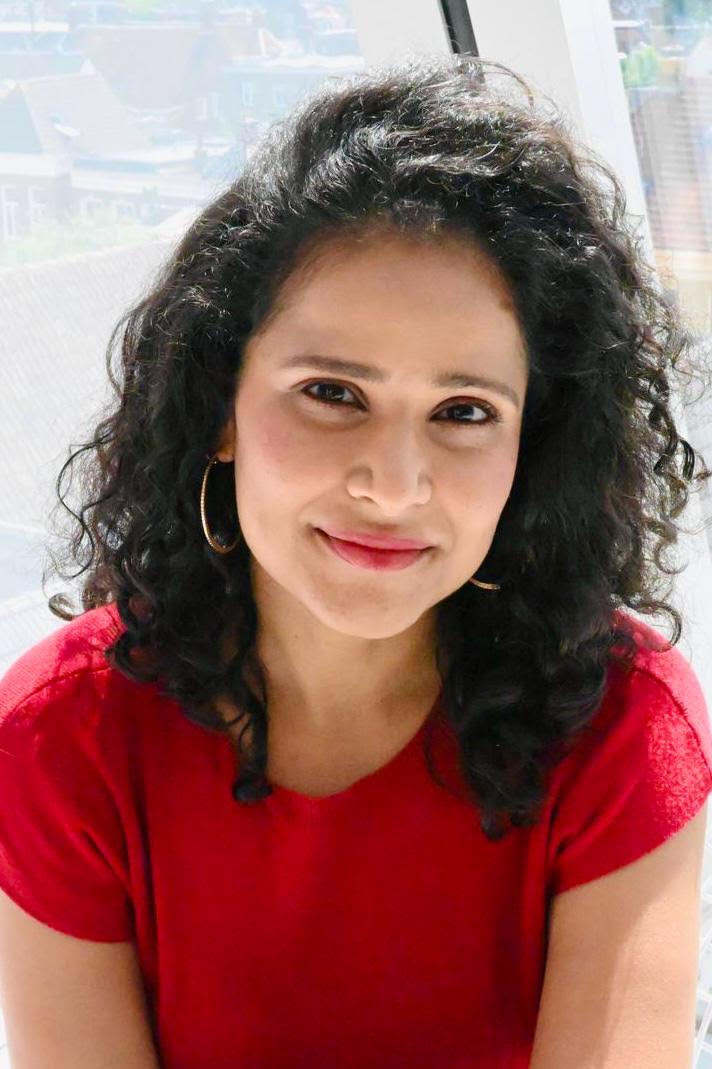
Recently, Dr. Kritika Saxena, Postdoctoral Researcher at the Faculty of Economics and Business, was awarded the prestigious Veni grant from the Dutch Research Council (NWO) for her project on women’s land rights and economic empowerment in Rwanda. The project builds on her broader research into how policies and cultural contexts influence women’s empowerment, fertility, and other demographic outcomes in developing countries. We met with Kritika to celebrate this milestone, learn more about her research project, and what she hopes to achieve over the coming years.
Could you tell us more about your awarded project?
“For centuries across Africa, women farmed land they were excluded from owning. Rwanda made an ambitious attempt to change this, granting formal land titles nationwide and allowing women to inherit and own land for the first time. Yet women's reported land ownership has since declined sharply. This project asks whether these formal rights translate into lasting economic empowerment and real decision-making power over land, or whether traditional norms reassert control over time. Combining household surveys, administrative land records, and satellite data, the research traces this question across more than a decade of reform. Findings will inform land governance and gender policy in Rwanda, across Sub-Saharan Africa, and within Dutch development cooperation.”
Why did you choose to apply for the Veni grant?
“I applied for the Veni because I was genuinely intrigued by the paradox at the heart of this project, why women's land ownership in Rwanda declined so sharply despite a reform designed to secure their rights. It's a question I wanted to dedicate the next four years to answering properly, not just because it's scientifically interesting, but because it has real implications for women's empowerment and land governance, not only in Rwanda but across Sub-Saharan Africa more broadly.”
How does this grant relate to what you're working on?
“This started with my current work as a postdoc on a project examining women's empowerment and food security. That project shows the central role women play in the food system and how enhancing their empowerment can also improve outcomes related to nutrition and food security. However, one of the persistent barriers to empowerment has been control over resources and, in particular, control over land has long been lacking for women across Africa. Rwanda's land reform promised to change that by granting women equal ownership and inheritance rights nationwide. I began investigating this under a UK FCDO grant, which funded my initial fieldwork and data access in Rwanda. Veni lets me extend that work substantially to deeply investigate the tension between formal reforms and traditional norms when it comes to women's empowerment.”
What are you planning to do now that you have been awarded?
“The first steps are practical: securing access to Rwanda's administrative land registry data, which I've already begun through my FCDO-funded fieldwork, and building out the datasets I'll need to answer the research question. Over the four years, I'll move from establishing the causal effect of land titling on women's economic agency, to examining whether that agency changes agricultural practices, to understanding why ownership is declining and the role informal norms play in this.”
What do you hope to achieve with this research?
“Scientifically, I want to understand whether formal legal reform can produce lasting change, or whether informal norms simply adapt around it over time. This speaks to a broader question in institutional economics that goes well beyond Rwanda. Practically, I hope the findings help refine how land reforms are designed, both in Rwanda and in other African countries pursuing similar policies, and inform Dutch development cooperation on land governance and women's empowerment.”
More news
-
-
03 September 2026
Ming Cao reappointed as scientific director of the Jantina Tammes School
-
01 September 2026
Evrim Ursavas appointed scientific director Wubbo Ockels School