

Event Recap: Lecture and Open Debate on Human Capital and the Future of Universities with Prof. Guy Standing
Text: Arnau Domènech
"This kind of event, where scholars from different disciplines can meet and discuss ideas freely from diverse perspectives, helps expand my horizon and develop my critical thinking. The format of this event is a good way to learn about scholarly work and dedicated research in a way that feels very different from a standard presentation. Instead of focusing on methodology or technical details, one can focus on the broader picture and the fundamental ideas behind someone's work, which is beneficial to me, especially as an early-career researcher.''
These were the words of Mihyun Seong, PhD Candidate at the Faculty of Spatial Sciences (FSS), when asked to reflect on her experience attending the sold-out lecture and open debate on human capital and the future of universities organised last May by the Rudolf Agricola School for Sustainable Development.
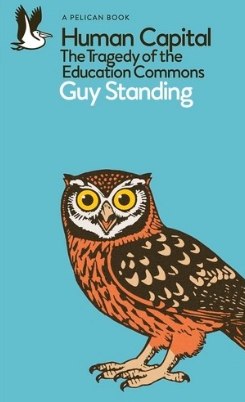
The event revolved around the recently published book 'Human Capital: The Tragedy of the Education Commons' written by economic and social thinker Prof. Guy Standing, who was present. The event was co-organised and moderated by Prof. Dimitris Ballas (FSS). It began with a welcome by dr. Michiel Daams (FSS) and by dr. Alvertos Konstantinis (FSS) presenting his recently completed PhD work in a pitch format. Afterwards, Standing set out the central arguments of his book, and Prof. Danny Dorling (University of Oxford) acted as a discussant. The centerpiece of the event, though, was the open debate between the audience and the panel, which brought together Standing and Dorling alongside fellow panellists Prof. Lisa Herzog (Faculty of Philosophy), Prof. Aleid Brouwer (FSS), Prof. Justin Doran (University College Cork), and Dr. Femke Cnossen (FSS).
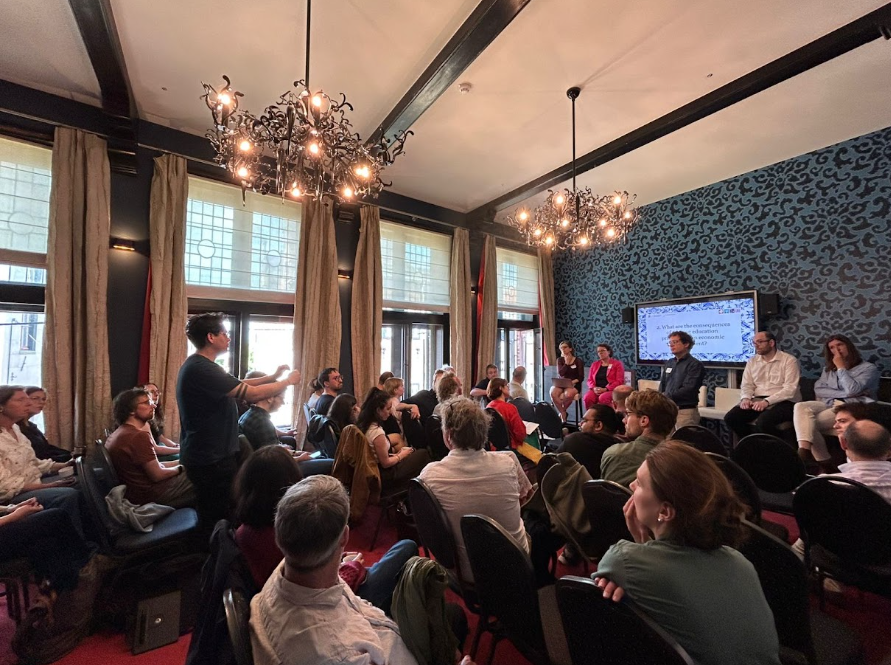
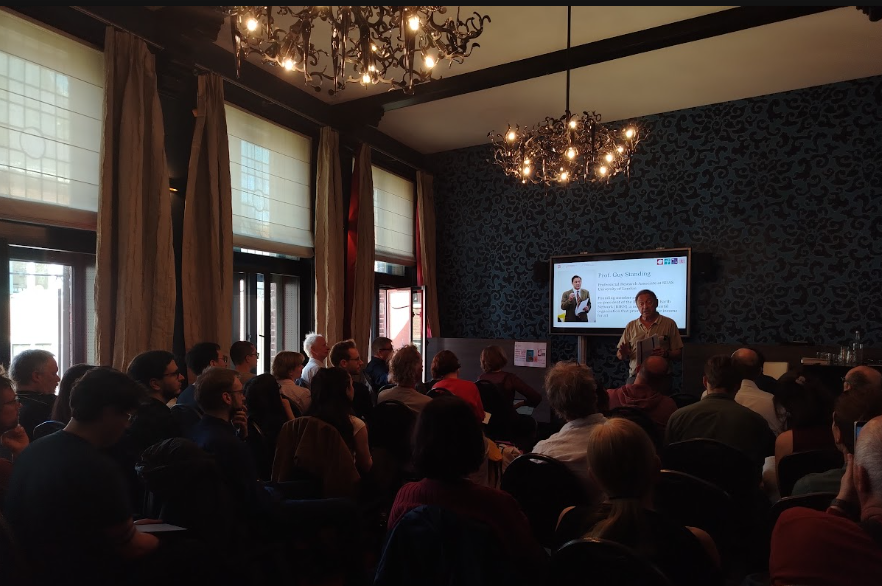
Throughout the event, it was clear that human capital as a factor of production has globally come to dominate education policy and institutional priorities. The consequence is the displacement of education as a commons, as it is narrowed around market logic instead of its broader social purpose of learning, such as truth-seeking, social ethics, and civic virtue. At the same time, participants discussed what we, individually and collectively, can do to reclaim the educational commons. In other words, ensuring that learning remains foundational to civilization rather than merely instrumental, a cause championed by our namesake, the 15th-century humanist philosopher Rudolf Agricola.
It was a good reflection point on where our education systems currently stand
Reflecting on what she learned through this event, Seong summarises that "it was a good reflection point on where our education systems currently stand and where they are heading." She further argues that beyond just reflecting, it really challenged her to think about how we can move forward to secure the intellectual sanctuary that universities are.
The event was aimed at being a sequel to the conversations initiated during the RAS 2025 Symposium, and thus to close a cycle of different opportunities for our community to collectively discuss the future of education and the role and relevance universities play in shaping it. Overall, the importance of collaboration and interdisciplinarity, as well as the implications of what is being done within universities for our local, regional, national, and global surroundings, became clear.
|
If the last academic year turned our attention to the future of universities at large, a new conversation is beginning: the future of sustainability at our own university. These are eventful times on that front, as the four Schools are being reshaped. Precisely at such a moment, the voice of our community has never mattered more.
Join us for Voicing Sustainability: Achievements, Progress and Prospects on 2 October 2026, where we will bring together the many voices within the School to share perspectives, reflect on experiences, and express how they see the past, present, and future of sustainability at RAS. This event aims to be a moment where our community, inclusive of all career stages, is given a voice, something the School has long worked to foster, this time to reflect on what has been built together and to look ahead as one.
|
More news
-
19 October 2026
From research to business: RUG Ventures helps ideas move forward
-
-
03 September 2026
Ming Cao reappointed as scientific director of the Jantina Tammes School