

Methodological and Practical Challenges of AI Research

This workshop addresses the methodological and practical challenges of researching AI beyond disciplinary boundaries. By bringing together scholars from diverse research backgrounds, the event fosters a collaborative environment to explore how different disciplines approach AI-related research questions. It focuses on the key decisions and lessons learned when researching AI across different faculties: Faculty of Arts, Faculty of Economics and Business, Faculty of Philosophy, Centre for Information Technology, and Campus Fryslân at the University of Groningen. Participants will gain insights into the methodologies and practicalities of AI research and have the opportunity to engage in a hands-on (Python-based) technical session.
The event is supported by the Jantina Tammes School of Technology, Society and AI under the 2026 Grassroots Grant "Prompting with multimodal generative AI: Bridging computational methods and critical AI studies."
Programme
|
Time |
Session |
Details |
|
14:30–14:35 |
Opening |
Welcome and introduction to the workshop’s core themes and objectives by Nataliia Laba (Faculty of Arts). |
|
14:35–15:30 |
Research reflections |
Three 15-minute talks focusing on key decisions, methodologies, and lessons learned in AI research.
|
|
15:30–15:40 |
Coffee break |
|
|
15:40–16:55 |
Workshop |
A. Emin Tatar (Center for Information Technology): From Words to Vectors: A Workshop on Understanding Text Through Analysis |
|
16:55–17:00 |
Closing remarks |
Summary of the event and key takeaways. |
Abstracts
Researching Military AI in a Changing Development Ecosystem
By Taís Fernanda Blauth
Research into military technologies has often faced challenges of secrecy and restricted access. However, AI intensifies a related but somewhat different methodological problem: the development of military capabilities is becoming increasingly difficult to observe. Unlike many conventional military technologies, which leave identifiable material and organisational traces, AI capabilities can emerge through software development, the adaptation of general-purpose technologies, and the integration of distributed public-private ecosystems. Therefore, their observable material footprint may reveal relatively little about the military capabilities being developed. This creates challenges for governance and research in this field: how can we identify what constitutes military AI development, where it occurs, and which actors contribute to it? In this talk, I will discuss how AI affects the visibility of military innovation and consider the implications for the study of capabilities whose development may leave few reliable indicators of their eventual military function.
Same Text, Different Numbers: The Divergence of LLM-Based Measures
By Sasan Mansouri
Large language models (LLMs) are increasingly used to turn text into quantitative measures of concepts that are difficult to observe directly, such as sentiment, uncertainty, culture, and risk. Their appeal is clear: LLMs can perform complex measurement tasks at a scale that would be difficult or costly with human coding. But how reliable are these measurements, and how much do they depend on the model used? We study this question by asking seven independently developed LLMs to measure the same texts using common definitions and scoring instructions. We find substantial disagreement across models: their rankings correlate only moderately, and model choice can change subsequent empirical conclusions. Models also disagree on seemingly simple rule-based tasks, while their reported confidence does not reliably identify more dependable results. Averaging across models improves consistency for many measures, but does not eliminate important differences. These findings highlight both the promise and the challenges of using LLMs as measurement instruments and suggest the need for systematic cross-model validation.
What Does It Mean to Be in Control of AI?
By Herman Veluwenkamp
Ethical reflection on new technology typically starts from familiar values and concepts. We want to know whether the new technology can be employed responsibly, whether it undermines autonomy and human agency, etc. This is already complex enough in itself, but the introduction of a disruptive technology such as AI has made this exercise even more challenging. The reason for this is that AI has forced us to rethink some of the values and concepts that we use to evaluate technologies themselves. The introduction of entities that seemingly think and act in a more or less autonomous way, has challenged our understanding of what it means to be a moral agent, to be responsible, and what it means to be in control. This gives rise to a methodological challenge. Some of the concepts that we use to assess new technologies are themselves put under pressure by these technologies. In this talk, I focus on the concept of control, and ask how AI has challenged us to rethink what it means for humans to have control over increasingly automated systems.
Workshop: “From Words to Vectors: A Workshop on Understanding Text Through Analysis”
By A. Emin Tatar (Center for Information Technology)
In this workshop, using Python with beginner-friendly Google Colab notebooks, we will show:
- how to work with large datasets, with GPU-accelerated solutions;
- how to use text embeddings to turn text into comparable vectors and
- how to work with those vectors to support practical analysis such as clustering, topic discovery, and trend exploration
Requirements: (Charged) laptop, Google account
Bios
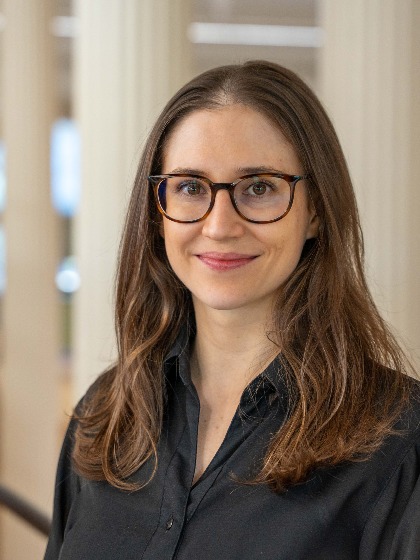
Taís Fernanda Blauth is an Assistant Professor of AI and Governance at the University of Groningen, Campus Fryslân, where she teaches in the BSc Data Science & Society and directs the Tech Governance Lab (CITE). Her research focuses on AI governance, ethics, and regulation, with particular expertise in military AI and the societal impacts of emerging technologies. She completed her PhD in 2025 on the legal and ethical challenges of autonomous weapons systems. Her work explores governance pathways for responsible AI innovation, with a focus on accountability, human dignity, and public oversight in high-stakes technological domains.

Nataliia Laba is an Assistant Professor in Digital and Multimodal Communication / Humane AI at the University of Groningen. Nataliia studies visual generative AI, with a strong focus on society↔technology relationships in the context of technology adoption and use. Her research asks what visual generative AI reveals—and conceals—about people and institutional conditions under which it becomes socially acceptable. Nataliia is a former Student and Early Career Representative of the Visual Communication Studies Division of the International Communication Association and co-editor of Six Critical Lenses on AI-Generated Images (CRC Press, 2026).
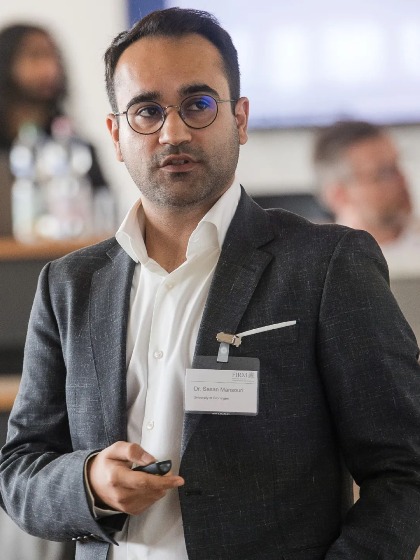
Sasan Mansouri is an Associate Professor at the University of Groningen’s Faculty of Economics and Business and a Fellow of the Jantina Tammes School of Digital Society, Technology & AI, where he coordinates the faculty’s AI & Digitalization theme. His research applies natural language processing and large language models to study how information shapes financial markets, along two strands: information intermediaries—analysts and business media—who acquire, process, and disseminate value-relevant insights, and the reliability and bias of AI-generated text. His work appears in Management Science, the Journal of Financial and Quantitative Analysis, and the Journal of Business Venturing.
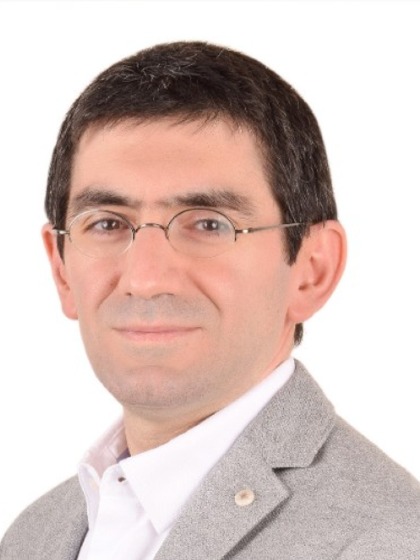
A. Emin Tatar is a data scientist in the Research Domain of the Center for Information Technology at the University of Groningen. His work focuses on the development and application of data-driven methodologies to complex scientific problems in medical, social, economic, and engineering domains. His research interests include statistical learning and predictive modeling, with an emphasis on translating theoretical models into practical analytical solutions.
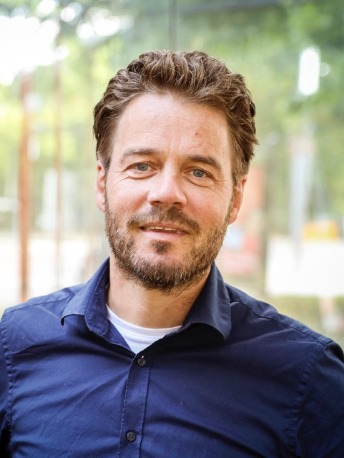
Herman Veluwenkamp is an Assistant Professor on Normative Ethics and the Digital Society at the University of Groningen. His research focuses on conceptual engineering, meaningful human control, meaningful democratic control, and responsibility gaps, with publications in journals including Mind, Synthese, Philosophy & Technology, and Ethics and Information Technology. In the two-year “Democracy in Traffic” project, funded by the SIDN Fonds, he examines how public-sector automated systems can be deployed in democratically responsible ways. Before moving to philosophy, he studied Computer Science and worked as a software engineer and IT project manager.
Questions? Contact Nataliia Laba at n.laba rug.nl