

Revised edition of bestseller ‘Nederlands in gang’ published
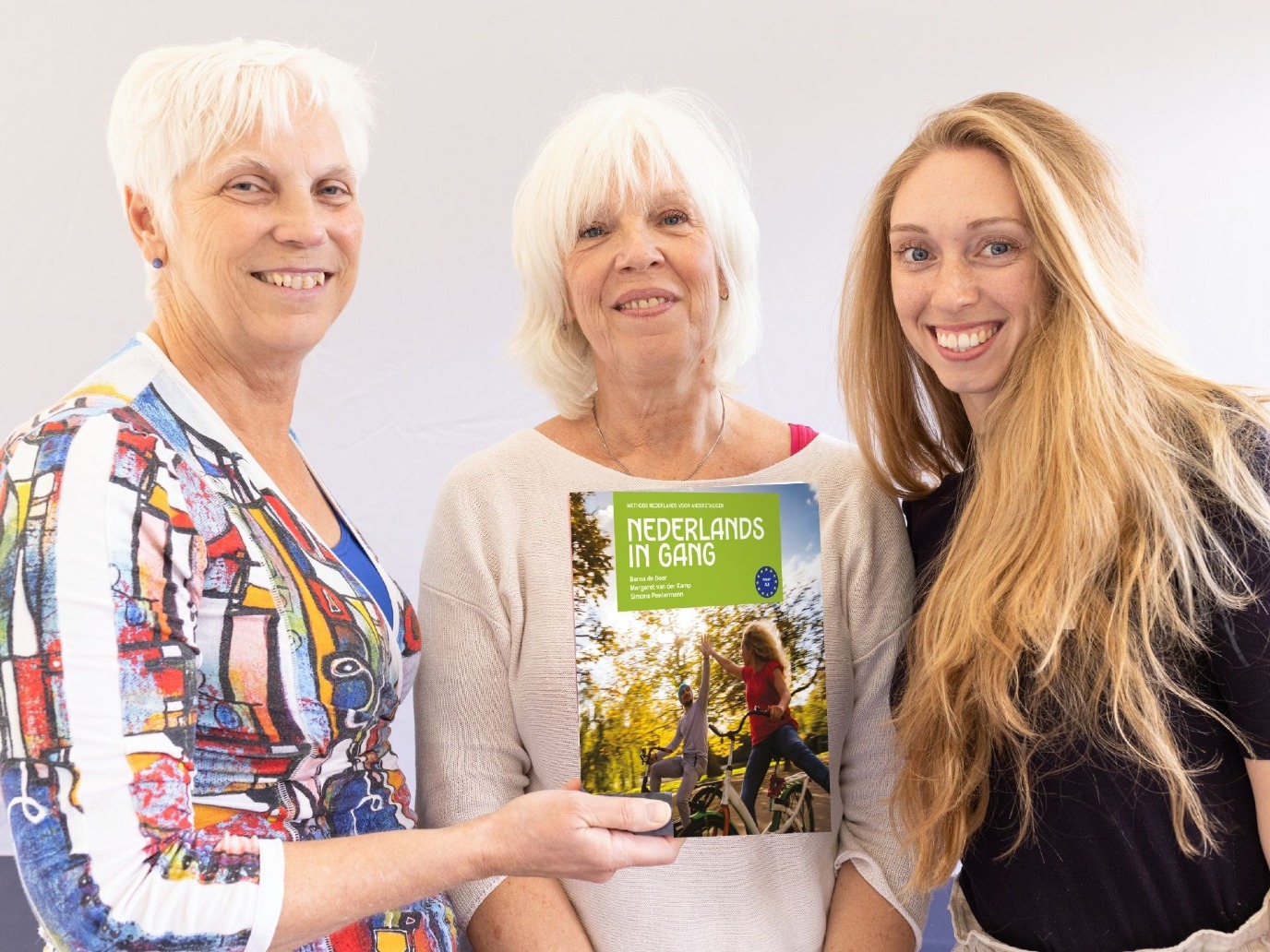
The updated edition of 'Nederlands in Gang', one of the most widely used teaching methods for Dutch as a second language (NT2), has been published this week by Boom Publishers. Developed by NT2 teachers Berna de Boer, Margaret van der Kamp, and Simone Pentermann from the University of Groningen Language Centre, the method includes a wealth of new content and is even better tailored to the needs of theoretically educated adults studying or working in the Netherlands.
Practical input
‘The world in which our students use Dutch is constantly changing,’ says Berna. ‘That’s why we felt it was important to thoroughly update the method by looking at which situations are relevant for today’s learners.’ The new edition was developed with input from a focus group, and the materials were extensively tested in various NT2 courses. ‘This provided us with incredibly valuable insights,’ says Margaret. For example, the grammar section has been completely revised, with more explanations and examples. Based on experiences with the previous edition, the order of topics has also been adjusted. ‘We noticed that students were ready for certain grammar topics much earlier in their learning process,’ explains Margaret. “By moving these topics forward, they can also practise them for longer.”
More speaking, fewer fill-in-the-blank exercises
The focus remains on communication and interaction. However, the number of speaking assignments and interactive exercises has been significantly expanded. ‘You don’t learn a language just by studying rules,’ says Berna. ‘You learn a language by using it. That’s why we’ve added many more assignments where students engage in conversation with each other.’
Instead of individual fill-in-the-blank exercises, students now more often work together on question-and-answer tasks, role plays, and interactive exercises. Each chapter concludes with a playful final assignment that brings together all the learning objectives. One example is the ‘ping-pong game,’ where students take turns naming numbers, days of the week, months, or seasons as quickly as possible.
Pronunciation as a continuous learning path
Pronunciation has also been given a more prominent place in the method. The pronunciation training consists of several steps: listening and recognizing, producing sounds independently, and applying them. The integrated pronunciation training was developed by speech therapist and NT2 teacher Karin Brummelman, who previously also designed the pronunciation training for Nederlands in Actie. The training includes new videos in which Karin, using supportive gestures, demonstrates how Dutch sounds are formed.
A unique feature of this teaching method is that students are also made aware of word stress in the pronunciation exercises—whether a sound should be pronounced louder, longer, or with a higher pitch. ’We believe it’s important to include this from the start so that students make the connection between sounds and word stress. This improves the melody of their speech and greatly enhances intelligibility,’ notes Simone.
Extensive online learning environment
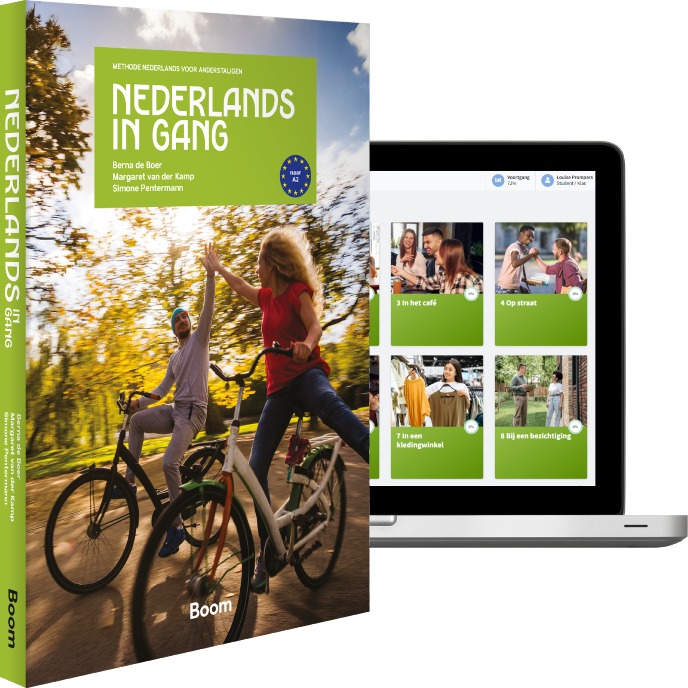
In addition to the book, the website has also been completely renewed. It offers interactive exercises, grammar and pronunciation videos, and extra materials for independent practice. ’The website is truly an extension of the book,’ says Simone. ‘Students can choose for themselves what they want to practise further and when they want to do it.’
Diversity and inclusion have also received attention in the new edition. For example, the pronouns hen and die have been included in the grammatical overviews, and a special version of the word list is available on the website for students with dyslexia, featuring extra spacing between letters and lines.
The new cover features cyclists, a typically Dutch image that symbolizes movement. A fitting choice for a method that guides students towards confident and successful use of Dutch!
More news
-
-
03 September 2026
Ming Cao reappointed as scientific director of the Jantina Tammes School
-
01 September 2026
Evrim Ursavas appointed scientific director Wubbo Ockels School