
PlesTIC Ready
There are plenty of good ideas for circular plastics, but the step towards successful practical application often proves difficult. With the Plastic Ready project, we are working on an approach that helps innovations reach the market faster and with a greater chance of success.
Plastic approach
Central to this is the plesTic approach, in which an innovation is viewed not only from a technical perspective, but from seven interconnected angles: Policy , Logistics , Economy , Social acceptance, Technology , Innovative design, and Corporate & Community.
The plesTic approach is being developed with the help of subprojects. Within these subprojects, work is being done on challenges within the various letters. Letter experts from knowledge institutions closely monitor the projects. Together, they subsequently develop the plesTic approach.
Accelerate ongoing innovations and develop a broad approach
With plesTic Ready, we aim not only to accelerate ongoing innovations but also to develop a broad approach that can be deployed in the future for all innovations in circular plastics. In this way, we contribute to a faster and more sustainable transition to a circular plastics chain.
Started subprojects
Within plesTic Ready, the following projects have been approved and have started.
Higher quality recycling
Higher quality recycling
Two new innovation projects awarded
The University of Groningen is involved in two newly awarded innovation projects within the plesTic Ready programme. Both projects focus on improving the quality of plastic recycling.
-
Melt Filtration
Pyoor, together with the University of Groningen, is investigating how PE and PP recyclate streams can be further purified using fine-
mesh melt filtration. This can improve the quality of the recyclate, creating new application possibilities.
-
Mobile sorting plant for EPS
Get2Green, together with Wierda, Looped, and the University of Groningen, is developing a mobile plant for sorting, cleaning, and processing EPS (styrofoam) on-site. This reduces transport movements and can simultaneously lead to higher quality recyclate.
Repack+ Foodgrade film packaging
First project within Plastic Ready: Food-grade film packaging
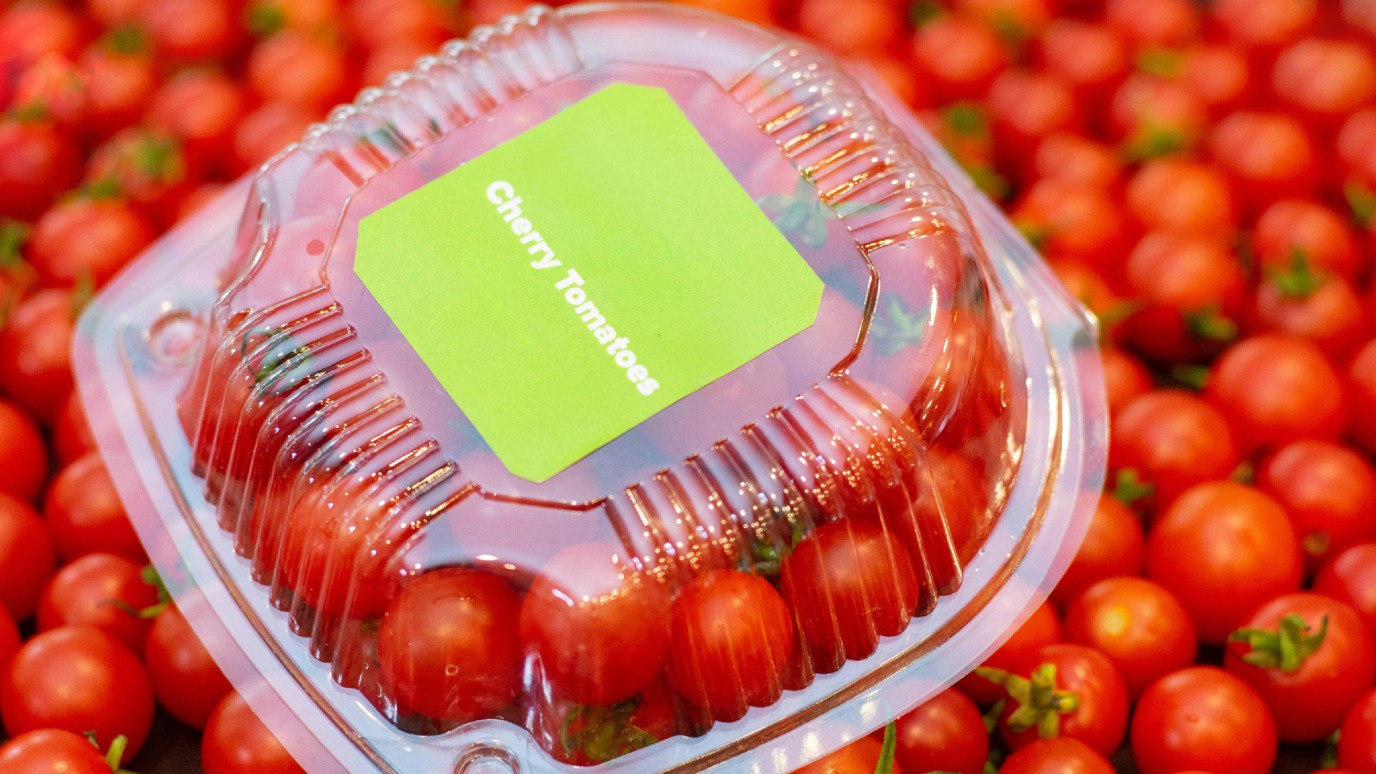
The first research project within Plastic Ready focuses on food-grade film packaging. The goal is clear and ambitious: to recycle plastic food packaging in such a way that it can be reused as safe packaging for food. In this way, valuable plastic remains in the loop and no longer ends up as waste.
Current laws and regulations are an obstacle
In practice, however, this proves to be complex. One of the biggest challenges is that recycled plastic is currently hardly permitted for use in direct contact with food. Current legislation and regulations therefore constitute a major obstacle to keeping the large flow of film packaging circular.
Research via feasibility study
Within plesTic Ready, we are investigating, through a feasibility study, how this can still be made possible. The essence of this project is on-site collection and subsequent thorough cleaning so that it can be safely reused in new food contact packaging materials. We are doing this in collaboration with NNRD, NNZ, Sylvaphane, DYE-FF, Ferrtech, NHL Stenden, and the University of Groningen.
We look not only at technological solutions, but also at the conditions in policy and regulations and at the design of logistics chains. The deployment of LETTERS experts in Policy, Logistics, and Technology is crucial in this regard.
How the plastic approach can contribute
By bringing these disciplines together from the outset, we aim to gain insight into what is technically possible, what is required from a policy perspective, and how the supply chain needs to be structured accordingly. In this way, we take a first concrete step towards circular food-grade packaging and demonstrate how the plesTic approach can contribute to breakthroughs in circular plastics.
More about all subprojects
This project is part of plesTic Ready. Also view the other subprojects and discover how we are working together on a circular plastics chain.
Plastic Conscious
Plastic Conscious
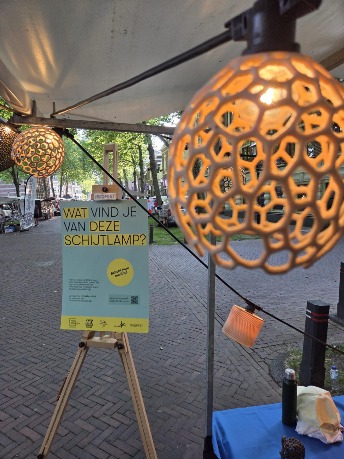
What if waste is actually just material with a second life? Within the Plastic Bewust project, research is being conducted into waste as a raw material for new products. A remarkable example is the circular lampshades made from recycled plastic and fibers from elephant dung.
What is the reason for the project?
The demand for circular solutions for plastics is growing. Governments, organizations, and residents are increasingly seeking ways to reduce waste streams, reuse raw materials, and apply sustainable materials. At the same time, innovative combinations of recycled and bio-based materials offer new opportunities for product development.
What problem does the project solve?
The Netherlands faces a major challenge when it comes to reducing waste, curbing the use of new raw materials, and realizing a circular economy.
Plastic Bewust contributes to the solution by processing residual streams such as recycled plastic and organic material into new, usable products. The project investigates how new products, materials, and collaborations can contribute to a more sustainable living environment and demonstrates that waste does not mean the end of a product, but can actually be the beginning of something new. This reduces waste streams, reuses raw materials, and creates greater awareness of the possibilities of circular design.
What are the key (preliminary) results?
The foundation was laid within the Plastic Soup? Close the Loop! program at NHL Stenden. Students set to work on the question of how recycled plastic and elephant dung can be used for circular product development. The first results showed what is possible when you look at raw materials differently. Lampshades were designed from recycled plastic, combined with fibers from elephant dung from Wildlands Adventure Zoo Emmen . The lampshades could be admired during WILDnights. A surprising mix that shows how waste streams can come together to form a new, usable, and aesthetic product.
Students from the Communication & Multimedia Design program at NHL Stenden visualized this process. They translated the material research and design into visuals and a story that shows how innovation works in practice. In this way, not only the product is developed, but also the story behind it.
Meanwhile, more products are being designed, such as information boards for use in the animal park, swings, and decorative applications for public spaces.
Our collaboration with WILDLANDS has won the public award of the Sustainable Thirty 2025 .
In June, a practical trial followed during the TT Festival in Assen , where the lampshades were tested under realistic conditions.
Project partners
-
Ecoras
-
WILDLANDS Adventure Zoo Emmen
-
Hanze University of Applied Sciences
-
University of Groningen
-
Greenwise Campus
-
Municipality of Emmen
More about all subprojects
This project is part of plesTic Ready. Also view the other subprojects and discover how we are working together on a circular plastics chain.
ERDFplesTic Ready is a project within the ERDF Northern Netherlands 2021–2027 programme and is made possible in part by the European Regional Development Fund. The ERDF supports innovation, cooperation and sustainable economic growth in the region and, with this project, contributes to strengthening the circular plastics sector in the Northern Netherlands. |