

Making the past FAIR: an interview with Canan Çakırlar on open data and archaeological collections
Archaeological research often depends on materials that can never be collected again. Once an excavation takes place, the archaeological record is permanently changed, making careful documentation, preservation and data sharing essential. But how can we make archaeological collections and research data accessible and reusable, while also protecting the physical materials and the communities they are connected to?
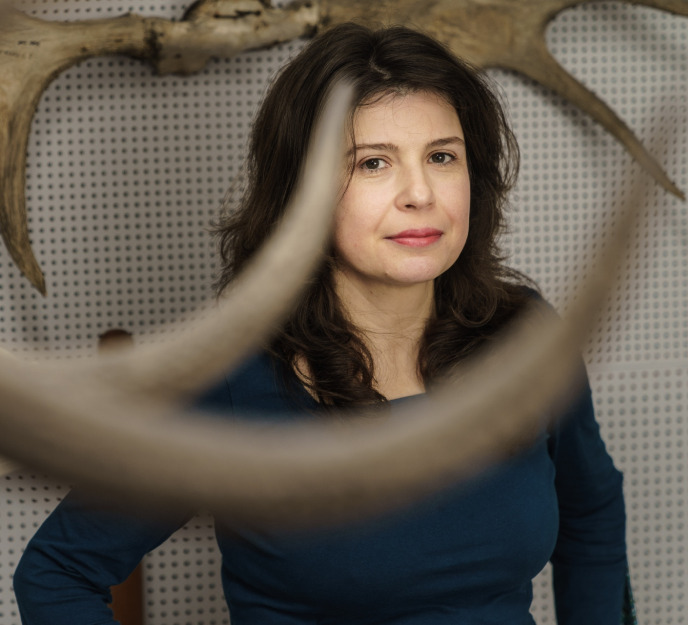
Canan Çakırlar is an Associate Professor of Bioarchaeology and East Mediterranean and West Asian Archaeology at the University of Groningen. As a member of the Groningen Institute of Archaeology (GIA) and head of its zooarchaeology collections and biomolecular lab, she works at the intersection of archaeology, biology and environmental research, studying how human-animal interactions have shaped societies and ecosystems.
In this interview, she reflects on the benefits of sharing research data, the challenges of digitising physical collections, and the importance of combining digital resources with the hands-on knowledge gained through collections and fieldwork.
Bioarchaeology has had an open vision from the get-go.
How common are open science practices and research data reuse within your field of research? Has this changed over time?
My field, bioarchaeology, has had an open vision from the get-go, I would argue. First of all, it has been one of the most international and interdisciplinary fields within archaeology. Coming from biology, veterinary science, and archaeology, researchers have long advocated for precise publication of methods, sharing raw data, etc. When the field took off in the late 60s, the problem was, of course, that publishing raw data and detailed protocols, among others, was expensive.
Interestingly, and we should be very proud of this: Anneke T. Clason, researcher and then professor at the University of Groningen between 1962 and 2002, was one of the first scientists in our field who wrote about the importance of publishing raw data clearly using metadata and standards so that they can be reused and reinterpreted by other researchers.1
For the archaeology of the Mediterranean and West Asia, different traditions have been in place, and these are partly still rather strong: Publishing books through established, highly specialized, ‘prestigious’ publishing houses that sell pricey books is still acceptable in most circles. I do it too occasionally, to maintain my good relations within my network. In general, I’d argue that method and data could definitely be FAIRer, and that research is consequently less reproducible than it could be.
Archaeology is destruction.
“Archaeology is destruction.” When you excavate, you find things, but you also destroy anthropogenic remains that took millennia to form. As you can imagine, in conflict- and climate change affected areas like the Middle East, documentation of archaeological assets is an extremely urgent matter. Despite this, it is difficult to say that open science practices are common and designed to protect these essential heritage data for future generations.
On the other hand, efforts in citizen and participatory science to record tangible archaeological assets in affected areas are regularly recognized by prestigious awards by international organizations such as ICOMOS (the International Council on Monuments and Sites). There are also specialized platforms to publish Linked Open Data, such as Open Context, which are growing and publishing new FAIR datasets by the day.
In many modern research disciplines, research data is almost exclusively digital. How do you approach making physical data, such as specimens, FAIR (Findable, Accessible, Interoperable and Reusable)? What are the main challenges and benefits?
We make time to make the 5000+ specimen zooarchaeological reference collections Findable through our open database on DataverseNL. Accessible by keeping our collections manned and open 4 days a week to UG and third party users, including commercial parties, at no cost. The database is of course Interoperable, because it uses standard biological taxonomies. Specimens are Reusable for all kinds of non-destructive and, within certain limits set by our regulations, for destructive analyses such as genetic and other biochemical analyses.
We actively reach out to potential users from communities where some of the collections come from, whether they are in Friesland or in Türkiye.
We also apply CARE principles. We actively reach out to potential users from communities where some of the collections come from, whether they are in Friesland or in Türkiye. In GIA’s vision, our shared ethical responsibility for the collections is clearly mentioned and recognized by the faculty and the university in their strategic plans. What could improve is housing, I do not think we are doing our ethical due diligence in that respect. The specimens are shedding biological information as we speak, because they are stored in an attic with no climate control. This should be bluntly and clearly stated at this point.
The largest challenge is the budget.
Many historical records and collections have not yet been digitised. To what extent is this a challenge for research and data sharing, and what efforts are being made to digitise these materials?
The largest challenge is the budget (consequently time and labour). Our collections are partly digitized (2D scans), with scans stored in our secure Y drive, available upon request. We await the university/faculty to mobilize their resources to make them widely accessible. 3D digitization of our collections would be the most ideal, but this would require a greater investment.
You have published a dataset on DataverseNL containing species data from the Zooarchaeological Collections, which has been updated over time and received nearly 1,500 downloads. How has using DataverseNL, our UG repository of choice, contributed to the accessibility and discoverability of your dataset?
The bioarchaeological community is interested in understanding what is in the collections, and seeing if the specimens they need for their research are here in Groningen. We have received a lot of positive notes from the community.
Uploading our data on DataverseNL has been a practical solution for us, and clearly for the now 1500+ downloaders. To upload our data to DataverseNL, we did not need to convert our dataset (which is on access, including the metadata) to another system. Secondly, it does not cost our institute or team (at least not directly). The university library has been super helpful when we run into issues with new versions.
Uploading our data on dataverse.nl has been a practical solution for us, and clearly for the now 1500+ downloaders.
In disciplines that rely on physical collections and fieldwork, data collection can be both time-consuming and costly. To what extent can open data sharing and reuse help address some of these challenges? Has access to shared data, or sharing your own data, had a noticeable impact on your research?
Theoretically, with all the data that is out there, researchers in both bioarchaeology and in the archaeology of the Mediterranean and West Asia can achieve a lot without physical collections and fieldwork: read satellite and LIDAR data, reuse LOD, dig into biodiversity heritage archives, etc. But only access to physical collections and participating in fieldwork will provide the training required and desired, because our fields require embodied knowledge. Only after this embodied knowledge is acquired to some degree does digital data (visual, quantitative, etc) start making sense.
Open data... creates a sense of community, because openness fosters collaboration and trust.
One of my most cited papers is a data sharing exercise.2 Data was published on a private platform, while the project was funded by the Smithsonian Institution. I still regularly reuse the data we published, and in general, I’d say the scientific community really appreciates open data, codes, protocols… even when they do not reuse them (i.e. visibly with a citation), but explore and get inspired by them. It creates a sense of community, because openness fosters collaboration and trust.
Citations
1 Clason, Anneke T. 1972 Some Remarks on the Use and Presentation of Archaeozoological Data. Helinium 12 (2):139–153. Google Scholar
2 Arbuckle, B.S., Kansa, S.W., Kansa, E., Orton, D., Çakırlar, C., Gourichon, L., Atici, L., Galik, A., Marciniak, A., Mulville, J. and Buitenhuis, H., 2014. Data sharing reveals complexity in the westward spread of domestic animals across Neolithic Turkey. PloS one, 9(6), p.e99845.
More news
-
-
03 September 2026
Ming Cao reappointed as scientific director of the Jantina Tammes School
-
01 September 2026
Evrim Ursavas appointed scientific director Wubbo Ockels School