

Event recap: FAIR data without borders
On 20 October 2026, researchers, data professionals, research support staff and IT specialists gathered at the House of Connections for FAIR Data Without Borders: A New Era of Interoperable Research Data. Organized by the UG Digital Competence Centre (UG DCC), the UMCG DCC and the Open Science Community Groningen (OSCG), the event explored how interoperability can help overcome barriers between research disciplines, datasets, tools and infrastructures.
Text: Sanaz Afshin
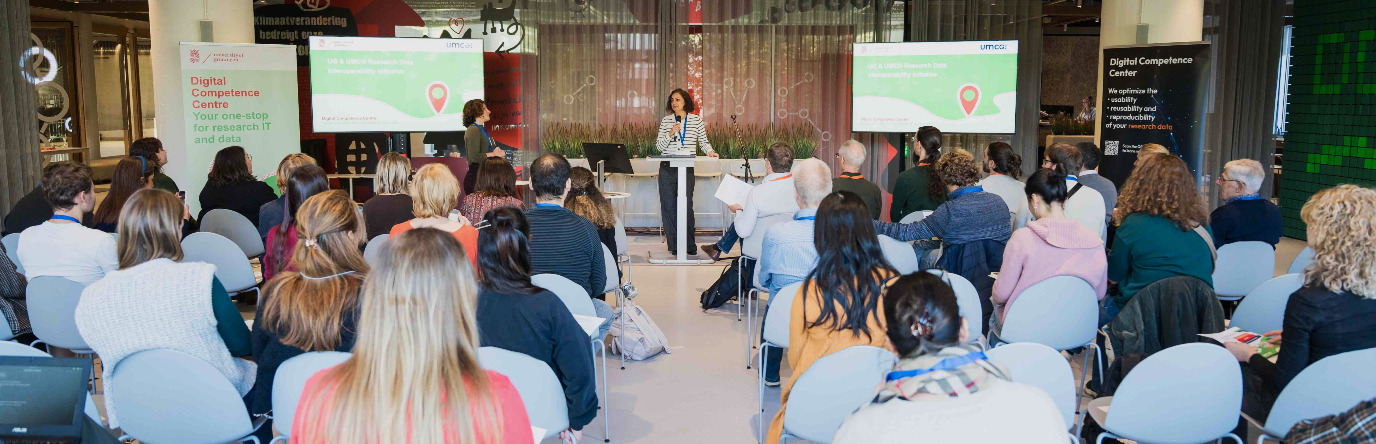
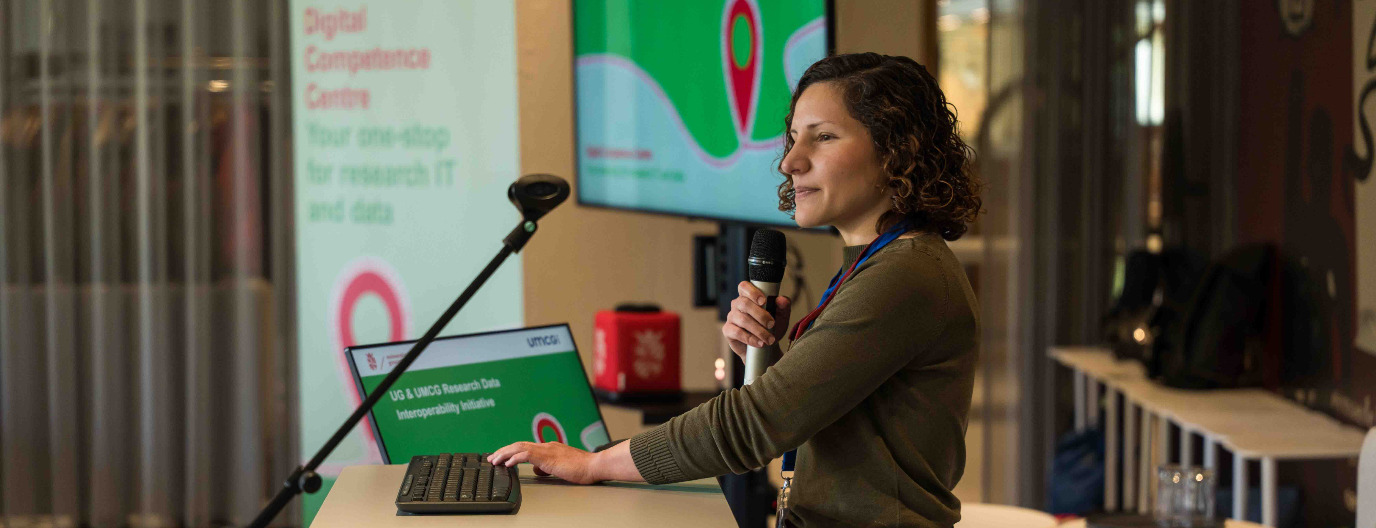
As research increasingly relies on combining data from different sources and disciplines, making data Findable, Accessible, Interoperable and Reusable (FAIR) is becoming ever more important. Yet even when data is technically accessible, differences in formats, vocabularies, standards and meanings can make it difficult to combine and reuse. Interoperability is therefore more than a technical challenge: it requires researchers and professionals from different fields to understand one another’s approaches, establish shared practices and develop solutions together.
The event aimed to create space for these conversations and to connect local expertise with national initiatives. Experts from the Thematic Digital Competence Centres (TDCCs) played a key role, contributing as speakers and workshop leaders and helping to shape the programme with their knowledge and feedback. Members of the Dutch Interoperability Network, a community of practice supported by Open Science NL that focuses on open research software and data interoperability, also took part, further strengthening the link with national initiatives.
Exploring interoperability across disciplines
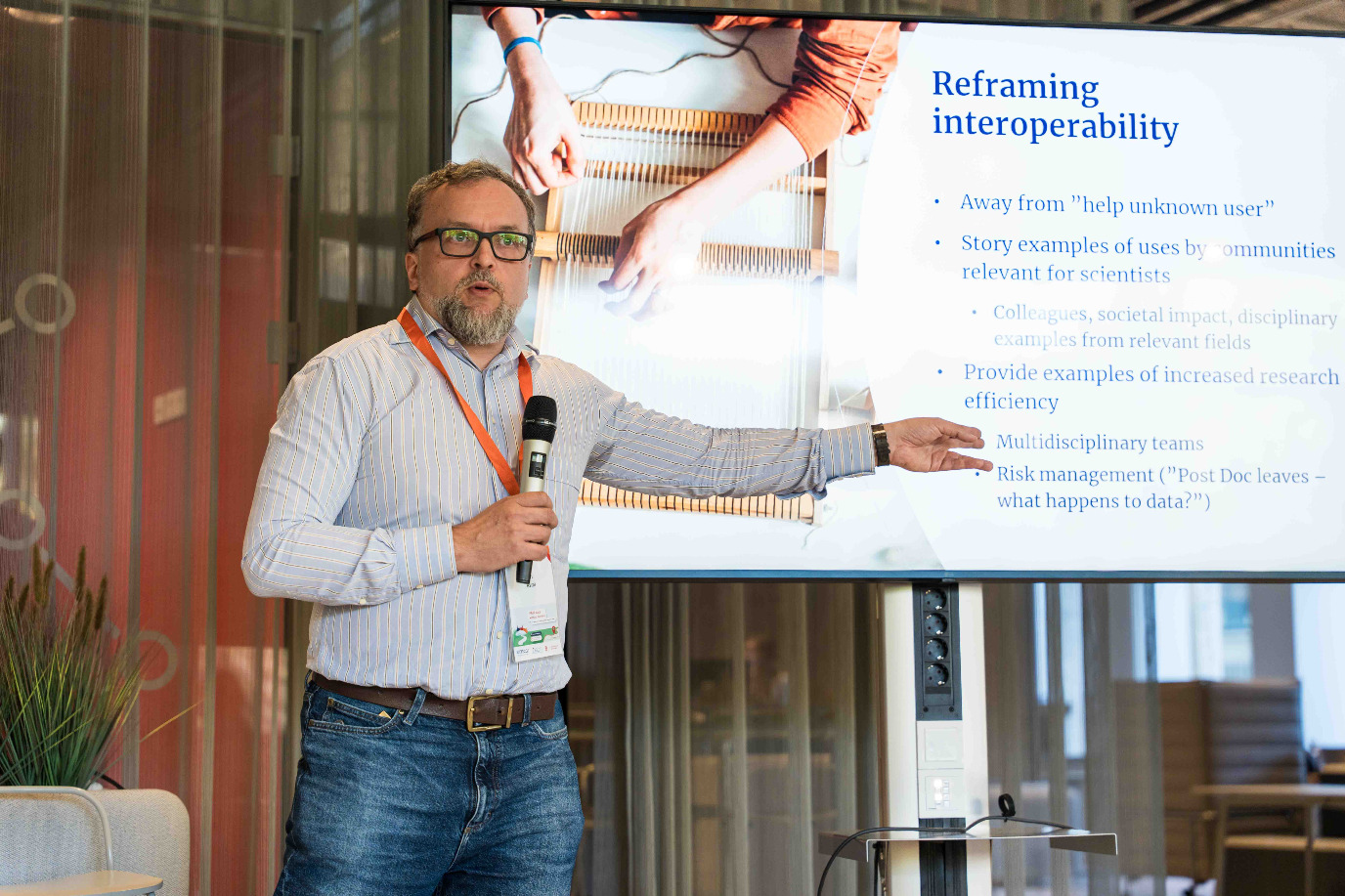
The afternoon opened with a keynote by Ari Asmi, research data interoperability expert at the Centre for Digital Scholarship, Leiden University, and the TU Delft Library. He introduced the topic with four questions: What is interoperability? Why does it need events like this? How can we increase it? And is it worth the effort? Alex Brandsen, Interoperability Project Lead at TDCC-SSH, followed with an introduction to TDCCs and their role in advancing interoperability across the Netherlands.
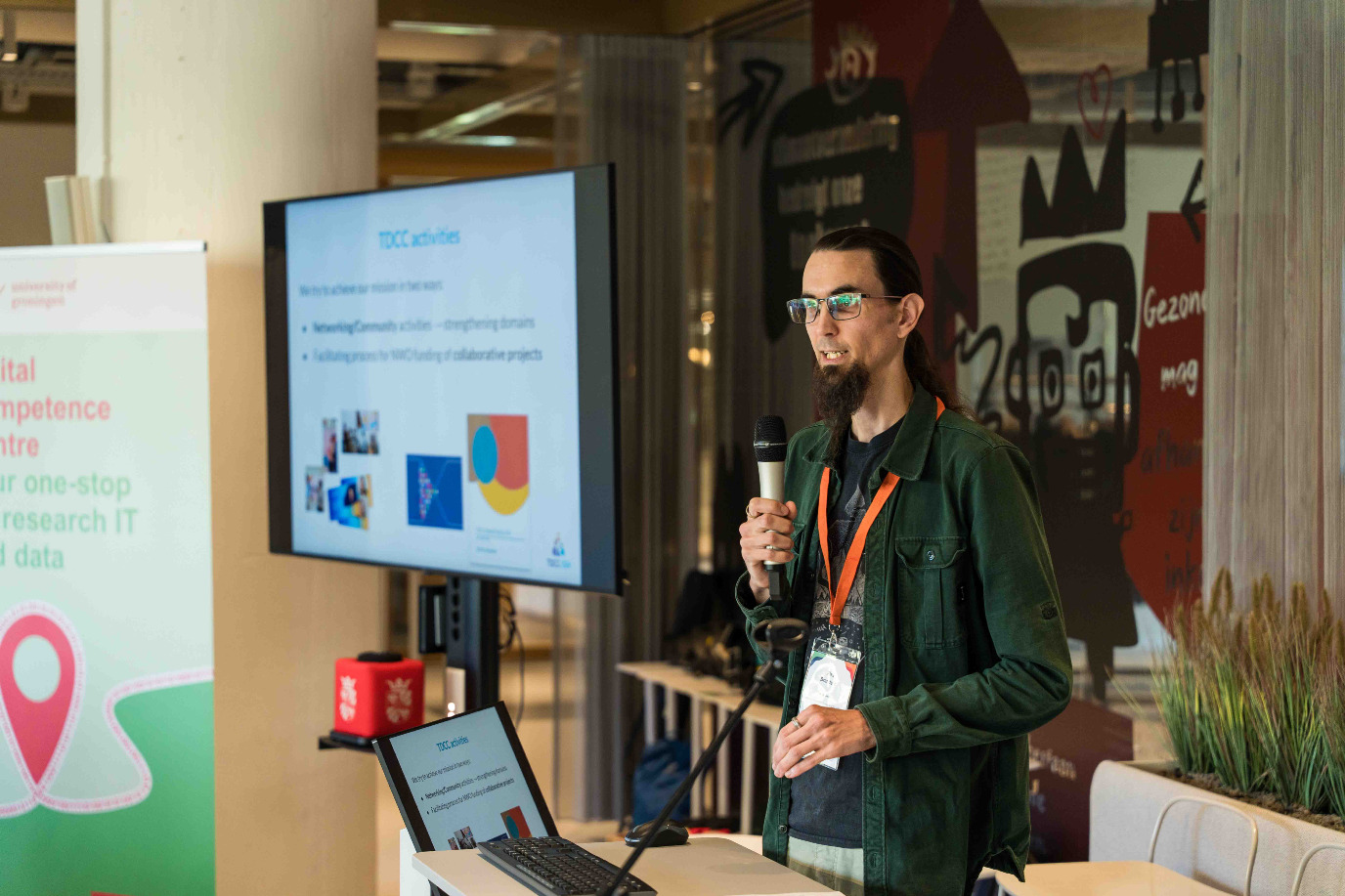
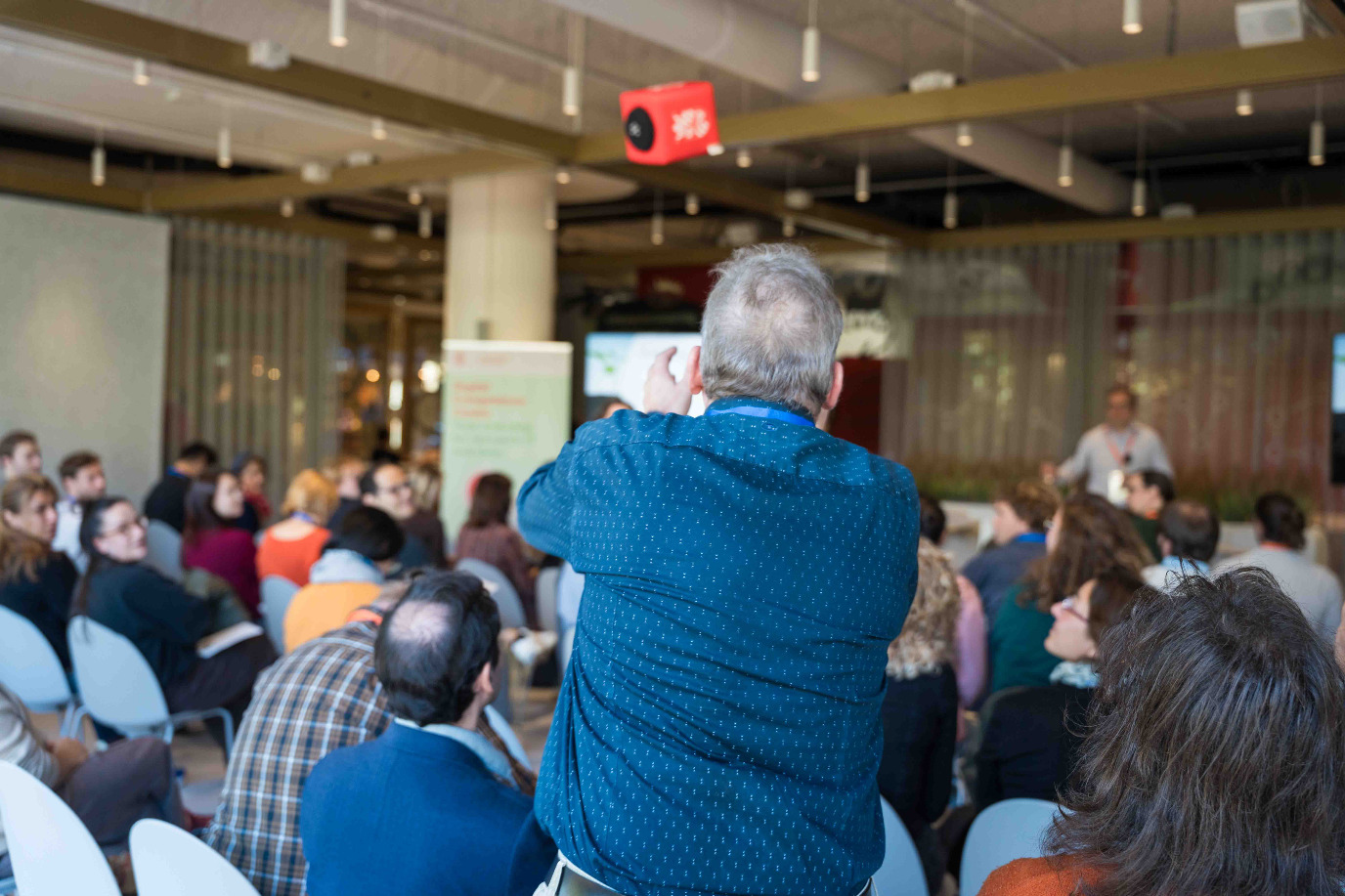
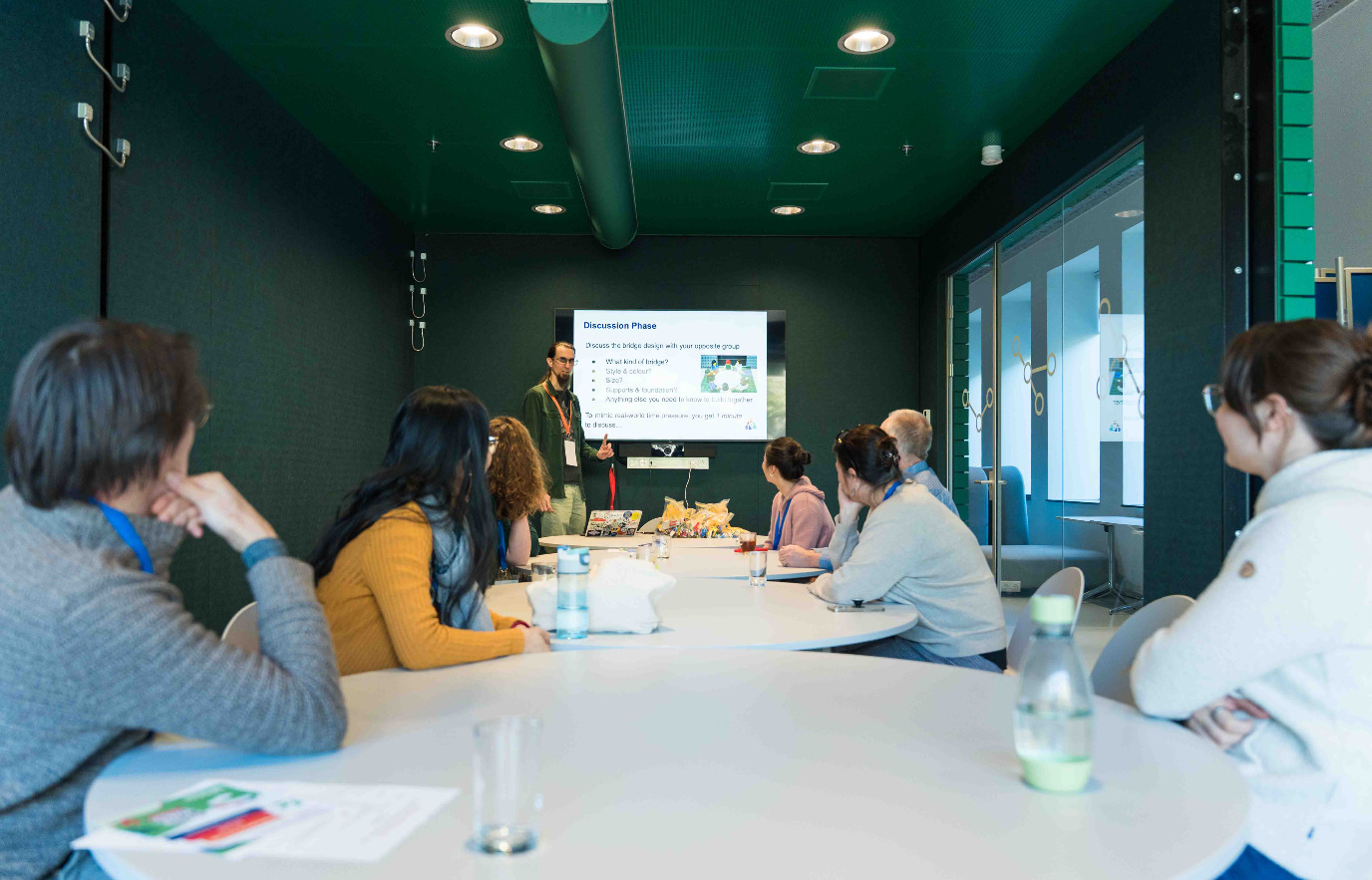
Participants then took part in three interactive workshops, each approaching interoperability from a different perspective.
In the workshop Exploring interoperability through a LEGO challenge, Alex Brandsen made interoperability tangible through hands-on building.
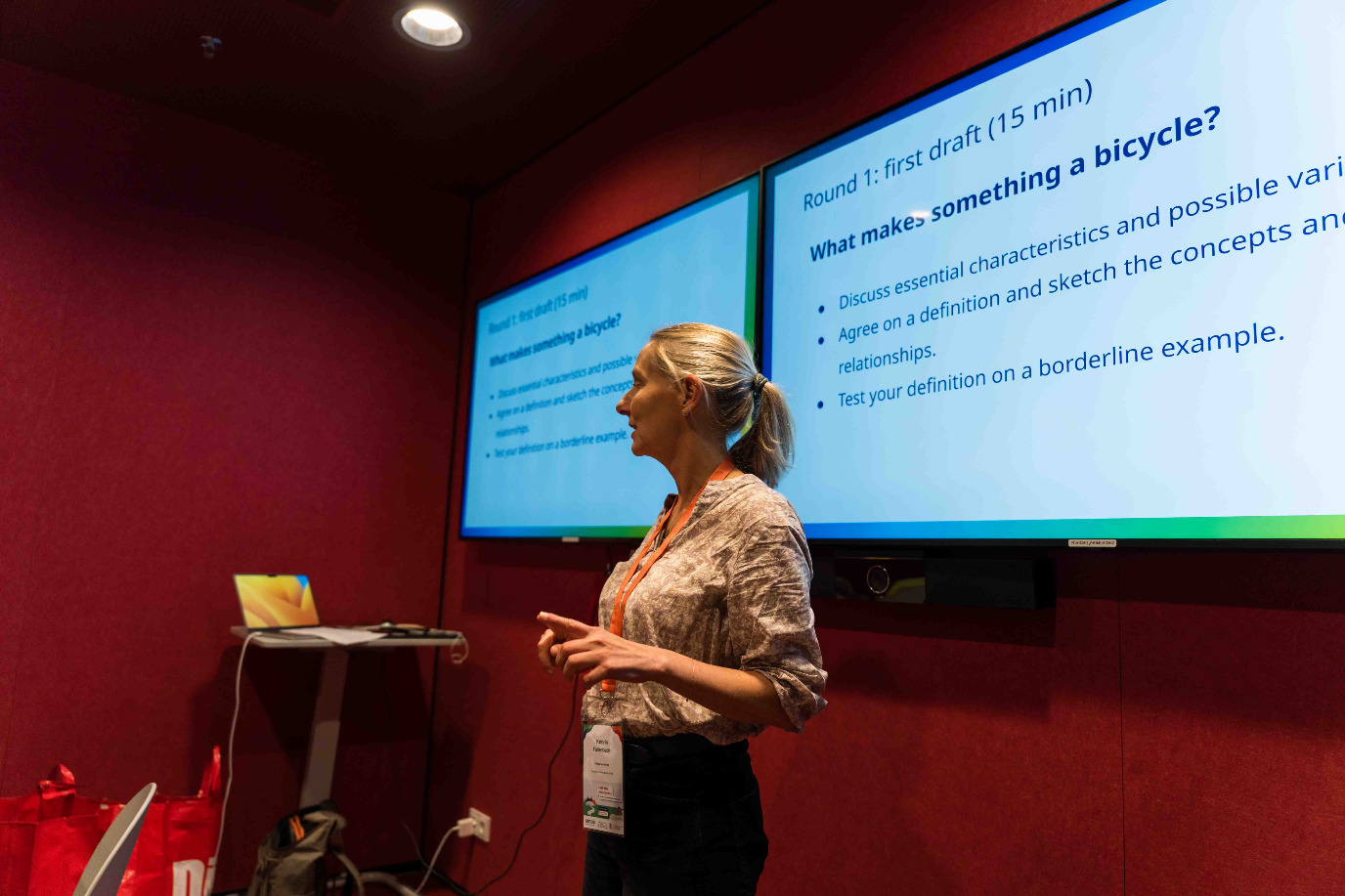
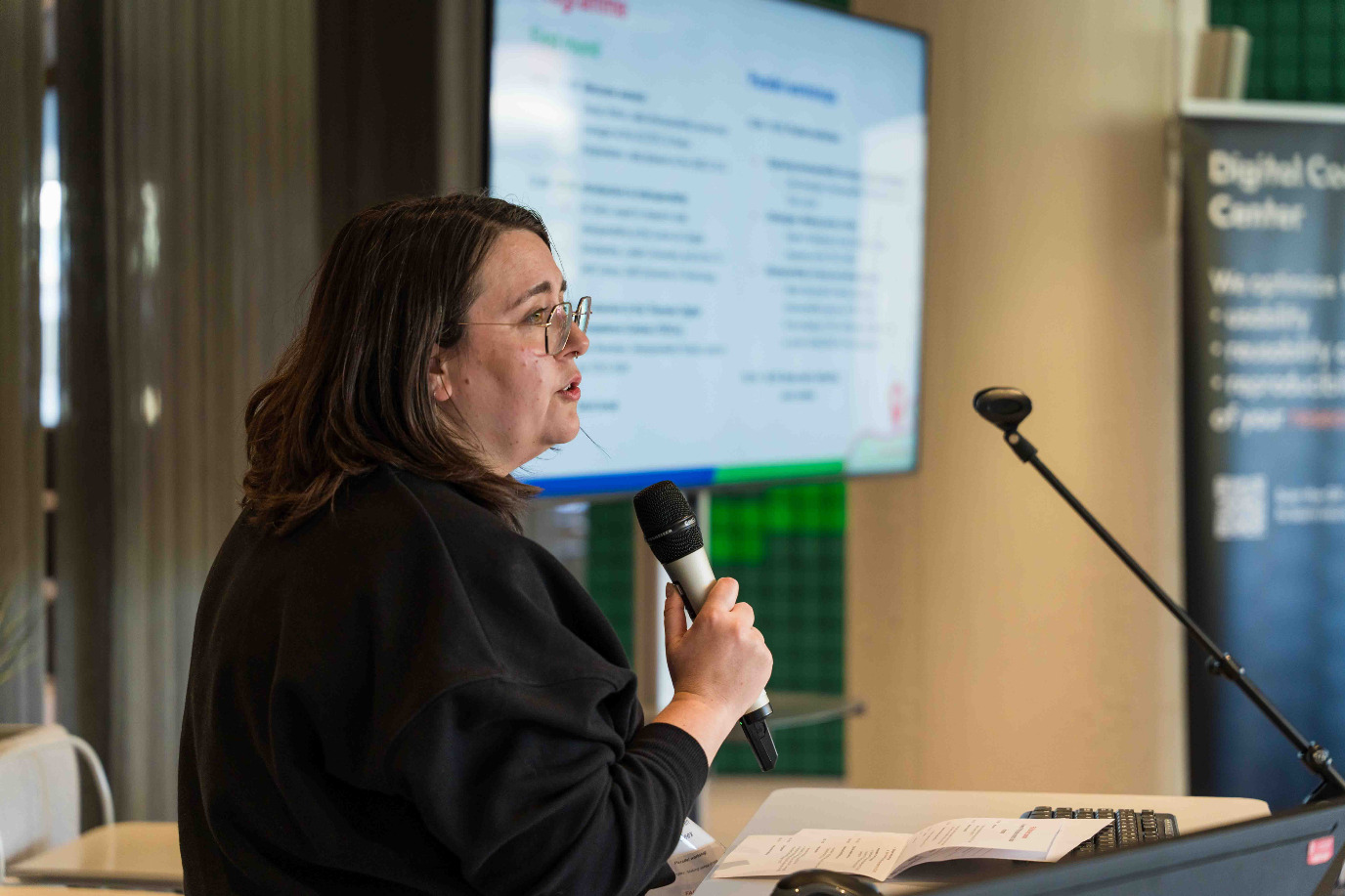
In the workshop Ontologies: making sense of data, TDCC-NES ontology engineers Kathrin Füllenbach and Dani Metilli asked participants to model something as familiar as a bicycle. The exercise revealed how seemingly straightforward concepts can have different meanings across languages: Dutch and English definitions did not always align, illustrating the challenges of semantic interoperability.
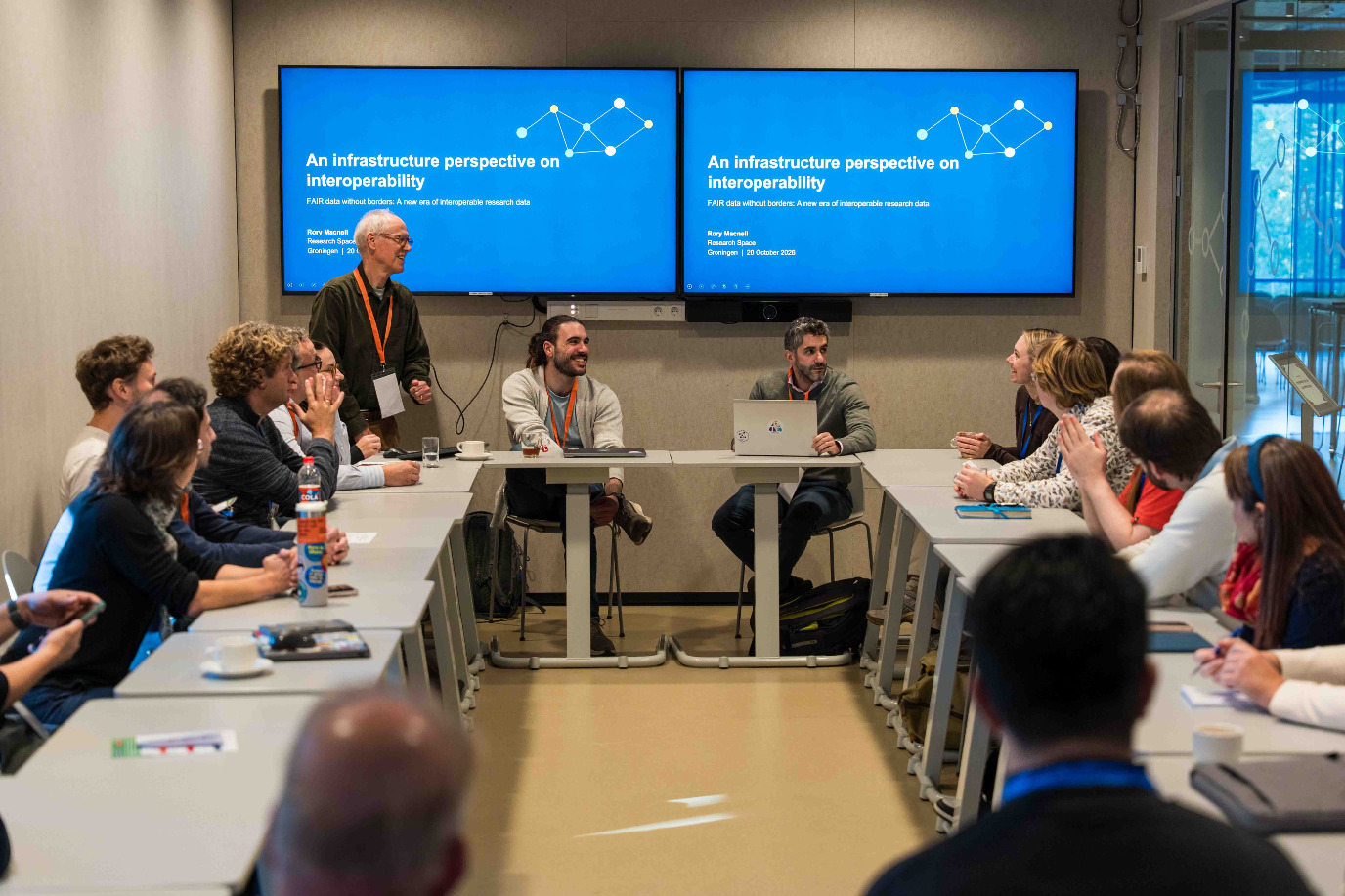
In the workshop Interoperability of tools and infrastructures, Walter Baccinelli and Vedran Kasalica, interoperability experts of TDCC-LSH, and Rory Macneil, CEO of RSpace and co-chair of the RDA MaLDReTH II working group, explored how to evaluate software interoperability and make research tools and infrastructures work together smoothly.
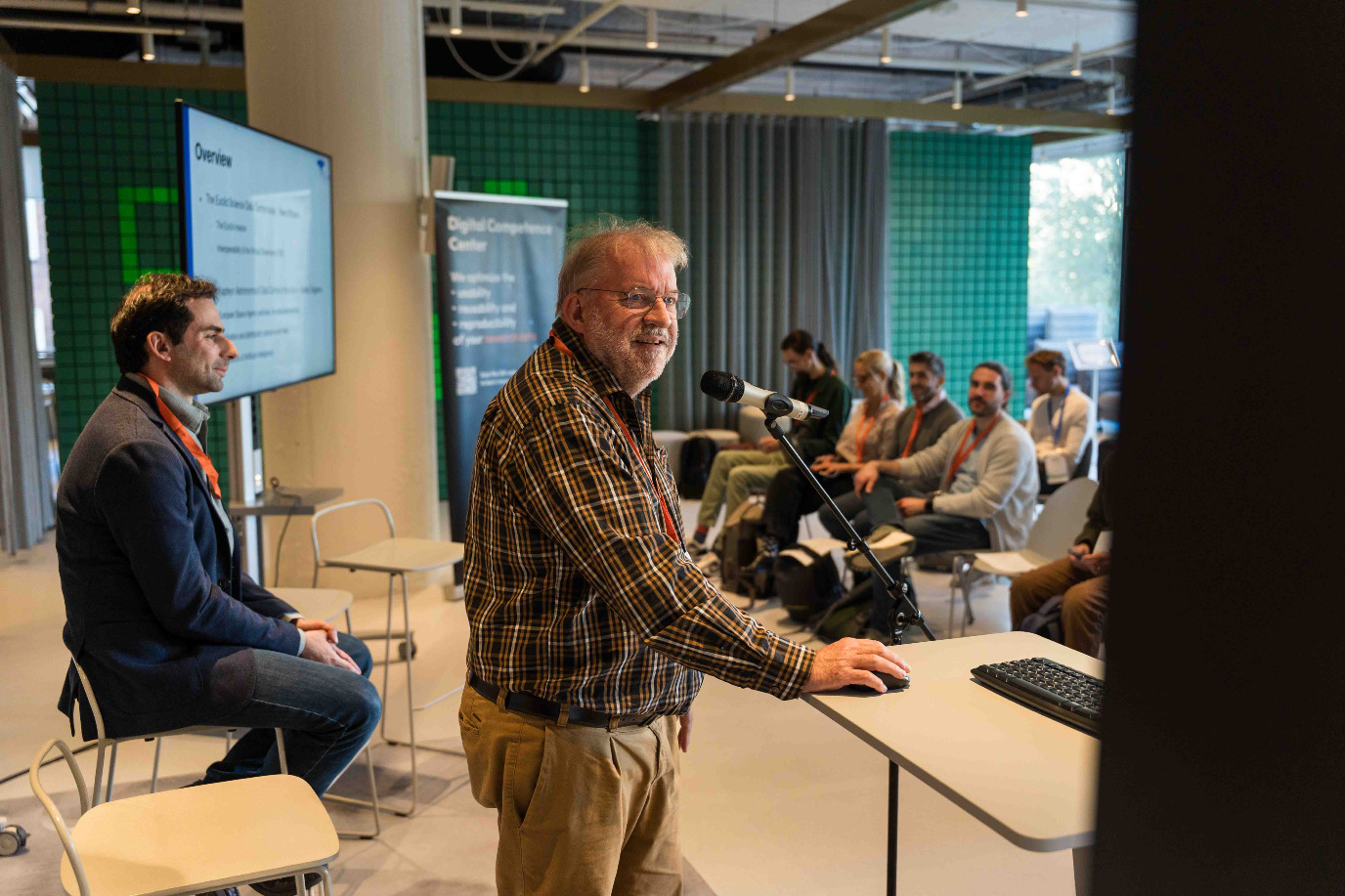
The programme also featured a session on the Euclid Science Data Centre, offering a real-world view of interoperability in a large-scale astronomy data infrastructure. Rees Williams presented the Euclid mission and interoperability through the Virtual Observatory. Andrey Tsyganov discussed the future of the Kapteyn Astronomical Data Centre, from European Space Agency archives and cloud infrastructure to data replication, distribution and AI.
Turning challenges into opportunities
The day concluded with a panel featuring Alex Brandsen, Rory Macneil, Brenda Hijmans, metadata specialist on the MOLGENIS catalogue team at the UMCG, and Rees Williams. Together, they reflected on the challenges of putting interoperability into practice.
A key distinction was between syntactic interoperability, which makes data technically compatible, and semantic interoperability, which ensures that data keeps its meaning across disciplines. The latter is considerably more complex. Particularly in the humanities, standardisation and AI-generated solutions can overlook context, reproduce biases or flatten multiple interpretations, so human expertise and judgement remain essential. AI was seen as both an opportunity and a risk: it can speed up data processing and connect tools, but not at the expense of accuracy, quality and human oversight.
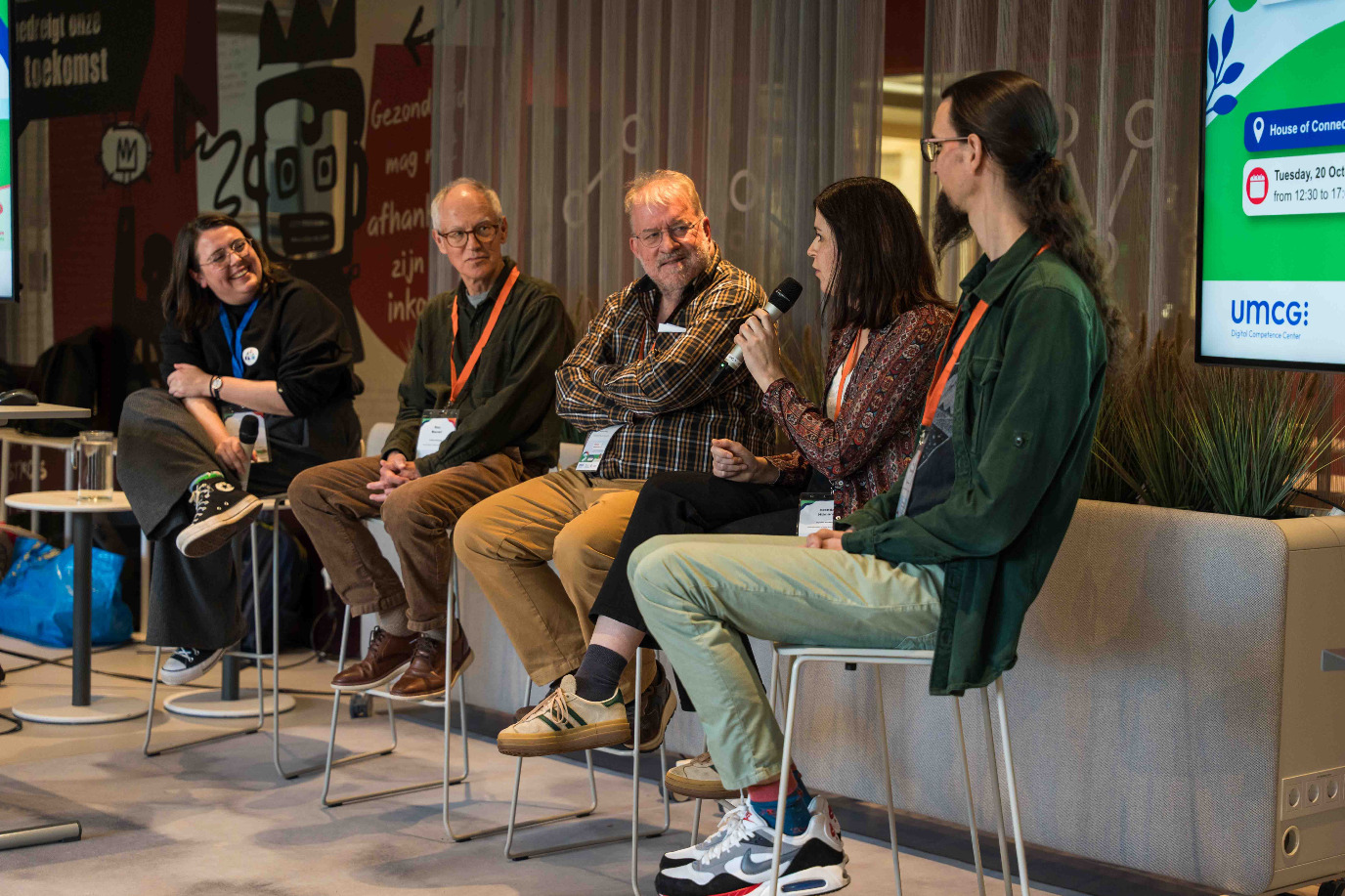
The discussion also called for structural support. Interoperability cannot rely solely on individual researchers or temporary projects; it requires reliable infrastructure, sustained collaboration and dedicated expertise. Yet those specialists and professionals who bridge disciplines are often undervalued and underfunded.
For researchers, the message was to document and organise their data, build on existing standards and initiatives, and collaborate with domain experts. Institutions and funders, in turn, should recognise interoperability as an integral part of research and invest in the tools, infrastructure and people it needs. As one panellist put it, rather than complaining about challenges, we should look at the opportunities they create.
What comes next at the UG?
The event marked an important step towards strengthening the interoperability community at the UG and UMCG. The lively workshops and interest in further collaboration showed the value of bringing different perspectives together. Building on these connections, the UG DCC, UMCG DCC and OSCG will continue to support collaboration on interoperability.
Ultimately, FAIR data without borders was about more than connecting datasets. It was about creating conditions in which different kinds of knowledge, expertise and practice can connect, while respecting the diversity of the disciplines they come from.
More news
-
02 November 2026
Access to Web of Science will end on 31 December 2026
-
-
12 October 2026
Farewell to Big Tech: ‘It requires a different mindset’