

Our experts
Our multidisciplinary research centre integrates expertise in materials science, physics, device engineering, mathematics, computer science, artificial Intelligence, electrical engineering and robotics. This expertise is embedded in three different institutes within the Faculty of Science and Engineering at the University of Groningen: the Zernike Institute for Advanced Materials, the Bernoulli Institute for Mathematics, Computer Science and AI and the Engineering and Technology Institute Groningen (ENTEG).
Advancing neuromorphic computing
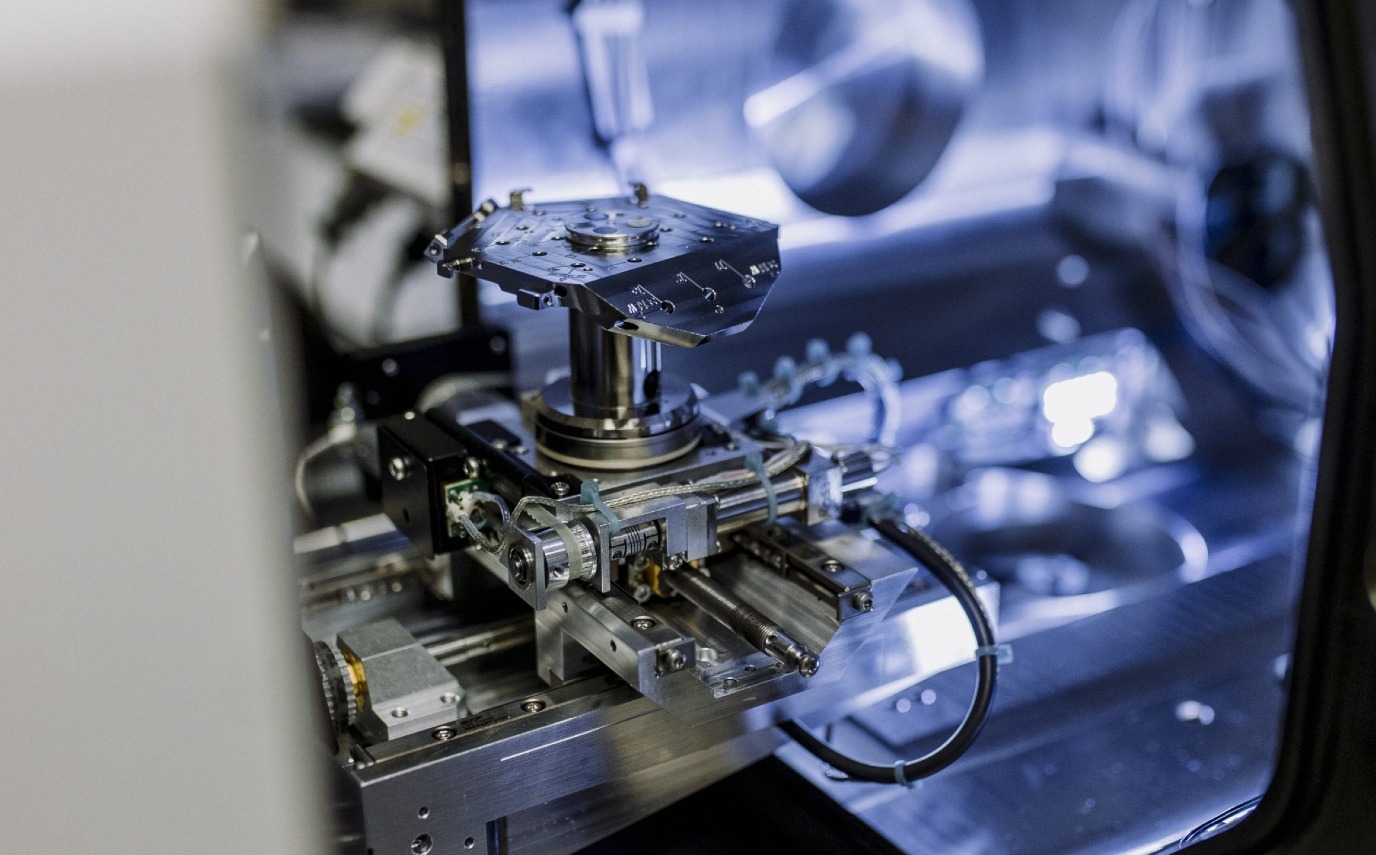
Leveraging strengths in neuromorphic computing and brain-inspired computing, our unique approach focuses on developing scalable neuromorphic chips and neural network hardware. This scalability allows us to surpass current solutions, driving advancements in neuromorphic processors and AI.
Find out more about student courses connected to neuromorphic computing that the UG offers.
Research disciplines and Principal Investigators
Materials Science
At the heart of our research is the advancement of materials that enable rapid signal transfer and long-term learning effects, akin to memristors. We focus on developing materials with adaptive features and low-energy consumption, aiming to create systems that integrate both short-term signal transfer and long-term learning dynamics. This involves exploring various material systems and devices, from nanoscale materials with intrinsic properties to hybrid and fully integrated low-power devices, drawing on our expertise in tuneable conducting domain walls, skyrmions, and optoelectronics.
Materials for Mechatronics

Spintronics of Functional Materials

Nanostructured Materials and Interfaces
Photophysics and OptoElectronics
Nanostructures of Functional Oxides
Physics (Surface interactions and Nanostructures)
Photophysics and OptoElectronics
Artificial Intelligence
The University of Groningen excels in artificial intelligence, pattern recognition, machine learning, and cognitive modelling, with expertise spanning neural networks in both artificial and natural systems, cognitive neuroscience, and data science engineering. Recent advancements in Deep Learning have revolutionised machine learning, enabling neural networks to handle complex 2D and 3D patterns with greater efficiency and robustness. This progress in Cognitive Computing facilitates the detection and prediction of spatiotemporal patterns from raw data. However, challenges remain, such as the high energy consumption of current neural-network implementations compared to the brain’s efficiency. To address these issues, we aim to explore new materials and computing paradigms suitable for neuromorphic computing, leveraging both theoretical and practical approaches. Collaboration with experts at CWI in Amsterdam and the University of Waterloo will support our efforts to develop models and methods for efficient, low-energy neural computing.
Computational (Cognitive) Models

Cortex-inspired Computing

Cognitive Multiagent Systems
Computation in Cognitive Materials
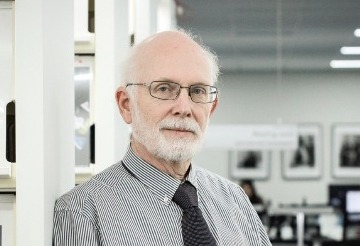
Artificial Intelligence

Artificial Intelligence
Computational argumentation
Mathematics
The University of Groningen’s mathematics expertise covers a broad range, including Statistics & Stochastics, Systems & Control, Computational Mathematics, and Dynamical Systems. This expertise is closely connected to computer sciences, particularly through Systems & Control, which is vital for modelling large-scale stochastic systems and performing complex simulations. The department’s focus includes the analysis and control of dynamic systems using mathematical theories from analysis, algebra, geometry, and measure theory.
Key areas of interest involve studying both long-term and transient behaviours, bifurcations, and employing numerical and visualisation tools. Additionally, the department highlights algorithmic and constructive methods, especially in statistical mechanics and high-dimensional inference. There are ample opportunities for collaboration between mathematics and materials engineering, integrating fundamental research with practical applications in engineering and the natural sciences.

Systems and Control Theory

Stochastics
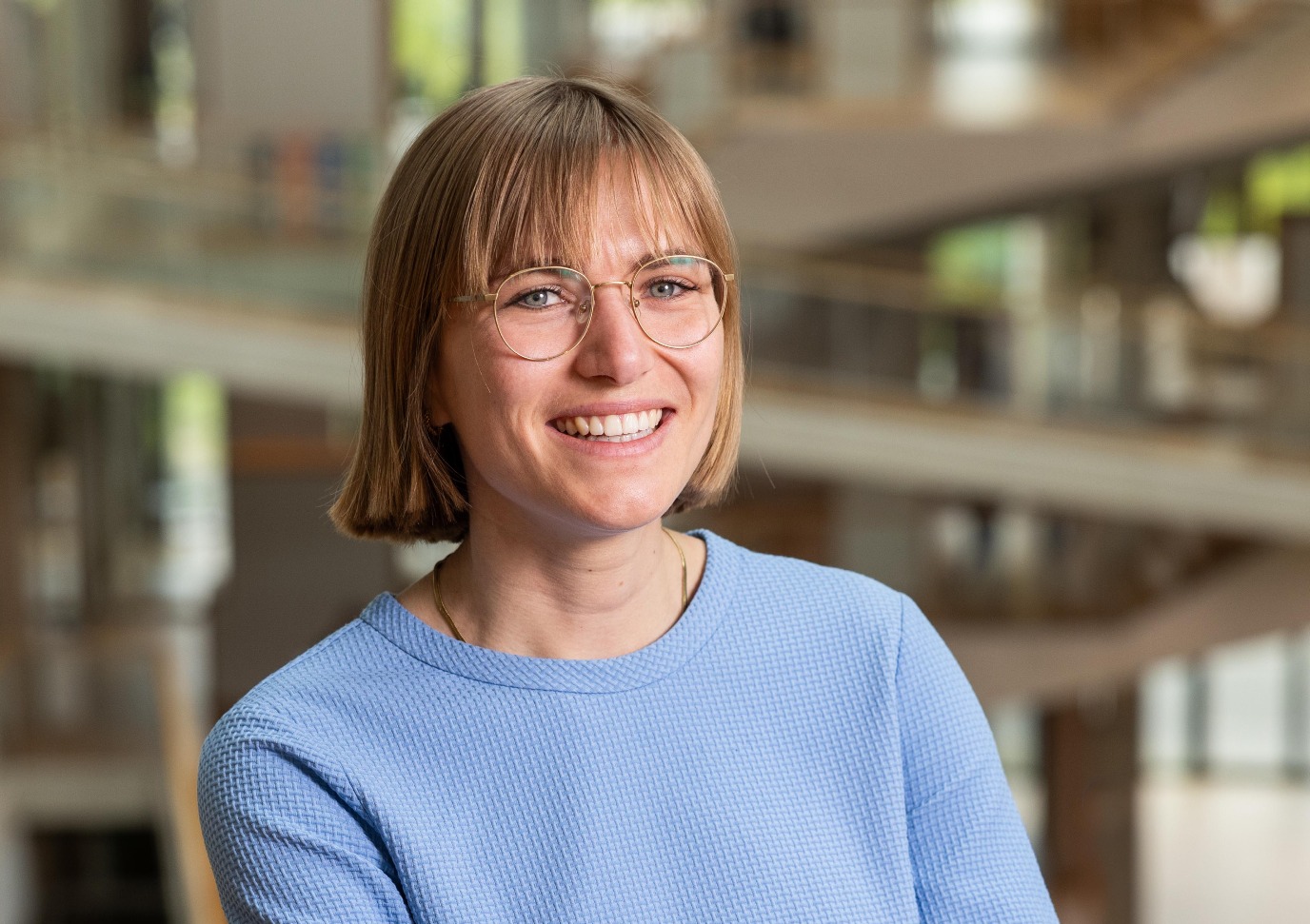
Probability Theory
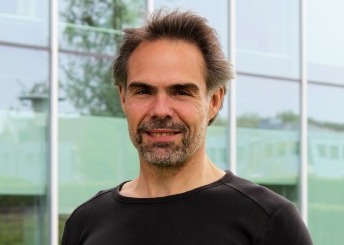
Computational Statistics

Mathematics, Interdisciplinary Applications
Computational Mathematics

Applied Analysis

Dynamical Systems Theory
Computer Science
The computer science department at the University of Groningen is essential to CogniGron, with its strong expertise in Image Processing & Computer Vision, which is perfect for creating advanced algorithms to analyse images of nanomaterials. The department’s strengths in biologically inspired pattern recognition and machine learning align closely with Cognitive Computing. Additionally, expertise in Computer Graphics, Visualisation, and Visual Analytics aids in designing and understanding cognitive materials and complex systems. Knowledge in Fundamental Computing, including logic, algorithms, and data structures, is crucial for developing new computing paradigms for cognitive systems. Collaborative efforts with materials scientists focus on using these technologies for efficient image analysis and system design, integrating machine learning and pattern recognition to enhance cognitive system development.
Computer Science

Intelligent Systems

Innovative Computer Architecture

Innovative Computer Architecture

Innovate Computer Architectures

Theory of Computation
Scientific Visualization and Computer Graphics
Computer and Network Security
Digital image analysis and computer vision
Electrical Engineering and Robotics
At CogniGron, the Electrical Engineering and Robotics discipline is dedicated to advancing neuromorphic computing by developing bio-inspired circuits and systems that emulate the brain's efficiency and adaptability. Our research focuses on creating autonomous robots and complex systems capable of self-learning and decision-making. We aim to revolutionize computing technologies with energy-efficient, compact and robust solutions especially suitable for edge-computing and robotic applications.

Multi-agent systems, autonomous robots, complex systems and networks
Bio-Inspired Circuits and Systems
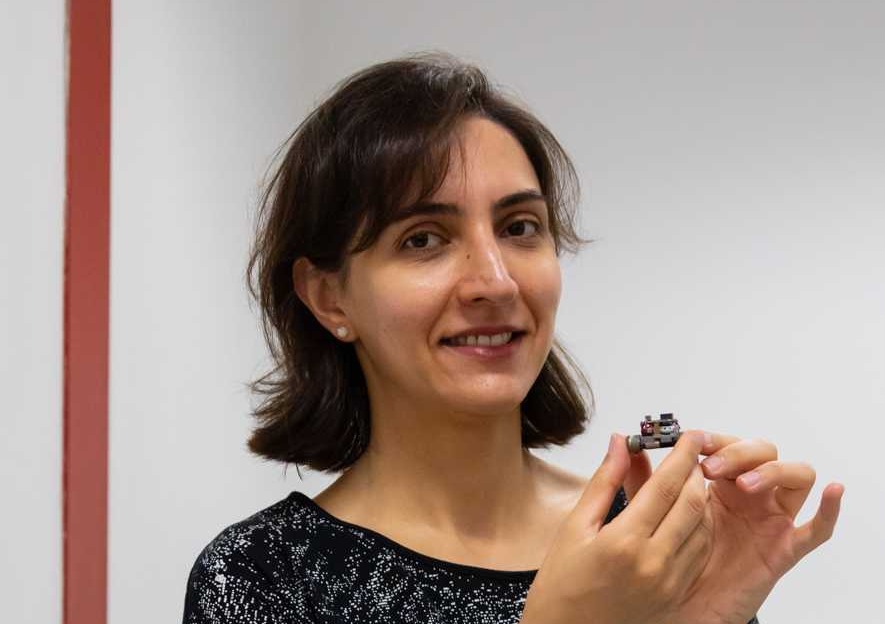
Multi-Robot Systems, Mechatronic Design, Multi-Level Modeling, Control

Neuromorphic Engineering and Computational Neuroscience
Control of Robotic Systems for Assistance and Rehabilitation

Bioinspired MEMS and Biomedical Devices
Interactive Robot Learning
Human-centered Robotics

PhD candidates, Postdocs & CogniGron alumni
PhD candidates & Postdocs
PhD candidates
Zhengkun Yu (2026-2030)
Novel magneto-resistive random access memory-based neuromorphic architectures (MSCA-DN REACT)
Innovative Computer Architecture group (PI: Farhad Merchant)
Devindu Kandane Arachchillage (2026-2030)
Novel FeRAM/FeFET-based neuromorphic architectures (MSCA-DN REACT)
Innovative Computer Architecture group (PI: Farhad Merchant)
Yilin Li (Feb 2026-2030)
Hardware security, specifically pre-silicon verification (MSCA-DN REACT)
Innovative Computer Architecture group (PI: Farhad Merchant)
Niels Burgler (2026-2029)
Processing of sensory information that is encoded in oscillating signals using analog CMOS circuits (SWIMS)
Bio-inspired Circuits and Systems group (PI: Elisabetta Chicca)
André Herrera Gama (2025-2029)
Simulators for Post-Von Neumann Architectures (NL Eco)
Innovative Computer Architecture group (PIs: Dirk Pleiter & Georgi Gaydadjiev)
Mahima Gautam (2025-2029)
Hierarchical Spatio-temporal Receptive Fields
Cognitive Modeling group (PI Matthew Cook)
Yaiza Cintora Perez (2025-2029)
Epitaxial oxides for low power devices
Solid State Materials for Electronics group (PI: Beatriz Noheda)
Tangwei Cao (2025-2029)
Neuromorphic control for mobile robots
Discrete Technology and Production Automation (PIs: Ming Cao / Hildeberto Jardón Kojakhmetov)
Milad Jabri (2025-2029)
Flexible piezoelectric touch sensor for bio-inspired neuromorphic systems
Discrete Technology and Production Automation group (PI: Mónica Acuautla Meneses)
Federico Loi (2025-2029)
Bio-inspired neuromorphic touch-sensing system: integrating piezoelectric-based flexible sensors with neuromorphic circuit architectures to develop energy-efficient tactile sensory systems for robotics and prosthetics
Bio-Inspired Circuits and Systems group (PI: Elisabetta Chicca)
Yuehai Chen (2025-2029)
FPGA-Based Computing System Design
Computer Architecture (PI: Farhad Merchant)
Lingyu Gong (2025-2029)
Privacy-Preserving Computer Architectures
Computer Architecture (PI: Farhad Merchant)
Leah Dijkshoorn (2024-2028)
Artificial Intelligence and Mathematics for Cognitive Devices
Stochastic Studies and Statistics group (PI: Marco Grzegorczyk)
Albert Silvans (2024-2028)
Physics and Statistics for Cognitive Devices
Stochastic Studies and Statistics group (PI: Marco Grzegorczyk)
Himanshu Rai (2024-2028)
Memristive models for faster material design cycles towards applications
Spintronics of Functional Materials group (PI: Tamalika Banerjee)
Ram Eshwar Kaundinya (2024-2028)
Cognitive Architectures for Touch Based Applications
Cognitive Modeling group (PIs: Niels Taatgen / Jelmer Borst)
Yiming Zhang (2024-2028)
Low Power Probabilistic-bits Enabled Reckoning (LOPPER Project)
Innovative Computer Architecture (PIs: Tamalika Banerjee/Georgi Gaydadjiev)
Pablo Sorrentino (2024-2028)
Security and Privacy in Neuromorphic Computing Device: Opportunities and Challenges
Information Systems Group (PIs: Fatih Turkmen/ Tamalika Banjeree)
Henrieke Krijgsheld (2024-2028)
Mathematical Methods of Neuromorphic Computing and Control
Dynamical Systems, Geometry & Mathematical Physics group (PIs: Hildeberto Jardon /Ming Cao)
Hitesh Chhabra (2024-2028)
Spin and Charge Based Oscillators for Tactile Internet
Spintronics of Functional Materials group (PIs: Tamalika Banerjee/ Elisabetta Chicca)
Giuseppe Leo (2024-2028)
Stochastic Spiking Wireless Multimodal Sensory Systems (SWIMS)
Bio-Inspired Circuits and Systems group (PI: Elisabetta Chicca)
Bojian Zhang (2024-2028)
Development, modelling, and characterisation of RRAM-based circuits for analog computing
NeuroPrivate Project: Privacy Preserving Architecture using Novel Cognitive ReRAM Devices
Bio-Inspired Circuits and Systems group (PI: Erika Covi) and Computer Architecture (PI: Farhad Merchant)
Davide Maioli (2024-2028)
Neuromorphic High Level Information Processing
Cognitive Modeling group (PI: Matthew Cook)
Memoona Ismael (2024-2028)
Edge of stability for enhanced memristive functionality – This project has received funding from the European Union’s Horizon 2020 research and innovation programme (under Marie Skłodowska-Curie grant agreement No 101119608). Part of TOPOCOM.
Solid State Materials for Electronics group (PI: Beatriz Noheda)
Haoran Yu (2024–2028)
Ferroelectric memristors for energy-efficient computing
Solid State Materials for Electronics (PI: Beatriz Noheda)
Ishitro Bhaduri (2023-2027)
Low power probabilistic-bits enabled reckoning
Spintronics of Functional Materials group (PI: Tamalika Banerjee)
Otavio Citton (2023-2027)
Statistical physics of learning in layered systems of adaptive elements
Intelligent Systems Group (PI: Michael Biehl)
Safiere Kuijpers (2023-2027)
Memristive models for faster material design cycles towards applications
Computational & Numerical Mathematics group (PI: Julian Koellermeier)
Peter van der Wal (2023–2027)
Robust learning of sparse representations: brain-inspired inhibition and statistical physics analysis
Information Systems group (PI: George Azzopardi)
Jingtian Zhao (2023–2027)
Ferroelectric memristive devices – This project has received funding from the Chinese Scholarship Council (CSC)
Solid State Materials for Electronics (PI: Beatriz Noheda)
Floor Schipper (2024-2026)
The Geometry of Coupled Neurons towards Analog Computing
Dynamical Systems, Geometry & Mathematical Physics group (PI: Hildeberto Jardon /Ming Cao)
Foelke Janssen (2022-2026)
Qualitative modeling, simulation and exploration of multi-phenomenal materials dynamics (Q-Mat)
Solid State Materials for Electronics group (PI: Beatriz Noheda)
Ton Juny Pina (2022-2026)
Neuromorphic odor classification
Bio-inspired systems and circuits group (PI: Elisabetta Chicca)
Radu Cimpean (2022-2026)
The development of ordinary differential equation (ODE) theory and computational models for sense of smell
Systems Control and Applied Analysis group (PIs: Alden Waters & Stephan Trenn)
Fabian IJpelaar (2022-2026)
Qualitative modeling, simulation and exploration of multi-phenomenal materials dynamics
Computing in Cognitive Materials group (PI. Herbert Jaeger)
Paul Hansch (2022-2026)
Smart electronic olfactory system
Photophysics and Optoelectronics group (PI: Maria Loi)
Jordi Timmermans (2022–2026)
Nb-doped SrTiO3 memristive interfaces for bio inspired computing
Artificial Intelligence group (PI. Lambert Schomaker)
Marieke Heidema (2022-2026)
Learning in memristive electrical circuits
Systems and Control Theory Research group (PI: Bart Besselink)
Maxim Fabre (2021-2025)
On-chip training on analog circuits with memristive devices and bio-plausible learning algorithms
Bio-inspired Circuits and Systems group (PI: Elisabetta Chicca)
Guillaume Pourcel (2020-2025)
Theory of neuromorphic computing – This project is funded by the EU Horizon 2020 Research and Innovation programme POSTDIGITAL under the Marie Skłodowska-Curie grant 860360.
Computing in Cognitive Materials group (PI: Herbert Jaeger)
Ruben Hamming-Green (2021-2024)
CogniGron-IBM Fellow
Combined volatile/non-volatile memristive ferroelectric arrays
Nanostructures of Functional Oxides group & IBM Research-Zurich
Remi Brandt (2020-2024)
Neural networks with observable decisions
Innovative Computer Architectures (PI: Georgi Gaydadjiev)
Mian Li (2020-2024)
Morphological image analysis of conduction maps – This project has received funding from the EU’s Horizon 2020 programme MANIC, under the Marie Skłodowska-Curie grant agreement 861153.
Scientific Visualization and Computer Graphics (PIs: Michael Wilkinson & Jos Roerdink)
Willian Soares Girão (2020–2024)
Neuromorphic circuits for novel devices – This project has received funding from the EU’s Horizon 2020 programme MANIC under the Marie Skłodowska-Curie grant agreement 861153)
Bio-inspired Circuits and Systems (PI: Elisabetta Chicca)
Postdocs
Dr. Shavika Rastogi (2026-)
Neuromorphic touch (MSCA-PF)
Bio-inspired Circuits and Systems group (PI: Elisabetta Chicca)
Dr. Muath Abu Lebdeh (2026-)
Memristive and CMOS circuits for implementing time difference encoders + Insect-Brain Inspired Neuromorphic Nanophotonics (memTDE / InsectNeuronNano)
Bio-inspired Circuits and Systems group (PI: Elisabetta Chicca)
Dr. Nikhil Garg (2026-)
Circuits design - building energy-efficient intelligent systems by combining neuromorphic algorithms with emerging memory devices and mixed-signal hardware (SWIMS)
Bio-inspired Circuits and Systems group (PI: Elisabetta Chicca)
Dr. Jesse Luchtenveld (2025-)
Nanostructured Materials and Interfaces group (PI: Bart Kooi)
CogniGron-IBM Fellow (2021-2025), thesis defence in March 2026.
Analogue phase-change memory cells for neuromorphic computing
Nanostructured Materials and Interfaces group & IBM Research-Zurich (PIs: Bart Kooi and Abu Sebastian)
Dr. Simranjeet Singh (2025-2026)
Deep Tech Fellow, IIT Bombay / Co-Founder & CTO at Ximplic
Innovative Computer Architecture group (PI: Farhad Merchant)
Dr. Martin Sarott (2024–2028)
Ferroelectric devices for brain-inspired computing - This project has received funding from the Horizon Europe programme CONCEPT under the Grant Agreement 101135946
Solid State Materials for Electronics (PI: Beatriz Noheda)
Dr. Fernando Quintana Velazquez (2024-2026)
SMART: Synchronised neuro-Memristive Architecture for Reinforced learning Technology
Bio-inspired Circuits and Systems group (PI: Elisabetta Chicca)
Dr. Horatio Cox (2024-2028)
Crystalline Oxides for Next Generation Computing and Emerging Photonic Technologies (CONCEPT project)
Solid State Materials for Electronics group (PI: Beatriz Noheda)
Dr. Alejandro Pequeño Zurro (2023–2027)
Tactile Internet: remote sensing with neuromorphic technology – This project has received funding from the Dutch NWA Project NL-ECO.
Bio-inspired Circuits and Systems (PI: Elisabetta Chicca)
Alumni
Dr. Paolo Gibertini (2022-2026, thesis defence in September 2026)
Hybrid memristive-CMOS neuromorphic systems for edge computing
Cognitive Systems (CoSy) group (PI: Erika Covi)
Renzo Barraza Altamirano (2025-2026)
Memristive Time Difference Encoder: characterization and integration of memristors in a CMOS chip
Bio-inspired Circuits and Systems group (PI: Elisabetta Chicca)
Dr. Fernando Quintana Velázquez (2024-2026)
Meta-Learning of memristive devices for lifelong adaptation
Cognitive Systems (CoSy) group (PI: Erika Covi)
Dr. Luca Fehlings (2022-2026, thesis defence in February 2026)
Integration of emerging memory devices into neuromorphic CMOS circuits
Cognitive Systems (CoSy) group (PI: Erika Covi)
Dr. Gaurav Vats (2023–2025)
SMART: Synchronised neuro-Memristive Architecture for Reinforced learning Technology – This project has received funding from the EU’s Horizon 2020 programme SMART under the Marie Skłodowska-Curie grant agreement
Solid State Materials for Electronics (PI: Beatriz Noheda)
Dr. Hugh Greatorex, (2021-2026, thesis defence in November 2025, postdoc BICS)
Memristive time difference encoder
Bio-inspired Circuits and Systems group (PI: Elisabetta Chicca)
Steven Abreu (2021-2025)
Computing in non-digital substrates
Computing in Cognitive Materials group (PI: Herbert Jaeger)
Dr. Azminul Jaman (2020-2024, thesis defence in September 2025)
Towards a cognitive computer architecture based on memristive devices: developing short- and long-term memory
Spintronics of Functional Materials group (PI. Tamalika Banerjee)
Dr. Madison Cotteret (2021-2024, thesis defence in May 2025)
Neuromorphic memristive VLSI architectures for cognition
Bio-inspired Circuits and Systems group (PI: Elisabetta Chicca)
Dr. Julien van der Ree (2021-2025, thesis defence in April 2025)
Nanoparticle-based percolating networks towards neuromorphic computing
Nanostructured Materials and Interfaces - Kooi group (PI: George Palasantzas)
Dr. Jhon Kevin Astoquillca Aquilar (2021-2025, thesis defence in April 2025)
Synchronization in random networks
Stochastics and Statistics group (PI: Holger Waalkens)
Dr. Lijun Chen (2021-2024, thesis defence in March 2025)
Robust metal halide perovskites for solar cells and memristors
Photophysics and Optoelectronics group (PI: Maria Loi)
Dr. Davide Cipollini (2021-2025, thesis defence in March 2025)
Adaptive random non-linear mappings for neural computing in ferroelastic films – This project is funded by the EU Horizon 2020 programme MANIC (under Marie Skłodowska-Curie grant agreement no. 861153)
Artificial Intelligence group (PI: Lambert Schomaker)
Dr. Saad Saleh (2020-2025)
New switching architectures with memristors for neuromorphic computing
Computer Networks group (PI. Boris Koldehofe)
Dr. Anne-Men Huijzer (2019-2025)
Memristor networks
Systems and Control Theory Research group (PI: Bart Besselink)
Dr. Nicoletta Risi (2022-2024)
Bio-inspired Circuits and Systems group (PI: Elisabetta Chicca)
Dr. Michele Mastella (2020-2024)
Neuromorphic embedded processing for touch – This project is funded by the EU Horizon 2020 Research and Innovation project NEUTOUCH, under grant agreement no. 813713
Bio-inspired Circuits and Systems group (PI: Elisabetta Chicca)
Dr. Ole Richter (2020-2024)
Neuromorphic integrated systems for network stability and homeostasis
Bio-inspired Circuits and Systems group (PI: Elisabetta Chicca)
Dr. Thomas Tiotto (2020-2024)
Towards a cognitive computer architecture based on memristive devices: developing short- and long-term memory
Artificial Intelligence group (PI. Niels Taatgen)
Dr. Daniel Willhalm (2020-2024)
Large deviations in stochastic geometry
Topological Data Analysis and Data Science group (PI: Tobias Muller)
Karoline Tran (2020–2024)
Carbon nanotube-based neuromorphic electronics
Photophysics and Optoelectronics group (PI: Maria A. Loi)
Dr. Philipp Klein (2020-2024)
Learning in neuromorphic systems
Bio-inspired Circuits and Systems group (PI: Elisabetta Chicca)
Dr. Jan Rieck (2019-2024)
Memristor networks from self-assembled domain walls in oxides – This project has received funding from the EU’s Horizon 2020 programme MANIC, under the Marie Skłodowska-Curie grant agreement 861153.
Solid State Materials for Electronics (PI: Beatriz Noheda)
Dr. Celestine Lawrence (2020-2023)
Theory of neuromorphic computing – This project has received funding from the EU Horizon 2020 Research and Innovation programme MEMSCALES, under grant agreement no. 871371
Computing in Cognitive Materials group (PI: Herbert Jaeger)
Dr. Mart Salverda (2018–2023)
Neuromorphic phenomena in thin film perovskite oxides
Solid State Materials for Electronics (PI: Beatriz Noheda)
Dr. Anouk Goossens (2018-2023)
Nanoscale memristors for new computing paradigms
Spintronics of Functional Materials group (PI: Tamalika Banerjee)
Dr. Sanne Berg (2018-2022, thesis defence in 2023)
Self-assembled networks of functional metal oxides for neuromorphic materials
Solid State Materials for Electronics (PI: Beatriz Noheda)
Dr. Lyes Khacef (2020-2022)
Bio-inspired Circuits and Systems group (PI: Elisabetta Chicca)
Dr. Alexander Kugele
Event‐based vision for automated driving
Bio-inspired Circuits and Systems (PI: Elisabetta Chicca)