

Women in the Special Collections (part 1): Books of Hours
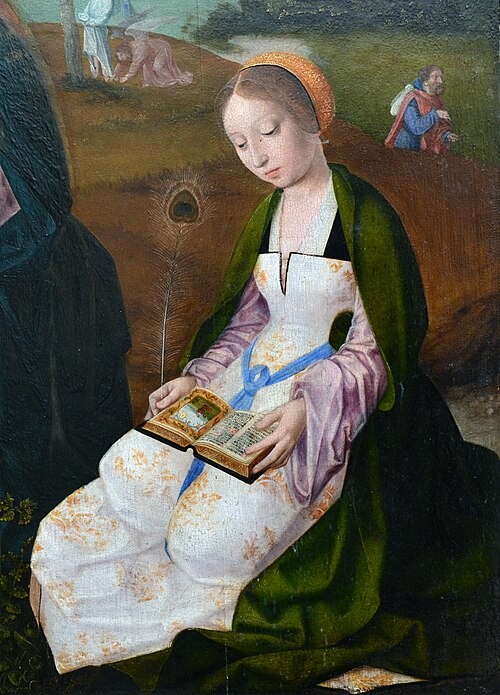
On the 6th of February 2026 I presented on Women in the Special Collections of the University of Groningen Library. The occasion was the portrait unveiling of the portraits of our current and previous librarian. The current librarian is the first female librarian in the history of the University Library. The idea arose to turn my presentation into a series of blogposts and publish these. This is part 1.
Women can already be found in early materials at Special Collections, such as 15th-century books of hours. Books of hours are manuscripts made for private devotion with prayers for set times of the day. The books of hours in our collections were written in Middle Dutch, the vernacular. This is unusual, as Latin was used for these books almost everywhere else. Only in the Northern Netherlands most books of hours contain texts in Dutch, in a 14th-century translation of the Latin book of hours made by Geert Grote. He had founded a house for sisters in his former home in Deventer. The women who lived there did not take monastic vows but did want to live a devout life according to a set of house rules. They came be known as ‘sisters of the common life’. A few years later a house for ‘brothers of the common life’ was founded and soon communities of the common life also sprung up in other places also. Although some members of the community were familiar with Latin, many were not, especially among the sisters. For them Geert Grote created his translation, which became very popular with lay people. His translation is sometimes referred to as the bestseller of the Late Middle Ages. Because of their religious nature, books of hours were considered suitable for female readers.
Because of material evidence, such as annotations, we sometimes know to which woman a specific book of hours belonged. An example of this is this annotation in a book of hours from the monastery in Selwerd (uklu HANDS ADD 429) , which we purchased at an auction in Chicago last summer.
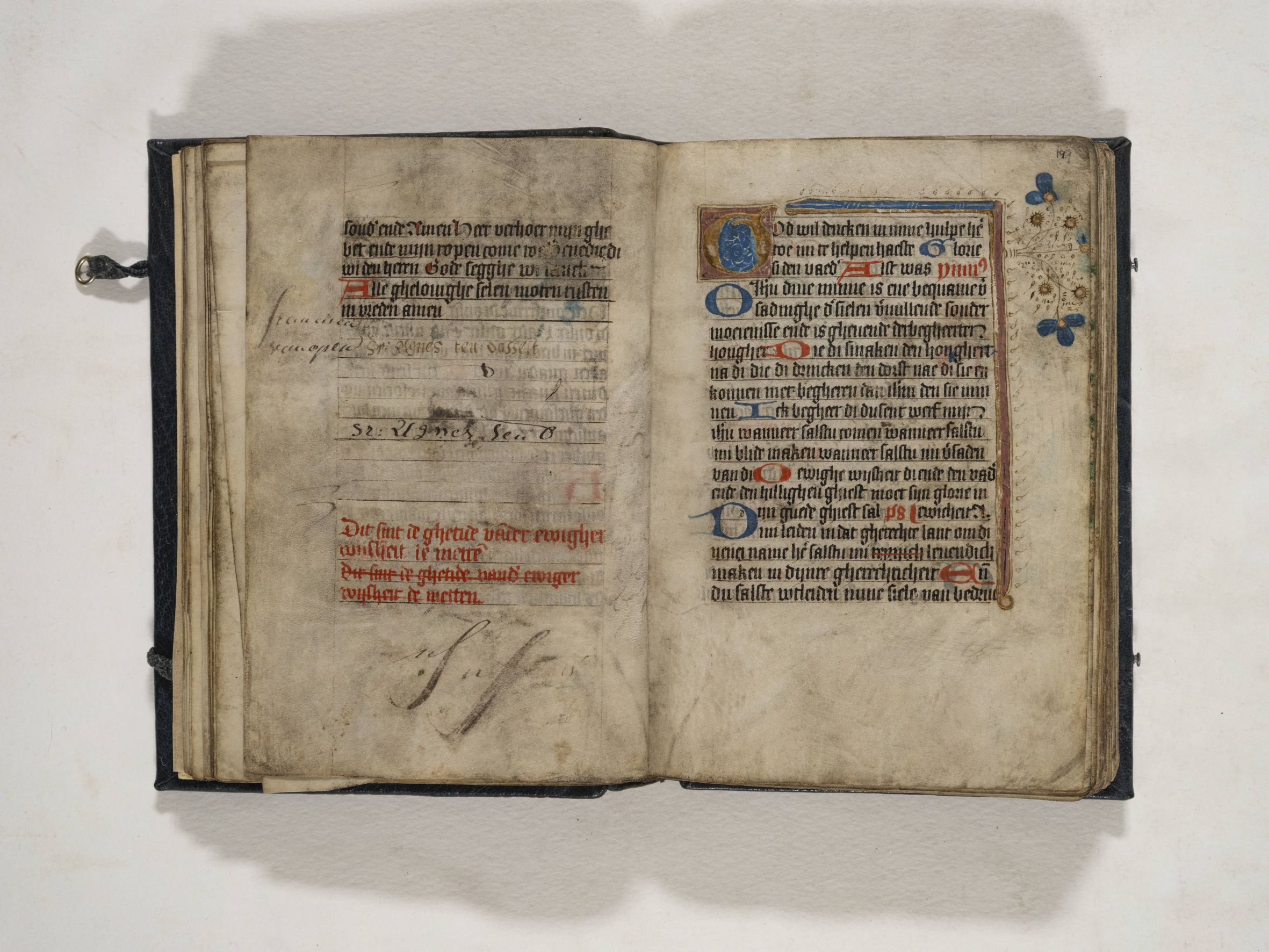
It seems that a sister ‘Agnes ten Dasselt’ wrote her name here in the 16th century. In fact her name is there twice, in two different hands. The reason for this is not completely clear. Perhaps sister Ten Dasselt wrote the abbreviated version of her name and someone else added her full name later, to avoid confusion?
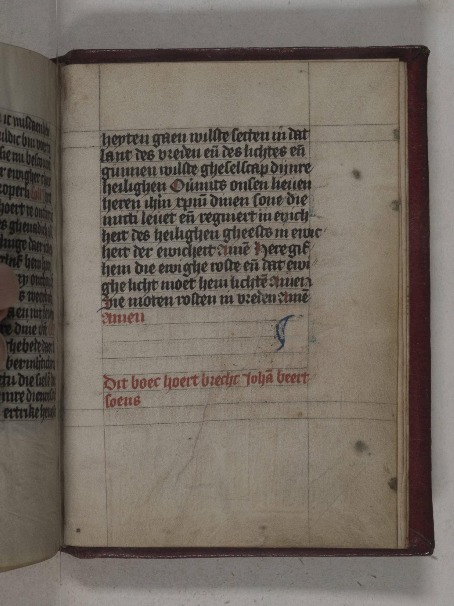
Books of hours were also commissioned by women. In these manuscripts the name of the person who commissioned it is sometimes mentioned at the end of the manuscript in the hand of the scribe who copied the whole manuscript. An example can be found in this manuscript (uklu HANDS ADD 424) which ends with the words: ‘Dit boec hoert brecht Iohan beert soens’. The name Brecht was used for both men and women. But the name construction – which can also be found in other fourteenth- and fifteenth-century texts – makes it clear that the scribe is referring to a woman, ‘Brecht, the wife of Johan, (who is the) son of Beert’.
Furthermore, books of hours were written by women in monasteries. This work was both a spiritual practice and a source of income for the monastery. One of these women was a nun from the Benedictine monastery in Thesinge, called Stine Dutmers. She wrote her initials in a book of hours (uklu HANDS ADD 274) which is now part of our collection; we know that the initials refer to her, because more manuscripts from her hand survive; in one of these, in the University Library of Ghent, she wrote her name in full.
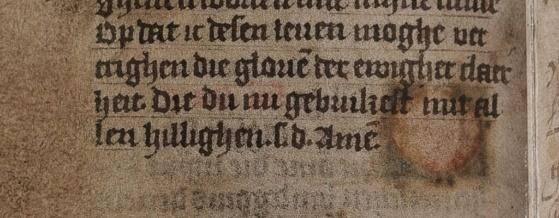
It is evident that women play an important role in the history of the book of hours, as creators and readers of these popular works.
The following blog posts have been published so far in the “Women in the Special Collections” series: